Mapping Ancient Africa: Video of seminar 14

February 29, 2024
WDG

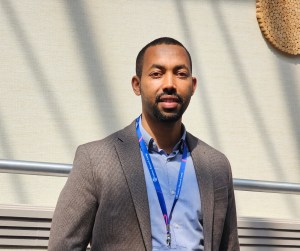
The 14th Mapping Ancient Africa seminar took place on Thursday 28th February 2024. The seminar was delivered by Mathias Vinnepand (Leibniz-Institute for Applied Geophysics Hannover, Germany) and presented recent advances in developing a chronology for the Lake Bosumtwi sediment record over the last c. 1 million years. 

Details of this seminar can be found here. You can find more Mapping Ancient Africa seminar videos on the “Ecology of the Past” YouTube channel.

INQUAlogo

Mapping Ancient Africa: Seminar 14

February 28, 2024
WDG

The first Mapping Ancient Africa online seminar of 2024 will take place on 28 February (17:00 CET). 

  • Speaker:  Mathias Vinnepand (Leibniz-Institute for Applied Geophysics Hannover, Germany)
  • Title: An age-depth model for Lake Bosumtwi (Ghana) to reconstruct one million years of West African climate and environmental change
  • Related publication: Vinnepand, M., Zeeden, C., Wonik, T., Gosling, W., Noren, A., Kück, J., Pierdominici, S., Voigt, S., Abadi, M.S., Ulfers, A., Danour, S., Afrifa, K. & Kaboth-Bahr, S. (2024) An age-depth model for Lake Bosumtwi (Ghana) to reconstruct one million years of West African climate and environmental change. Quaternary Science Reviews 325, 108478. DOI: 10.1016/j.quascirev.2023.108478

The seminar will be delivered via Zoom. The link for the seminar can be obtained from the MAA Slack channel or by contacting the chair of this seminar (Stefanie Kaboth-Bahr). If you want to know more about the Mapping Ancient Africa project visit our web pages and please do not hesitate to get in contact if you want to get involved.

INQUAlogo

Scientific international mobility fellowships

January 25, 2024
WDG

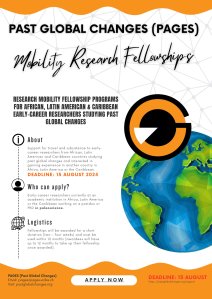
The call for the PAst Global changES (PAGES) research mobility fellowships for African, Latin American and Caribbean early career researchers studying past global changes is currently open.

Deadline: 15 August 2024

To find out more and how to apply click here.

Floristic homogenization of South Pacific islands commenced with human arrival

January 17, 2024
WDG

Strandberg, N.A., Steinbauer, M.J., Walentowitz, A., Gosling, W.D., Fall, P.L., Prebble, M., Stevenson, J., Wilmshurst, J.M., Sear, D.A., Langdon, P.G., Edwards, M.E. & Nogué, S. (2024) Floristic homogenization of South Pacific islands commenced with human arrival. Nature Ecology & Evolution. DOI: 10.1038/s41559-023-02306-3

Mapping Ancient Africa: Video of Seminar 10

January 12, 2024
WDG

The 10th Mapping Ancient Africa seminar took place on Tuesday 7th February 2023. The seminar was delivered by Cecile Blanchet (Helmholtz-Zentrum Potsdam) and highlighted recent work linking river sediments from the Nile with change in global climate systems, including El Nino.

Details of this seminar can be found here. You can find more Mapping Ancient Africa seminar videos on the “Ecology of the Past” YouTube channel.

References

  • Blanchet, C.L., Osborne, A.H., Tjallingii, R., Ehrmann, W., Friedrich, T., Timmermann, A., Brückmann, W. & Frank, M. (2021) Drivers of river reactivation in North Africa during the last glacial cycle. Nature Geoscience 14, 97-103. DOI: 10.1038/s41561-020-00671-3
  • Blanchet, C.L., Tjallingii, R., Schleicher, A.M., Schouten, S., Frank, M. & Brauer, A. (2021) Deoxygenation dynamics on the western Nile deep-sea fan during sapropel S1 from seasonal to millennial timescales. Climate of the Past 17, 1025-1050. DOI: 10.5194/cp-17-1025-2021
  • Blanchet, C.L., Ionita, M., Ramisch, A., Tjallingii, R., Brauer, A., Laruelle, L., Bagge, M. & Klemann, V. (2023) Pacemakers of extreme floods during warmer and wetter climates of the “Wild Nile” stage. PREPRINT (Version 1) available at Research Square DOI: 10.21203/rs.3.rs-3051876/v1
INQUAlogo

New PODCAST: Human & Biosphere

January 11, 2024
WDG

INQUAlogo

The International Union for Quaternary Research (INQUA) supports a number of commissions which focus on more specific aspects of Quaternary research. One of these, the Human & Biosphere Commission, or HABCOM, has recently launched a podcast introducing its members and activities. To find out more about HABCOM listen to the podcast below, or click this link to visit the related INQUA web pages.

Hugo de Vries Prijs 2023

January 9, 2024
WDG

Attention Dutch biologists: The deadline for submission of nominations for the Hugo de Vries Prijs is closing soon (31 January 2024). The prize is awarded to the best biology PhD thesis defended at a Dutch university in 2023. The types of thesis considered by the panel within the category on “biology” is broad, and – for readers of this blog – includes (palaeo)ecology.

To find out more about the prize, see the past winners, and to download a nomination form visit: https://www.knbv.eu/hugo-de-vries-prijs/

An age-depth model for Lake Bosumtwi (Ghana) to reconstruct one million years of West African climate and environmental change

January 8, 2024
WDG

Vinnepand, M., Zeeden, C., Wonik, T., Gosling, W.D., Noren, A., Kück, J., Pierdominici, S., Voigt, S., Abadi, M.S., Ulfers, A., Danour, S., Afrifa, K. & Kaboth-Bahr, S. (2024) An age-depth model for Lake Bosumtwi (Ghana) to reconstruct one million years of West African climate and environmental change. Quaternary Science Reviews 325, 108478. DOI: 10.1016/j.quascirev.2023.108478

INQUA Fellowship Award: Alfred Houngnon

December 20, 2023
WDG

I am delighted to be able to report that Alfred Houngnon (University of Abomey-Calavi, Benin) has beenawarded an INQUA Fellowship for 2024 to develop his research into past environmental change in the Dahomey Gap. This research will link up my laboratory, at the Institute of Biodiversity & Ecosystem Dynamics (University of Amsterdam), and the group of Dr Mireille S.S. Toyi (Laboratory of Applied Ecology, University of Abomey-Calavi). Below, and in the associated video report, Alfred explains the project and what he hopes to achieve during the project.

The Dahomey Gap project is designed to gain new insights on the West African palaeoenvironments using pollen, charcoal and dung fungal spore records to reconstruct past vegetation, fire and animal abundances. These empirical data will then be compared against paleoclimate models. Specifically, we will explore the interactions between fire, animals and vegetation around the Ewe-Adakplame forest in the south east of Benin Republic and highlight the role humans would have previously played in the modification of the landscape for millennia.

Continue Reading

Mapping Ancient Africa: Structuring a scientific article

December 19, 2023
WDG

INQUAlogo

The Mapping Ancient Africa (MAA) project is currently (late 2023 until early 2024) in the process of collecting submissions for a special issue of the INQUA (our sponsors) journal Quaternary International. The special issue will showcase research developed at the MAA workshop in Rome, and presented at the MAA sessions at the INQUA Rome congress. However, the editorial team is open to considering manuscripts relevant to the MAA goals that come from people not already involved in the project – so please contact us if you have ideas.

The process of developing articles for the special issue will be supported by the MAA community through a series of events. The first of these was a online workshop (2 October 2023) set out the frame of reference for the special issue, and included a short presentation on tips for structing a scientific article for this journal. If you missed the event and are thinking about writing an article for the special issue, or in a similar style, you can catch up with this on the Ecology of the Past YouTube channel. In person writing workshops are planned for 2024 in Africa. As full details emerge information will be published here.

Blog at WordPress.com.