If you have exciting new research on past ecological change please consider submitting it to Vegetation History & Archaeobotany.
Two articles recently published on-line in the journal Vegetation History & Archaebotany (of which I am an Associate Editor) recently caught my attention.These explore:
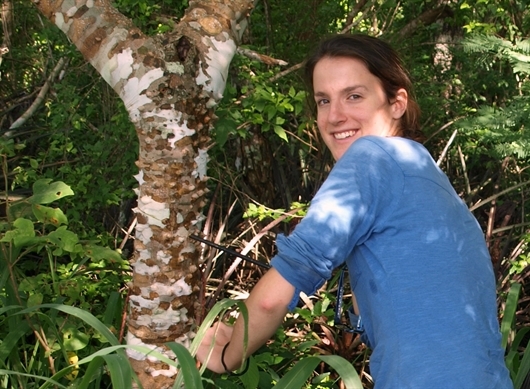
IBEDs Crystal McMichael hard at work sampling sediments in the Andes
Insights into recent field work in Ecuador by a team lead by Crystal McMichael can be found in a recent blog from our collaborators at the Instituto Geofisico, Escuela Politecnica Nacional, Quito (Ecuador).
The images taken by Adele Julier to help her with pollen identifications during her PhD at The Open University (UK) are now available to download. Please note these images are not of reference material but identifications, made by Adele and myself, of the pollen grains found within her pollen traps. The pollen traps were deployed within vegetation study plots in wet evergreen forest, semi-deciduous moist forest, and the forest-savanna transition zone in Ghana. Further publications on this work and a thesis coming soon…
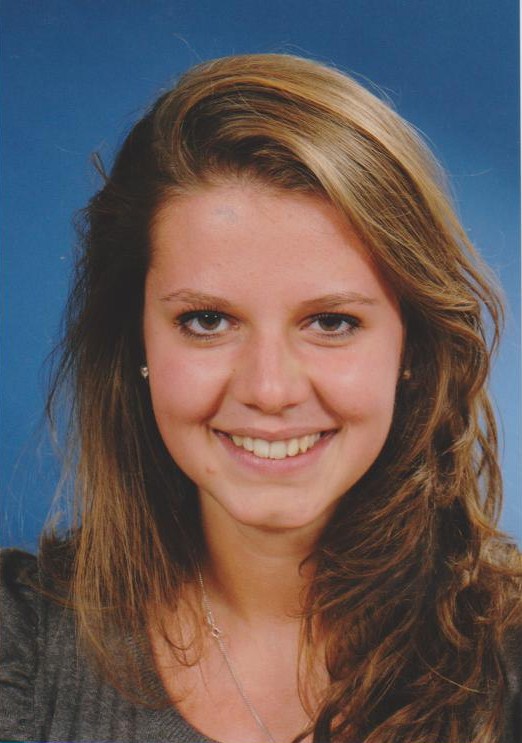
This time you are reading a message from a non-expert in paleoecology. My name is Masha and I will spend the next two years on a very exciting postdoctoral fellowship funded by NWO (Dutch National Science Foundation) under their Rubicon scheme in close collaboration with William Gosling (University of Amsterdam).
Each project was set up to test a particular ecological or biogeographic hypothesis. Investigations included the exploration of the role of humans in modifying ecosystems in Amazon, the nature of the pre-farming landscape in the the Netherlands, and how to chemically identify fossil charcoal. In undertaking their projects individual students had the opportunity to variously develop skills in microscopy, spatial modelling, or analytical chemistry. The high quality of the data produced means that hopefully many of these data sets can be used in future scientific publications. Well done to all!
If you are interested in conducting a similar project (at any academic level) with us please do not hesitate to get in contact. For further details of ongoing research within the Department of Ecosystems & Landscape Dynamics visit our web pages by clicking here.
Hi all! My name is Seringe (Dutch for lilac flower), and unsurprisingly I am a biology student. I completed my BSc Biology at the VU University, specializing in ecology. Being fascinated by tropical rainforest since I was a kid, I attended a Tropical Ecology course at the University of Amsterdam (UvA), resulting in a research project with Crystal McMichael from the Palaeoecology & Landscape Ecology group on the late-Holocene fire history of western Amazonia. Besides performing this palaeoecological project, focusing on the aspect of ancient human activity, I followed courses of Latin America Studies to broaden my perspectives on the current socio-environmental complexity and conservation status of the area. This year, I have gotten the amazing opportunity to join Crystal McMichael on a fieldwork expedition to the Ecuadorian Amazon!
Seringe Huisman in the field…
The fieldwork will be part of my Master’s thesis, elaborating on the regional patterns of vegetation composition changes in relation to human disturbance. I will be taking sediment cores from two lakes in the Sangay region of Ecuador, perform charcoal and phytolith analysis to reconstruct fire and vegetation assemblages over the late Holocene and compare the results to previously established records across western Amazonia. While I am currently attending the MSc Biological Sciences Limnology & Oceanography Master’s track at UvA, I could not help but directing my first project into Paleoecology again! My field trip is largely made possible by obtaining €1150 of grants through the Treub-Maatschappij and the Amsterdam University Fund, for which I am very grateful.
I am super excited to be heading to Ecuador soon, and will be back in a month with field stories, mosquito bites and hopefully some suitable sediments!
BSc student Henk Cornelissen presents his thesis work on identifying charcoal characteristics that represent specific fire parameters, such as burn temperature. Photo: C. McMichael
Wimbledon tennis fortnight is on its way, but we’ve had our own palaeoecology fortnight here at the Institute for Biodiversity & Ecosystem Dynamics at the University of Amsterdam. We’ve seen seminars on reconstructing past landscapes and climates on timescales of decades to millions of years, and on spatial scales ranging from single sites to the entire Earth. Our presenters included our BSc students, MSc students, PhD candidates, faculty members, guest researchers, and even an internationally known palaeoclimatologist and contributor to the IPCC (Intergovernmental Panel on Climate Change) reports!
BSc student Isa Mulder presents her thesis on reconstructing glacial-aged fire histories from the Andes. Photo: C. McMichael
We began with a three-day series of presentations from our BSc students in the Future Planet studies program. William Gosling and I had four students that presented their final theses. We continued with a seminar series organized by the Palynologische Kring (the Dutch palynology society). Eric Grimm, a guest researcher at UvA, presented a high resolution record of hydrological variability, vegetation, and fire from the Great Plains of the United States. Guest researcher Carina Hoorn showed us how the Amazon River formed, and the associated plant turnover that occurred during the Neogene. PhD student Keith Richards explained to us why the Arctic seal became land-locked in the Caspian Sea over 2.6 million years ago. PhD student Suzette Flantua presented a multi-proxy approach to exploring the biogeographic history of the Andes Mountains. She came back the following day to present her PhD thesis entitled, “Ecosystems in Pleistocene Latin America”. And we are happy to report that Suzette is now Dr. Flantua!!
Suzette Flantua highlights the work in her PhD thesis. Congratulations Suzette! Photo: C. McMichael
Dr. William Gosling and Prof. Jonathan Overpeck discuss the future of palaeoecology and upcoming collaborations. Photo: C. McMichael
Our presenters included males and females from multiple countries at an array of career stages. I am glad to have been a part of this fortnight, and I am glad that our current students got to see such a diverse integration of people and palaeoecology. My hope is at least one of these students has been inspired by these seminars, and will develop the same passion for palaeoecology as what we’ve seen here over the last two weeks.
University of Amsterdam MSc Biological Sciences student Jippe Kreuning investigated the contents of cesspits in the Dutch city of Deventer for his research project. Jippe investigated fossil pollen, seeds and other biological remains to discover what people in the ancient city were eating. In doing so Jippe gained new insights into ancient trade routes.
To find out more about Jippe’s project watch his video courtesy of FOLIA YouTube channel (in Dutch)







 Ecology of the past