News articles:

Unesco to rule on Tasmania forest and Great Barrier Reef, BBC News Asia.

Climate change will ‘cost world far more than estimated’, by Tom Bawden, The Independent.

Scientific articles:

Heslop-Harrison, J. (1979) Aspects of the structure, cytochemistry and germination of the pollen of Rye (Secale cereale L.). Annals of Botany, 44, 1-47.
Summary (Adele): Sometimes, the old ones are the best, and this behemoth of a paper contains a huge amount of useful information on the chemical structure and development of Rye pollen grains. As I am working on the chemistry of grass pollen at the moment, it is incredibly useful to know that this sort of information exists and can be used to inform both my experimental protocol and interpretations.

Michelutti, N., Blais, J.M., Cumming, B.F., Paterson, A.M., Rühland, K., Wolfe, A.P. & Smol, J.P. (2010) Do spectrally inferred determinations of chlorophyll a reflect trends in lake trophic status? Journal of Paleolimnology, 43, 205-217. doi: 10.1007/s10933-009-9325-8
Summary (Frazer): Quick and easy way to extract data from lake sediment cores.

Rossetti, D.F., de Toledo, P.M and Góes, A.M. (2005) New geological framework for Western Amazonia (Brazil) and implications for biogeography and evolution. Quaternary Research, 63, 78 – 89. doi: 10.1016/j.ygres.2004.10.001.
Summary (Hayley): Research discussing the importance of understanding the underlying geological processes in order to correctly identify the mechanisms controlling modern biodiversity in Western Amazonia, Brazil.

Simpson, J. (2011) On the Ambiguity of Elves. Folklore, 122, 76-83. DOI: 10.1080/0015587X.2011.537133
Summary (Will): Elves depicted in modern literature have a grounding in ancient literature.

Trenkamp, R., Kellogg, J. N., Freymueller, J.T. and Mora, H.P. (2002) Wide plate margin deformation, southern Central America and northwestern South America, CASA GPS observations. Journal of South American Earth Sciences. 15, 157 – 171. PIL: S0895-9811(02)00018-4.
Summary (Hayley): GPS data used to detect plate boundary convergence, subduction and collision within the north west of South America. GPS data between 1991 and 1998 was used to work out rates of movement for plates.


NERC-PlanetEarth

Insects, sediment and climate change

Frazer Bird and William Gosling talk about how to conduct palaeoecological research in the tropics for NERC’s Planet Earth pod-cast. Click here to here to listen to the conversation.

For other similar stories online visit the Planet Earth website.

An interview with Adele Julier

May 26, 2014
philjardine

Following on from Wes Fraser’s insightful and revealing interview, cactus-hugger Adele Julier tells us about her academic background and her role on the Lake Bosumtwi pollen chemistry project.


For more videos check out the “Ecology of the past” YouTube channel.

Newspaper articles:

Exclusive: Found after 500 years, the wreck of Christopher Columbus’s flagship the Santa Maria by David Keys, The Independent.

Scientific articles:

Cole, L.E.S., Bhagwat, S.A. & Willis, K.J. (2014) Recovery and resilience of tropical forests after disturbance. Nat Commun, 5, Article number 3906.
Summary (Will): Varying factors have disturbed tropical forests which have recovered at varying rates.

Hoorn, C., Wesselingh, F.P., ter Steege, H., Bermudez, M.A., Mora, A., Sevink, J., Sanmartín, I., Sanchez-Meseguer, A., Anderson, C.L., Figueiredo, J.P., Jaramillo, C., Riff, D., Negri, F.R., Hooghiemstra, H., Lundberg, J., Stadler, T., Särkinen, T. & Antonelli, A. (2010) Amazonia Through Time: Andean Uplift, Climate Change, Landscape Evolution, and Biodiversity. Science, 330, 927-931.

Montade, V., Ledru, M.-P., Burte, J., Martins, E.S.P.R., Verola, C.F., Costa, I.R.d. & Magalhães e Silva, F.H. (2014) Stability of a Neotropical microrefugium during climatic instability. Journal of Biogeography, 41, 1215-1226.
SUMMARY (Will): Thoughts on what happened to species when in Amazonia.

Cardenas PhD thesis 2011

May 20, 2014
WDG

Cárdenas, M.L. (2011) The response of western Amazonian vegetation to fire and climate change: A palaeoecological study. PhD Thesis, Department of Earth & Environmental Sciences, The Open University.

MLC Ecuador (2008)

MLC Ecuador (2008)

Abstract:

Amazonia is one of the most biodiverse regions of the world, a reputation largely earned by the floristic richness of western Amazonia, namely the Ecuadorian Andes. In particular, montane cloud forest in western Amazonia on the Andean flank has been identified as of high ecological value because of its large floristic diversity. Unfortunately, montane forests’ biodiversity have suffered a strong detrimental impact due the ongoing human activity and climate change. Consequently, understanding the dynamics of montane forest and identifying the main factors that control them is fundamental to manage and protect these ecosystems.

This thesis focuses upon paleoecological data obtained from organic sediments from Erazo (Ecuador), located today within the lower montane forest. Examination of modern vegetation and pollen rain close to Erazo revealed florist variation at the kilometer scale related to human disturbance. Modern data provided the basis for interpreting the fossil record. Radiometric dating of interbedded volcanic ash indicates the sediments were deposited c. 324,000-193,000 years ago, well before the arrival of humans in America. Fossil pollen and wood preserved within organic sediments suggest that the composition of the forest was different to modern and changed significantly during the middle Pleistocene. Taxonomic changes in the fossil pollen assemblage, coupled with the presence of Podocarpus spp. macrofossils within the sediments, indicate that temperatures reached c. 5oC cooler than modern. Given the timing and magnitude of vegetation cha

nge observed in the Erazo sediments it therefore seems likely that the variations were instigated by global temperature changes associated with Marine Isotope Stage (MIS) 9 and the MIS 7-6 transition from interglacial-glacial conditions.

The palaeoecological data from Erazo indicate that far from being a relatively stable ‘museums’ tropical forests are in fact dynamic systems undergoing long term floristic re-assortment as well as being susceptible to abrupt short term floristic reorganization.

Supervisors: Dr. William D. Gosling , Dr. Sarah Sherlock, Dr. Vincent Gauci (all The Open University), Prof. Toby Pennington (Royal Botanic Gardens Edinburgh), and Dr. Imogen Poole (University of Aberdeen).

Examined by: Dr. Juan-Carlos Berrio (University of Leicester), and Prof. Simon Kelley (The Open University).

To borrow a copy from The Open University Library click here.

Continue Reading

African ecology in context

May 14, 2014
WDG

afqua-logo-header-copy

I am delighted to be organizing a focus session at the first AfQUA meeting. The session seeks to bring together ecologists and palaeoecologists working in Africa. If you are interested in getting involved please contact me (William Gosling) directly. For further information on the conference visit the AfQUA website or twitter feed.

Focus session 1: African ecology in context
The African continent spans over 80 degrees of latitude, nearly 6000 m of altitude and around 30 million km2 consequently it contains a vast array of unique ecosystems. Many of the African ecosystems are under direct pressure from human activity and are threatened by on-going and projected climate change. However, management and conservation of the modern African ecosystems is hampered by a paucity of data on their natural history. Studies of observations of ecosystems spanning >30 years are rare so we are heavily reliant on examination of the fossil record to place modern ecology in a long-term (>50 year) context. Information on past ecosystems can be extracted through the examination of a range of biological indicators (e.g. pollen, carbon isotopes, charcoal) found within marine and lake sediments. However, interpretation of the sediments and the proxies they contain with the ecosystems observed today is challenging because of timescale and interpretation issues. The aim of this session is to bring together modern ecologists and paleo-ecologists working in Africa to present the state-of-the-art understanding of ecosystems past and present, and explore how we can improve understanding of timescales and proxy interpretation to place these threatened ecosystems in context.

Williams PhD thesis 2011

May 13, 2014
WDG

Williams, J.J. (2011) Human and climate impacts on tropical Andean ecosystems. PhD Thesis, Department of Earth & Environmental Sciences, The Open University.

JJW Bolivia (2007)

JJW Bolivia (2007)

Abstract:

Population growth and predicted global climate change are applying new, and increasing, pressure to mountain environments, but the consequences of these changes upon the biodiverse and vulnerable Tropical Andean ecosystems are poorly understood. This thesis explores past human-climate-ecosystem interactions using multi-proxy palaeolimnological investigations (fossil pollen, spore, charcoal and Chironomidae (midges); elemental abundance, colour spectra and magnetic susceptibility) of two sites in the eastern Bolivian Andes (Lake Challacaba and Laguna Khomer Kocha Upper) over the last c. 18,000 years. During the deglaciation and Holocene ecosystems were exposed to varying climatic stress levels, and pressures imposed by the development of human cultures.

Examination of preserved ecological assemblages, including the first assessment of subfossil central Andean Chironomidae, reveals ecosystem sensitivity to changes in temperature, moisture, fire regime, lake level and salinity. Charcoal analysis from Laguna Khomer Kotcha Upper reveals changes in burning at c. 14,500, 10,100 and 6,400 cal yr BP. Concomitant palynological shifts shows this climatically controlled fire regime was a transformative agent of Andean vegetation, particularly for the threatened, high elevation, Polylepis woodlands. Pollen and geochemical data from Lake Challacaba indicate two periods of aridity (c. 4000−3370 and 2190−1020 cal yr BP), these broadly correlated to El Niño/Southern Oscillation variations. Increased Sporormiella abundance after c. 1,340 cal yr BP indicate changes in trade routes and agricultural practices; demonstrating human adaption to environmental change and interconnectivity to Tiwanaku and Inca civilizations.

The long-term response of the terrestrial and aquatic ecosystems, reconstructed from these lakes, has provided insights into how Tropical Andean ecosystems may respond to future changes in temperature, precipitation and human interference. The palaeoenvironmental data has implications for conservation management; it indicates that spatial and temporal variations in site sensitivity, exposure and resilience should be assessed, and that planting strategies should mimic the present day natural patchy distribution of Polylepis woodlands.

Supervisors: Dr. William D. Gosling , Dr. Angela Coe (both The Open University), and Steve Brooks (Natural History Museum).

Examined by: Prof. Henry Hoogheimstra (University of Amsterdam), and Prof. Bob Spicer (The Open University).

To borrow a copy from The Open University Library click here.

Continue Reading

One short story and five scientific papers thinking about different aspects of ecological change through time.

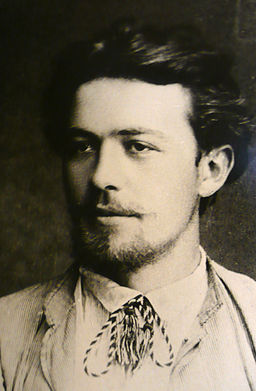
Chekhov in 1889

Chekhov in 1889 (http://tinyurl.com/ny2msd9)

Short story:

Checkhov, A. (1889) The Pipe

SUMMARY (Will): People have long been concerned about environmental change. Observations of phenological shifts, degradation of ecosystem services and climate change are clearly presented in Checkhov’s “The Pipe” (1889).The key difference is today we have a better idea of why these things are happening!?

Scientific papers:

Garcia, R.A., Cabeza, M., Rahbek, C. & Araújo, M.B. (2014) Multiple dimensions of climate change and their implications for biodiversity. Science 344 1247579
SUMMARY (Phil): This review highlights the alternative metrics used to quantify climate change at different spatial scales, each with its own set of threats and opportunities for biodiversity. It’s a very relevant paper for palaeoecologists, with implications for how we think about climatic estimates we generate, how we interpret ecological shifts in the assemblages we study, and for demonstrating the importance thinking spatially as well as temporally. It also shows how important palaeoecological data is for setting baselines and putting projected climatic change into context.

Garzón-Orduña, I.J., Benetti-Longhini, J.E. & Brower, A.V.Z. (2014) Timing the diversification of the Amazonian biota: butterfly divergences are consistent with Pleistocene refugia. Journal of Biogeography, early online.
SUMMARY (Will): Butterfly species diverged in the Neotropics during the Pleistocene (probably).

Mitchard, E.T.A. et al. (2014) Markedly divergent estimates of Amazon forest carbon density from ground plots and satellites. Global Ecology and Biogeography, early online.
SUMMARY (Will): It is difficult to work out how much carbon is in a tropical forest.

Stansell, N.D., Polissar, P.J., Abbott, M.B., Bezada, M., Steinmann, B.A. and Braun, C. (2014) Proglacial lake sediment records reveal Holocene climate changes in the Venezuelan Andes. Quaternary Science Reviews. 89, 44 – 55.
SUMMARY (Hayley): A study of three lake sediment records in the Venezuelan Andes to look at patterns of glacial variability, and how glaciers might have responded to changing climatic conditions during the last c. 12,000 years.

Still, C.J., Foster, P.N. & Schneider, S.H. (1999) Simulating the effects of climate change on tropical montane cloud forests. Nature, 398, 608–610.
SUMMARY (Nick): The paper attempts to model the impact of climate change on a number of cloud forests around the world by simulating atmospheric parameters at the last glacial maximum (LGM) and at twice today’s CO2 level. The models agrees with palaeoecological data of a downslope migration of the cloud forest at the LGM, while the 2xCO2 model shows reduced cloud cover and increased evapotranspiration, which results in a significant reduction in cloud forest supporting land area.

Blog at WordPress.com.