Chevalier, M., Gosling, W.D., Hooghiemstra, H., Cartapanis, O., Chase, B.M. & Kaboth-Bahr, S. (2025) Eccentricity-driven glacial climate variability and its influence on speciation in the tropical Andes. Quaternary Science Advances 100278. DOI: 10.1016/j.qsa.2025.100278
In this article I summarize and describe the scientific research that was performed near Botopasi in Suriname, which was published in Ecology as ‘Pre-contact and post-colonial ecological legacies shape Surinamese rainforests’ (https://doi.org/10.1002/ecy.4272).
Figure 1: Our research team in the field
Background
In October 2021, between COVID-19 restrictions, I joined archaeologist dr. Cheryl White and her team to excavate the remnants of a ‘lost village’ of Saamaka Maroons in the Surinamese rainforest. Maroons are the descendants of enslaved Africans, who, in the late 1600s, fled plantations to live in freedom in the Surinamese rainforests. Dr. White has been investigating the first villages and the movements of Suriname’s Maroon communities for decades and is an expert in this topic.
Our wonderful research team consisted of Farisha Kartosemito B.Sc., Sushmeeta Ganesh B.Sc., Jõvan Samson B.Sc., Agir Axwijk B.Sc., Santosh Singh M.A., Thanya Fonkel MPA, Harrold Sijlbing, Dombi Lö, Gerno Eduards & Farik Eduards. We were welcomed in the village Botopasi, and after a day of hard work in the field, we enjoyed delicious Surinamese food and played troefcall!
As an ecologist, I was interested in the ecological effects of past human activities on the forest ecosystem. In these rainforests, Maroon and Indigenous communities often burn and remove trees near their homes to grow a variety of crops like cassava, tayer, maize and banana. After some years, the cultivation site is abandoned and forests can grow back. But do those forests recover back to their original state?
What did the forest look like before people arrived and settled in the landscape of Boven Suriname?
To study how Maroon communities have shaped Surinamese forests over time, I made a reconstruction of the landscape of the past (going back thousands of years). The landscape was near an archaeological sites called ‘Beng Tau’, where Maroons lived in the 17th century. We used plant fossils and charcoal remains to reconstruct the forest from the past, to research if people were using fire and growing crops, and how the forests recovered from that.
Results and implications
Figure 2: Phytoliths from the banana plant
The charcoal remains and plant fossils, particularly from maize and banana, confirmed Saamaka Maroons settled in the area since ca. 1700 and practiced slash-and-burn agriculture was near the archaeological site called ‘Beng Tapu’ (Figure 2). The site may have been a cooking area, because remnants of pottery with maize, rice and banana were found. Within 1 km of Beng Tapu, we found large fragments of charcoal, and plant fossils from maize and banana. Smaller charcoal fragments and banana were found within 5 km of the archaeological site. Nowadays, agriculture is practiced within 8 km of the archaeological site and Suriname river. The area used for agriculture likely expanded over time.
How did the forest recover from these activities?
Within 1 km of the archaeological site, forests were burnt and used multiple times. Here, forests have a lower biomass than further away from Beng Tapu, meaning fewer or smaller trees have grown back. Also, Attalea and Oenocarpus palm trees increased. Still today, the Saamaka Maroon community uses the maripa palm to make oil. Therefore, the number of maripa palms may have increased due to human activities like cooking and oil production! Attalea and Oenocarpus palms are also adapted to open conditions and fire, showing the influence people had on the environment and how the forest responded to fires.
Further (2-7 km) away from the archaeological site, where disturbances were fewer, the forests recovered much better but Astrocaryum palms grew back in higher numbers in the understory of the forests. What makes these palms so resilient? We are still uncertain. The forests furthest away (>8km) from Beng Tapu showed little signs of disturbances.
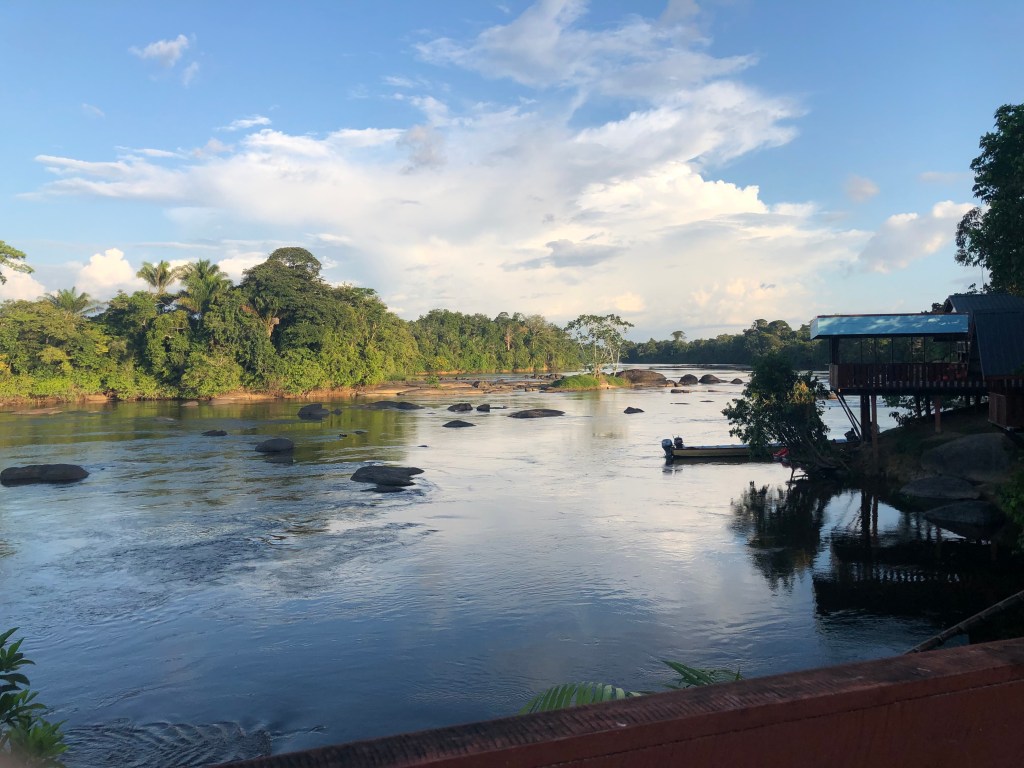
Figure 3: View from the Suriname River
A long human history, and an Indigenous archaeological site?
The Saamaka Maroons were not the first people to have inhabited the forests near Botopasi. Charcoal fragments show that people were in region (the ca. 20 km radius we studied) already 2000 years ago, and fire events occurred ca. 2000, 1700,1500, 1300, 1200 and 800 years ago. We don’t know which Indigenous Cultures may have inhabited this region, because of limited archaeological and historical research here. Large charcoal fragments were found ca. 7 km away from Beng Tapu, across the Suriname River. Could this be an Indigenous archaeological site?
Conclusion
Our results show the timing, intensity and frequency of past disturbances are very important for good forest recovery and some disturbances from the past can still impact the modern vegetation.
Unravelling the past not only tells us about the ancestors of Maroons and the lives of Indigenous communities before the 1500s. The past also helps us to understand how forests respond to human impacts. To better guide conservation strategies, we need to do more archaeological and ecological research in Surinamese rainforests.
Next to the Suriname River, past human activities shaped the forest andincreased local palm abundances. The broader forested region showed a healthy recovery. These results indicate that the Saamaka Maroon community preserved most of the forests they inhabited since the 1700s. We can learn from traditional knowledge about which management practices are sustainable to keep forests healthy.
If you want to know more about the “hows” of this research…dive with me into the methodology!
Poaceae (the grass family) is one of the most diverse angiosperm families on Earth, comprising close to 12,000 species. The history of grass-dominated biomes extends back over 20 million years, yet the spatial and temporal development of these biomes and the underlying drivers remains unresolved. This thesis addresses these questions in South America, focusing on modern grass pollen and ancient samples dating from the early Miocene to the present. The thesis reveals several key points: (i) Grass pollen size varies significantly both among genera and species and within species. Pollen size shows no correlation with (a)biotic factors, indicating its limited utility as a generally applicable proxy for reconstructing past vegetation and climate; (ii) Grass pollen exhibits high diverse on surface ornamentation. The morphotypes identified by descriptive terminology are well-supported by a combination of SEM images of pollen surface patterns and computational image analysis. The findings reveal that pollen sculpture is unrelated to (a)biotic variables but is diverse across the phylogeny; (iii) Tropical grass pollen morphology suggests a gradual rather than punctuated evolution, based on the trend toward a less dense ornamentation of the exine since c. 23 Ma. The changes in the exine of grass pollen since the early Miocene might be driven by evolutionary processes (evolutionary drift and/or directional selection), and potentially immigration at the continental scale. In summary, the thesis reveals the trajectory of grass pollen morphological changes over time and examining the drivers that have contributed to their evolution and geographical expansion at the continental scale.
Antoine, P., Wieringa, L.N., Adnet, S., Aguilera, O., Bodin, S.C., Cairns, S., Conejeros-Vargas, C., Cornée, J., Ežerinskis, Ž, Fietzke, J., Gribenski, N.O., Grouard, S., Hendy, A., Hoorn, C., Joannes-Boyau, R., Langer, M.R., Luque, J., Marivaux, L., Moissette, P., Nooren, K., Quillévéré, F., Šapolaitė, J., Sciumbata, M., Valla, P.G., Witteveen, N.H., Casanova, A., Clavier, S., Bidgrain, P., Gallay, M., Rhoné, M. & Heuret, A. (2024) A Late Pleistocene coastal ecosystem in French Guiana was hyperdiverse relative to today. Proceedings of the National Academy of Sciences 121, e2311597121. DOI: 10.1073/pnas.2311597121
The fifteenth Mapping Ancient Africa seminar will take place on 15 March 2024 (17:00 CET)
Speaker: Bruk Lemma (Martin Luther University Halle-Wittenberg, Germany; Ethiopian Biodiversity Institute – EBI)
Title: Nature’s Fingerprints: Exploring the Use of Biomarkers and Stable Isotopes in Unraveling Chemotaxonomy and (Paleo-)Climate Dynamics of the Bale Mountains, Ethiopia
The seminar will be delivered via Zoom. The link for the seminar can be obtained from the MAA Slack channel or by contacting the chair of this seminar (Stefanie Kaboth-Bahr). If you want to know more about the Mapping Ancient Africa project visit our web pages and please do not hesitate to get in contact if you want to get involved.
During the delivery of this years BSc Palaeoeclogy course at the University of Amsterdam (UvA) I discussed with a number of students about the nature and purpose of understanding the ecology of the past. This lead me to highlighting the research of Nick Loughlin (@PalaeoNick) from his PhD at The Open University and the subsequent work that he has done. I though it might be interesting to also share this here…
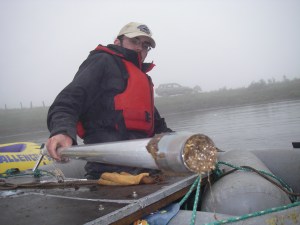
Nick Loughlin during his PhD field work in Ecuador
Nick’s study sought to understand better the ecological history of the biodiverse eastern Andean flank in Ecuador. To achieve this he went into the field and recovered sediments from a lake and a sedimentary section exposed by a road cutting. He analysed the sediments to reveal vegetation change (pollen analysis), fire histories (charcoal analysis), and past animals in the landscape (non-pollen palynomorphs, or NPPs). To extract extra ecological information from his samples he developed the methodological approach for examining NPPs in a tropical setting (Loughlin et al. 2018a). He then combined all the different palaeoecological approaches to reveal the drivers of vegetation change during the last glacial period (in the absence of humans; Loughlin et al. 2018b), and during the last 1000 years (when indigenous and European human populations radically altered the landscape; Loughlin et al. 2018c). The insights gained from Nicks research provided empirical evidence of how humans have been modifying this biodiversity hotspot on the timescales relevant to the lifecycles of tropical trees. These findings and ideas were collated in his PhD Thesis at The Open University which was supervised by Encarni Montoya, Angela Coe and myself (Loughlin, 2018a). Subsequently, Nick has been working to broaden the impact of his work and to communicate his findings to the broader scientific and conservation community. This has lead to two new publications focused on understanding baseline ecological function and conservation implications (Loughlin et al. 2022, Nogué et al. 2022).
Evidence of past ecological change recovered from Lake Huila (Ecuador) revealed how past peoples had modified the landscape of the eastern Andean biodiversity hotspot.
The arch of research carried out by Nick, I think, really demonstrates the important of understanding the ecology of the past – without his detailed investigation of microfossils we could not have seen the impacts of indigenous communities on the past Andean landscape, or identify the consequences of the European depopulation; or been able to estimate the timescales of the ecological change!
Prof. dr. Willem Renema Special Chair in Marine Palaeobiodiversity
Willem Renema, head of the Marine Biodiversity research group at Naturalis, has been appointed as a Special Chair in Marine Palaeobiodiversity within the Department of Ecosystem & Landscape Dynamics at the University of Amsterdam. I am delighted that Willem has joined the team coupling his expertise in marine tropical systems with our existing focus on terrestrial tropical settings will, I am sure, provide many new avenues of scientific endeavour. Catalysing collaboration between Naturalis and UvA will be five PhD researchers, employed on the Marie Skłodowska-Curie Innovative Training Network, who will be jointly supervised by Naturalis and UvA staff.
To find out more about Willem and his appointment click here.
Do you have a PhD in Physical Geography, Environmental Sciences, Landscape Ecology or Soil Ecology? Have you got educational and research experience working with digital data to contribute to climate, geographic or biodiversity science? If so please consider applying for the 4-year post-doctoral position “Digital Environmental Sustainability” currently available within the Department of Ecosystem & Landscape Dynamics (Institute for Biodiversity & Ecosystem Dynamics, University of Amsterdam).
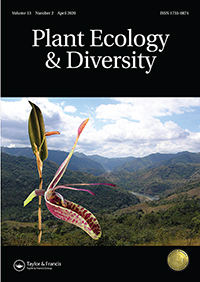
Within the overarching context of Plant Ecology & Diversity the “Global change & vegetation dynamics” subject area aims to place a temporal component on key themes such as biodiversity, conservation and ecosystem function. Manuscripts are welcome that use long-term (palaeo-) ecological approaches, modern field observations and laboratory experiments, and computational modelling to explore change and dynamics within ecosystems. We welcome all formats of manuscripts to this section (original research articles, rapid communication articles, review articles, and perspectives articles). If you have any questions about the potential suitability of your research in the journal please do not hesitate to get in contact.
The editorial team handling this section of the journal currently comprises myself as Subject Editor and six Associate Editors. To find out more about us, our research interests and expertise read on…
My name is Majoi Nascimento, I just started a new job as a postdoc researcher at the University of Amsterdam working on an ERC project named ALPHA (Assessing Legacies of Past Human Activities in Amazonia with Crystal McMichael). The main focus of ALPHA is to investigate the role of human disturbance and recovery processes that have occurred over the past few millennia in Amazonia, and their effects on the biodiversity and carbon dynamics that are observed there today. To do a good job, it is important that we understand the concepts of disturbance and recovery, but also the processes that underlie forest resilience. That is the reason why we decided to read and discuss this work from Adolf et al. 2020 “Identifying drivers of forest resilience in long-term records from the Neotropics”, published in the journal Biology Letters, during one of our lab meetings.








 Ecology of the past