
Introducing: Seringe Huisman

July 3, 2017
WDG

Seringe Huisman

Hi all! My name is Seringe (Dutch for lilac flower), and unsurprisingly I am a biology student. I completed my BSc Biology at the VU University, specializing in ecology. Being fascinated by tropical rainforest since I was a kid, I attended a Tropical Ecology course at the University of Amsterdam (UvA), resulting in a research project with Crystal McMichael from the Palaeoecology & Landscape Ecology group on the late-Holocene fire history of western Amazonia. Besides performing this palaeoecological project, focusing on the aspect of ancient human activity, I followed courses of Latin America Studies to broaden my perspectives on the current socio-environmental complexity and conservation status of the area. This year, I have gotten the amazing opportunity to join Crystal McMichael on a fieldwork expedition to the Ecuadorian Amazon!

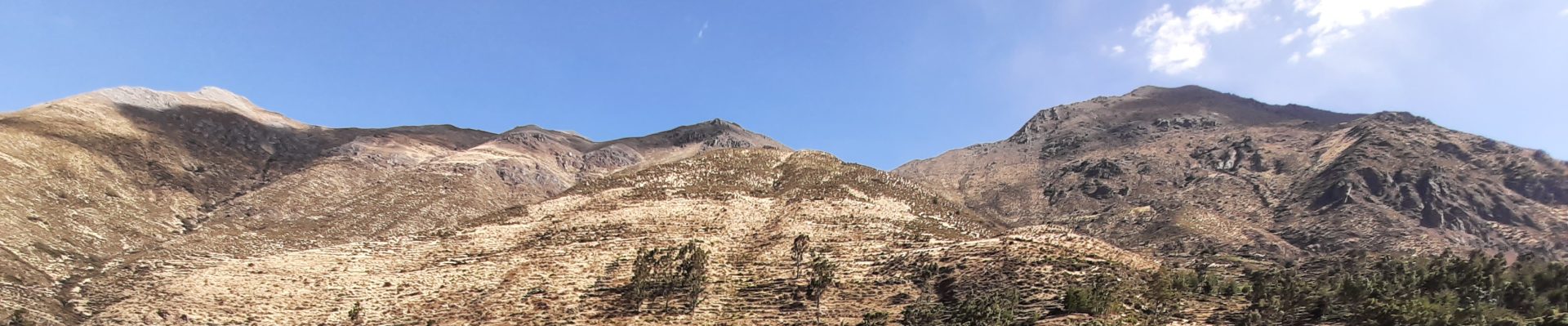
Seringe Huisman in the field...

Seringe Huisman in the field…

The fieldwork will be part of my Master’s thesis, elaborating on the regional patterns of vegetation composition changes in relation to human disturbance. I will be taking sediment cores from two lakes in the Sangay region of Ecuador, perform charcoal and phytolith analysis to reconstruct fire and vegetation assemblages over the late Holocene and compare the results to previously established records across western Amazonia. While I am currently attending the MSc Biological Sciences Limnology & Oceanography Master’s track at UvA, I could not help but directing my first project into Paleoecology again! My field trip is largely made possible by obtaining €1150 of grants through the Treub-Maatschappij and the Amsterdam University Fund, for which I am very grateful.

I am super excited to be heading to Ecuador soon, and will be back in a month with field stories, mosquito bites and hopefully some suitable sediments!
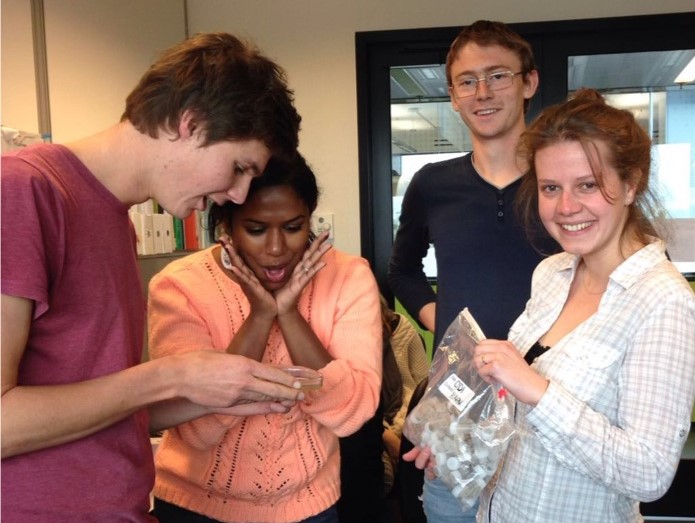
Seringe Huisman and palaeoecology friends

Seringe Huisman and palaeoecology friends

Matthews-Bird, F., Brooks, S.J., Holden, P.B., Montoya, E. & Gosling, W.D. (2016) Inferring late-Holocene climate in the Ecuadorian Andes using a chironomid-based temperature inference model. Climate of the Past 12, 1263-1280. DOI: 10.5194/cp-12-1263-2016

Introducing Milan Teunissen van Manen

February 9, 2016
WDG

Milan Teunissen van ManenMy name is Milan Teunissen van Manen and I just finished my first week as a Ph.D. researcher with the Palaeoecology & Landscape Ecology (P&L) group in the Institute for Biodiversity & Ecosystem Dynamics (IBED) at the University of Amsterdam (UvA)!

My undergraduate studies were interdisciplinary in nature: I did a BSc Beta-Gamma (Institute for Interdisciplinary Studies (IIS), UvA) where students are taught to collaborate between different disciplines. Ecology has always been an interest of mine, so I was quick to specialize in that field. In my final year of my bachelor I came in contact with paleoecology and did not hesitate to make sure my first master’s project (MSc Biological Science, IBED, UvA) would be with the P&L research group (IBED) – a worked on a project on tropical rainforest dynamics in Miocene Amazonia. After that I got the chance to test my skills outside research institutes: during the Tesla consultancy Minor (IIS) I got firsthand practical experience in developing urban green areas from start to finish for the municipality of Amsterdam. The focus of that project was to increase the ecologic, educational, scientific, and social value of the natural areas on Amsterdam Science Park. It was great to see my scientific background put to good use outside the research community. The project is still active today.

After a short period of working in education and sustainability consultancy I seized the opportunity to, once more, join the P&L research group – this time as a Ph.D. student under the watchful eyes of William Gosling and Boris Jansen. My project revolves around characterizing biomarker and modern pollen-rain signals across the altitude of the Ecuadorian Andes vegetation. A great opportunity at the frontier of tropical research!

If the first week is any indication, I foresee to a lot of collaboration, hard work, exploration and adventure in the coming years!

To find out more about me visit:

Quantifying late-Holocene climate in the Ecuadorian Andes using a chironomid-based temperature inference model

January 21, 2016
WDG

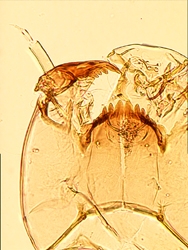
midge headOur latest manuscript has just been made available, via Climate of the Past Discussions, for comment and review. Click here to check it out. We look forward to hearing what people think.

Quantifying late-Holocene climate in the Ecuadorian Andes using a chironomid-based temperature inference model
Matthews-Bird, F., Brooks, S.J., Holden, P.B., Montoya, E. & Gosling, W.D.

Abstract below

Continue Reading

In the news:

Jonathan Amos (2016) ‘Case is made’ for Anthropogenic Epoch. BBC News: Science & Environment.

Scientific publications:

Sarmiento, F.O. (2002) Anthropogenic change in the landscapes of highland Ecuador. Geographical Review 92, 213-234. doi: 10.1111/j.1931-0846.2002.tb00005.x

Swindles, G.T., Lamentowicz, M., Reczuga, M. & Galloway, J.M. (online)  Palaeoecology of testate amoebae in a tropical peatland. European Journal of Protistology. doi: 10.1016/j.ejop.2015.10.002

Tellkamp, M.P. (2014) Habitat change and trade explain the bird assemblage from the La Chimba archaeological site in the northeastern Andes of Ecuador. Ibis 156, 812-825. doi: 10.1111/ibi.12179

Waters, C.N., Zalasiewicz, J., Summerhayes, C., Barnosky, A.D., Poirier, C., Galuszka, A., Cearreta, A., Edgeworth, M., Ellis, E.C., Ellis, M., Jeandel, C., Leinfelder, R., McNeill, J.R., Richter, D.d., Steffen, W., Syvitski, J., Vidas, D., Wagreich, M., Williams, M., Zhisheng, A., Grinevald, J., Odada, E., Oreskes, N. & Wolfe, A.P. (2016) The Anthropocene is functionally and stratigraphically distinct from the Holocene. Science 351, . doi: 10.1126/science.aad2622

Open access online:

Matthews-Bird, F., Gosling, W.D., Coe, A.L., Bush, M., Mayle, F.E., Axford, Y. & Brooks, S.J. (2015) Environmental controls on the distribution and diversity of lentic Chironomidae (Insecta: Diptera) across an altitudinal gradient in tropical South America. Ecology and Evolution. DOI: 10.1002/ece3.1833


Open access online:

Flantua, S.G.A., Hooghiemstra, H., Grimm, E.C., Behling, H., Bush, M.B., González-Arango, C., Gosling, W.D., Ledru, M., Lozano-García, S., Maldonado, A., Prieto, A.R., Rull, V. & Van Boxel, J.H. Updated site compilation of the Latin American Pollen Database. Review of Palaeobotany and Palynology 223, 104-115. DOI: 10.1016/j.revpalbo.2015.09.008

Journal articles

  • Clement, C.R., Denevan, W.M., Heckenberger, M.J., Junqueira, A.B., Neves, E.G., Teixeira, W.G. & Woods, W.I. (2015) The domestication of Amazonia before European conquest. Proceedings of the Royal Society of London B: Biological Sciences 282. DOI: 10.1098/rspb.2015.0813
  • Oliver, T.H., Heard, M.S., Isaac, N.J.B., Roy, D.B., Procter, D., Eigenbrod, F., Freckleton, R., Hector, A., Orme, C.D., Petchey, O.L., Proenca, V., Raffaelli, D., Suttle, K.B., Mace, G.M., Martin-Lopez, B., Woodcock, B.A. & Bullock, J.M. Biodiversity and Resilience of Ecosystem Functions. Trends in Ecology & Evolution. DOI: 10.1016/j.tree.2015.08.009
  • Watkins, C. (2015) Oliver Rackham OBE FBA 1939–2015. Landscape History 36, 5-8. DOI: 10.1080/01433768.2015.1044280
    COMMENT: One of the books that inspired me to enter this field of research was Rackham’s Trees and woodlands in the British landscape; published the year I was born…

Plus three papers discussed during the University of Amsterdam BSc Biology Tropical Ecology course trip to De Hortus Botanicus Amsterdam:

  • Bush, M.B. (1995) Neotropical plant reproductive strategies and fossil pollen representation. American Naturalist 145, 594-609. Stable URL: http://www.jstor.org/stable/2462970
  • Cárdenas, M.L., Gosling, W.D., Sherlock, S.C., Poole, I., Pennington, R.T. & Mothes, P. (2011) The response of vegetation on the Andean flank in western Amazonia to Pleistocene climate change. Science 331, 1055-1058. DOI: 10.1126/science.1197947
  • Logan, A.L. & D’Andrea, A.C. (2012) Oil palm, arboriculture, and changing subsistence practices during Kintampo times (3600–3200 BP, Ghana). Quaternary International 249, 63-71. DOI: 10.1016/j.quaint.2010.12.004


Ecology of the past on film: Hayley Keen

October 6, 2015
WDG

Whilst conducting her PhD research Hayley Keen helped produced two of short films about her research project Past environmental change on the eastern Andean flank, Ecuador:

  1. on her field work, which was the winning entry into the American Geophysical Union (AGU) student video competition in 2014, and
  2. a presentation summing up her PhD project in just 3 minutes!

First prize in the AGU student video competition (2014)

Three minute thesis (The Open University, 2014)

Follow Hayley’s ongoing research on this blog and on Twitter @Hayley1keen 

Blog at WordPress.com.