Introducing Milan Teunissen van Manen

February 9, 2016
WDG

Milan Teunissen van ManenMy name is Milan Teunissen van Manen and I just finished my first week as a Ph.D. researcher with the Palaeoecology & Landscape Ecology (P&L) group in the Institute for Biodiversity & Ecosystem Dynamics (IBED) at the University of Amsterdam (UvA)!

My undergraduate studies were interdisciplinary in nature: I did a BSc Beta-Gamma (Institute for Interdisciplinary Studies (IIS), UvA) where students are taught to collaborate between different disciplines. Ecology has always been an interest of mine, so I was quick to specialize in that field. In my final year of my bachelor I came in contact with paleoecology and did not hesitate to make sure my first master’s project (MSc Biological Science, IBED, UvA) would be with the P&L research group (IBED) – a worked on a project on tropical rainforest dynamics in Miocene Amazonia. After that I got the chance to test my skills outside research institutes: during the Tesla consultancy Minor (IIS) I got firsthand practical experience in developing urban green areas from start to finish for the municipality of Amsterdam. The focus of that project was to increase the ecologic, educational, scientific, and social value of the natural areas on Amsterdam Science Park. It was great to see my scientific background put to good use outside the research community. The project is still active today.

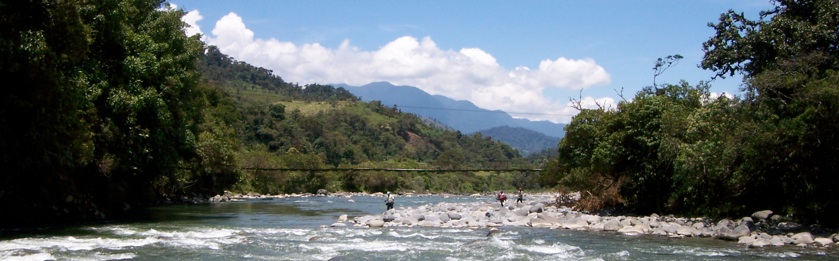
After a short period of working in education and sustainability consultancy I seized the opportunity to, once more, join the P&L research group – this time as a Ph.D. student under the watchful eyes of William Gosling and Boris Jansen. My project revolves around characterizing biomarker and modern pollen-rain signals across the altitude of the Ecuadorian Andes vegetation. A great opportunity at the frontier of tropical research!

If the first week is any indication, I foresee to a lot of collaboration, hard work, exploration and adventure in the coming years!

To find out more about me visit:

Past environmental change on Mauritius: Unknown macro-fossils

December 18, 2015
WDG

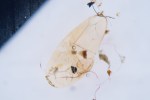
Unknown macro-fossil JdK-type2

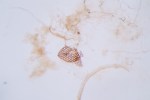
Unknown macro-fossil JdK-type2

Past environmental change on Mauritius has been the focus of research with the Palaeoecology & Landscape Ecology group at the University of Amsterdam (UvA) for a number of years. This research has been lead by Erik de Boer and Henry Hooghiemstra and has already resulted in a number of key publications on the environmental history of the island (de Boer et al., 2013, 2014, 2015). One current past environmental change research project working on Mauritius is being undertaken by Jona de Krui; a student within the UvA BSc Biology program supervised by myself and Erik. Jona’s is working on a study site (modern day swamp) on the north-east of the island and is focused on improving our understanding changes in the:

  • depositional environment (loss-on-ignition analysis),
  • fire activity (macro-charcoal analysis), and
  • vegetation (macro-fossils) over the last c. 1000 years.

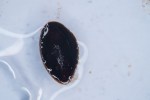
Jona has now completed the analysis of all his samples and we are currently collating the data sets; however, a number of the macro-fossils which he has discovered remain unidentified. Below are images of the unknown macro-fossils if you have any suggestions on identifications please comment, or get in touch directly.

Continue Reading

Highlights of Dutch research in the tropics

October 5, 2015
WDG

Symposium
125 years Treub Maatschappij – Society for the Advancement of Research in the Tropics
&
Biodiversity & Global Change (IBED/UvA)

present:
“Highlights of Dutch research in the tropics”
Coordinators: Carina Hoorn & Daniel Kissling

Location: Institute for Biodiversity & Ecosystem Dynamics, Amsterdam Science Park (Building 904)
Time: Wednesday 11 November 2015, 1300-1700 (followed by drinks reception)
For further information, and to book your place, visit the IBED web site by clicking here.

amazone-rivier


Introducing the XPERT network

January 16, 2015
WDG

ErazoRegion1

The Cross-disciplinary Palaeo-Environmental Research Training (XPERT) network commences in 2015. This international network will bring together early career researchers from five countries to learn new skills and develop collaborative projects. Training will be provided during a field school in Ecuador, and a summer school at the University of Amsterdam. For further details please visit the respective field school, summer school and staff pages hosted on this blog.

100_4140

Ecology of the past 2014

January 4, 2015
WDG

William shortly after a haircut

William shortly after first Dutch haircut

2014 has seen more people visit this blog and more “clicks” through to articles than in any previous year (see Annual Report 2014). So thanks for reading! I hope that the information provided is useful. For me 2014 has been a big year of change; with the largest work related change being taking up my new post at the University of Amsterdam in September.

2015 promises to be an exciting year with a number of key projects generating exciting findings (including chironomid climate for the Neotropics, Andean flank evolution, and ‘deep time’ palynomorphs) , the start of the XPERT network, and new proposals and collaborations being developed here in the Netherlands (including new proposal to work in Europe!).

Any comments, thoughts or contributions on the blog welcome.

William

Assistant Professor Palaeoecology

November 18, 2014
WDG

02_05_2007_AsteraceaeVacancy: Assistant Professor Palaeoecology
(5-year tenure track)

Palaeoecology & Landscape Ecology
Institute of Biodiversity & Ecosystem Dynamics
University of Amsterdam

Closing data: 14 December 2014
Interviews: January 2015

We are looking for an ecologist with experience and interest in long timescales specifically related to one, or more, of the following research areas:

  • the Quaternary (last 2.6 million years);
  • sedimentary archives;
  • application and interpretation of proxy indicators (physical, biological and/or geochemical);
  • novel proxy development;
  • numerical/statistical methods in ecology.

For full details on the position and how to apply click here.
For informal discussion of the position please contact William Gosling.

Current research within the P&L group focuses on examining past environmental change in lake sediments (Yanacocha, Peru)

Current research within the P&L group focuses on examining past environmental change in lake sediments (Photo: Yanacocha, Peru)

PCRG February

March 7, 2014
WDG

William on Bainbridge

My first fieldwork from the OU, in 2005, was pollen trapping on the Galapagos. Here I am looking beardy on Bainbridge.

February was an exciting month for me principally because of the finalization of my move to the University of Amsterdam (UvA) where I will become head of Paleo and Landscape Ecology in September. The decision to leave The Open University (OU) has been a difficult one. When I joined the OU as a RCUK Research Fellow in Ecosystem Science in 2005 I would not have believed that I would be in a position to take on a job such as the one in Amsterdam only nine years later. Building the group here during the last nine years has been a lot of fun and I have got to work with some great people. Stand out moments include:

  • Obtaining my first grant as Principle Investigator (c. US$20,000 from the National Geographic for field work in Bolivia),
  • Recruiting, and graduating, my first PhD research students (Joe Williams and Macarena Cardenas),
  • Being invited to participate in large international research efforts (notably the Lake Bosumtwi project),
  • Co-editing my first book (Bush et al., 2011), having my first student to publish a paper getting it in Science (Cardenas et al., 2011), and helping to write a popular science text co-published by the Natural History Museum (Silvertown et al., 2011)

There have been many more amazing things here but I don’t want to swamp this post with a retrospective of my OU career…

Ongoing excitement within the PCRG is happening on a number of fronts:

Continue Reading

New job: Paleo & Landscape Ecology

February 21, 2014
WDG

IBED-UvA-logoI am delighted to announce that later this year I will be moving to the Institute of Biodiversity & Ecosystem Dynamics at the Universiteit van Amsterdam. I will be taking up an Associate Professor position as head of the Paleo & Landscape Ecology group. I am excited, and honoured, by this appointment and look forward to intergrating my ongoing program of research with the world class team in Amsterdam. Over the next few months I am sure further details will appear on the blog about the move as plans evolve towards my start date in September. Exciting times…

In the light of my departure, at that of Emma Sayer (bound for Lancaster), The Open University, Department of Environment, Earth & Ecosystems is now advertising two posts (details below). I have enjoyed my time at the OU and I think there are still good teaching and research opportunities for academics here. If anyone whats to contact me about the posts then I am happy to discuss.

Lectureship  Environmental Science (Advert)
Lectureship / Senior Lectureship in Earth or Environmental Science (Advert)

Palynologishe Kring

January 9, 2013
WDG

Prof. H. Hoogiemstra Chair of Palaeoecology & Landscape ecology

Prof. H. Hoogiemstra Chair of Palaeoecology & Landscape ecology at IBED

Dutch and Belgian Palynology meeting
University of Amsterdam
13/12/2012

Many thanks to Henry Hooghiemstra for the invitation to present at the recent palynology meeting in Amsterdam hosted by the Institute of Biodiversity and Ecosystems Dynamics (IBED). The program of talks was broad and interesting ranging from the deep time geological history of the Amazon basin (Carina Hoorn) to the use of video game technology in visulizing landscapes (Bodo Schuetze); watch videos of his work, or read the thesis.

View Schuetze's work on recreating Mauritius in 3D on Vimeo

View Schuetze’s work on recreating Mauritius in 3D on Vimeo

 I contributed some new work on human-landscape interaction in the central Andes, entitled: Ecosystem service provision sets the pace for pre-Columbian Andean societal development”. It was very exciting to get feedback from such an esteemed audience on this new work. The days talks concluded with the IBED seminar given by Mark Bush (Florida Institute of Technology) which countinued the South American human-environment theme but we moved to the lowlands for “Amazonia in 1491: A paleoecological perspective”. Mark’s talk built on his recent work exmining the extent of human impact on Amazonia (references 1-3 below) which has cautioned against assuming widespread and intensive human impact within Amazonia prior to the arrival of Europeans.

Following the seminars we had drinks at the institute and an excellent meal in Amsterdam. Thanks again to Henry and all those at IBED who hosted a high class and scientifically stimulating meeting.

Continue Reading

Blog at WordPress.com.