Scientific methods in archaeology

November 10, 2016
WDG

Preparing my lecture for the new Scientific Methods in Archaeology course for VU Amsterdam and University of Amsterdam students studying a minor in Geoarchaeology. The focus will be on detecting human activity in the past, to illustrate this I will include Easter Island/Rapa Nui as a case study. We will focus on how palaeoecological evidence can be used to gain insights into past human activity. Whilst putting this together I discovered these nice documentaries looking at humans and their environmental impacts on Easter Island/Rapa Nui which I wanted to share, they show how much effort people would have had to put into altering their landscape:

For further information see also:

Rull, V., Cañellas-Boltà, N., Saez, A., Margalef, O., Bao, R., Pla-Rabes, S., Valero-Garcés, B. & Giralt, S. (2013) Challenging Easter Island’s collapse: The need for interdisciplinary synergies. Frontiers in Ecology and Evolution 1, DOI: 10.3389/fevo.2013.00003

Published open access:

Julier, A.C.M., Jardine, P.E., Coe, A.L., Gosling, W.D., Lomax, B.H. & Fraser, W.T. (2016) Chemotaxonomy as a tool for interpreting the cryptic diversity of Poaceae pollen. Review of Palaeobotany and Palynology 235, 140-147. DOI: 10.1016/j.revpalbo.2016.08.004

Full or Associate Professor in Earth and Climate at VU Amsterdam

October 13, 2016
WDG

VU Amsterdam

I would like to publicize the current vacancy for a Full or Associate Professor within the “Earth & Climate” cluster at the VU Amsterdam. Having worked in Amsterdam now for just over two years I really enjoy living in the Netherlands, and find the academic environment very stimulating. UvAThere are strong links between the VU Amsterdam and the University of Amsterdam (where I am based).

The VU Amsterdam are looking for someone with a strong track record in palaeoclimate and/or landscape modelling with a focus on Quaternary timescales. I am excited to see this vacancy and I am sure that there would be many opportunities to develop links with the Research Group of Palaeoecology & Landscape Ecology which I head up.

For full details on the vacancy click here closing date 1 November 2016.

Bush, M.B. & McMichael, C.N.H. (2016) Holocene variability of an Amazonian hyperdominant. Journal of Ecology online. DOI: 10.1111/1365-2745.12600

van Beek, R., Gouw-Bouman, M.T.I.J. & Bos, J.A.A. (2015) Mapping regional vegetation developments in Twente (the Netherlands) since the Late Glacial and evaluating contemporary settlement patterns. Netherlands Journal of Geosciences-Geologie En Mijnbouw 94, 229-255. doi: 10.1017/njg.2014.40

  • SUMMARY: Examination of archaeological and palaeoecological evidence from the Twente region of the Netherlands is used to produce maps and images of past landscapes. The artists reconstructions of landscape change are particularly amazing and thought provoking.

Burn, M.J. & Palmer, S.E. (2014) Solar forcing of Caribbean drought events during the last millennium. Journal of Quaternary Science 29, 827-836. doi: 10.1002/jqs.2660

Göldel, B., Araujo, A.C., Kissling, W.D. & Svenning, J.-C. (2016) Impacts of large herbivores on spinescence and abundance of palms in the Pantanal, Brazil. Botanical Journal of the Linnean Society in press. doi: 10.1111/boj.12420

Llamas, B., Fehren-Schmitz, L., Valverde, G., Soubrier, J., Mallick, S., Rohland, N., Nordenfelt, S., Valdiosera, C., Richards, S.M., Rohrlach, A., Romero, M.I.B., Espinoza, I.F., Cagigao, E.T., Jiménez, L.W., Makowski, K., Reyna, I.S.L., Lory, J.M., Torrez, J.A.B., Rivera, M.A., Burger, R.L., Ceruti, M.C., Reinhard, J., Wells, R.S., Politis, G., Santoro, C.M., Standen, V.G., Smith, C., Reich, D., Ho, S.Y.W., Cooper, A. & Haak, W. (2016) Ancient mitochondrial DNA provides high-resolution time scale of the peopling of the Americas. Science Advances 2. doi: 10.1126/sciadv.1501385

Turner, T.E., Swindles, G.T., Charman, D.J., Langdon, P.G., Morris, P.J., Booth, R.K., Parry, L.E. & Nichols, J.E. (2016) Solar cycles or random processes? Evaluating solar variability in Holocene climate records. Scientific Reports 6, 23961. doi: 10.1038/srep23961

In the news:

Jonathan Amos (2016) ‘Case is made’ for Anthropogenic Epoch. BBC News: Science & Environment.

Scientific publications:

Sarmiento, F.O. (2002) Anthropogenic change in the landscapes of highland Ecuador. Geographical Review 92, 213-234. doi: 10.1111/j.1931-0846.2002.tb00005.x

Swindles, G.T., Lamentowicz, M., Reczuga, M. & Galloway, J.M. (online)  Palaeoecology of testate amoebae in a tropical peatland. European Journal of Protistology. doi: 10.1016/j.ejop.2015.10.002

Tellkamp, M.P. (2014) Habitat change and trade explain the bird assemblage from the La Chimba archaeological site in the northeastern Andes of Ecuador. Ibis 156, 812-825. doi: 10.1111/ibi.12179

Waters, C.N., Zalasiewicz, J., Summerhayes, C., Barnosky, A.D., Poirier, C., Galuszka, A., Cearreta, A., Edgeworth, M., Ellis, E.C., Ellis, M., Jeandel, C., Leinfelder, R., McNeill, J.R., Richter, D.d., Steffen, W., Syvitski, J., Vidas, D., Wagreich, M., Williams, M., Zhisheng, A., Grinevald, J., Odada, E., Oreskes, N. & Wolfe, A.P. (2016) The Anthropocene is functionally and stratigraphically distinct from the Holocene. Science 351, . doi: 10.1126/science.aad2622

Past environmental change on Mauritius: Unknown macro-fossils

December 18, 2015
WDG

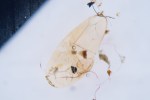
Unknown macro-fossil JdK-type2

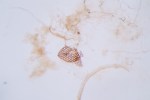
Unknown macro-fossil JdK-type2

Past environmental change on Mauritius has been the focus of research with the Palaeoecology & Landscape Ecology group at the University of Amsterdam (UvA) for a number of years. This research has been lead by Erik de Boer and Henry Hooghiemstra and has already resulted in a number of key publications on the environmental history of the island (de Boer et al., 2013, 2014, 2015). One current past environmental change research project working on Mauritius is being undertaken by Jona de Krui; a student within the UvA BSc Biology program supervised by myself and Erik. Jona’s is working on a study site (modern day swamp) on the north-east of the island and is focused on improving our understanding changes in the:

  • depositional environment (loss-on-ignition analysis),
  • fire activity (macro-charcoal analysis), and
  • vegetation (macro-fossils) over the last c. 1000 years.

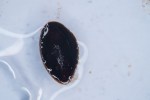
Jona has now completed the analysis of all his samples and we are currently collating the data sets; however, a number of the macro-fossils which he has discovered remain unidentified. Below are images of the unknown macro-fossils if you have any suggestions on identifications please comment, or get in touch directly.

Continue Reading

Blog at WordPress.com.