Palynologische Kring: Jaarvergadering en lezingenmiddag
Date: 20 June 2025 / 20 juni 2025
Location: Minnaertgebouw, Utrecht Science Park
13.15: arrival / inloop
13.30-14.30: Annual meeting / Jaarvergadering
14.30-14.55: Tobias Vervaart MSc (Universiteit Utrecht): Introducing PhD project ‘Looking back to plan ahead: unfolding the natural heritage of Dutch landscapes’.
14.55-15.15: coffee break
15.15-15.40: Yannick Bats MSc (Universiteit Utrecht): Impact of chemical treatments on the molecular and stable carbon isotopic composition of sporomorphs.
15.40-16.10: Prof Dr. Corrie Bakels (Faculteit der Archeologie, Universiteit Leiden): Results from stable isotope analysis applied to charred grain preserved in two storage rooms found in Tell Damiyah, Jordan.
16.10-16.35: Dr. Otto Brinkkemper (Rijksdienst voor het Cultureel Erfgoed): The optimal sample size of cereal grains for stable isotope research.
The next seminar series of the Palynologische Kring (Dutch palynological society) will take place on 24 January 2025, at the Auditorium of TNO Utrecht. If you would like to attend please register by emailing the society (link).
PROGRAMME
13.00-13.15 Arrival
13.15-13.45 Irene Waajen (TNO): Re-evaluation of Early Weichselian pollen zones with new insights from the North Sea.
A postdoctoral position in palynology and sedimentary DNA analysis, focused on understanding the environmental history of the Malagasy landscapes and populations over the last millennia, is now available working with Laurent Bremond (University of Montpellier, France). Funding is from the French National Research Agency (ANR) with support from CNRS.
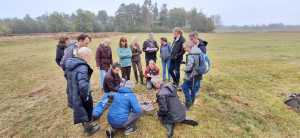
During the seminar afternoon (17 October) we heard four talks. The first from Harm Smeenge and Ariët Kieskamp (both Bosgroep) introduced the sites we were to visit on the excursion the next day. This focused on the landscape ecology and ecological history of the bogs on the eastern slopes of the Veluwe. The second talk, by Roy van Beek (Wageningen University & Research), focused on the Celtic field systems around the Veluwe. He explained the latest archaeological and archaeobotaincal work investigating the age and origins of these field systems. The third presentation was by Jasper Candel (Wageningen University & Research) and focused on the geomorphological features from glacial activity in the Veluwe region and how this has effected the development of mire ecosystems. I (William Gosling) gave the final talk, presenting the outputs of the research theses of Sanna Wessel, Chiara Raino and Roos Dik who all completed projects at the University of Amsterdam and worked together to investigate how different mega-herbivore populations in the Dutch landscape were represented by the dung fungal spores preserved in the soil.
COLLABORATION OPPORTUNITY: The TIP-TOP project, funded through the Dutch Research Council (NWO) and awarded to Rick Hennekam at the NIOZ Royal Netherlands Institute for Sea Research (NIOZ), is running from 2024-2029 and aims to use sediments accumulated in front of North African rivers to study environmental tipping points in North Africa. Specifically, the project focuses on available sediments from the Nile River delta, a now-dormant river system in Libya, as well as material from in front of the Senegal and Gambia rivers that will be acquired during a cruise early 2025. A multidisciplinary group of scientists is collaborating within this project, including scientists from NIOZ, GFZ Potsdam, ETH Zürich, Wageningen University, and the Utrecht University, using especially (in)organic and palynological proxies. Yet, we are keen to start new collaborations, especially with scientists based in northwest Africa. Potentially we could aim for the INQUA Fellowship Program For International Mobility (deadline 15 of September, 2024) for someone to gain international experience at one of the involved institutes for the duration of 3–6 months. If you are interested to link up with Rick please join the seminar to speak with him, or contact him directly. Note that participation in the 2025 expedition to the coasts of Gambia, Senegal, and Mauritania can be discussed too, but available places are very limited.
This video was recorded after the 19th online Mapping Ancient Africa seminar given by Solène Boisard, to watch her seminar on the past climate of north-western Africa and others in the series click here. To find out more about the Mapping Ancient Africa project click here.
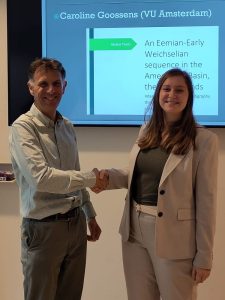
On Friday 24 May 2024 the Palynologische Kring (Dutch palynological society) held a seminar series and laboratory workshop at the Institute for Biodiversity & Ecosystem Dynamics (University of Amsterdam). During the afternoon we had the annual meeting of the society, the presentation of our MSc Thesis prize, four seminars and two laboratory demonstrations. The MSc thesis prize “Florschütz Award” was won by Caroline Goossens (VU Amsterdam) for her thesis entitle: “An Eemian-Early Weichselian sequence in the Amersfoort Basin, the Netherlands”; the project was supervised by Natalie Van der Putten, Cees Kasse and Jeroen Schokker. We hope that Caroline will present her thesis at a future Palynologishe Kring meeting.
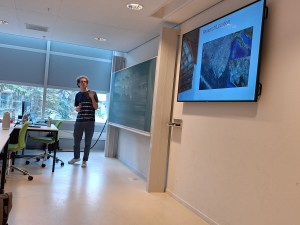
Teye Aukes presenting on the diatoms of ancient Rome
The talk series was kicked off by Nina Witteveen (University of Amsterdam) who presented part of her PhD thesis (currently awaiting defense), entitled: “Long-term forest recovery in Amazonia insights from phytolith analysis”. Nina discussed the impact of past peoples on the vegetation of Suriname based on her work identifying phytoliths in soil samples collected at varying distances from an archaeological site. The second talk was given my Amanda Henry (Leiden University) who demonstrated how the analysis of starch grains extracted from archaeological context can provide insights in to past diets. She used these evidences to suggest that early humans and Neanderthals had a similar diversity of plants in their diets. The third talk was given by University of Amsterdam MSc researcher Teye Aukes and focused upon his identification of diatoms from an swampy lagoon environment near Ostia (Italy). He drew conclusions from these data about the antiquity of salt production in ancient Rome. The final talk was given online by Welmoed Out (Moesgaard Museum) who presented a detailed analysis of inter- and intra-analyst variability in phytolith morphometric analysis.
After the seminars we moved upstairs to the microscope laboratory where Nina Witteveen and Ana Smuk (University of Groningen) showed off phytoliths from their study site in South America and the Netherlands.
Some of the Palynologische Kring members enjoying some refreshment after the event.
On November 17, 2023, Caixia Wei (魏彩霞) accomplished a pivotal milestone by successfully defending her thesis titled “Morphometrics of Modern and Fossil Poaceae Pollen from South America” at the distinguished Agnietenkapel (University of Amsterdam). During the defense ceremony, Caixia showcased her professional knowledge and expertise in the field of paleoecology in a relaxed and cheerful manner. The committee members, promoters (Carina Hoorn, William Gosling, Phillip Jardine), and attendees (~50 people) responded with frequent smiles, laughter, and numerous rounds of applause! After the defense, a delightful reception and dinner were held, where Caixia was showered with an abundance of hugs, kisses, heartfelt wishes, and thoughtful gifts. These wonderful memories will support Caixia on her journey ahead…
For a glimpse into the event, you can watch Caixia’s insightful 10-minute project presentation here:
Additionally, most of Caixia’s thesis is available for download at this link:
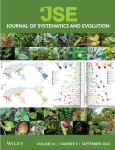
Wei, C., Jardine, P.E., Mao, L., Mander, L., Li, M., Gosling, W.D. & Hoorn, C. (2023) Grass pollen surface ornamentation is diverse across the phylogeny: Evidence from northern South America and the global literature. Journal of Systematics and Evolution. DOI: 10.1111/jse.13021
Henry Hooghiemstra (University of Amsterdam) began working on “long” continental pollen records during his PhD (Hooghiemstra, 1984). After a long and distinguished career working around the Henry has just published a retrospective discussing the challenges, benefits, and prospects for investing in this aspect of palaeoecological research (Hooghiemstra, 2023).
References
Hooghiemstra, H. (2023) Making a Long Continental Pollen Record, a Fabulous and Bizarre Enterprise: A 50-year Retrospective. Palynology 47, 1-4. DOI: 10.1080/01916122.2023.2191257
Hooghiemstra, H. (1984) Vegetational and climatic history of the high plain of Bogota, Colombia: A continuous record of the last 3.5 million Years Gantner Verlag, Vaduz.
The June 2023 meeting of the Dutch palynological society (Palynologische Kring) took place at the offices of the Dutch National Cultural Heritage Agency (Rijksdienst Cultureel Erfgoed) in Amersfoort. The focus of this meeting was the past forest landscape of the Netherlands. The meeting included the annual report of the society, three scientific talks, and a prize giving for the best MSc thesis.
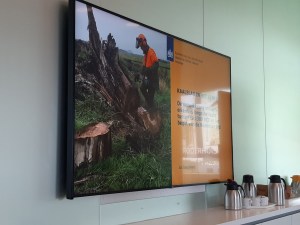
Presentation of Jos Bazelmans showed the huge amount of woody material extracted from Dutch peat bogs.
The scientific part of the meeting was kicked off my Roy van Beek who presented results from his ongoing project on the peatlands of the Netherlands which suggest peatland expansion occurred between 5500 and 3500 years ago (van Beek et al., 2023). The second talk was by our host, Otto Brinkkemper, and traced the history of woodlands across the Netherlands on the basis of macrofossil finds; including huge tree stumps remarkably preserved in peatlands (Bazelmans et al., 2021; Kooistra et al., 2006). The final talk was given by Jos Bazelmans who showed the remarkably high volume of tree stumps that have been recovered from the Netherlands, and how tree rings from these 100s of record are being used to reconstruct forest histories and past climate change. It was interesting to hear that the average age of the tree stumps found was around 250 years, and that some of the trees had lived to around 400 years in exceptional cases.
Kelly with her proud supervisors Stefan Uitdehaag (right), and I (left)
The final section of the meeting was the prize giving. Corrie Barkels, on behalf of the independent judging panel, announced Kelly van Leeuwen as the winner for her thesis entitled “Using soils samples and footwear to improve forensic palynology”. Her thesis was conducted at the University of Amsterdam as part of her MSc Earth Sciences degree and was conducted in collaboration with the Netherlands Forensic Institute. Congratulations Kelly!










 Ecology of the past