Teunissen van Manen PhD thesis 2020

April 11, 2024
WDG

Teunissen van Manen, M.L. (2020) Plant wax n-alkane biomarkers in the tropical Andes (Ecuador). PhD Thesis, University of Amsterdam, Amsterdam. ISBN: 9789491407857

Abstract

Developing new applications for plant wax n-alkane biomarkers can deepen our understanding of ecosystem history. In this thesis I study modern and sedimentary n-alkane signals, sourced along the tropical Andes, to better understand how they can be used as a proxy for past environmental change. The overarching question addressed in this thesis is: what do n-alkane patterns extracted from sedimentary records reflect? Specifically, I address:• Do environmental or taxonomic factors dominate the n-alkane signal?• Does the n-alkane signal alter as the plant material degrades?• How much of the n-alkane variability can be explained by our analytical protocols?I find that the taxonomic and environmental signals of n-alkane patterns are entangled, especially in leaf n-alkanes. Soil n-alkane patterns reflect environmental conditions at the site, but the results cannot rule out a taxonomic signal in soil n-alkane patterns. I also find that, as the source material degrades (leaves), the n-alkane patterns are altered. Although the n-alkane signal is recognizable as having plant origin, there is a reduction in n-alkane pattern variability and the metric for degradation becomes an increasingly important descriptor of the n-alkane pattern shifts observed in soils and sediments. I find evidence that the metric for degradation can be used as proxy for past environmental change, but the application of this n-alkane signal proxy is not straightforward. Finally, I find there is little understanding of how much extraction and measurement protocols contribute to the n-alkane pattern variability and what implications this has on interpretations of the n-alkane signal.

Handel: http://hdl.handle.net/11245.1/716e0c42-7bc7-4270-9d76-e4c556c51e1a

Cuesta PhD thesis 2019

April 9, 2024
WDG

Cuesta C., F.X. (2019) Global environmental changes in the high tropical Andes. PhD Thesis, University of Amsterdam, Amsterdam. ISBN: 9789491407758

Abstract

The high tropical Andes harbours vital ecosystems that sustain biodiversity, carbon storage, and environmental service provision for millions of people. They are identified as one of the most vulnerable terrestrial ecosystems to global environmental changes, particularly to climate change and land use conversion. Despite their vulnerability and the importance of global biodiversity conservation and Andean societies, they are among the least studied ecosystems in the world. In this thesis, I studied the patterns of summit plant community’s across the tropical section of the Andes. Further, I studied what environmental factors influence plant community composition, species diversity, and thermal niche traits in high tropical alpine ecosystems. Based on the thermal niche traits, I assessed the potential vulnerability of species and communities to climate warming, considering the effect of the climate variability hypothesis on the species niche breadths. Further, I synthesised the current state of knowledge and assessed the current and projected landscape changes in the high Andes due to the combined effect of glacier retreat and climate warming. I reviewed documented glacier changes and landscape evolution over past decades to millennia and assessed projected future glacier shrinkage until 2100 for two case studies in the Andes of Ecuador and Peru. I also evaluated the capacity of high Andean ecosystems to recover from land use changes using the aptitude to store and take up carbon together with plant diversity. Lastly, I carried out an applied research analysis aimed at informing conservation policy formulation in continental Ecuador through defining critical areas for biodiversity conservation.

Handel: http://hdl.handle.net/11245.1/c97e30b0-90d7-4363-9d33-50d288089712

PhD Scholarship program for migrants in the Netherlands

April 5, 2024
WDG

The Dutch science foundation (NWO) currently has a call for proposals to support migrants to the Netherlands to undertake a PhD project.

Applicants must have:

  • a Dutch passport (or residency status),
  • a masters level degree from a university in the Kingdom of the Netherlands, and
  • have been born in specific regions outsides the Netherlands (or be the child of someone born outside the Netherlands)

For full details click here visit the NWO Mozaiek 2.0 call web page.

If you think you might fulfill all the criteria for application, and are interested in conducting a PhD on a “ecology of the past” related theme at the University of Amsterdam, please do not hesitate to get in contact. I am then happy to check eligibility and discuss if your skill set and interests would be appropriate to apply for a PhD scholarship with us. I would be delighted if we would be able to support an applicant to this scheme.

Deadline for applications: 21 May 2024 (but please get in contact as soon as possible so that we can make the relevant eligibility checks and discuss ideas).

Contact: William D. Gosling

PhD opportunity: Fire Starters – Understanding Human vs Natural Fire Regimes in Britain

January 10, 2024
WDG

Applications are invited for a fully-funded three-year PhD to commence in October 2024 with Adele Julier (University of Portsmouth, UK).

The project will focus on disentangling the history of human ignited and natural fire regimes in Britain. This will be achieved through the analysis of charcoal fragments extracted from sedimentary sequences.

For full details click here.

Deadline: 19 January 2024

Hugo de Vries Prijs 2023

January 9, 2024
WDG

Attention Dutch biologists: The deadline for submission of nominations for the Hugo de Vries Prijs is closing soon (31 January 2024). The prize is awarded to the best biology PhD thesis defended at a Dutch university in 2023. The types of thesis considered by the panel within the category on “biology” is broad, and – for readers of this blog – includes (palaeo)ecology.

To find out more about the prize, see the past winners, and to download a nomination form visit: https://www.knbv.eu/hugo-de-vries-prijs/

New funding opportunity for African researchers

November 8, 2023
WDG

A new funding stream is about to open up (1 December 2023) to support African scientists to carry out PhD research at Dutch universities. The GROW research programme (Graduate Research on Worldwide Challenges) will fund 51 PhD positions to be based at one of five Dutch universities, including with the Institute for Biodiversity & Ecosystem Dynamics, at the University of Amsterdam.

To find out more click here.

Applications open 1 December 2023 and close 31 January 2024.

Job: PhD in Caribbean Palaeoecology

August 29, 2023
WDG

The Palaeoecology Research Group within the Department of Archaeology at the Max Planck Institute of Geoanthropology, Jena, Germany is pleased to announce a new vacancy for a Doctoral student exploring long-term human-environment interactions in the Caribbean. The position will be for a period of 3 years with the option for extensions based in Jena, Germany and supervised by Dr. Yoshi Maezumi. The position will be linked with the Department of Ecosystem & Landscape Dynamics at the University of Amsterdam.
Deadline: 30 August 2023

For full details on how to apply click here.

From new methods to new insights: Advancing palaeoecology with @PalaeoNick

September 21, 2022
WDG

During the delivery of this years BSc Palaeoeclogy course at the University of Amsterdam (UvA) I discussed with a number of students about the nature and purpose of understanding the ecology of the past. This lead me to highlighting the research of Nick Loughlin (@PalaeoNick) from his PhD at The Open University and the subsequent work that he has done. I though it might be interesting to also share this here…

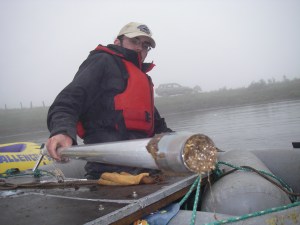
Nick recovers a sediment core for his PhD project.
Nick Loughlin during his PhD field work in Ecuador

Nick’s study sought to understand better the ecological history of the biodiverse eastern Andean flank in Ecuador. To achieve this he went into the field and recovered sediments from a lake and a sedimentary section exposed by a road cutting. He analysed the sediments to reveal vegetation change (pollen analysis), fire histories (charcoal analysis), and past animals in the landscape (non-pollen palynomorphs, or NPPs). To extract extra ecological information from his samples he developed the methodological approach for examining NPPs in a tropical setting (Loughlin et al. 2018a). He then combined all the different palaeoecological approaches to reveal the drivers of vegetation change during the last glacial period (in the absence of humans; Loughlin et al. 2018b), and during the last 1000 years (when indigenous and European human populations radically altered the landscape; Loughlin et al. 2018c). The insights gained from Nicks research provided empirical evidence of how humans have been modifying this biodiversity hotspot on the timescales relevant to the lifecycles of tropical trees. These findings and ideas were collated in his PhD Thesis at The Open University which was supervised by Encarni Montoya, Angela Coe and myself (Loughlin, 2018a). Subsequently, Nick has been working to broaden the impact of his work and to communicate his findings to the broader scientific and conservation community. This has lead to two new publications focused on understanding baseline ecological function and conservation implications (Loughlin et al. 2022, Nogué et al. 2022).

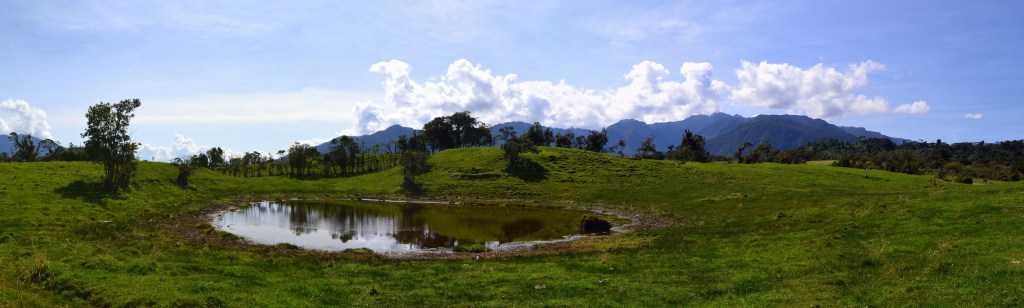
Lake Huila
Evidence of past ecological change recovered from Lake Huila (Ecuador) revealed how past peoples had modified the landscape of the eastern Andean biodiversity hotspot.

The arch of research carried out by Nick, I think, really demonstrates the important of understanding the ecology of the past – without his detailed investigation of microfossils we could not have seen the impacts of indigenous communities on the past Andean landscape, or identify the consequences of the European depopulation; or been able to estimate the timescales of the ecological change!

References

Continue Reading

Job: PhD Caribbean Palaeoecology

September 9, 2022
WDG

The Palaeoecology Research Group within the Department of Archaeology at the Max Planck Institute for Geoanthropology, Jena, Germany is pleased to announce a new vacancy for a doctoral student exploring human-environment interactions in the Caribbean. The position will be based in Jena, Germany for a period of 3 years with the option for extensions and supervised by Dr. Yoshi Maezumi.

The Palaeoecology Research Group analyses palaeoecological and archaeobotanical proxies from sedimentary archives, including pollen, phytoliths, charcoal and stable isotopes to examine topics including the legacy of human land-use on ecosystems, spatio-temporal patterns of natural and human-driven fire activity, and the influence of natural and human disturbance regimes on the biogeographic distribution of plants and animals in past ecosystems.

Closing date: 30 September 2022

For full details and how to apply click here.

For further information contact Dr. Yoshi Maezumi.

PhD opportunity on palaeofires

April 20, 2022
WDG

Boris Vanniere

There is a new PhD opportunity at Ecole doctorale Environnements-Santé (France) working with Boris Vannière (Director of Research, CNRS, University Bourgogne Franche-Comté, University of Bern), Richard Vachula (Assistant Professor, Auburn University, USA), and Elisabeth Dietze (Professor, University of Göttingen, Germany). The project is entitled: Leverage the meaning of paleofire data through metadata mining. Case studies in mediterranean, tropical and arctic ecosystems, closing date 9 May 2022.

Details and how to apply here.

Blog at WordPress.com.