Past environmental change on Mauritius: Unknown macro-fossils

December 18, 2015
WDG

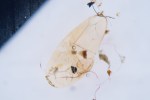
Unknown macro-fossil JdK-type2

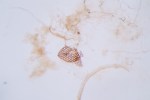
Unknown macro-fossil JdK-type2

Past environmental change on Mauritius has been the focus of research with the Palaeoecology & Landscape Ecology group at the University of Amsterdam (UvA) for a number of years. This research has been lead by Erik de Boer and Henry Hooghiemstra and has already resulted in a number of key publications on the environmental history of the island (de Boer et al., 2013, 2014, 2015). One current past environmental change research project working on Mauritius is being undertaken by Jona de Krui; a student within the UvA BSc Biology program supervised by myself and Erik. Jona’s is working on a study site (modern day swamp) on the north-east of the island and is focused on improving our understanding changes in the:

  • depositional environment (loss-on-ignition analysis),
  • fire activity (macro-charcoal analysis), and
  • vegetation (macro-fossils) over the last c. 1000 years.

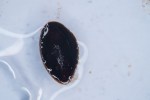
Jona has now completed the analysis of all his samples and we are currently collating the data sets; however, a number of the macro-fossils which he has discovered remain unidentified. Below are images of the unknown macro-fossils if you have any suggestions on identifications please comment, or get in touch directly.

Continue Reading

Tropical Ecology in the Netherlands

October 12, 2015
WDG

UvAPresentations by current PhD research students
R
elated to the University of Amsterdam Tropical Ecology course

Date: Friday October 16 2015
Location: Sciencepark 904
Contact: Joost Duivenvoorden

Program

9:00-9:30 Marian Cabrera (UvA): Paramo response to human influence: A trait-based approach.
9:30-10:00 Caterina Cúcio (UvA): The seagrass rhizobiome and its role in the sulfur cycle.
10:00-10:30 Vitor Gomes (Naturalis): Endangered tree species future in Amazon.

Coffee Break

11:00-11:30 Catarina Jacovac (WUR): Effects of land use on forest succession in the Amazon.
11:30-12:00 Andre van Proosdij (WUR/Naturalis): Assessing botanical diversity patterns in Gabon using Species Distribution Models: methods & applications.
12.00-12.30 André Junqueira (WUR): Legacies of anthropogenic soils on forests and cultivation systems in Amazonia.

Lunch

Mashpi (25)

Journal articles

  • Clement, C.R., Denevan, W.M., Heckenberger, M.J., Junqueira, A.B., Neves, E.G., Teixeira, W.G. & Woods, W.I. (2015) The domestication of Amazonia before European conquest. Proceedings of the Royal Society of London B: Biological Sciences 282. DOI: 10.1098/rspb.2015.0813
  • Oliver, T.H., Heard, M.S., Isaac, N.J.B., Roy, D.B., Procter, D., Eigenbrod, F., Freckleton, R., Hector, A., Orme, C.D., Petchey, O.L., Proenca, V., Raffaelli, D., Suttle, K.B., Mace, G.M., Martin-Lopez, B., Woodcock, B.A. & Bullock, J.M. Biodiversity and Resilience of Ecosystem Functions. Trends in Ecology & Evolution. DOI: 10.1016/j.tree.2015.08.009
  • Watkins, C. (2015) Oliver Rackham OBE FBA 1939–2015. Landscape History 36, 5-8. DOI: 10.1080/01433768.2015.1044280
    COMMENT: One of the books that inspired me to enter this field of research was Rackham’s Trees and woodlands in the British landscape; published the year I was born…

Plus three papers discussed during the University of Amsterdam BSc Biology Tropical Ecology course trip to De Hortus Botanicus Amsterdam:

  • Bush, M.B. (1995) Neotropical plant reproductive strategies and fossil pollen representation. American Naturalist 145, 594-609. Stable URL: http://www.jstor.org/stable/2462970
  • Cárdenas, M.L., Gosling, W.D., Sherlock, S.C., Poole, I., Pennington, R.T. & Mothes, P. (2011) The response of vegetation on the Andean flank in western Amazonia to Pleistocene climate change. Science 331, 1055-1058. DOI: 10.1126/science.1197947
  • Logan, A.L. & D’Andrea, A.C. (2012) Oil palm, arboriculture, and changing subsistence practices during Kintampo times (3600–3200 BP, Ghana). Quaternary International 249, 63-71. DOI: 10.1016/j.quaint.2010.12.004


Highlights of Dutch research in the tropics

October 5, 2015
WDG

Symposium
125 years Treub Maatschappij – Society for the Advancement of Research in the Tropics
&
Biodiversity & Global Change (IBED/UvA)

present:
“Highlights of Dutch research in the tropics”
Coordinators: Carina Hoorn & Daniel Kissling

Location: Institute for Biodiversity & Ecosystem Dynamics, Amsterdam Science Park (Building 904)
Time: Wednesday 11 November 2015, 1300-1700 (followed by drinks reception)
For further information, and to book your place, visit the IBED web site by clicking here.

amazone-rivier


Palaeoecology at UvA and Twente 2015: Teaching and Learning

September 21, 2015
cmcmicha

By Crystal McMichael

The month-long palaeoecology module at UvA is coming to an end. We have had two weeks of lectures and microscope work, an introduction to quantitative palaeoecology, and we just finished a week of fieldwork in Twente, which is in the easternmost part of the Netherlands.

Students working in the field (photo: M. Groot)

Students working in the field (photo: M. Groot)

Will Gosling and I tried something new for the field excursion this year. We split the class into eight groups, and gave each group a set of pollen and phytolith samples from an ‘unknown location’. Unknown in this context means being from one of the eight primary sites that we would visit during the field excursion. The students were required to perform vegetation surveys and characterize soils at each of the primary sites that we visited. The goal of each group was to figure out which location their set of ‘unknown’ samples came from. Basically, we had them doing forensic palynology, with idea that they could then better visualize the different vegetation assemblages seen in the palaeoecological records.
Continue Reading

Introducing Corine Driessen

July 7, 2015
corine102

DriessenCHi Everyone,

It’s very nice to be invited to write something for this blog, let me introduce myself a little bit.

I am a MSc Earth Sciences student at the University of Amsterdam. Currently I am working on my master thesis at Naturalis Biodiversity Center, under supervision of Niels Raes, Willem Renema and William Gosling. We are looking at species migration between Australia and Asia during the Miocene, and we compare it to migration between N and S America at the dawn of the Great American Biotic Interchange. To do so I’m analysing data on fossil occurrences in Australia and Southeast Asia. Hopefully this research will lead to interesting new insights.

Before starting my MSc Earth Sciences I did a bachelor in Biology at Leiden University. I decided to do a master’s in Earth Sciences because it offered a broader perspective of the natural world and its processes.

I like analysing and sorting out data like I’m currently doing for my thesis with fossil occurrence data. It also played a major role in my internship at TNO – Caribbean Branche Office, where I was involved in starting a database containing information on Aruba’s subsurface. During my internship I also experienced the “Green Aruba” conference and was involved in organising a geological excursion for some of the attendants. I am very interested in environmental issues and solutions, such as the transition to renewable energy. New technologies spike my interest a lot and I like being aware of innovations in a whole lot of fields.

Hopefully I will have my thesis ready within a couple of months, and can give an update about some of the findings.

Corine

Pollen database of Early-Miocene Amazonian palynological diversity

June 29, 2015
milantvm

By Milan Teunissen van Manen
MSc Biological Sciences, University of Amsterdam.

As part of my MSc research project on Early-Miocene paleodiversity shifts due to marine incursions in the Amazon basin, I recorded and photographed large numbers of palynomorphs. The database consists of a set of images (Teunissen van Manen, 2015a) that I took with my smartphone (bundled in pdfs for sharing purposes) and an Excel overview file (Teunissen van Manen, 2015b) where each of the entries is described. Some of the entries are well documented taxa (C’mon, who hasn’t heard of Zonocostites ramonae and Mauritidites franciscoi before?) while others are “types” that are not formally described – mainly because in Amazonian sediments new, unseen palynomorphs pop up all the time. Indeed, this was the reason why I started the database in the first place: I was merely trying to keep up with the vast diversity that I encountered during sample counting.

Seeing the added value of having a digital record of the palynological diversity from the Amazon basin samples, my project supervisor, Carina Hoorn (UvA), encouraged me to publish the database online so others could also access it. I’d like to invite you to take a look. I hope it can maybe help you with identifying taxa or, who knows, linking taxa across the Amazon basin… if you do, please let me know!

…or maybe it will have you rejoice in the huge diversity and alien beauty of pollen morphology, just as it rejoiced me as I was working through my (seemingly endless) samples.

REFERENCES

Teunissen van Manen, Milan (2015a): Miocene Amazonian Palynological Diversity – Image files. figshare. http://dx.doi.org/10.6084/m9.figshare.1396453

Teunissen van Manen, Milan (2015b): Miocene Amazonian palynological diversity database – Entries record. figshare. http://dx.doi.org/10.6084/m9.figshare.1396562

This project was conducted with Research Group of Palaeoecology & Landscape Ecology, part of the Institute for Biodiversity & Ecosystem Dynamics.

Introducing Tessa Driessen

February 16, 2015
TessaDriessen

Tessa DriessenHi I’m Tessa and really excited to introduce myself here!

I’m an Environmental Biology Master student from Utrecht University (UU) doing a research internship in Amsterdam with William Gosling and Rike Wagner of the UU. Most people would describe me as a typical biologist because I like identifying plants and know some birds by their name. Personally I disagree because I lack the beard and hardly wear woollen socks. Besides looking at birds and plants I’m also interested in biodiversity and palaeoecology, and I will try to combine these interests in my research project on a sediment core from Samoa. I will be working on lake sediment cores from Samoa and hope fossil record can give me an overview of the natural history of the island (past c. 10,000 years); and an insight into what impact human colonisation had on the biodiversity. To explore the islands natural history I will be looking at pollen, charcoal and non pollen palynomorphs.

The sediment core on which I will be working has already been recovered and currently resides in beautiful Southampton (UK). So I’m spared of a 30 hour trip to tropical Samoa and the opportunity to return with some Samoan tattoo’s and a tan… So thanks to David Sear and his team at the University of Southampton with whom I will be collaborating for this project.

I have a long standing interest in tropical islands. Before commencing this research internship I did my first masters internship at WWF Indonesia. For my WWF internship I spent three months in the tropics collecting baseline ecological data on timber companies located in a new reserve in Sumatra. Furthermore, during my bachelor degree, I did a research internship at Naturalis Biodiversity Center investigating the “Correlation between higher altitudes and endemic plant species” in the Malayan archipelago. Our results turned out much better then we hoped for and fingers crossed our article will be accepted soon!

In three weeks I will be starting in the lab in Amsterdam and hopefully in a few months will be able to post an update about my results here.

Tessa

Netherlands Annual Ecology Meeting 2015

February 13, 2015
WDG

NERN-NWO-ELIFE-NECOV_2015Netherlands Annual Ecology Meeting
10-11 February 2015
by William Gosling

On Wednesday I attended my first Netherlands Annual Ecology Meeting (NAEM) unfortunately, due to prior commitments, I was not able to attend the whole event, but I still managed to get a nice insight into the vibrant Dutch Ecological research community. Particularly exciting for me was the “Biodiversity in Space and Time” theme. Plenary sessions by Alexandre Anotonelli (University of Gothenburg) and Hans ter Steege (Naturalis Biodiversity Center, Leiden) focused on the Amazon ecology past and present. The subsequent session on the same theme, organized by Daniel Kissling (University of Amsterdam) and Niels Raes (Naturalis Biodiversity Center), was also excellent and ranged from species richness patterns past and present in Gabon (Andre van Proosdij, Naturalis Biodiversity Center), through soil microbes (Kelly Ramirez, Netherlands Institute of Ecology) to the role of sea level change on island biodiversity (Kenneth Rijsdijk, University of Amsterdam). I am looking forward to attending more of these meetings in the future and getting involved with the NERN community.

Continue Reading

Introducing the XPERT network

January 16, 2015
WDG

ErazoRegion1

The Cross-disciplinary Palaeo-Environmental Research Training (XPERT) network commences in 2015. This international network will bring together early career researchers from five countries to learn new skills and develop collaborative projects. Training will be provided during a field school in Ecuador, and a summer school at the University of Amsterdam. For further details please visit the respective field school, summer school and staff pages hosted on this blog.

100_4140

Blog at WordPress.com.