Mapping Ancient Africa Quaternary International Special Issue #10
Kinyanjui, R. N., Mashaka, H. K., Chritz, K. L., Wemanya, S. N., Ndiema, E. K., Braun, D. R., & Bamford, M. (2026). Holocene vegetation dynamics of the Koobi Fora Basin, East Turkana, Kenya: Insights from phytolith analysis. Quaternary International, 759, 110131. https://doi.org/10.1016/j.quaint.2026.110131
To find the complete list of articles in the Mapping Ancient Africa special issue of Quaternary International click here.
During the Mapping Ancient Africa (MAA) workshop in Kenya (3-6 June 2024) the session delivered by Rahab Kinyanjui (National Museums of Kenya) was recorded for those that could not make it. The seminar was focused on how to deal with reviewer comments. While this was targeted for participants focused on developing their manuscripts for the MAA special issue of Quaternary International (for full details click here). This seminar is relevant to all those facing reviewer comments on their scientific manuscripts.
Dealing with reviewer comments (Rahab Kinyanjui, National Museums of Kenya)
A workshop will be held at the National Museums of Kenya (Nairobi, Kenya) in June 2024. The aim of the workshop is to help authors prepare articles for the Mapping Ancient Africa (MAA) special issue proposed for publication in Quaternary International and lead by Dr. Stefanie Kaboth-Bahr. The workshop will be associated with the “1st Joint International Scientific Conference” (3-6 June). The MAA workshop is being organized by Dr. Rahab Kinyanjui, and the congress organization is being lead by Dr. Emmanuel Ndiema (click here to watch his 2022 MAA seminar) and Dr. Esther Kioko (Acting Director National Repository and Research).
For further information on attending the MAA workshop please contact Rahab directly.
To find out more about the Mapping Ancient Africa project click here.
The third in Mapping Ancient Africa (MAA) online seminar series will take place on Monday 17 January at 18:00 CET (20:00 EAT). This seminar will focus on the archaeology of eastern Africa.
Title: The Later Prehistory of South Eastern Lake Turkana basin
The seminar will be delivered via Zoom. The link for the seminar can be obtained from the MAA Slack page, or from seminar chair and chaired by MAA hub coordinator Rahab Kinyanjui.
For further information on seminars in this series visit the MAA schedule page.
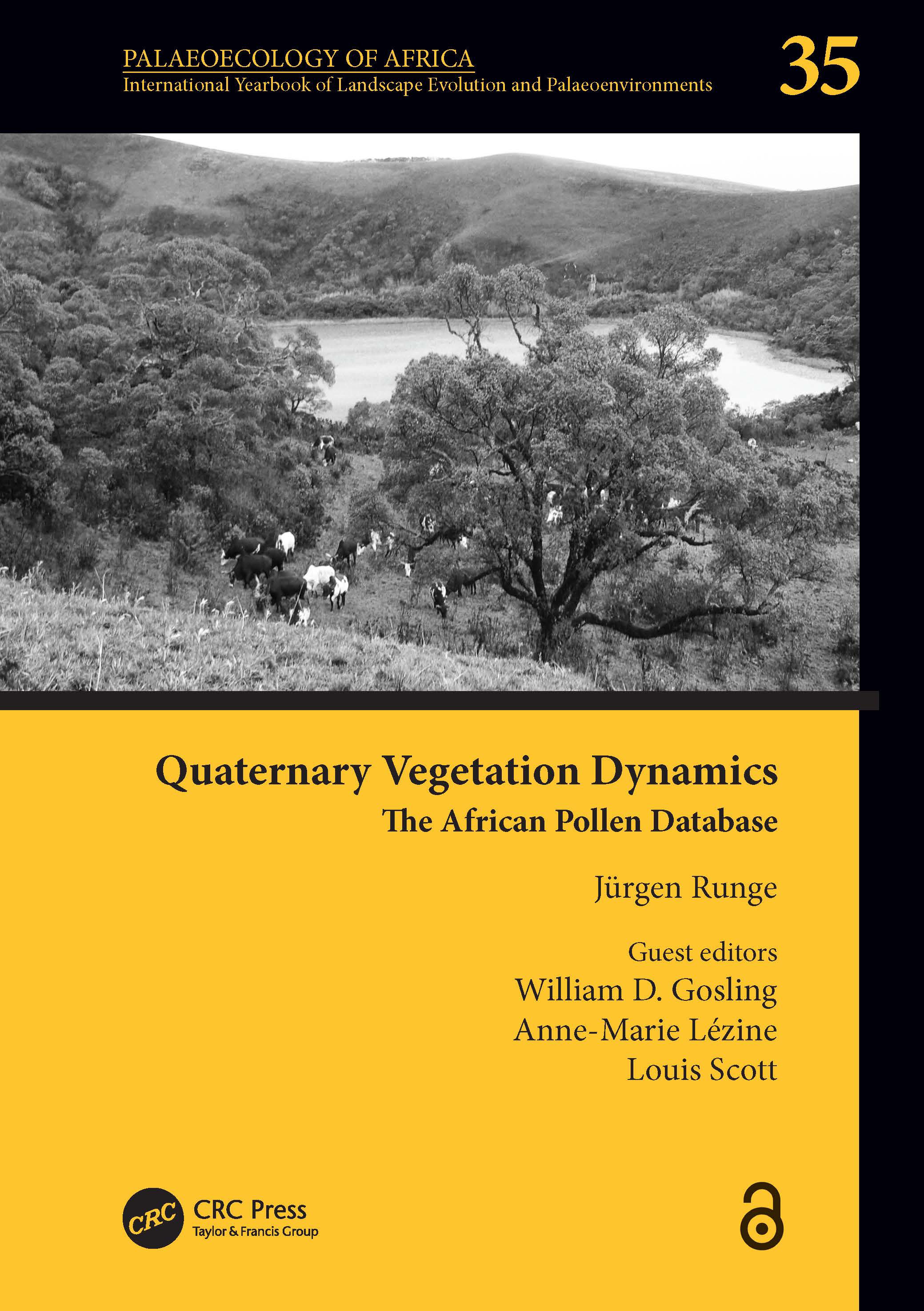
I am pleased to announce that the new, open access, volume of Palaeoecology of Africa (PoA) should be available to download in October. The “Quaternary Vegetation Dynamics” volume comprises 24 chapters, produced by more than 70 authors, and contains extensive review papers, personal perspectives on hot topics, as well as new research and data papers.
To find out more on the volume visit the publishers web site: PoA Vol. 35
Over the next few months I aim to blog about the various specific chapters to showcase some of the key findings. I hope that this book will provide a useful resource to all researchers working on past climate, environmental and vegetation change in Africa, and will provide a springboard for the start of the new “Mapping Ancient Africa” project that will kick off in October.
I am pleased to announce the start of a new project “Mapping Ancient Africa” funded by the International Union for Quaternary Research (INQUA) with support from the Palaeoclimate commission (PALCOM) and the Human & Biospheres commission (HABCOM). This project will bring together Quaternary scientists focused on past climates and environments with those working on human evolution and development in Africa. Through the synthesising data and linking these with modelling approaches we hope to bring together a novel group of researchers to explore the climatic and environmental backdrop to hominin development.
Further information on the project can be found on a new “sub-site” within this blog dedicated to the “Mapping Ancient Africa” project. The project is designed to connect researchers working on these topics so if you are interested to be involved please do get in contact. The first meeting will be held in October 2021 online and at four locations: Nairobi (Kenya), Port Elizabeth (South Africa), Potsdam (Germany) and Portland (Oregon, USA) – for further details click here.
USING PALAEOECOLOGICAL PROXIES TO DETERMINE ANTHROPOGENIC IMPACT ON VEGETATION DURING PRE-COLONIAL, COLONIAL AND POST-COLONIAL PERIOD IN KENYA’S HIGHLANDS-CASE STUDY ABERDARE RANGES
In spite of the challenges and uncertainties that the larger scientific community is currently facing, I am delighted and humbled to accept one of the British Ecological Society’s Ecologist in Africa research grant for 2020. The grant will support my historical ecology project whose main goal is to apply palaeoecological and archaeological proxies to investigate the extent of anthropogenic impacts on vegetation structure and composition of one of the Kenyan Central highlands before, during, and after the colonial period.
The Aberdare range forest provide an ideal setting for this study because they have been farmed by local populations since long before colonialism, and they were heavily impacted during colonial times because of their fertile soils. This pilot project aims to reveal the land-use and land-cover dynamics of the Aberdare range forest, and it is hoped that eventually similar studies will be undertaken in other parts of the Kenyan highland forests.




 Ecology of the past