Article from: Archaeology a publication of the Archaeological Institute of America
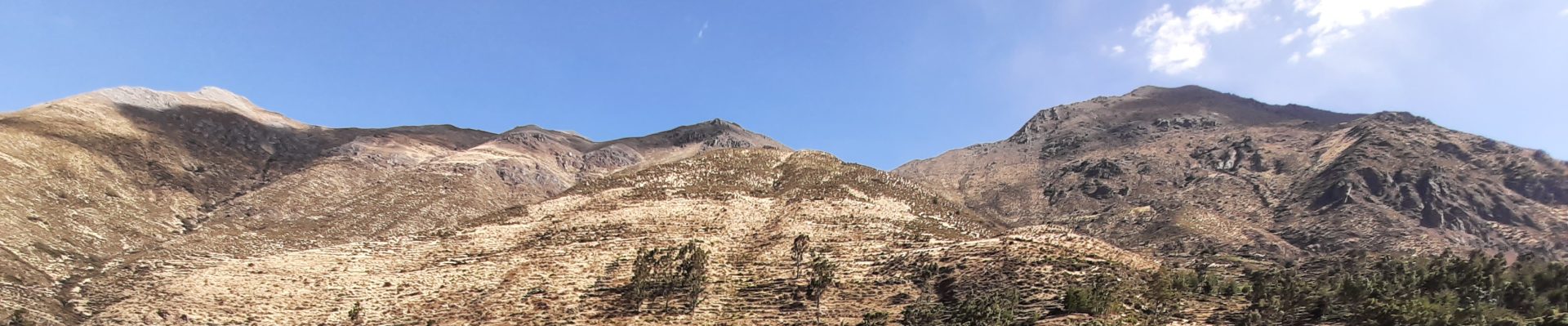
Archaeologists rethink the early civilizations of the Amazon
By ROGER ATWOOD
Monday, June 12, 2017
July 25, 2017
Article from: Archaeology a publication of the Archaeological Institute of America
Archaeologists rethink the early civilizations of the Amazon
By ROGER ATWOOD
Monday, June 12, 2017
July 18, 2017

Many BSc students undertook our “Palaeoecology” course prior to choosing to do a research project with us.
This year 15 (fifteen!) bachelors students completed their research projects in palaeoecology based within the Department of Ecosystem & Landscape Dynamics at the University of Amsterdam. The students had a variety of backgrounds with the majority coming from the BSc Biology and the BSc Future Planet Studies programs.
Each project was set up to test a particular ecological or biogeographic hypothesis. Investigations included the exploration of the role of humans in modifying ecosystems in Amazon, the nature of the pre-farming landscape in the the Netherlands, and how to chemically identify fossil charcoal. In undertaking their projects individual students had the opportunity to variously develop skills in microscopy, spatial modelling, or analytical chemistry. The high quality of the data produced means that hopefully many of these data sets can be used in future scientific publications. Well done to all!
If you are interested in conducting a similar project (at any academic level) with us please do not hesitate to get in contact. For further details of ongoing research within the Department of Ecosystems & Landscape Dynamics visit our web pages by clicking here.
July 6, 2017
I discovered what I think is the first colour pollen diagram this week. Published in 1948 and still looks beautiful.
Selling, O.H. (1948) On the late Quaternary history of the Hawaiian vegetation. PhD thesis, University of Stockholm, Honolulu, Hawaii.


Images of the copy held at the University of Amsterdam library.
June 26, 2017

Jippe Kreuning
University of Amsterdam MSc Biological Sciences student Jippe Kreuning investigated the contents of cesspits in the Dutch city of Deventer for his research project. Jippe investigated fossil pollen, seeds and other biological remains to discover what people in the ancient city were eating. In doing so Jippe gained new insights into ancient trade routes.
To find out more about Jippe’s project watch his video courtesy of FOLIA YouTube channel (in Dutch)
Jippe Kreunings zoektocht naar versteende poep
June 16, 2017
New films on how to find out about past environmental change from Elizabeth Alexson (University of Minnesota Duluth, USA)
June 15, 2017
 Palynologische Kring presents four seminars focus on past climate change
Date: Thursday 22 June
Time: Starts 14:10
Location: University of Amsterdam, Institute for Biodiversity & Ecosystem Dynamics, Science Park
For percise details of location and time please contact the organiser Prof. dr. Henry Hooghiemstra.
The meeting will be followed by the IBED seminar given by Prof. Jonathan Overpeck, click here for more details.

June 14, 2017
 Institute for Biodiversity & Ecosystem Dynamics seminar
University of Amsterdam
22 June 2017 (for details click here)
 New paleoclimatic perspectives on the future of terrestrial systems: bigger change, higher confidence?
Jonathan Overpeck
The University of Arizona
Numerous assessments of future freshwater and terrestrial system change have highlighted the potential for unprecedented change in the 21st century given continued emissions of greenhouse gases (GHGs) to the atmosphere; the risk to biodiversity is also believed to be high. The basis for these assertions are strengthened by recent observed ecosystem change, as well as by a new global compilation of climate and vegetation change over the last deglaciation indicating that most, if not all, dominantly natural landscapes on the planet are at high risk of significant transformation given the projected magnitude of warming that is likely in the future absent major reductions in global GHG emissions. At the same time, new paleoclimatic results indicate that the Amazon forests may be more resilient to future change than previously thought, whereas the risk of human deforestation associated with multi-year “megadrought” might be higher than previously believed. A growing body of literature highlight that drought and megadrought risk around the globe is going to be a bigger problem than widely thought. We know with great confidence that warming will continue as long as GHG emissions continue, and this means more drying of terrestrial systems is likely over much of the planet. As a result, droughts will become more severe, longer and frequent as long as GHG emissions are not reduced significantly. The ability of precipitation increases to mitigate the ecological and hydrological impacts of continued warming is especially diminished in the many regions of the globe where multi-decadal megadrought is likely, an assessment made more challenging by the growing realization that that state-of-the-art climate models may underestimate the risk of future megadrought. Existing global climate change assessments may thus be underestimating the challenges to terrestrial water and ecoystems under continued climate change.
Hosted by: William Gosling
May 8, 2017
 My second pair articles from Vegetation History & Archaeobotany that I would like to highlight look at the impacts of volcanoes and climate on vegetation change. Specifically these explore:
For more detailed thoughts on these papers read on…
Jardine, P.E., Abernethy, F.A.J., Lomax, B.H., Gosling, W.D. & Fraser, W.T. Shedding light on sporopollenin chemistry, with reference to UV reconstructions. Review of Palaeobotany and Palynology 238: 1-6. DOI: 10.1016/j.revpalbo.2016.11.014
March 9, 2017
See what it was like at the British Ecological Society (BES) annual meeting 2016:
See the winning act from the Science Slam:
Find out more about the BES:
For more videos by the society check out the BES YouTube channel by clicking here.
 Ecology of the past