
Stefan Engels
University of Amsterdam Palaeoecology & Landscape Ecology researcher Stefan Engels explains his research into the fossil record from Lake Uddelermeer on Vroege Vogels, to watch Stefan in action visit: Boren in het Uddelermeer.

April 29, 2015
Stefan Engels
University of Amsterdam Palaeoecology & Landscape Ecology researcher Stefan Engels explains his research into the fossil record from Lake Uddelermeer on Vroege Vogels, to watch Stefan in action visit: Boren in het Uddelermeer.
March 17, 2015
People, Politics and the Planet – Any Questions?
9 March 2015 The Light, Euston Road, London
British Ecological Society
Find out what UK politicians think about the environment ahead of the forthcoming UK general election.
The panellists were:
February 13, 2015
 Netherlands Annual Ecology Meeting
10-11 February 2015
by William Gosling
On Wednesday I attended my first Netherlands Annual Ecology Meeting (NAEM) unfortunately, due to prior commitments, I was not able to attend the whole event, but I still managed to get a nice insight into the vibrant Dutch Ecological research community. Particularly exciting for me was the “Biodiversity in Space and Time” theme. Plenary sessions by Alexandre Anotonelli (University of Gothenburg) and Hans ter Steege (Naturalis Biodiversity Center, Leiden) focused on the Amazon ecology past and present. The subsequent session on the same theme, organized by Daniel Kissling (University of Amsterdam) and Niels Raes (Naturalis Biodiversity Center), was also excellent and ranged from species richness patterns past and present in Gabon (Andre van Proosdij, Naturalis Biodiversity Center), through soil microbes (Kelly Ramirez, Netherlands Institute of Ecology) to the role of sea level change on island biodiversity (Kenneth Rijsdijk, University of Amsterdam). I am looking forward to attending more of these meetings in the future and getting involved with the NERN community.
January 16, 2015
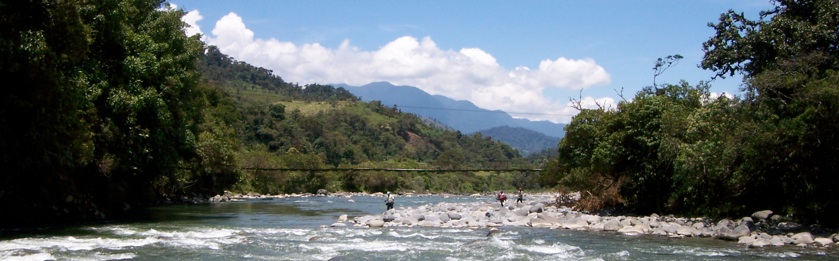
The Cross-disciplinary Palaeo-Environmental Research Training (XPERT) network commences in 2015. This international network will bring together early career researchers from five countries to learn new skills and develop collaborative projects. Training will be provided during a field school in Ecuador, and a summer school at the University of Amsterdam. For further details please visit the respective field school, summer school and staff pages hosted on this blog.

January 4, 2015

William shortly after first Dutch haircut
2014 has seen more people visit this blog and more “clicks” through to articles than in any previous year (see Annual Report 2014). So thanks for reading! I hope that the information provided is useful. For me 2014 has been a big year of change; with the largest work related change being taking up my new post at the University of Amsterdam in September.
2015 promises to be an exciting year with a number of key projects generating exciting findings (including chironomid climate for the Neotropics, Andean flank evolution, and ‘deep time’ palynomorphs) , the start of the XPERT network, and new proposals and collaborations being developed here in the Netherlands (including new proposal to work in Europe!).
Any comments, thoughts or contributions on the blog welcome.
William
News article
Science check call over Badger cull, Pallab Ghosh (@BBCPallab), BBC News.
Reporting on: Transparency and Evidence-Based Policy: An Open Letter to Defra from Journal of Animal Ecology
New fanged frog ‘gives both to tadpoles’, Jonathan Webb, BBC News.
Journal Articles
Hodgson, J.A., Thomas, C.D., Wintle, B.A. & Moilanen, A. (2009) Climate change, connectivity and conservation decision making: back to basics. Journal of Applied Ecology 46, 964-969.
…and published comment:
Doerr, V.A.J., Barrett, T. & Doerr, E.D. (2011) Connectivity, dispersal behaviour and conservation under climate change: a response to Hodgson et al. Journal of Applied Ecology 48, 143-147.
Summary (Will): The debate over the effectiveness of corridors to link landscapes
Jeffers, E.S., Bonsall, M.B. Froyd, C.A., Brooks, S.J. & Willis, K.J. The relative importance of biotic and abiotic processes for structuring plant communities through time. Journal of Ecology.
Jussila, T. & Virtanen, V. (2014) Learning in Virtual Forest: a forest ecosystem in the web-based learning environment. Journal of Biological Education 48, 196-200.
Associated Virtual forest site: http://www.helsinki.fi/biosci/biopop/virtualforest/index.html
November 18, 2014
 Vacancy: Assistant Professor Palaeoecology
(5-year tenure track)
Palaeoecology & Landscape Ecology
Institute of Biodiversity & Ecosystem Dynamics
University of Amsterdam
Closing data: 14 December 2014
Interviews: January 2015
We are looking for an ecologist with experience and interest in long timescales specifically related to one, or more, of the following research areas:
For full details on the position and how to apply click here.
For informal discussion of the position please contact William Gosling.

Current research within the P&L group focuses on examining past environmental change in lake sediments (Photo: Yanacocha, Peru)
November 13, 2014
 British Ecological Society
Ecological careers
Webinar series 2014-2015
Webinar 1: Surviving the Viva
31 October 2014
For further information on the BES webinar series click here, or for more general information on ecological careers click here.
 Bush, M.B., de Oliveira, P.E., Raczka, M.F., Gosling, W.D., Mayle, F.E., McMichael, C.H. & Urrego, D.H. (2014) Paleoclimates of Amazonia: An ice-age view. IN: Ribeiro F. & Carvalho, I. (eds.) Paleontologia: Cenários de Vida – Paleoclimas Volume 5. Editora Interciência Ltda., Brazil, pp. 353-368. ISBN: 9788571933439
Media articles
Relics discovered in Mexico’s Teotihuacan, BBC News
Tree of the year finalists announced, BBC News
Journal articles
Kessler, M., Toivonen, J.M., Sylvester, S.P., Kluge, J. & Hertel, D. (2014) Elevational patterns of Polylepis tree height (Rosaceae) in the high Andes of Peru: role of human impact and climatic conditions. Frontiers in Plant Science: Functional Plant Ecology 5, Article 194.
Sylvester, S.P., Sylvester, M.D.P.V. & Kessler, M. (2014) Inaccessible ledges as refuges for the natural vegetation of the high Andes. Journal of Vegetation Science 25, 1225-1234.
Keller, A., Danner, N., Grimmer, G., Ankenbrand, M., von der Ohe, K., von der Ohe, W., Rost, S., Härtel, S. & Steffan-Dewenter, I. (2014) Evaluating multiplexed next-generation sequencing as a method in palynology for mixed pollen samples. Plant Biology online.
 Ecology of the past