Predicting the future by understanding the past: Climate change

October 9, 2014
WDG

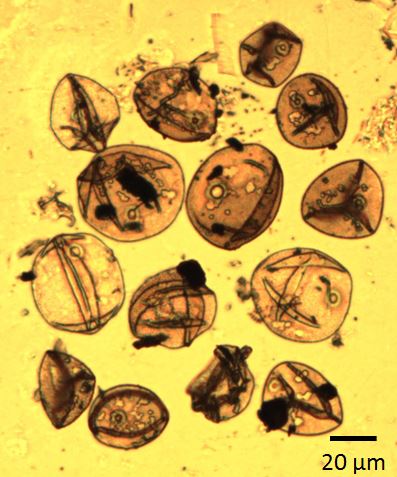
As part of the 500,000 years of solar irradiance, climate and vegetation changes” Natural Environments Research Council funded (NE/K005294/1) project we have produced a wall chart explaining the type of research we do and how it can help to place on-going, and projected, climate change in context. The wall chart is designed for use in schools and universities. To obtain a copy of this, and other wall charts, please contact the British Ecological Society (direct wall chart link here).

Understanding Climate Changes

Teaching in the field: Foundations, feedback and fun

September 16, 2014
WDG

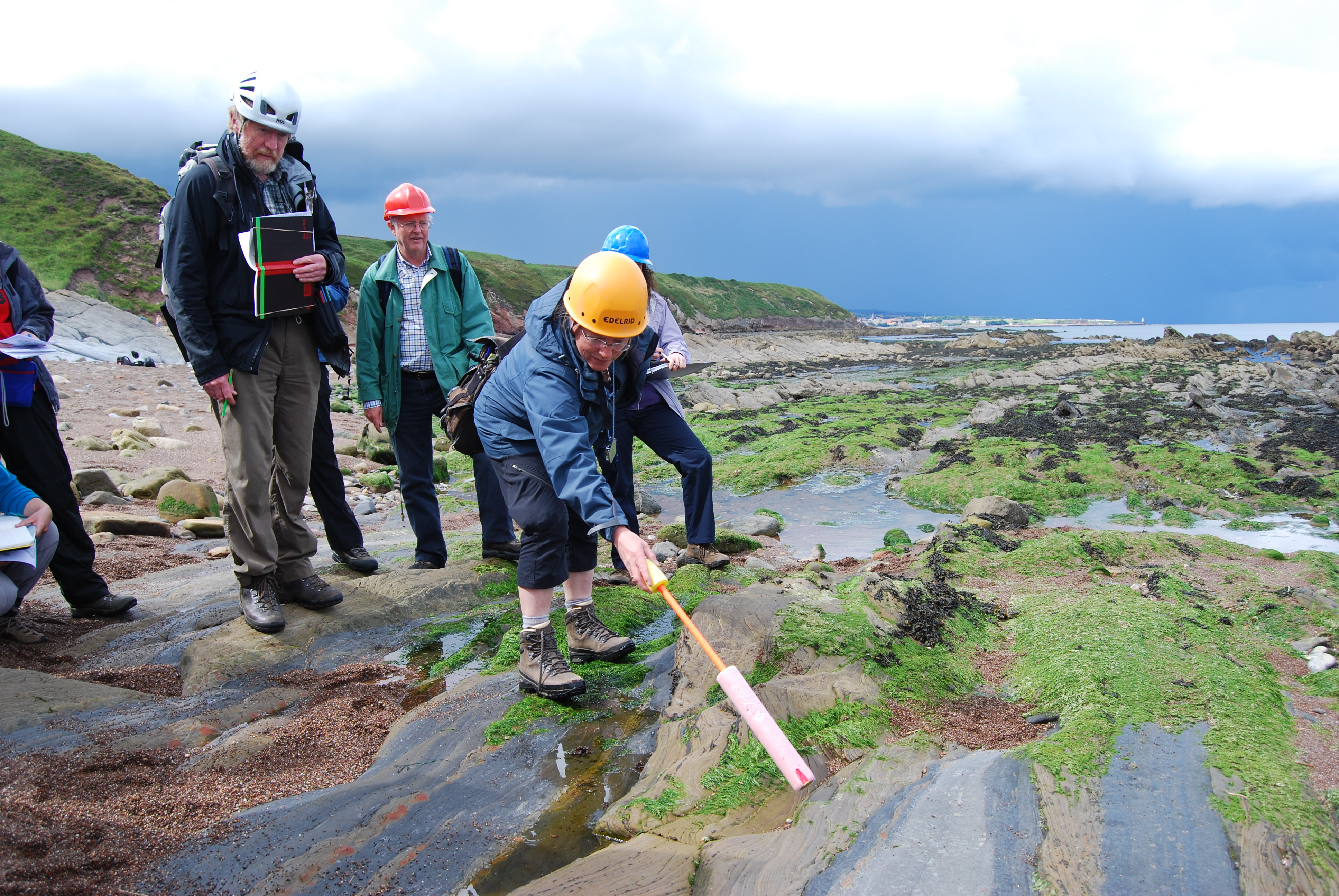
My final teaching job for The Open University was to help deliver the “Sedimentary Rocks & Fossils in the Field” section of the Level 2 Practical Science module (SXG288) offered by the Science Faculty. I have been involved in all three presentations of this section of the SXG288 module, which will now cease to be offered, and a number of other Earth and environmental science residential schools over the last 9 years.

Showing students the rocksHaving the opportunity to engage directly with students and enthuse them face-to-face about the subject I specialise in is a privilege I have gained a lot from. Furthermore, my over-riding impression from the students I have taught is that they feel they benefit greatly from the opportunity to explore first hand the concepts and subjects which they have previously studied in books and online. Based on my experiences on “Sedimentary Rocks and Fossils”, and other modules as both a tutor and a student, I am convinced that to effectively teach geological, geographical, environmental and ecological subjects effectively an element of field-based teaching is required.

Continue Reading

In the news:

Exploding flower blasts birds with pollen, by Xochitl Rojas-Rocha Science shot. (Research article behind this story is Dellinger et al. listed below). Also:

Scientific articles:

Dellinger, A.S., Penneys, D.S., Staedler, Y.M., Fragner, L., Weckwerth, W. & Schönenberger, J. A Specialized Bird Pollination System with a Bellows Mechanism for Pollen Transfer and Staminal Food Body Rewards. Current Biology, online.

Huntley, B., Midgley, G.F., Barnard, P. & Valdes, P. (2014) Suborbital climatic variability and centres of biological diversity in the Cape region of southern Africa. Journal of Biogeography, 41 (7): 1338-1351.

Matthew, T.J., Cottee-Jones, H.E., & Whittaker, R.J. (2014) Habitat fragmentation and the species–area relationship: a focus on total species richness obscures the impact of habitat loss on habitat specialists. Diversity and Distribution, 20 (10): 1136-1146.

Rijsdijk, K.F., Hengl, T., Norder, S.J.,  Otto, R., Emerson, B.C., Ávila, S.P., López, H., van Loon, E. E., Tjørve, E. & Fernández-Palacios, J.M. (2014) Quantifying surface-area changes of volcanic islands driven by Pleistocene sea-level cycles: biogeographical implications for the Macaronesian archipelagos. Journal of Biogeography, 41 (7): 1242-1254.

Three new videos on the Ecology of the Past Youtube channel

July 25, 2014
philjardine

We’ve got a bumper crop of palaeoecological film making for you today, with three videos uploaded to our very own ‘Ecology of the Past’ Youtube channel. We’ve got an interview with Will Gosling, talking about the Bosumtwi pollen chemistry project and his own background and career (it’s a timely and somewhat poignant addition to the channel, because this is Will’s last day at The Open University before heading off to Amsterdam). Also posted are research presentations by Frazer Bird and Hayley Keen, which were filmed during the PhD student conference on 21st May. For the first time at the Open University these presentations were carried out in the Three Minute Thesis (3MT®) format.

6th Workshop on Non-Pollen Palynomorphs

July 9, 2014
encarnimontoya

POSTER: Non-Pollen Palynomorphs in Ecuador: Starting from scratch

OUR POSTER: Non-Pollen Palynomorphs in Ecuador: Starting from scratch

Tallinn University
18-20 June 2014

Last month I had the opportunity of attending the 3-days non-pollen palynomorphs (NPP) workshop that was held at the Tallinn University, Estonia. It was perfectly organised by Tiiu Koff and Egle Avi among other members of the university, as it was a join workshop of Cladocera remains (XII Subfossil Cladocera workshop; 16-18th June) and NPP (18-20th June). Unfortunately, I was just present in the NPP workshop, so my comments will be focus on it.

With around 40 participants, we greatly enjoyed the discussions that came up about the state-of-the-art of this broad and interesting proxy and its implications for archaeology, palaeolimnology, and different aspects of ecology like human landscape management, biodiversity and conservation, or community assemblages. Current methodological problems like taxonomy, standardisation of lab techniques, etc., were also debated.

Opening and key lectures were from Bas van Geel and Emilie Gauthier, showing the development of this discipline over the last 40 years, and a great example of multi-proxy project aimed to study the human arrival and impact in Greenland respectively. Besides oral and poster presentations, last day there was a microscope session, very useful for sharing knowledge and uncertainties! In our specific case, Will, Hayley and I contributed with a poster titled “Non-pollen palynomorphs in Ecuador: starting from scratch”.

Personally, among the things I most like from the NPP meetings is the friendly and close environment, where everyone is more than glad to help others, regardless the experience. Following this feeling of small and scattered group of people dealing with the same issues, we used to do a final remark session every workshop raising the advances and inconveniences found so far, updating our NPP papers repository (managed by Antonella Miola), and addressing future directions as a group (for instance, we have now our own project in ResearchGate, thanks to Lyudmila Shumilovskikh!). In this particular workshop, I was very happy when I found out that Tallinn University has a green policy (paper free), and they replaced book abstracts etc., by iPads to follow the workshop schedule.

Although these meetings are normally biannual, next conference location and date is yet to be decided, but we hope to have the chance to join this very friendly and supporting community again. In addition, there will be a NPP session in the next European Palaeobotany and Palynology congress, tobe held in University of Padova (Italy), next August 2014. We encourage people with all kind of experience (or lack of) to attend further events.

In the news:

First Farmers Were Also Sailors, by Michael Balter in Science.

John Bostock: The man who ‘discovered’ hay fever, by Justin Parkinson in BBC News Magazine.

DNA study shows yeti is real (sort of) – and Oxford scientist prepares expedition to find it, by Adam Withnall in The Independent.

Tibetan altitude gene inherited ‘from extinct species’, by Paul Rincon BBC News Website

Scientific articles:

Bonatelli, I.A.S., Perez, M.F., Peterson, A.T., Taylor, N.P., Zappi, D.C., Machado, M.C., Koch, I., Pires, A.H.C. & Moraes, E.M. (2014) Interglacial microrefugia and diversification of a cactus species complex: phylogeography and palaeodistributional reconstructions for Pilosocereus aurisetus and allies. Molecular Ecology, 23, 3044-3063.

Bush, M.B., Restrepo, A. and Collins, A.F. (2014) Galápagos history, restoration, and a shifted baseline. Restoration Ecology, 22, 3, 296-298.
Summary (Nick): A concise and pithy look at how a robust long-term ecological system can be transformed rapidly by human impact. The paper demonstrates how the fossil pollen record is fundamental if a near-natural vegetation state is to be restored to the Galápagos islands, to avoid restoration to a shifted baseline.

Froyd, C.A., Coffey, E.E.D., van der Knaap, W.O., van Leeuwen, J.F.N., Tye, A. & Willis, K.J. (2014) The ecological consequences of megafaunal loss: giant tortoises and wetland biodiversity. Ecology Letters, 17, 144-154.

Giguet-Covex, C., Pansu, J., Arnaud, F., Rey, P.-J., Griggo, C., Gielly, L., Domaizon, I., Coissac, E., David, F., Choler, P., Poulenard, J. & Taberlet, P. (2014) Long livestock farming history and human landscape shaping revealed by lake sediment DNA. Nat Commun, 5

Gillson, L. & Marchant, R. (2014) From myopia to clarity: sharpening the focus of ecosystem management through the lens of palaeoecology. Trends in Ecology & Evolution, 29, 317-325.
Comment (Will): For a good example of feeding palaeoecology into management see Bush et al. above.

News articles:

Unesco to rule on Tasmania forest and Great Barrier Reef, BBC News Asia.

Climate change will ‘cost world far more than estimated’, by Tom Bawden, The Independent.

Scientific articles:

Heslop-Harrison, J. (1979) Aspects of the structure, cytochemistry and germination of the pollen of Rye (Secale cereale L.). Annals of Botany, 44, 1-47.
Summary (Adele): Sometimes, the old ones are the best, and this behemoth of a paper contains a huge amount of useful information on the chemical structure and development of Rye pollen grains. As I am working on the chemistry of grass pollen at the moment, it is incredibly useful to know that this sort of information exists and can be used to inform both my experimental protocol and interpretations.

Michelutti, N., Blais, J.M., Cumming, B.F., Paterson, A.M., Rühland, K., Wolfe, A.P. & Smol, J.P. (2010) Do spectrally inferred determinations of chlorophyll a reflect trends in lake trophic status? Journal of Paleolimnology, 43, 205-217. doi: 10.1007/s10933-009-9325-8
Summary (Frazer): Quick and easy way to extract data from lake sediment cores.

Rossetti, D.F., de Toledo, P.M and Góes, A.M. (2005) New geological framework for Western Amazonia (Brazil) and implications for biogeography and evolution. Quaternary Research, 63, 78 – 89. doi: 10.1016/j.ygres.2004.10.001.
Summary (Hayley): Research discussing the importance of understanding the underlying geological processes in order to correctly identify the mechanisms controlling modern biodiversity in Western Amazonia, Brazil.

Simpson, J. (2011) On the Ambiguity of Elves. Folklore, 122, 76-83. DOI: 10.1080/0015587X.2011.537133
Summary (Will): Elves depicted in modern literature have a grounding in ancient literature.

Trenkamp, R., Kellogg, J. N., Freymueller, J.T. and Mora, H.P. (2002) Wide plate margin deformation, southern Central America and northwestern South America, CASA GPS observations. Journal of South American Earth Sciences. 15, 157 – 171. PIL: S0895-9811(02)00018-4.
Summary (Hayley): GPS data used to detect plate boundary convergence, subduction and collision within the north west of South America. GPS data between 1991 and 1998 was used to work out rates of movement for plates.

NERC-PlanetEarth

Insects, sediment and climate change

Frazer Bird and William Gosling talk about how to conduct palaeoecological research in the tropics for NERC’s Planet Earth pod-cast. Click here to here to listen to the conversation.

For other similar stories online visit the Planet Earth website.

Newspaper articles:

Exclusive: Found after 500 years, the wreck of Christopher Columbus’s flagship the Santa Maria by David Keys, The Independent.

Scientific articles:

Cole, L.E.S., Bhagwat, S.A. & Willis, K.J. (2014) Recovery and resilience of tropical forests after disturbance. Nat Commun, 5, Article number 3906.
Summary (Will): Varying factors have disturbed tropical forests which have recovered at varying rates.

Hoorn, C., Wesselingh, F.P., ter Steege, H., Bermudez, M.A., Mora, A., Sevink, J., Sanmartín, I., Sanchez-Meseguer, A., Anderson, C.L., Figueiredo, J.P., Jaramillo, C., Riff, D., Negri, F.R., Hooghiemstra, H., Lundberg, J., Stadler, T., Särkinen, T. & Antonelli, A. (2010) Amazonia Through Time: Andean Uplift, Climate Change, Landscape Evolution, and Biodiversity. Science, 330, 927-931.

Montade, V., Ledru, M.-P., Burte, J., Martins, E.S.P.R., Verola, C.F., Costa, I.R.d. & Magalhães e Silva, F.H. (2014) Stability of a Neotropical microrefugium during climatic instability. Journal of Biogeography, 41, 1215-1226.
SUMMARY (Will): Thoughts on what happened to species when in Amazonia.

Blog at WordPress.com.