African ecology in context

May 14, 2014
WDG

afqua-logo-header-copy

I am delighted to be organizing a focus session at the first AfQUA meeting. The session seeks to bring together ecologists and palaeoecologists working in Africa. If you are interested in getting involved please contact me (William Gosling) directly. For further information on the conference visit the AfQUA website or twitter feed.

Focus session 1: African ecology in context
The African continent spans over 80 degrees of latitude, nearly 6000 m of altitude and around 30 million km2 consequently it contains a vast array of unique ecosystems. Many of the African ecosystems are under direct pressure from human activity and are threatened by on-going and projected climate change. However, management and conservation of the modern African ecosystems is hampered by a paucity of data on their natural history. Studies of observations of ecosystems spanning >30 years are rare so we are heavily reliant on examination of the fossil record to place modern ecology in a long-term (>50 year) context. Information on past ecosystems can be extracted through the examination of a range of biological indicators (e.g. pollen, carbon isotopes, charcoal) found within marine and lake sediments. However, interpretation of the sediments and the proxies they contain with the ecosystems observed today is challenging because of timescale and interpretation issues. The aim of this session is to bring together modern ecologists and paleo-ecologists working in Africa to present the state-of-the-art understanding of ecosystems past and present, and explore how we can improve understanding of timescales and proxy interpretation to place these threatened ecosystems in context.

One short story and five scientific papers thinking about different aspects of ecological change through time.

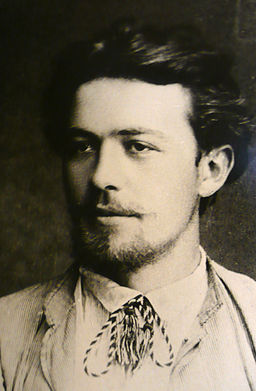
Chekhov in 1889

Chekhov in 1889 (http://tinyurl.com/ny2msd9)

Short story:

Checkhov, A. (1889) The Pipe

SUMMARY (Will): People have long been concerned about environmental change. Observations of phenological shifts, degradation of ecosystem services and climate change are clearly presented in Checkhov’s “The Pipe” (1889).The key difference is today we have a better idea of why these things are happening!?

Scientific papers:

Garcia, R.A., Cabeza, M., Rahbek, C. & Araújo, M.B. (2014) Multiple dimensions of climate change and their implications for biodiversity. Science 344 1247579
SUMMARY (Phil): This review highlights the alternative metrics used to quantify climate change at different spatial scales, each with its own set of threats and opportunities for biodiversity. It’s a very relevant paper for palaeoecologists, with implications for how we think about climatic estimates we generate, how we interpret ecological shifts in the assemblages we study, and for demonstrating the importance thinking spatially as well as temporally. It also shows how important palaeoecological data is for setting baselines and putting projected climatic change into context.

Garzón-Orduña, I.J., Benetti-Longhini, J.E. & Brower, A.V.Z. (2014) Timing the diversification of the Amazonian biota: butterfly divergences are consistent with Pleistocene refugia. Journal of Biogeography, early online.
SUMMARY (Will): Butterfly species diverged in the Neotropics during the Pleistocene (probably).

Mitchard, E.T.A. et al. (2014) Markedly divergent estimates of Amazon forest carbon density from ground plots and satellites. Global Ecology and Biogeography, early online.
SUMMARY (Will): It is difficult to work out how much carbon is in a tropical forest.

Stansell, N.D., Polissar, P.J., Abbott, M.B., Bezada, M., Steinmann, B.A. and Braun, C. (2014) Proglacial lake sediment records reveal Holocene climate changes in the Venezuelan Andes. Quaternary Science Reviews. 89, 44 – 55.
SUMMARY (Hayley): A study of three lake sediment records in the Venezuelan Andes to look at patterns of glacial variability, and how glaciers might have responded to changing climatic conditions during the last c. 12,000 years.

Still, C.J., Foster, P.N. & Schneider, S.H. (1999) Simulating the effects of climate change on tropical montane cloud forests. Nature, 398, 608–610.
SUMMARY (Nick): The paper attempts to model the impact of climate change on a number of cloud forests around the world by simulating atmospheric parameters at the last glacial maximum (LGM) and at twice today’s CO2 level. The models agrees with palaeoecological data of a downslope migration of the cloud forest at the LGM, while the 2xCO2 model shows reduced cloud cover and increased evapotranspiration, which results in a significant reduction in cloud forest supporting land area.

BES Tropical Ecology Meeting

April 23, 2014
WDG

The 7th Early Career Research meeting 2014

The University of York, August 14th and 15th 2014

Tropical ecosystems – from process to policy

SIG_TropEcol_final-300x214Keynote speakers:

After six successful meetings, the legendary BES-TEG Early Career Research Meeting returns. Day one will focus on Ecology and Ecosystem Processes, while day two will focus on Practical Applications and links to Policy such as conservation, livelihood, policy and development.

All early-career researchers, both PhD and Post-Docs, are welcome to present their tropical ecology related research with a poster and/or oral presentation. There shall be a competition for both with prizes. This event will take place at Derwent College (D/L//047) and the accommodation at Alcuin College (see map link below).

Continue Reading

Highlights of articles members of the group read recently.

Newspaper articles:

The natural historian faces extinction: Overspecialism and funding cuts could end a vital scientific tradition, claim experts by Joe Kavanagh in The Independent

Fires could turn Amazon rainforest into a desert as human activity and climate change threaten ‘lungs of the world’, says study by Steve Connor in The Independent.

Linked to this article:

Scientific papers:

Giesecke, T., Ammann, B. and Brande, A. (2014) Palynological richness and evenness: insights from the taxa accumulation curve. Vegetation history and archaeobotany. 32, 217 – 228.

SUMMARY (Hayley): “A new method is presented on splitting the log – transformed taxa accumulation curve into sections (natural breaks where the curve deviates from a linear trend), with the hypothesis that breaks in the curve could indicate shifts in abundance between high (e.g. wind pollinated taxa) and low producers of pollen (e.g. insect pollinated taxa), this hypothesis is tested on pollen diagrams from three separate pollen diagrams from varying landscapes.”

Katifori, E., Alben, S., Cerda, E., Nelson, D.R. & Dumais, J. (2010) Foldable structures and the natural design of pollen grains. Proceedings of the National Academy of Sciences of the United States of America, 107, 7635-7639.

SUMMARY (Adele): “This elegant paper highlights the changeability of pollen grains and their responses to their environment, giving those of us who identify pollen based on morphological characteristics plenty to think about.”

Gosling PhD thesis 2004

April 10, 2014
WDG

Gosling, W.D. (2004) Characterisation of Amazonian forest and savannah ecosystems by their modern pollen spectra.  PhD Thesis, Department of Geography, University of Leicester.

PhD-wdg

WDG Bolivia (2002)

Abstract:

Controversy surrounds the Quaternary palaeoenvironmental history of Amazonia. It is unclear whether moist evergreen forest, savannah or seasonally dry forest dominated the Amazon basin at the last glacial maximum (c. 21,000 years B.P.). In part the uncertainty surrounding the palaeoenvironmental history of Amazonia stems from a poor understanding of the ecological significance of the fossil pollen records from the region. In order to improve interpretations of the fossil pollen record it is essential to better understand the nature of the pollen rain produced by modern ecosystems.

In this thesis, three Neotropical ecosystems equivalent to those alluded to above were characterised by their modern pollen rain. This was achieved by examining samples collected in artificial pollen traps located within permanent (50 x 200 m) vegetation plots in the Noel Kempff Mercado National Park area, Bolivia. In each plot 10 traps were sampled for one field season (September 1998 to September 1999, or September 2000 to September 2001) and 5 traps were sampled from two additional field seasons (between 1998 and 2001). Pollen counts of at least 100 grains were made for each trap. In total 318 pollen taxa were distinguished, of which 116 were identified. The characteristic pollen from each of the three ecosystems were determined through a series of steps: spatial and temporal variations were explored using Spearman’s Rank correlations, the distinctive taxa of each ecosystem were identified using Principal Components Analyses (PCA), and the representativity of the pollen for each ecosystem was examined by comparing pollen and vegetation abundances. These analyses revealed a small number of taxa that can be used to characterize these ecosystems. Further PCA showed that it is possible to differentiate between the ecosystems by assessing the relative proportions of Didymopanax, Alchornea, Anadenanthera, Melastomataceae/Combretaceae, Moraceae/Urticaceae, Myrtaceae, Palmae, Pteropsidia (trilete), Poaceae and Solanum. These findings mean that it is now possible to detect these ecosystems in the fossil pollen record and consequently further information regarding the nature of the vegetation change in the Amazon basin can be gained.

Supervisors: Dr. Francis Mayle (University of Leicester, now at University of Reading) and Dr. Nicholas Tate (University of Leicester)

Examined by: Prof. Henry Lamb (University of Aberystwyth) and Prof. Andrew Millington (University of Leicester, now at Texas A & M), April 2004.

To borrow a copy from University of Leicester Library (item ID 7507349613), or download directly: Volume 1, Volume 2, and CD, or via the University of Leicester FigShare.

Continue Reading

Tropical pollen database online

April 7, 2014
WDG

PollenTo facilitate the our ability to identify pollen in the fossil record we have been building a searchable digital tropical pollen database. Our work builds upon the architecture provided by Bush & Weng (2007) for their Neotropical pollen database (Palaeoecology labFlorida Institute of Technology). We have used Bush & Weng’s freeware tool and expanded it to include an additional 364 pollen and spore types from tropical Africa. The images are of pollen reference material collected over the career of Prof. Dan Livingstone and curated in the Department of BiologyDuke University; full collection details of each specimen are indicated on each individual electronic record. In conjunction with the open access publication “Atlas of the tropical West African pollen flora” (Gosling et al., 2013) we have made the entire updated pollen database available. We hope that this will prove to be a useful tool for palynologists working in Africa and the wider tropics and that it will encourage others to develop the database further.

Continue Reading

Problem solving in the Anthropocene

April 3, 2014
WDG

DSCN3814William Gosling on:

Barnosky, A.D. & Hadly, E.A. (2014) Problem solving in the Anthropocene. The Anthropocene Review, 1, 76-77.

The short communication by Barnosky & Hadly examines the current fundamental environmental ‘problem’ for human populations  through the lens of the “Anthropocene” concept, i.e. will some human populations:

  1. continue to develop using a “business as usual” model that has been shown to elevate environmental risk to all human populations, or
  2. alter societal practice in an attempt to reduce the environmental risks now and for future generations.

Barnosky & Hadly straightforwardly and succinctly present the case that, based on the weight of evidence from the collective scientific endeavour of the global community, humans are now fundamental altering the functioning of planet Earth; a view further supported by the recently published Intergovernmental Panel on Climate Change report (IPCC, 2014).Throughout the period of anatomically modern human existence (Homo sapiens sapiens, the last c. 200,000 years) populations have experienced a variety of environmental changes. Exposure to environmental change has had both positive and negative impacts on societal development (e.g. Gosling & Williams, 2013; Hodell et al., 1995).

Continue Reading

The Anthropocene Review – reviewed

March 26, 2014
WDG

AnthropoceneReviewThe Anthropocene Review is a new journal focusing on the impact of humans on planet Earth through time; information on the latest publications can be found on the associated blog.

Given that much of the research we are interested in relates human-environment interactions in the past we decided to take a closer look at the range of articles being covered by this journal. Our thoughts on seven articles published in the first issue of The Anthropocene Review will appear in a series of blog posts soon. To get started here are a list of the papers we will be covering:

Full Anthropocene Review table of contents here.


Blog at WordPress.com.