Palaeo-Caribbean

July 30, 2013
WDG

Earlier this month Rachel Gwynn (Geography, UCL) visited the PCRG to use our core splitter to reveal what was contained within two cores collected from the Carribean. She has also been kind enough to provide photos of the sediments and an insight into the story so far:

Sediments from Fresh Water Pond Barbuda (Photograph Rachel Gwynn)

Sediments from Fresh Water Pond Barbuda (Photograph Rachel Gwynn)

Lake sediment cores covering the past few hundred to thousand years have been taken from two lakes, Wallywash Great Pond in Jamaica and Freshwater Pond in Barbuda. The sediments form part of the NERC-funded project Neotropics1k (PI Prof. Jonathan Holmes), which is concerned with climate variability in the northern Neotropics over the past millennium. The sediment cores show marked changes in composition and colour, from pale marl to dark organic mud. These colour changes, which are clearly visible in the photographs, represent changes in sediment composition that are in turn related to lake-level variations caused by long-term climate shifts. Deeper, open-water conditions under wetter climate are represented by the marls, whereas lowered lake levels, caused by direr climate, are associated with organic-rich sediments.

Wallywash Great Pond– core section W2

  • Thirteen separate units have been identified through the 1 m core length, varying between light coloured marl, dark organic and shelly sediments.
  • The abundance of preserved Ostracod valves increases throughout the marl and shell rich layers but drops significantly in the organic rich material.

Barbuda Freshwater Pond- core section FWP

  • This core has four distinct units. 0-23 cm is a calcareous mud with a diffused lower boundary into a shelly calcareous mud at 25-35.5 cm. 35.5-38 cm and 38-52 cm is two variations of calcareous mud.
  • These units, as with the W2 core, have been defined using a Munsel Soil Chart.
  • The Ostracod valves are thought to be abundant throughout the core due to the high marl content.
Wallywash Great Pond Jamaica (photograph Rachel Gwynn)
Wallywash Great Pond Jamaica (photograph Rachel Gwynn)

Sex & Bugs & Rock ‘n Roll – Wychwood

June 5, 2013
WDG

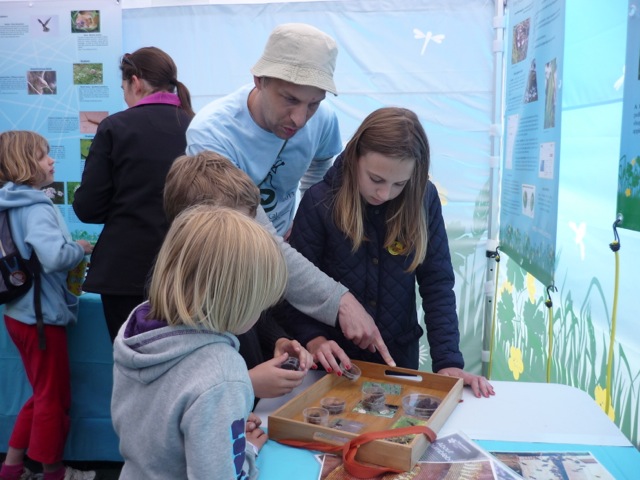
Playing the "Who's poo" game at Wychwood Festival.

Playing the “Who’s poo” game at Wychwood Festival.

Group members William and Frazer took part in the first music festival outing of the British Ecological Society 100 year celebration “Sex & Bugs & Rock ‘n Roll” at Wychwood (31 May – 3 June). Early reports suggest that over 900 people were “stickered” and around 100 people “swabbed” during the weekend. For full details of this event, and future activity, check out the blog and follow the BES Roadies on twitter @BESRoadies.

American tour: Biogeography meeting & Ecuador field work

February 26, 2013
Fray

PCRG COMPLETE AGAIN

Image

I am glad to say that after almost two months out of the office running around with 8 bags of equipment, Frazer and I have finished our tour of the Americas. As the work has been so diverse, we would like to split our comments and impressions into two different posts, we hope you enjoy them!

Continue Reading

Palynologishe Kring

January 9, 2013
WDG

Prof. H. Hoogiemstra Chair of Palaeoecology & Landscape ecology

Prof. H. Hoogiemstra Chair of Palaeoecology & Landscape ecology at IBED

Dutch and Belgian Palynology meeting
University of Amsterdam
13/12/2012

Many thanks to Henry Hooghiemstra for the invitation to present at the recent palynology meeting in Amsterdam hosted by the Institute of Biodiversity and Ecosystems Dynamics (IBED). The program of talks was broad and interesting ranging from the deep time geological history of the Amazon basin (Carina Hoorn) to the use of video game technology in visulizing landscapes (Bodo Schuetze); watch videos of his work, or read the thesis.

View Schuetze's work on recreating Mauritius in 3D on Vimeo

View Schuetze’s work on recreating Mauritius in 3D on Vimeo

 I contributed some new work on human-landscape interaction in the central Andes, entitled: Ecosystem service provision sets the pace for pre-Columbian Andean societal development”. It was very exciting to get feedback from such an esteemed audience on this new work. The days talks concluded with the IBED seminar given by Mark Bush (Florida Institute of Technology) which countinued the South American human-environment theme but we moved to the lowlands for “Amazonia in 1491: A paleoecological perspective”. Mark’s talk built on his recent work exmining the extent of human impact on Amazonia (references 1-3 below) which has cautioned against assuming widespread and intensive human impact within Amazonia prior to the arrival of Europeans.

Following the seminars we had drinks at the institute and an excellent meal in Amsterdam. Thanks again to Henry and all those at IBED who hosted a high class and scientifically stimulating meeting.

Continue Reading

Understanding pollen and spore diversity

November 2, 2012
WDG

Linnean Society Palynology Specialist Group meeting
Linnean Society of London
Burlington House
1st November 2012

Linnean Society (November 2012)

PCRG members at the Linnean Society 1st November
Left-Right: Hayley Keen, William Gosling, Alice Kennedy and Encarni Montoya

Yesterday four members of the Palaeoenvironmental Change Research Group (PCRG) visited the Linnean Society of London to attended the annual palynology meeting. The talks were excellent and covered a wide range of issues in palaynology  from the configuration of Late Triassic Cassopollis grains (Wolfram Kurschner, University of Oslo), through how pollen and spores are built (Stephen Blackmore, Royal Botanic Garderns, Edinburgh) to understanding global patterns of mass-extinctions with particular focus on the Cretaceous-Paleogene (Vivi Vajda, University of Lund). For further information on the days program click here to visit the meeting web site.

The PCRG contribution to the meeting was made by Hayley Keen who presented the first paper related to her doctoral research to an exteral audience entitled “Pollen counting for diverse tropical ecosystems”. The paper presented:  

  1. A statistical model (developed by co-author Felix Hanke) which simulaltes pollen counting in order to estimate the size of pollen count required to develop a robust ecological insight from the fossil pollen record, and
  2. compared model predictions with empirical data from a diverse tropopical ecosystem (Mera, Ecuador) to assess the reliablity of the model.

It is hoped the application of the model to fossil pollen counting will allow more efficient and effective use of palynologists time. The paper was very well recieved despite the audible intake of breath when Hayley recommened that to characterize pollen richness (diversity) in some settings pollen counts in excess of 2000 grains might be required!

Sediment sampling on the Andean flank, Ecuador

October 10, 2012
HayleyKeen

One of the key goals of the fieldtrip to Ecuador (August-September) was to sample organic and volcanic (tephra) layers from sedimentary exposures with the aim of obtaining new information about past envrionmental change in the region. Our Ecuadorian collaborator, Dr Patricia Mothes (Instituto Geofisico), had identified four of sites she thought might be useful too us: El Fatima Dique, Mera “2” Dique, El Rosol and Vinillos. 

Fatima section

At the Fatima site, near Puyo, a thin organic bed was sampled sandwiched between volcanic ash deposits. Wood macrofossils from this deposit have been dated to the last glacial period.

For further descriptions of what we found and field photos read on…

Continue Reading

Fieldwork: Papallacta and Cosanga

September 15, 2012
WDG

The second part of our Ecuadorian expedition took in lakes and sections close to the towns of Papallacta and Cosanga. The variation in climatic conditions was marked as we experienced first hand the transition from freezing fog and driving rain to burning sun and heat within a few tens of kilometers as we travelled from >4000 m down to around 1000 m elevation.

Vinillos Section

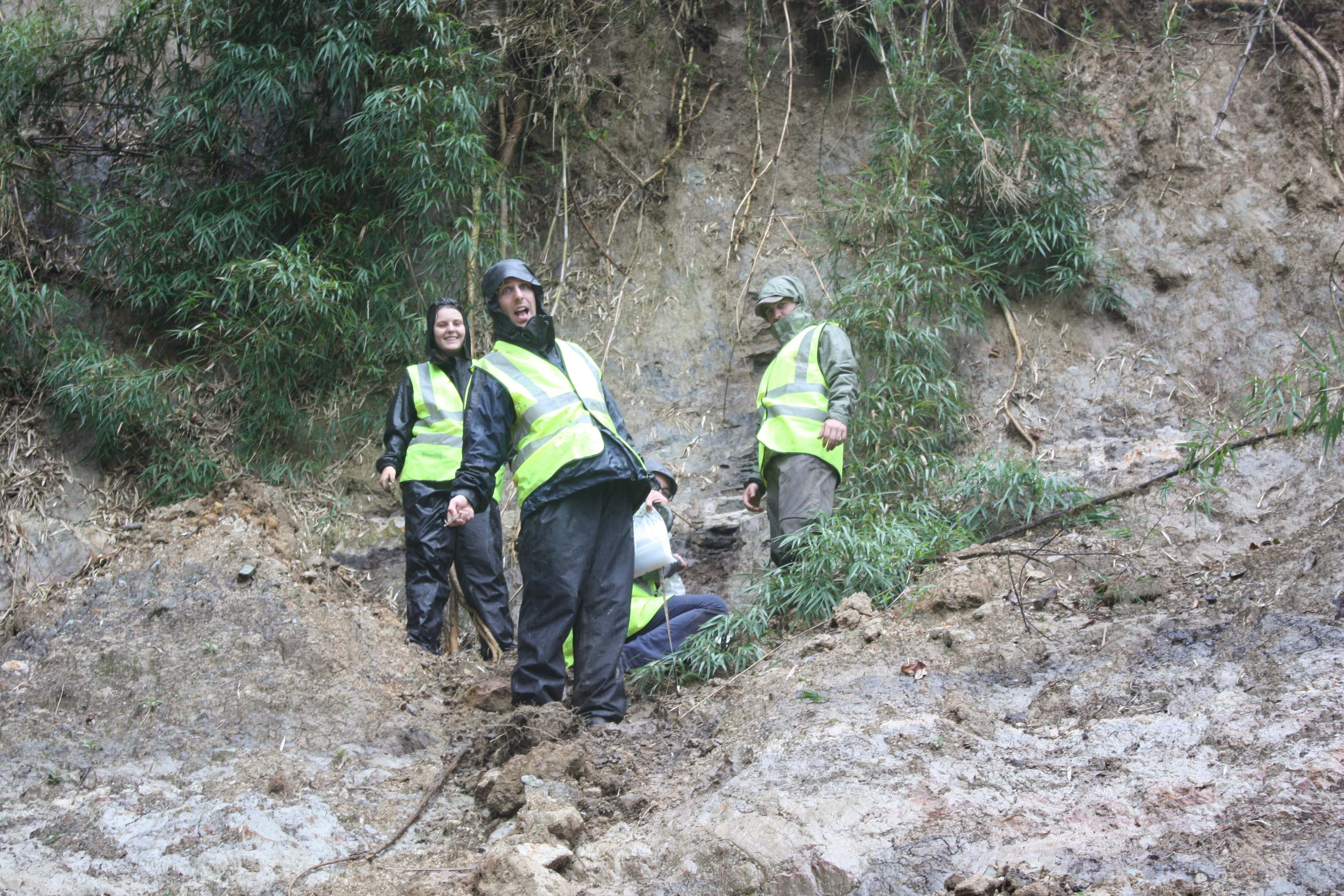
Sampling the sedimentary section at Vinillos was hampered by a tropical downpour. Sediments recovered from here include volcanic ash, mud slide deposits including large wood macrofossils and fine grained organic sediments probably deposited in still water environments.

Antenas near Cujuca

Preparing to recover a short core from a pond near the antenas at Cujuca. Short cores will be used for Chironomid analysis.

Tomorrow we will attempt to recover short cores from two more lakes. Then our final few days here in Ecuador will be spent visiting partners and packing up.

Mera fieldwork continued…

September 8, 2012
WDG

The first half of our field work expedition to Ecuador has now been completed. We had a very successful visit to Mera collecting samples from three new sections and recovered short cores from four lakes.

The sediment sections have yielded many wood macrofossils and samples for pollen analysis. It is anticipated that these will shed light on the nature of tropical vegetation during the last glacial period and before. Some of these samples will be analyzed by Hayley as part of her PhD research.

Mera "Forest bed"

The sedimentary section found near Mera contained layers of crushed forest beneath volcanic ash. These “forest beds” provide a snapshot of vegetation in the landscape at the time of eruption. Part of plants growing on the landscape thousands of years ago are clearly preserved in the sediment.

Continue Reading

Field work near Mera (Ecuador)

September 3, 2012
WDG

Mera (Ecuador) 

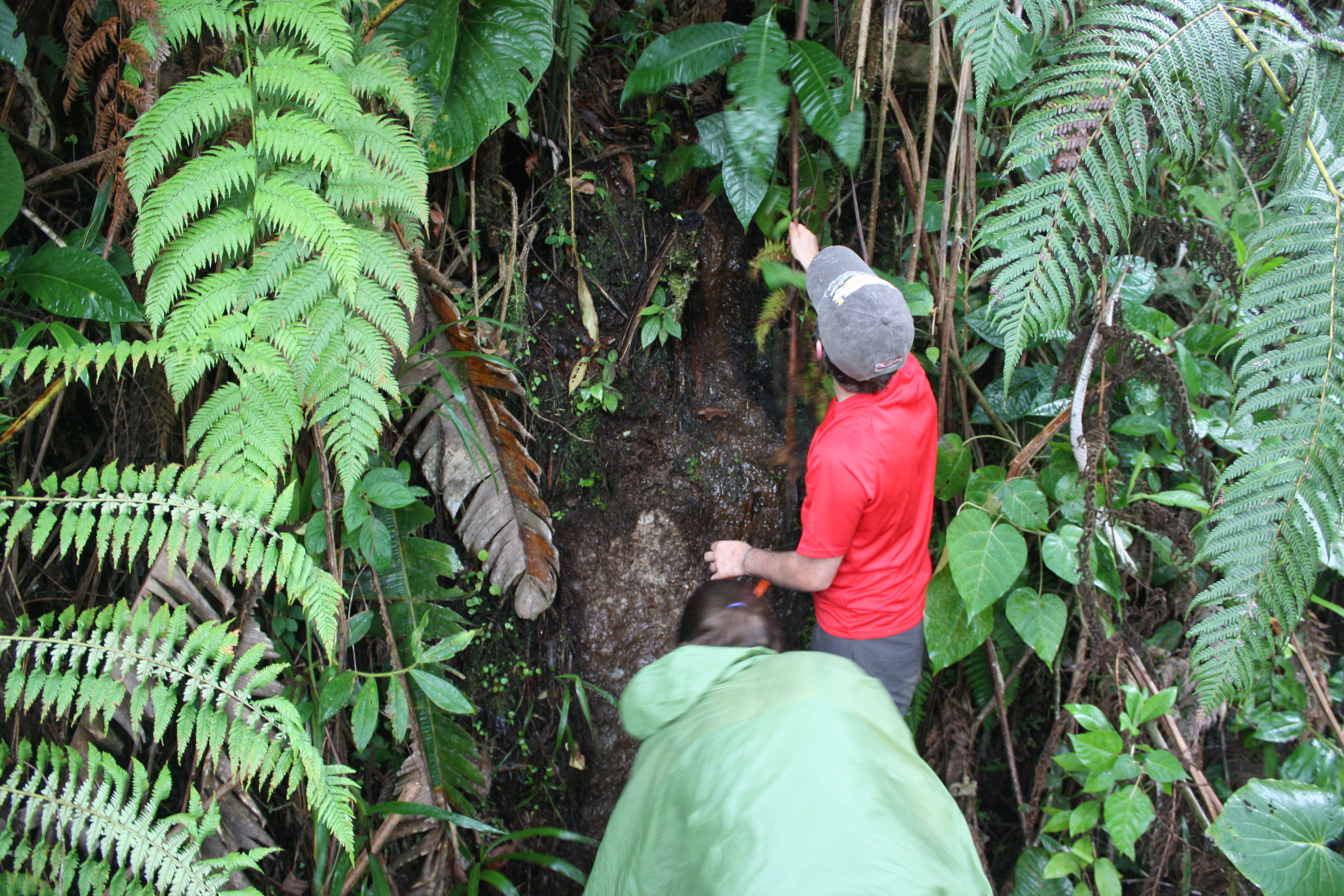
We have now spent two days in sampling sedimentary sections near the Rio Tigre close to Mera in Ecuador. The sections are peat deposits interspersed with volcanic ash and contain many wood macrofossils. It seems likely that the depositional environment was a shallow water swamp or bog. Although we will have to wait for the analysis of the fossil record to know the composition of the vegetation at the site.

Sediment Hunting near Mera

Sediment Hunting near Mera

Mera Rio Tigre section

Sunset at Giobambua hotel

Blog at WordPress.com.