Uncovering Ecuador’s landscapes and cultures: A student adventure

August 16, 2023
Bianca Tacoronte Gomes

By: Lina Cabrera Sáenz and Bianca Gomes

We invite you to join us on an incredible journey through the heart of Ecuador, where a group of adventurous students from Florida Institute of Technology embarked on a life-changing experience as part of the Neotropical Archaeoecology summer field course. Buckle up as we delve into the marvels of nature, indigenous cultures, and unforgettable experiences. Let’s dive right in!

Unveiling the Andes

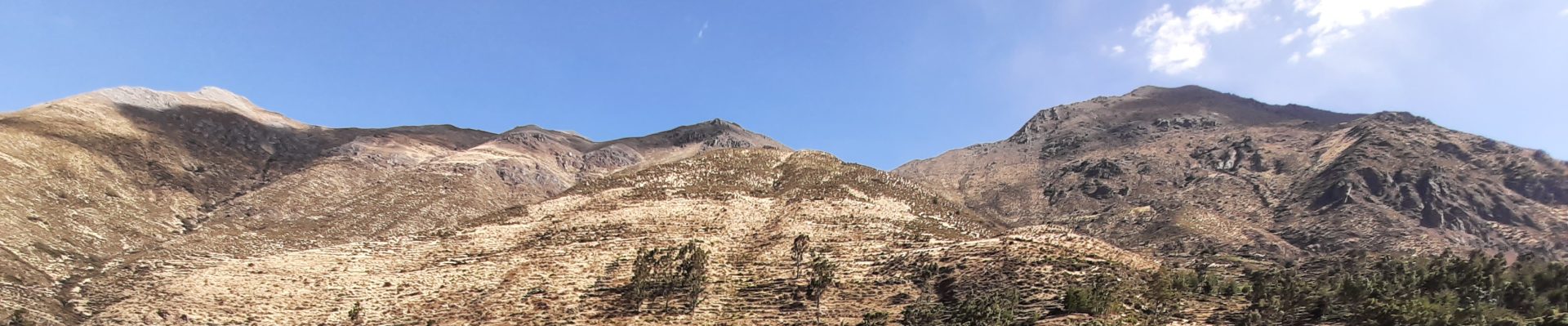
Our adventure began with a breath-taking visit to the Paramo at Cayambe-Coca National Park. Paramos are high altitude (3000-4000 metres) wet grasslands above the tree line and below the snow line within the equatorial Andes. Our tour guides Patricio and Byron gave us information about the local vegetation, focusing on the Polylepis tree (locally known as “paper tree”), which is unique to this sort of habitat. They also told us about some of the fascinating wildlife that can be seen here, such as the Andean Bear (Tremarctos ornatus) and the Andean Puma (Puma concolor).

We then descended through the cloud forest (3,600–3,400 meters) and lower montane rainforest (3,400–2,500 meters). Across these various habitats, we documented changes in hummingbird abundance and recorded their behaviour at four different feeder points: Guango Lodge, La Brisa, San Isidro Lodge, and Cascada el Hollin. The sheer diversity of hummingbird species left us in awe, and we marvelled at their iridescent feathers and incredible agility. 

We explored a waterfall near San Isidro Lodge (https://cabanasanisidro.com), and we were able to observe pre-Inca pottery. At the lodge we also saw a diverse array of bird species, which was delightful! The forest’s nightlife brought us close encounters with a group of nocturnal monkeys, and to our surprise, we stumbled upon a very rare mountain tapir. The following morning we saw a small agouti (a small rodent) prowling around the lodge, and ended our adventures in the cloud forest on a high note. 
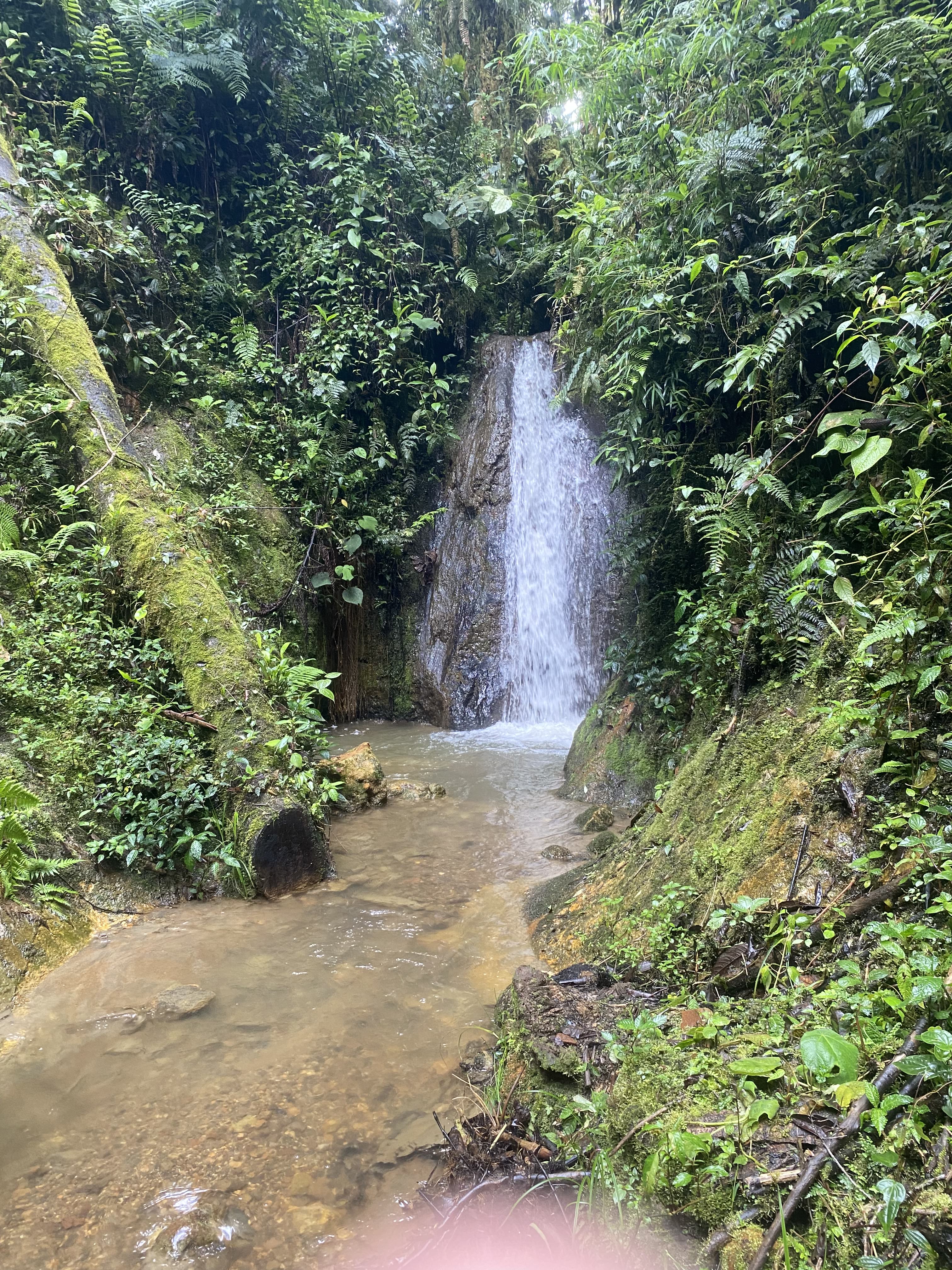
San Isidro waterfall and some of the animal diversity we observed

Continue Reading
Introducing ANSIS BLAUS

June 26, 2023
ablaus

Ansis Blaus is a Latvian postdoctoral research associate exploring patterns of climatic and anthropogenic change in the Neotropical Paleoecology Research Group led by Mark Bush at Florida Institute of Technology. He earned his Ph.D. in Earth Sciences from Tallinn University of Technology, Estonia. Supervised by Dr. Triin Reitalu he worked on modern pollen-plant relationships and palaeoecological reconstructions of peatlands and calcareous spring fens with an emphasis on biodiversity and plant functional trait reconstructions.

Currently, at Florida Tech, Ansis works on pollen data and other proxies from the sediment cores collected in the tropical Amazon. He investigates the tropical forest changes in relation to the global climate from a historical perspective, particularly during the Last Glacial Period and the Last Interglacial ca. 130 thousand years ago. His work will shed light on the history of dynamics and climate tipping points in the Amazonian rainforest. This research is particularly important in the face of the current global climate crisis and could help to anticipate the tropical forest response to the changing climate in the future.

Another objective of Ansis’s work is to study the pollen signature of human disturbance in the Amazon Basin as a means to model and interpret human presence and activities in the past and to understand human-nature interactions in tropical forest ecosystems in different spatial and temporal scales. For that, he is collaborating with the University of Amsterdam, Institute for Biodiversity and Ecosystem Dynamics, and working on a project aiming to quantify tropical pollen assemblages led by Crystal McMichael.

Ansis is fascinated by the potential revelations that come with the intersection of neoecology and paleoecology and human interactions. His interest in paleoecology, biodiversity, and various natural processes comes through the sense of pursuing a higher purpose for society and the well-being of our planet, and from the concern that humans have altered tropical forests and most other ecosystems in the world to the level of a negative rebound effect. Ansis believes that we must study and understand these ecosystems from different perspectives to decrease the current damage, predict future scenarios and to develop conservation strategies for both nature and human well-being.

Warming, drought, and disturbances lead to shifts in functional composition

June 20, 2023
WDG

Open access:

van der Sande, M.T., Bush, M.B., Åkesson, C.M., Berrio, J.C., Correia Metrio, A., Flantua, S.G.A., Hooghiemstra, H., Maezumi, S.Y., McMichael, C.N.H., Montoya, E., Mosblech, N.A.S., de Novaes Nascimento, M., Peña-Claros, M., Poorter, L., Raczka, M.F. & Gosling, W.D. (2023) Warming, drought, and disturbances lead to shifts in functional composition: A millennial-scale analysis for Amazonian and Andean sites. Global Change Biology. DOI: 10.1111/gcb.16818

Neogene History of the Amazonian Flora: A Perspective Based on Geological, Palynological, and Molecular Phylogenetic Data

June 9, 2023
WDG

Open access:

Hoorn, C., Lohmann, L.G., Boschman, L.M. & Condamine, F.L. (2023) Neogene History of the Amazonian Flora: A Perspective Based on Geological, Palynological, and Molecular Phylogenetic Data. Annual Review of Earth and Planetary Sciences 51, 419-446. DOI: 10.1146/annurev-earth-081522-090454

The Ecology of the Past: Inagueral lecture

January 12, 2023
WDG

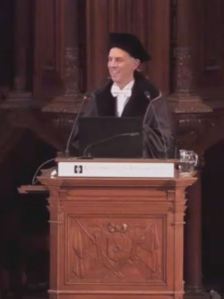
William Gosling giving his oratie “The Ecology of the Past” at the Aula (University of Amsterdam), 22 December 2022.

On the 22 December I gave my oratie (inaugural lecture), entitled “The Ecology of the Past”, related to my appointment as Professor of Palaeoecology & Biogeography at the University of Amsterdam. I really enjoyed the opportunity to mark this personal milestone with some many colleagues, friends and family. In case you missed the event you can watch it online via the universities portal by clicking here (or on the photo).

Note: (1) to flip between seeing the slides and the video feed just click on the screen, (2) running time of lecture until 50 minutes.

Reference

Gosling, W.D. (2022) The Ecology of the Past
Inaugural speech, University of Amsterdam.

Long-term fire and vegetation change in northwestern Amazonia

December 6, 2022
WDG

Open access:

Heijink, B.M., Mattijs, Q.A., Valencia, R., Philip, A.L., Piperno, D.R. & McMichael, C.N.H. (2022) Long-term fire and vegetation change in northwestern Amazonia. Biotropica DOI: 10.1111/btp.13175

New insights from a Poaceae pollen morphological study in the Amazon

November 8, 2022
WDG

Open access:

Wei, C., Jardine, P.E., Gosling, W.D. & Hoorn, C. (2023) Is Poaceae pollen size a useful proxy in palaeoecological studies? New insights from a Poaceae pollen morphological study in the Amazon. Review of Palaeobotany and Palynology 308, 104790. DOI: 10.1016/j.revpalbo.2022.104790

From new methods to new insights: Advancing palaeoecology with @PalaeoNick

September 21, 2022
WDG

During the delivery of this years BSc Palaeoeclogy course at the University of Amsterdam (UvA) I discussed with a number of students about the nature and purpose of understanding the ecology of the past. This lead me to highlighting the research of Nick Loughlin (@PalaeoNick) from his PhD at The Open University and the subsequent work that he has done. I though it might be interesting to also share this here…

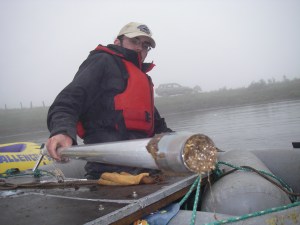
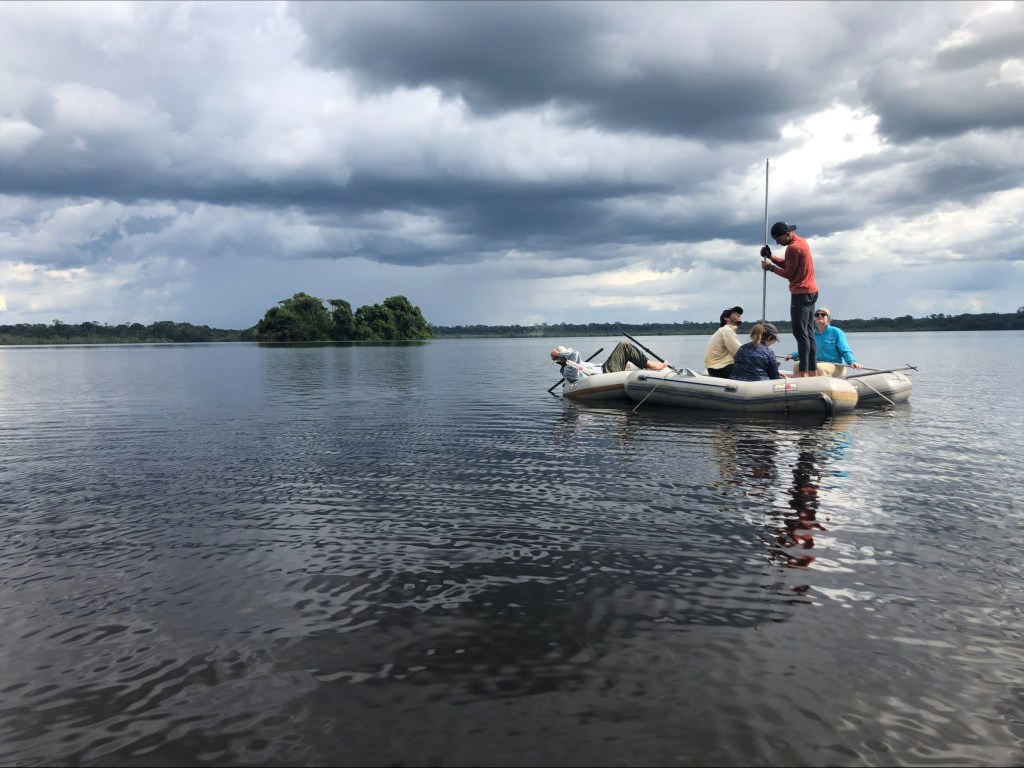
Nick recovers a sediment core for his PhD project.
Nick Loughlin during his PhD field work in Ecuador

Nick’s study sought to understand better the ecological history of the biodiverse eastern Andean flank in Ecuador. To achieve this he went into the field and recovered sediments from a lake and a sedimentary section exposed by a road cutting. He analysed the sediments to reveal vegetation change (pollen analysis), fire histories (charcoal analysis), and past animals in the landscape (non-pollen palynomorphs, or NPPs). To extract extra ecological information from his samples he developed the methodological approach for examining NPPs in a tropical setting (Loughlin et al. 2018a). He then combined all the different palaeoecological approaches to reveal the drivers of vegetation change during the last glacial period (in the absence of humans; Loughlin et al. 2018b), and during the last 1000 years (when indigenous and European human populations radically altered the landscape; Loughlin et al. 2018c). The insights gained from Nicks research provided empirical evidence of how humans have been modifying this biodiversity hotspot on the timescales relevant to the lifecycles of tropical trees. These findings and ideas were collated in his PhD Thesis at The Open University which was supervised by Encarni Montoya, Angela Coe and myself (Loughlin, 2018a). Subsequently, Nick has been working to broaden the impact of his work and to communicate his findings to the broader scientific and conservation community. This has lead to two new publications focused on understanding baseline ecological function and conservation implications (Loughlin et al. 2022, Nogué et al. 2022).

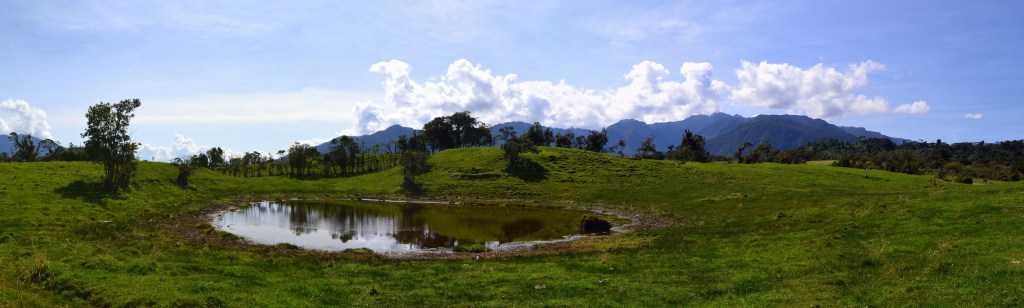
Lake Huila
Evidence of past ecological change recovered from Lake Huila (Ecuador) revealed how past peoples had modified the landscape of the eastern Andean biodiversity hotspot.

The arch of research carried out by Nick, I think, really demonstrates the important of understanding the ecology of the past – without his detailed investigation of microfossils we could not have seen the impacts of indigenous communities on the past Andean landscape, or identify the consequences of the European depopulation; or been able to estimate the timescales of the ecological change!

References

Continue Reading

Incorporating a palaeo-perspective into Andean montane forest restoration

September 2, 2022
WDG

Open access:

Loughlin, N.J.D., Gosling, W.D., Duivenvoorden, J.F., Cuesta, F., Mothes, P. & Montoya, E. (2022) Incorporating a palaeo-perspective into Andean montane forest restoration. Frontiers in Conservation Science 3, 980728. DOI: 10.3389/fcosc.2022.980728

Blog at WordPress.com.