Mapping Ancient Africa: INQUA Rome session

July 3, 2023
WDG

The Mapping Ancient Africa (MAA) project has a double session of talks and a poster session at the INQUA congress in Rome 2023. Our session will be on Wednesday 19 July.

If you are at the INQUA Rome congress please come along to our talks and posters in Session 64: Mapping Ancient Africa: Climate, Vegetation & Humans.

Part 1: 08:30-10:30

  • Giosan et al. When the desert was a lake: Providing context for Homo sapiens development in the northern Kalahari
  • Chase et al. Paleolakes and socioecological implications of glacial “greening” of the South African interior
  • Biddulph et al. Spatiotemporal variability in the initiation and development of peatlands across the central Congo Basin
  • Blinkhorn et al. Evaluating refugia in recent human evolution in Africa
  • Aureli et al. Homo sapiens behaviour and adaptation in East Africa. New evidence from an open-air site in a modern Ethiopian savannah environment: the GOT10 site
  • Dembele Climatic fluctuations during the last millenium and their impact on political history and human settlements in West Africa
  • Porchier et al. Annually resolved hydroclimate variability in the East African Rift Valley at a time critical for hominin dispersion
  • Effiom et al. Late Holocene palaeoecological studies at Lake St Lucia, KwaZulu-Natal

Part 2: 11:00-13:00

Continue Reading

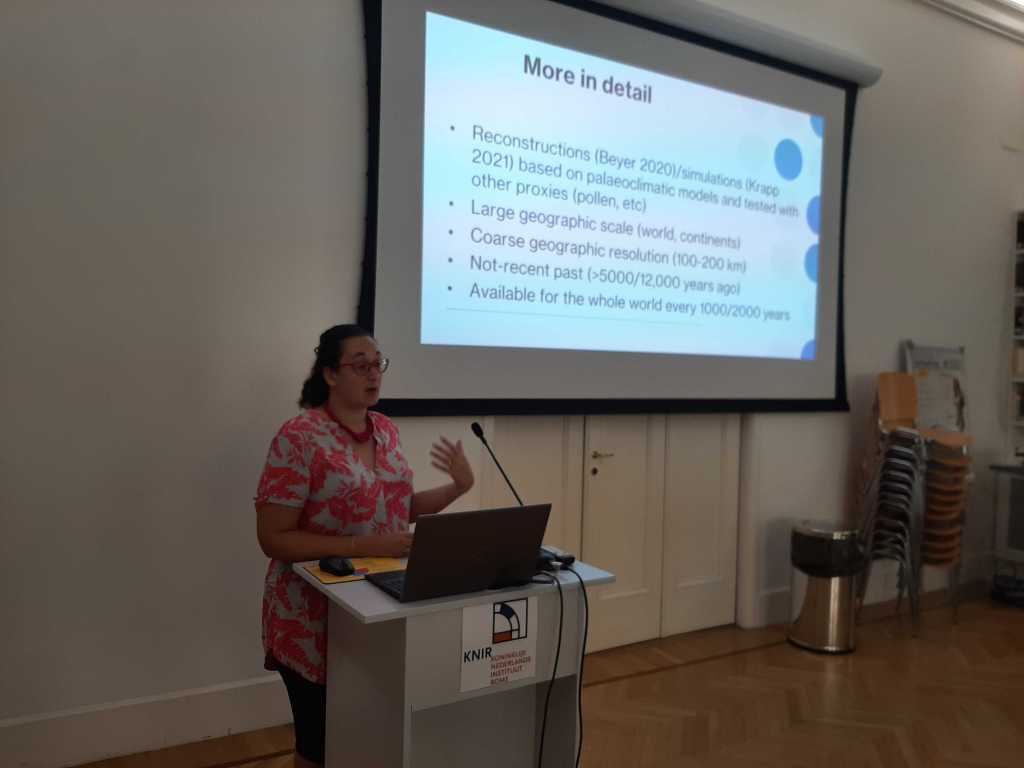
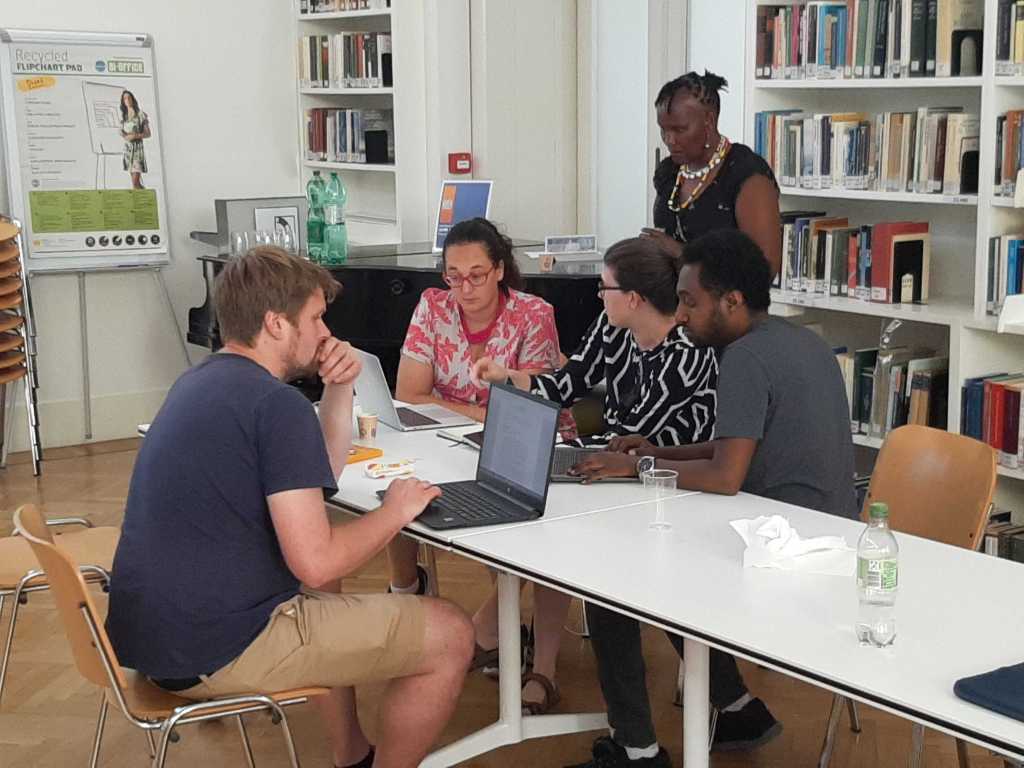
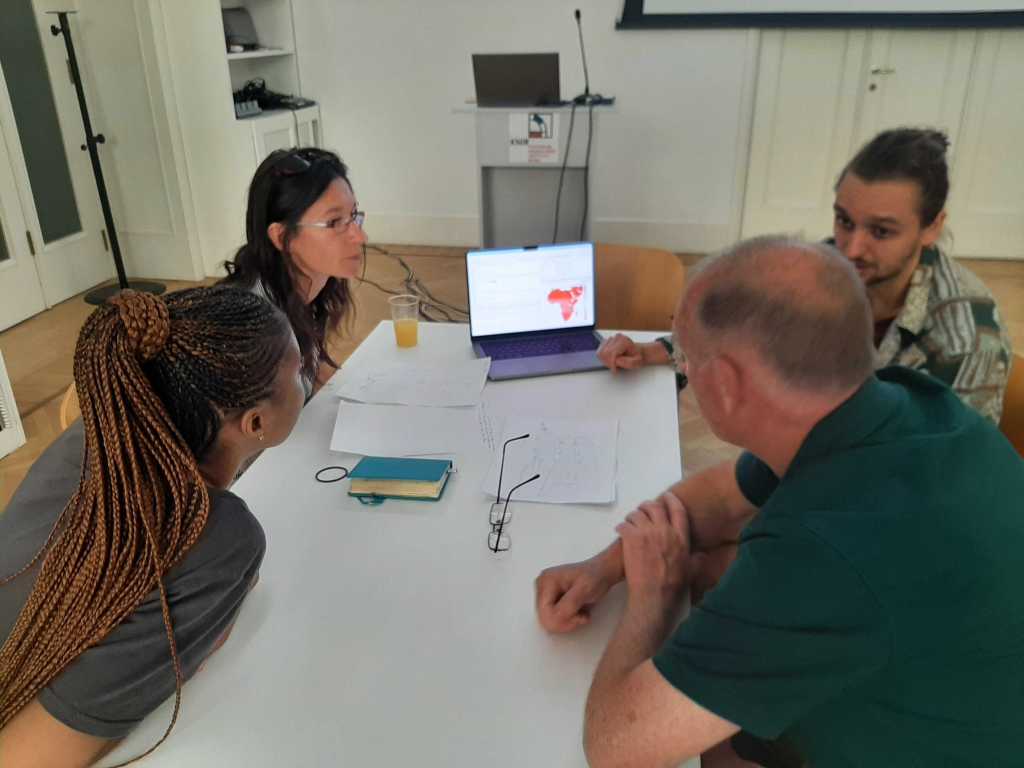
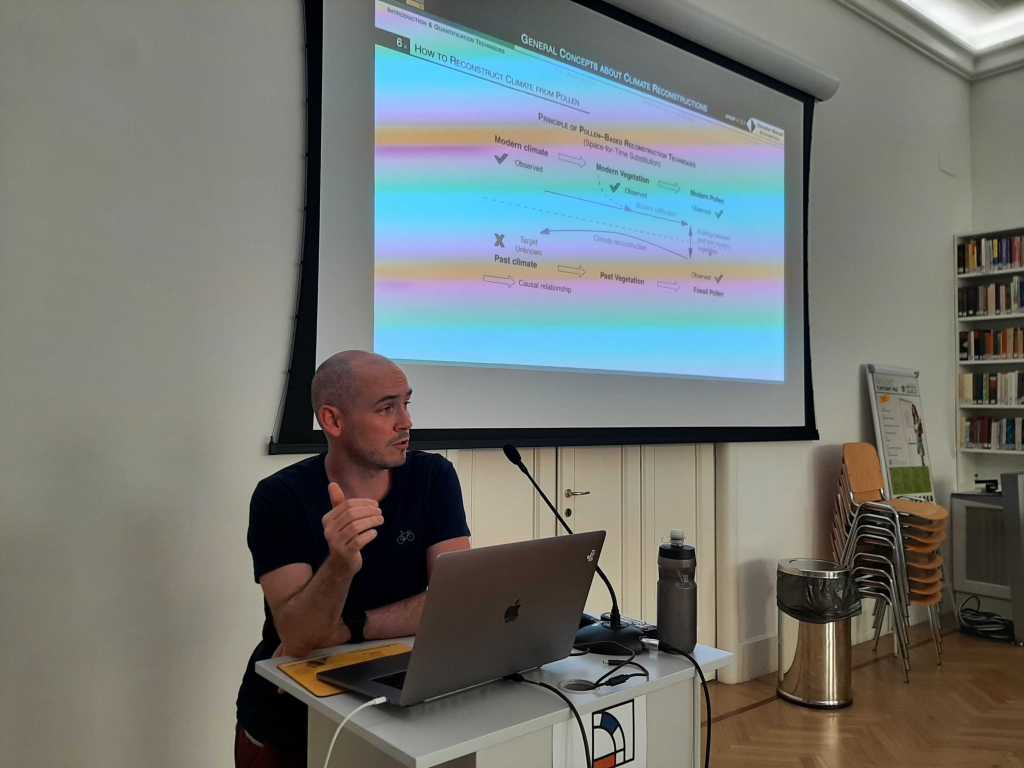
Mapping Ancient Africa: Workshop in Rome

June 23, 2023
WDG

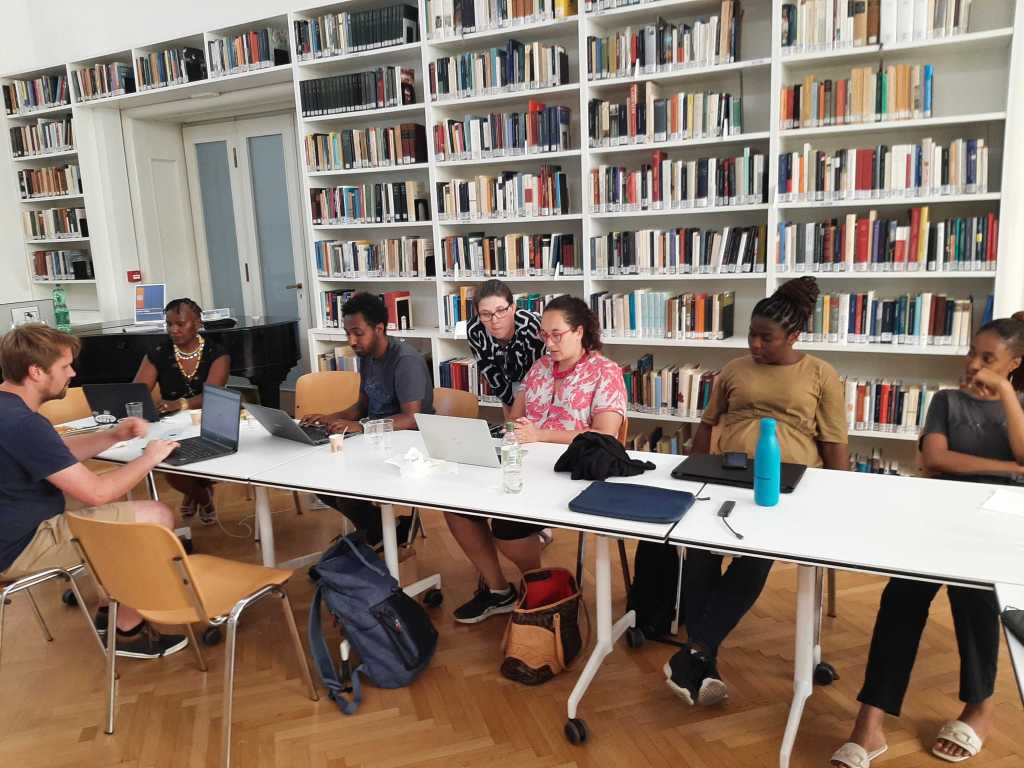
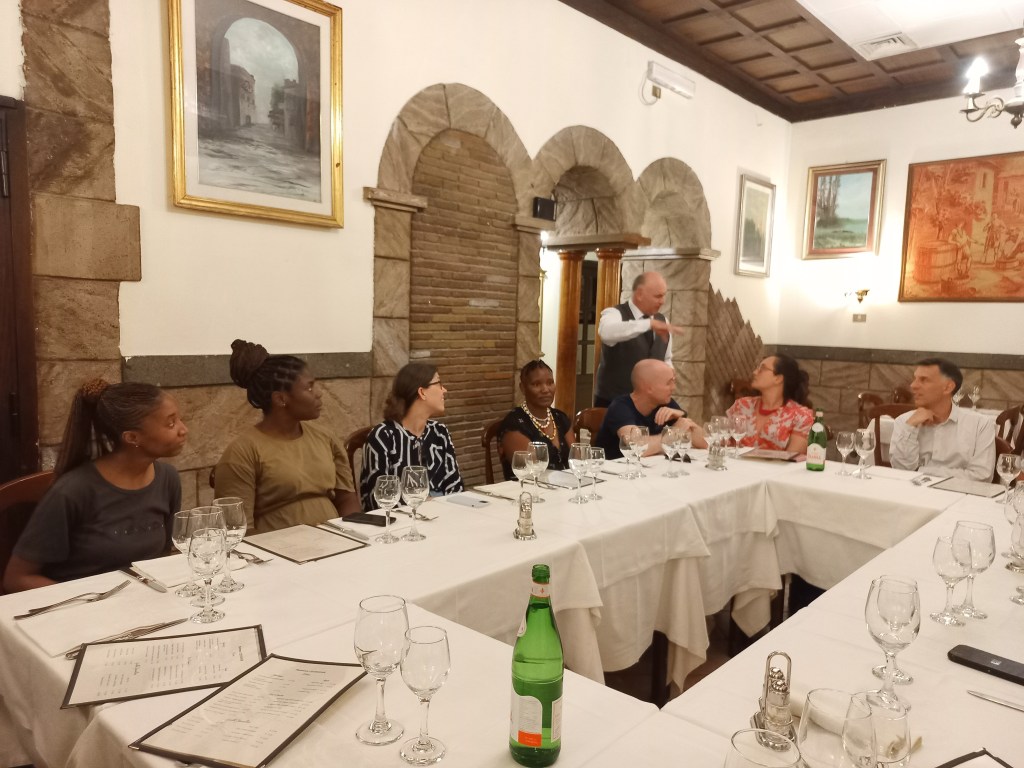
The Mapping Ancient Africa (MAA) workshop in Rome will take place on the 12 and 13 July 2023. The workshop supported by International Union for Quaternary Research (INQUA) and hosted by the Royal Netherlands Institute in Rome. During the workshop we will be working towards aims of the MAA project to strengthen the research community of Quaternary scientists working across Africa, and to further our scientific goals of understanding past climate change. To achieve this we will work collaboratively to:

  • simulate past climate change in Africa,
  • develop the proposed Special Issue of Quaternary International, and
  • plan the next steps for the MAA project.

Twenty-seven people are registered for the workshop and we look forward to seeing them in Rome. If you are not registered for the workshop but still want to participate this is possible. On the 13 July between 15:00 and 18:00 CEST the workshop sessions will be online via Zoom. To obtain the Zoom link either visit the MAA Slack channel, or contact William Gosling. During the online part of the meeting we will present the outputs from the palaeoclimate mapping activity, the plans for the special issue, and outline the ideas future of MAA. Feedback from the wider MAA community will be very welcome.

INQUAlogo

Mapping Ancient Africa: Video of seminar 13

May 19, 2023
WDG

The thirteenth Mapping Ancient Africa seminar was delivered by Andrea Manica on the 18th May 2023. In the seminar Andrea introduced the pastclim R package and gave examples of how it can be applied to address questions related to human evolution and dispersal.

Details of this seminar can be found here. You can find more Mapping Ancient Africa seminar videos on the “Ecology of the Past” YouTube channel.

INQUAlogo

Mapping Ancient Africa: Seminar 13

May 17, 2023
WDG

The thirteenth Mapping Ancient Africa online seminar will take place on 18 May 2023 (17:00 CEST). 

The seminar will be delivered via Zoom. The link for the seminar can be obtained from the MAA Slack channel or by contacting the chair of this seminar (William Gosling). If you want to know more about the Mapping Ancient Africa project visit our web pages and please do not hesitate to get in contact if you want to get involved.

INQUAlogo

Mapping Ancient Africa: Video of Seminar 12

April 14, 2023
WDG

The seminar delivered by Emma Mbua (National Museums of Kenya) on the 13th April 2023 was the twelfth in the Mapping Ancient Africa series. The seminar highlighted new finds from archaeological sites in eastern Africa that have yielded bones of various animals, including early humans.

Details of this seminar can be found here. You can find more Mapping Ancient Africa seminar videos on the “Ecology of the Past” YouTube channel.

To find out more and keep up to date with new insights from this research visit the project web sit here.

INQUAlogo

Mapping Ancient Africa: Video of seminar 11

March 28, 2023
WDG

The 11th Mapping Ancient Africa seminar took place on Thursday 16 March (2023). The seminar was delivered by Hannah Keller (Yale University) and highlighted her ongoing research into ostrich egg shells and environmental change she is undertaking as part of the “Malawi Ancient Lifeways and Peoples” project.

Details of this seminar can be found here. You can find more Mapping Ancient Africa seminar videos on the “Ecology of the Past” YouTube channel.

To find out more and keep up to date with new insights from this research visit the project web sit here.

INQUAlogo

Mapping Ancient Africa: Seminar 12

March 27, 2023
WDG

The twelfth Mapping Ancient Africa online seminar will take place on 13 April 2023 (17:00 CEST – Please note switch to European summer time).

  • Speaker: Emma Mbua (National Museums of Kenya)
  • Title: Newly discovered fossil sites in Kenya and their implications in human evolution discussions
  • Related publication: Mbua, E., Kusaka, S., Kunimatsu, Y., Geraads, D., Sawada, Y., Brown, F.H., Sakai, T., Boisserie, J., Saneyoshi, M., Omuombo, C., Muteti, S., Hirata, T., Hayashida, A., Iwano, H., Danhara, T., Bobe, R., Jicha, B. & Nakatsukasa, M. (2016) Kantis: A new Australopithecus site on the shoulders of the Rift Valley near Nairobi, Kenya. Journal of Human Evolution 94, 28-44. DOI: 10.1016/j.jhevol.2016.01.006
  • Find out more about Emma’s work by visiting her “Trowel Blazers” profile.

The seminar will be delivered via Zoom. The link for the seminar can be obtained from the MAA Slack channel or by contacting the chair of this seminar Rahab Kinyanjui. If you want to know more about the Mapping Ancient Africa project visit our web pages and please do not hesitate to get in contact if you want to get involved.

INQUAlogo

The Holocene

March 24, 2023
WDG

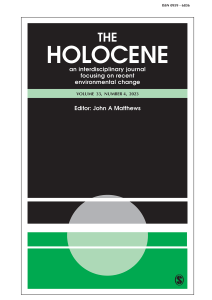
I am excited to announce that I have recently joined the “Advisory Editorial Board” of The Holocene journal. Many thanks to editor-in-chief John Matthews for the invitation. Interesting to join a very experienced team, which includes both my PhD and post-doc supervisors; the esteemed Frank Mayle and Mark Bush! I look forward to receiving interesting new papers to examine.

The Holocene journal publishes research, review and forum papers focused on environmental change during the Holocene (last 11,700 years). It encourages the submission of manuscripts with an interdisciplinary approach covering palaeoenvironments, palaeoclimate, palaeoecology, palaeohydrology, palaeopedology, palaeoceanography and geo-archaeology. So if you have a some research in this area that you are looking for a home for please check out the details aims and scope, and criteria on the journal web page, click here.

Mapping Ancient Africa: Seminar 11

February 28, 2023
WDG

The eleventh Mapping Ancient Africa online seminar will take place on 16 March 2023 (17:00 CET). Details are as follows:

  • Speaker: Hannah Keller (Yale University) 
  • Title: Ostrich eggshell taphonomy: Forager subsistence strategies and environmental indicators in northern Malawi during the Late Pleistocene and Early Holocene
  • To find out more about Hannah’s work visit her blog: Postcards from an Archaeologist

The seminar will be delivered via Zoom. The link for the seminar can be obtained from the MAA Slack channel or by contacting the chair of this seminar Lynne Quick. If you want to know more about the Mapping Ancient Africa project visit our web pages and please do not hesitate to get in contact if you want to get involved.

INQUAlogo

Mapping Ancient Africa: INQUA congress support

October 4, 2022
WDG

The Mapping Ancient Africa (MAA) project is offering five bursaries to help African based and/or early career researchers^ attend the up coming INQUA Rome congress. Each bursary will around Euro 1000 and should be used towards covering the cost of registration, accommodation and/or travel for the congress.

Application criteria:

  • Abstract submitted to INQUA Rome congress either to the Mapping Ancient Africa session, or to another session on a related topic (Deadline 1 November 2022).
  • Commitment to contributing an article for consideration to be published in the proposed MAA special issue of Quaternary International; for frame of references of the MAA project click here.

To apply submit the following information via emails to William Gosling as the corresponding Principle Investigator of the project. Applications should be clearly marked MAA-Application-YourName in the subject line:

  • Evidence of submission of an abstract to the INQUA Rome congress (copy of confirmation email and abstract).
  • Letter of motivation, including fit of the proposed article to the MAA aims and goals and statement of commitment to submit an article for consideration to be published in the Mapping Ancient Africa special issue of Quaternary International^^ (not more than 1 page)
  • Short academic CV, including highlight of up to 5 published articles indicating the scientific importance and your role in the publication (not more than 2 pages).

In the event of more applications being received than funding is available awards will be made by the MAA team (PIs and co-PIs) on the basis of the fit of the research to the MAA aims and goals. To receive funding receipts for all the expenses incurred will need to be provided (following INQUA regulations).

Deadline for application: 7 November 2022

Announcement of funding: 14 November 2022

INQUAlogo

^ following definition for Early Career Researchers (ECR) or Developing Country Researchers (DCR) provided by INQUA.

^^ please note that no guarantee of final publication is given or implied by this commitment. All submitted manuscripts will be subject to the usual rigorous peer review procedures for the journal.

Blog at WordPress.com.