Pinto, E., Cuesta, F., Bernardi, A., Llerena-Zambrano, M., Pérez, ÁJ., van der Sande, M.T., Gosling, W.D. & Burgess, K.S. (2023) Determinants of above-ground carbon stocks and productivity in secondary forests along a 3000-m elevation gradient in the Ecuadorian Andes. Plant Ecology & DiversityDOI: 10.1080/17550874.2023.2274844
We invite you to join us on an incredible journey through the heart of Ecuador, where a group of adventurous students from Florida Institute of Technology embarked on a life-changing experience as part of the Neotropical Archaeoecology summer field course. Buckle up as we delve into the marvels of nature, indigenous cultures, and unforgettable experiences. Let’s dive right in!
Unveiling the Andes
Our adventure began with a breath-taking visit to the Paramo at Cayambe-Coca National Park. Paramos are high altitude (3000-4000 metres) wet grasslands above the tree line and below the snow line within the equatorial Andes. Our tour guides Patricio and Byron gave us information about the local vegetation, focusing on the Polylepis tree (locally known as “paper tree”), which is unique to this sort of habitat. They also told us about some of the fascinating wildlife that can be seen here, such as the Andean Bear (Tremarctos ornatus) and the Andean Puma (Puma concolor).
We then descended through the cloud forest (3,600–3,400 meters) and lower montane rainforest (3,400–2,500 meters). Across these various habitats, we documented changes in hummingbird abundance and recorded their behaviour at four different feeder points: Guango Lodge, La Brisa, San Isidro Lodge, and Cascada el Hollin. The sheer diversity of hummingbird species left us in awe, and we marvelled at their iridescent feathers and incredible agility.
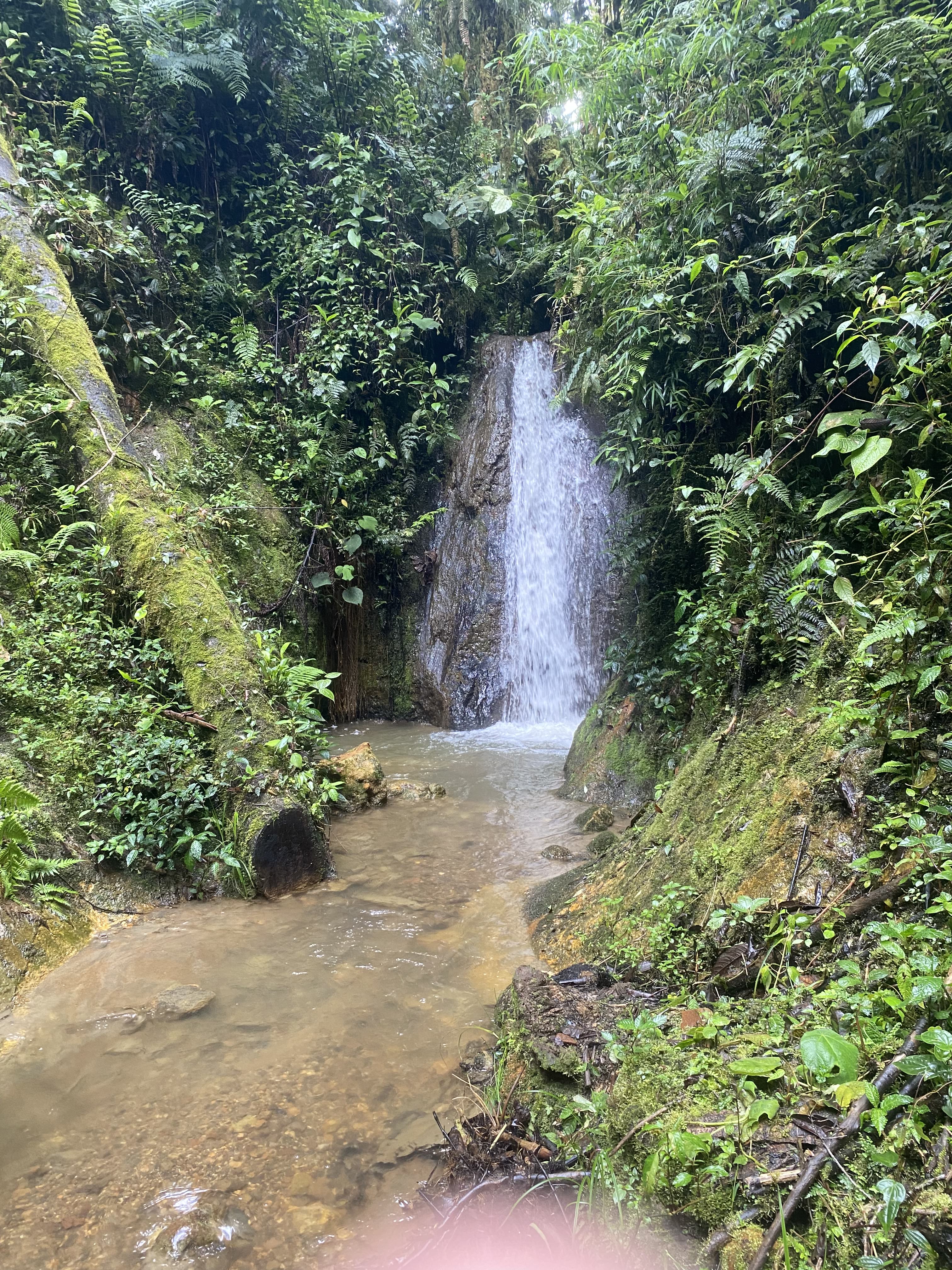
We explored a waterfall near San Isidro Lodge (https://cabanasanisidro.com), and we were able to observe pre-Inca pottery. At the lodge we also saw a diverse array of bird species, which was delightful! The forest’s nightlife brought us close encounters with a group of nocturnal monkeys, and to our surprise, we stumbled upon a very rare mountain tapir. The following morning we saw a small agouti (a small rodent) prowling around the lodge, and ended our adventures in the cloud forest on a high note.
San Isidro waterfall and some of the animal diversity we observed
The June 2023 meeting of the Dutch palynological society (Palynologische Kring) took place at the offices of the Dutch National Cultural Heritage Agency (Rijksdienst Cultureel Erfgoed) in Amersfoort. The focus of this meeting was the past forest landscape of the Netherlands. The meeting included the annual report of the society, three scientific talks, and a prize giving for the best MSc thesis.
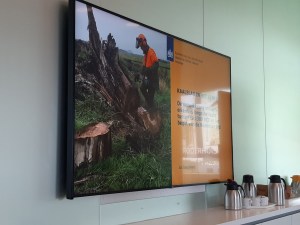
Presentation of Jos Bazelmans showed the huge amount of woody material extracted from Dutch peat bogs.
The scientific part of the meeting was kicked off my Roy van Beek who presented results from his ongoing project on the peatlands of the Netherlands which suggest peatland expansion occurred between 5500 and 3500 years ago (van Beek et al., 2023). The second talk was by our host, Otto Brinkkemper, and traced the history of woodlands across the Netherlands on the basis of macrofossil finds; including huge tree stumps remarkably preserved in peatlands (Bazelmans et al., 2021; Kooistra et al., 2006). The final talk was given by Jos Bazelmans who showed the remarkably high volume of tree stumps that have been recovered from the Netherlands, and how tree rings from these 100s of record are being used to reconstruct forest histories and past climate change. It was interesting to hear that the average age of the tree stumps found was around 250 years, and that some of the trees had lived to around 400 years in exceptional cases.
Kelly with her proud supervisors Stefan Uitdehaag (right), and I (left)
The final section of the meeting was the prize giving. Corrie Barkels, on behalf of the independent judging panel, announced Kelly van Leeuwen as the winner for her thesis entitled “Using soils samples and footwear to improve forensic palynology”. Her thesis was conducted at the University of Amsterdam as part of her MSc Earth Sciences degree and was conducted in collaboration with the Netherlands Forensic Institute. Congratulations Kelly!
de Wolf, I.K., McMichael, C.N.H., Philip, A.L. & Gosling, W.D. (2022) Characterising Dutch forests, wetlands and cultivated lands on the basis of phytolith assemblages. Netherlands Journal of Geosciences 101, e17. DOI: 10.1017/njg.2022.14
This paper started off as a research thesis undertaken by Iris de Wolf at the University of Amsterdam as part of her BSc Biology degree in 2018. The project was supervised by Crystal McMichael and William Gosling and has subsequently been further developed. If you are student or researcher interested in undertaking a similar type of projects please get in touch.
Listen to Iris’s journal podcast speaking about the subject here.
Gosling, W.D., Miller, C.S., Shanahan, T.M., Holden, P.B., Overpeck, J.T. & van Langevelde, F. (2022) A stronger role for long-term moisture change than for CO2 in determining tropical woody vegetation change. Science 376, 653-656. https://doi.org/10.1126/science.abg4618
To access this article FREE through the Science author referral service click here.
For more on the palaeoecological dataset underpinning this research check out the PhD thesis of Charlotte Miller by clicking here or here.
Nascimento, M.N., Heijink, B.M., Bush, M.B., Gosling, W.D. & McMichael, C.N.H. (2022) Early to mid-Holocene human activity exerted gradual influences on Amazonian forest vegetation. Philosophical Transactions of the Royal Society B: Biological Sciences 377, 20200498. https://doi.org/10.1098/rstb.2020.0498
Houngnon A, Adomou AC, Gosling WD, Adeonipekun PA. 2021. A checklist of vascular plants of Ewe-Adakplame Relic Forest in Benin, West Africa. PhytoKeys 175:151. https://doi.org/10.3897/phytokeys.175.61467
Hi everyone, and welcome to the ALPHA project: Assessing Legacies of Past Human Activities in Amazonia!
This project will increase our understanding of how past disturbances have influenced the biodiversity and structure of Amazonian rainforests. The coming years, we will work on reconstructing past fire and vegetation history of forest plots in Amazonia, and how that history relates to modern biomass and modern carbon dynamics. ALPHA is important for forest conservation, because results can be used to prioritize land for conservation. ALPHA results will also give an estimation of the Amazonian rainforests’ ability to sequester carbon, which is important for global carbon models. dr. C.N.H. McMichael received an ERC grant to research ALPHA in Amazonia together with 2 PhD students, 1 post-doc, 2 technicians and a senior-staff. At the beginning of March, the positions were filled, and our team was complete. But then COVID-19 happened… and our team was spread over continents!
To keep ALPHA going, we started with weekly virtual lab meetings. Because these fruitful discussions are online, other researchers soon joined from the US, UK and Jamaica. It is not your average “vrijmibo”, but very fun and a nice way to stay connected! One of the papers we have discussed is the “Asynchronous carbon sink saturation in African and Amazonian tropical forests” from Hubau et al (2020).
In 2015, Brienen et al. published an article about the growth and mortality of trees in Amazonian rainforests for the period of 1985 to 2015. Their results showed a decline of the carbon sink in Amazonian forests.
Now, Hubau et al. (2020) added results from African forest plots and compared the net carbon sink of the African and Amazonian forests. Instead of a long-term decline, African forests showed a stable carbon sink. The difference in their carbon sink was because more trees died in Amazonia, but not in African forests. But since 2010, a decline is also visible in the carbon sink of African forests. This suggests that the two forests have a different ‘saturation’ point in the carbon they can storage.
A statistical model with CO2, temperature, drought and forest dynamics was created to predict the carbon changes of the forests over time. This model predicts that the carbon sink of African forests will show a gradual decline and the carbon sink of Amazonian forests will decline fast.
Overall, this paper highlights that our rainforests may not be the carbon sink we had thirty years ago. We will need to reduce greenhouse gas emissions sooner, if we want to limit global warming. Also, this paper showed how important forest dynamics are to accurately model and predict the carbon storage of Amazonia. Hopefully, the ALPHA research project will make a contribution to this!
USING PALAEOECOLOGICAL PROXIES TO DETERMINE ANTHROPOGENIC IMPACT ON VEGETATION DURING PRE-COLONIAL, COLONIAL AND POST-COLONIAL PERIOD IN KENYA’S HIGHLANDS-CASE STUDY ABERDARE RANGES
In spite of the challenges and uncertainties that the larger scientific community is currently facing, I am delighted and humbled to accept one of the British Ecological Society’s Ecologist in Africa research grant for 2020. The grant will support my historical ecology project whose main goal is to apply palaeoecological and archaeological proxies to investigate the extent of anthropogenic impacts on vegetation structure and composition of one of the Kenyan Central highlands before, during, and after the colonial period.
The Aberdare range forest provide an ideal setting for this study because they have been farmed by local populations since long before colonialism, and they were heavily impacted during colonial times because of their fertile soils. This pilot project aims to reveal the land-use and land-cover dynamics of the Aberdare range forest, and it is hoped that eventually similar studies will be undertaken in other parts of the Kenyan highland forests.
This is the first is a series of blog posts based on papers discussed at our “Amsterdam Palaeoecology Club” meetings. The APC meetings are organized to promote palaeoecological discussion and to help the scientific development of our MSc and BSc research students. At each meeting we discuss a paper and the progress of individual projects. Short summaries of the papers and discussions are then made by the student introducing the paper. First up is MSc researcher Rianne van Duinen with her thoughts on Kaplan et al. (2016).
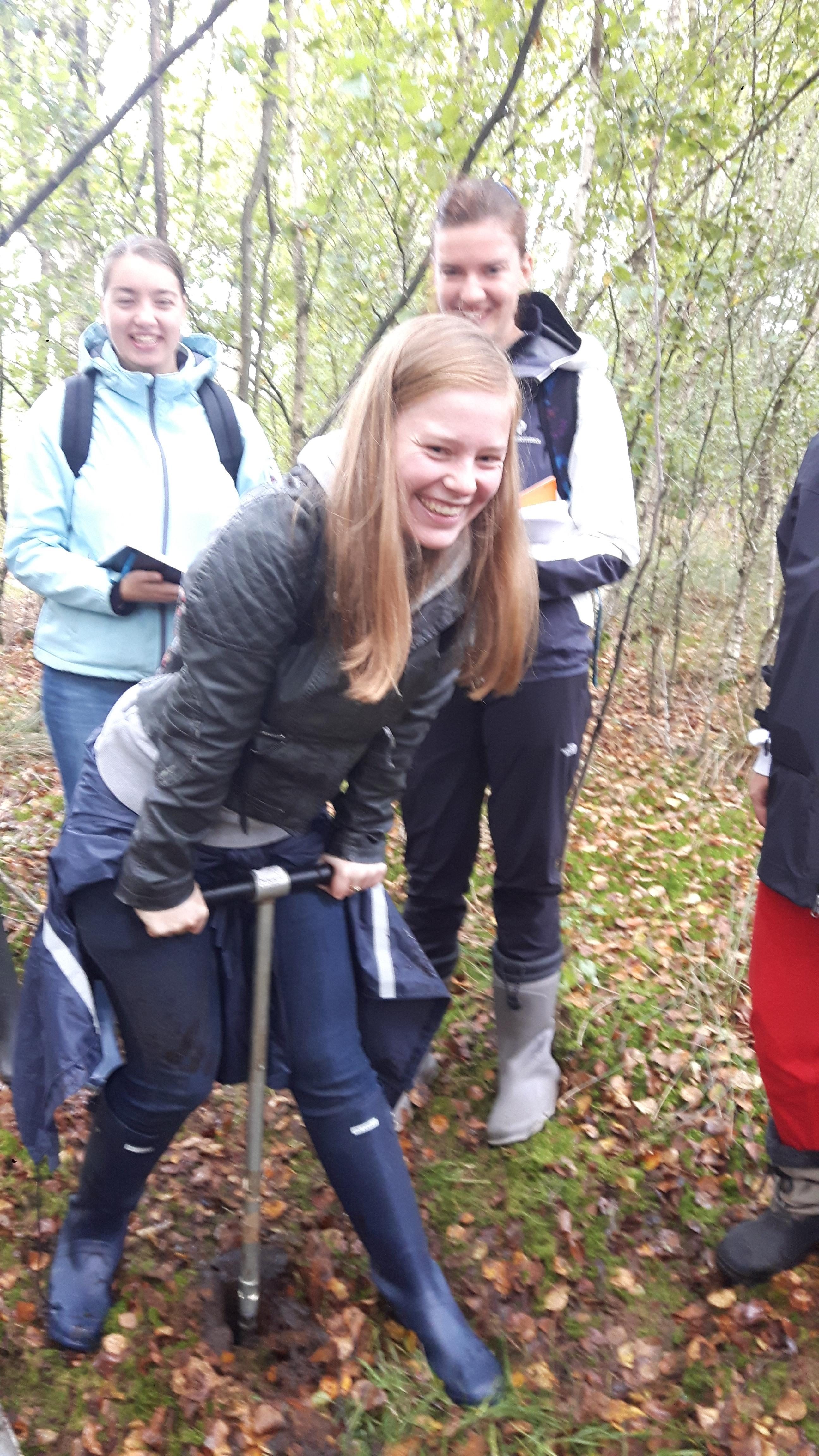
Rianne on field work in Twente during the 2017 edition of the BSc Palaeoecology course at University of Amsterdam
We discussed the paper “Large scale anthropogenic reduction of forest cover in Last Glacial Maximum Europe“ by Kaplan et al. (2016) which was found by the group to be super interesting and it incited a lot of discussion. The paper was mostly concerned with the anthropogenic influences and past vegetation of Europe. The main conclusion was that humans had a very big impact on forests during the last glacial period through the use of fire. The authors suggest that human actions are the explaining factor for the low amount of forests cover suggested by pollen records during the last glacial maximum (c. 21,000 years ago). The suggestion from Kaplan et al. that human modification of forest cover through fire during the glacial links with a recent study from Sevink et al. (2018) that suggests, based on pollen and charcoal data from the Netherlands, that human use of fire altered forest cover into the Holocene. In our discussion it was also noted that animals (mega-herbivores) were not really taken into account or discussed, even though animals probably had a big impact on the vegetation (e.g. see Bakker et al., 2016). Furthermore, another discussion point was the charcoal records that were used in the Kaplan et al. study, more specifically the number of cores. Kaplan et al. only used three cores to map out the effect of charcoal. It would be interesting to see what happens when more data from more cores is used. The Global Charcoal Database has a lot of data on European cores (c. 38% of the cores are from Europe) so there is a lot of potential for this. All in all, the article by Kaplan et al. raised a lot of questions and opened up a nice discussion.










 Ecology of the past