I recently joined the editorial board of Plant Ecology & Diversity at the invitation of editor-in-chief Laszlo Nagy (University of Campinas, Brazil). The journal focuses on ecological and evolutionary issues within plant biology with broad themes covering biodiversity, conservation and global change. Furthermore, I think this is a particularly interesting journal to be involved with because of its option for double-blind peer reviews, commitment to providing a platform for ‘negative results’ and ‘repeat experiments’, and its open access Grubb Review series (Nagy & Resco de Dios, 2016); which already includes many significant articles, including: Ashton (2017), Barbeta & Peñuelas (2016), Grubb (2016), Körner (2018), Valladares et al. (2016), and Wilkinson & Sherratt (2016). In addition to the invited Grubb Reviews the journal publishes: research articles, short communications, reviews, and scientific correspondence. My role on the editorial board will be to cover submissions related to tropical palaeoecology and biogeography. So please consider submitting to Plant Ecology & Diversity if you have some exciting new research or ideas that you think would be appropriate.
The Netherlands Annual Ecology Meeting (NAEM) 2019 takes place in the 12 and 13 February. This annual showcase of predominantly Dutch based ecological research will take place, as usual, at Conference Centre “De Werelt” (Lunteren). I am particularly excited this year as, along with Marielos Pena Carlos and Patrick Jansen, I am co-convening a session on “Tropical Ecology”. The first time I have contributed to the program in this way. Our session will be on the second day of the conference and contain the following exciting presentations:
15:00 Predator avoidance and prey tracking in a Neotropical forest (Constant Swinkels, Wageningen University & Research)
15:20 The role of fig volatiles in pollinator specificity and fig diversity (Aafke Oldenbeuving, Naturalis Biodiversity Center)
15:40 Mangrove Atlantis: Can mangroves keep up with extreme land-subsidence? (Celine van Bijsterveldt, Royal Netherlands Institute for Sea Research)
16:00 Break
16:10 The fate of forests in agro-forest frontier landscapes, implications for conservation (Madelon Lohbeck, Wageningen University & Research)
16:30 Trends in the variability of Specific Leaf Area of paramo vegetation during succession (Marian Cabrera, University of Amsterdam)
16:50 Succession dynamics of tree and soil fungal communities in regenerating tropical rainforests are strongly influenced by regional species pool and abiotic factors (Irene Adamo, Naturalis Biodiversity Center)
For those of you I have not had the pleasure of meeting yet, please allow me to introduce myself. My name is Yoshi Maezumi. I have recently been awarded a Marie Curie Fellowship for my research proposal FIRE: Fire Intensity in Rainforest Ecotones. I will have the honor of working with an extraordinary team of international, interdisciplinary researchers including Will Gosling, Crystal McMichael, Emiel van Loon, and Boris Jansen from the University of Amsterdam, Boris Vannière from the Université de Franche-Comté, Jose Iriarte from the University of Exeter, and Francisco Cruz from the University of São Paulo. Together we will examine the long-term role of fire in shaping Amazon Rainforest Ecotones.
My research is focused on paleofire (fire in the past) in Neotropical savanna and rainforest ecosystems. My current post-doctoral research at the University of Exeter is investigating the role indigenous fire management practices had on shaping the composition, structure, and flammability of modern Amazonian rainforests.
Recently introduced to a book by Bill Gammage entitled The Biggest Estate on Earth: How the Aborigines Made Australia. Gammage identifies five uses of indigenous fire: 1) to control wildfire fuel; 2) to maintain diversity; 3) to balance species; 4) to ensure abundance; 5) to locate resources conveniently and predictably. Gammage argues that our current regime is struggling with number one. These stages of fire management provide some really interesting food for thought for my Marie Curie Fellowship as I aim to develop new paleoecological techniques to analyze paleofire that will be used to model natural and anthropogenic drivers of paleofire activity.
I have been thinking a lot about what we do and do not know about paleofire. One of the ways we reconstruct past fire activity is through the use of charcoal preserved in lake sediments. Charcoal can tell us a lot about what past fires were like including what kind of plants were burning, how often fires occurred, and potentially how big a fire was. One of the more elusive components is paleofire intensity, or how hot a particular fire was. The temperature of a fire has important ecological implications, as hotter fires tend to cause more ecological damage. Lots of factors can contribute to fire intensity including droughts, fuel loads, vegetation composition and structure, fuel moisture, etc. All of this is to say that, fire intensity is complicated. Nevertheless, one of the main objectives of my Marie Curie research will be to compile what we currently know about the effect of modern fire intensity on the charcoal formation to figure out how that information can be used to interpret charcoal from the palaeorecord.
If you would like to join me on this ‘intense’ paleofire journey, (punny, I know, I just couldn’t resist), I am starting a weekly science blog called Her Science that will highlight the trials, tribulations, and triumphs of my Marie Curie research over the next few years.
Montoya, E., Keen, H.F., Luzuriaga, C.X. & Gosling, W.D. (2018) Long-term vegetation dynamics in a megadiverse hotspot: The Ice-Age record of a pre-montane forest of central Ecuador. Frontiers in Plant Science 9, 196. doi: 10.3389/fpls.2018.00196
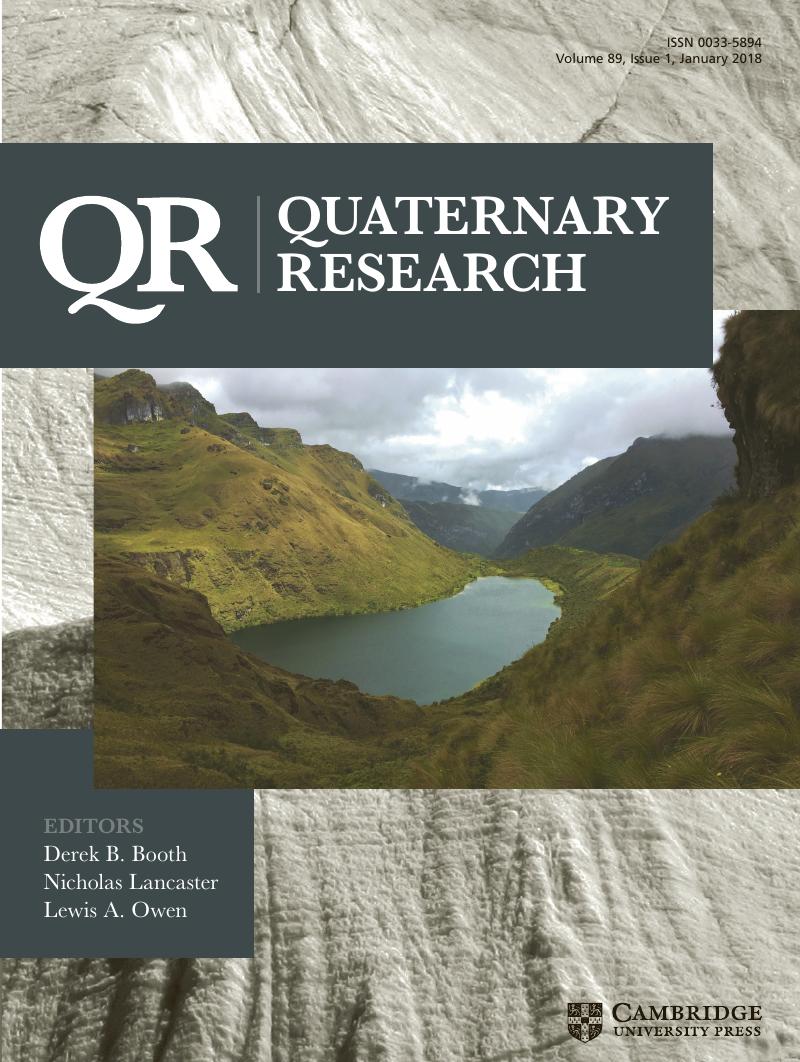
Mark Bush and I are proud to announce that a tribute to Prof. Daniel Livingston and Prof. Paul Colinvaux has recently been published in Quaternary Research. Dan and Paul were both pioneers of tropical pal(a)eoecology and both died in the spring of 2016 . To mark their passing Mark and I have guest edited ten new papers on palaeoecology drawn from researchers, and regions, of the tropics in which Dan and Paul worked (Bush & Gosling, 2018). We would like to thank Quaternary Research Senior Editor Derek Booth for giving us this opportunity and assisting greatly in the process of compiling the manuscripts. We would also like to thank all to contributing authors for their hard work and dedication to the project. We hope that you will enjoy reading the manuscripts and find them a fitting tribute to the life and work of these two great researchers.
Salamanca Villegas, S., van Soelen, E.E., Teunissen van Manen, M.L., Flantua, S.G.A., Santos, R.V., Roddaz, M., Dantas, E.L., van Loon, E., Sinninghe Damsté, J.S., Kim, J. & Hoorn, C. (2016) Amazon forest dynamics under changing abiotic conditions in the early Miocene (Colombian Amazonia). Journal of Biogeography online. DOI: 10.1111/jbi.12769

 I recently joined the editorial board of Plant Ecology & Diversity at the invitation of editor-in-chief Laszlo Nagy (University of Campinas, Brazil). The journal focuses on ecological and evolutionary issues within plant biology with broad themes covering biodiversity, conservation and global change. Furthermore, I think this is a particularly interesting journal to be involved with because of its option for double-blind peer reviews, commitment to providing a platform for ‘negative results’ and ‘repeat experiments’, and its open access Grubb Review series (Nagy & Resco de Dios, 2016); which already includes many significant articles, including: Ashton (2017), Barbeta & Peñuelas (2016), Grubb (2016), Körner (2018), Valladares et al. (2016), and Wilkinson & Sherratt (2016). In addition to the invited Grubb Reviews the journal publishes: research articles, short communications, reviews, and scientific correspondence. My role on the editorial board will be to cover submissions related to tropical palaeoecology and biogeography. So please consider submitting to Plant Ecology & Diversity if you have some exciting new research or ideas that you think would be appropriate.



 Ecology of the past