INQUA Fellowship Journey: Alfred Houngnon

May 16, 2024
WDG

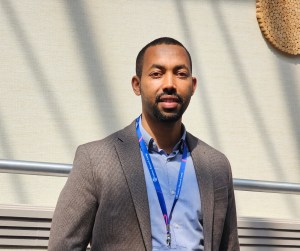
Alfred Houngnon

Alfred Houngnon was awarded an INQUA Fellowship in 2024 to develop his work on past environmental change in the Dahomey Gap (western Africa). Through the project Alfred is making a series of videos about his fellowship journey. In the first video Alfred introduced his project and collaborators (click here to watch the first part). In the two latest instalments (below) Alfred explains: (i) one of his key methodological approaches (modern pollen trapping), and (ii) the modern vegetation of the region and current threats to the vegetation.

To watch more videos about past environmental change visit the Ecology of the Past YouTube channel.

INQUAlogo

Mapping Ancient Africa: Seminar 17

May 15, 2024
WDG

The next Mapping Ancient Africa seminar will take place online at 17:00 CEST on 16 May 2024.

  • Speaker: N’dji dit Jacques Dembele (President of WAQUA, Université des sciences sociales et de gestion de Bamako, Mali)
  • Title: Quaternary period seismicity on the West African Craton

The seminar will be delivered via Zoom. The link for the seminar can be obtained from the MAA Slack channel or by contacting the chair of this seminar (Stefanie Kaboth-Bahr). If you want to know more about the Mapping Ancient Africa project visit our web pages and please do not hesitate to get in contact if you want to get involved.

INQUAlogo

Mapping Ancient Africa: Quaternary International special issue

April 5, 2024
WDG

The Mapping Ancient Africa (MAA) special issue of Quaternary International (QI) will open for submission on 30 April and will close 30 July 2024. To submit your article go to the QI submission portal and click “submit new article”, you will then be asked to “select article type”. From the drop down list select “SI: Mapping Ancient Africa”. This will ensure that your manuscript is directed to the guest editorial team. Submissions should follow the standard QI guideline (click here for details) and take account of the advice for submission to this special issue (click here for details).

The special issue is centered around work and papers presented in the MAA Rome workshop and sessions at the INQUA Rome congress (session 1, session 2), however, if you have a manuscript that you think would be appropriate for inclusion given the research themes of the project please also consider submitting. If you have any questions feel free to contact the editorial team in advance.

For further information on:

Presenters in the Mapping Ancient Africa session of the INQUA Rome congress 2023
INQUAlogo

Mapping Ancient Africa: Writing workshop 2024

March 7, 2024
WDG

A workshop will be held at the National Museums of Kenya (Nairobi, Kenya) in June 2024. The aim of the workshop is to help authors prepare articles for the Mapping Ancient Africa (MAA) special issue proposed for publication in Quaternary International and lead by Dr. Stefanie Kaboth-Bahr. The workshop will be associated with the “1st Joint International Scientific Conference” (3-6 June). The MAA workshop is being organized by Dr. Rahab Kinyanjui, and the congress organization is being lead by Dr. Emmanuel Ndiema (click here to watch his 2022 MAA seminar) and Dr. Esther Kioko (Acting Director National Repository and Research).

For further information on attending the MAA workshop please contact Rahab directly.

To find out more about the Mapping Ancient Africa project click here.

INQUAlogo

Mapping Ancient Africa: Seminar 15

March 4, 2024
WDG

The fifteenth Mapping Ancient Africa seminar will take place on 15 March 2024 (17:00 CET)

  • Speaker: Bruk Lemma (Martin Luther University Halle-Wittenberg, Germany; Ethiopian Biodiversity Institute – EBI)
  • Title: Nature’s Fingerprints: Exploring the Use of Biomarkers and Stable Isotopes in Unraveling Chemotaxonomy and (Paleo-)Climate Dynamics of the Bale Mountains, Ethiopia

The seminar will be delivered via Zoom. The link for the seminar can be obtained from the MAA Slack channel or by contacting the chair of this seminar (Stefanie Kaboth-Bahr). If you want to know more about the Mapping Ancient Africa project visit our web pages and please do not hesitate to get in contact if you want to get involved.

INQUAlogo

New PODCAST: Human & Biosphere

January 11, 2024
WDG

INQUAlogo

The International Union for Quaternary Research (INQUA) supports a number of commissions which focus on more specific aspects of Quaternary research. One of these, the Human & Biosphere Commission, or HABCOM, has recently launched a podcast introducing its members and activities. To find out more about HABCOM listen to the podcast below, or click this link to visit the related INQUA web pages.

Mapping Ancient Africa: Structuring a scientific article

December 19, 2023
WDG

INQUAlogo

The Mapping Ancient Africa (MAA) project is currently (late 2023 until early 2024) in the process of collecting submissions for a special issue of the INQUA (our sponsors) journal Quaternary International. The special issue will showcase research developed at the MAA workshop in Rome, and presented at the MAA sessions at the INQUA Rome congress. However, the editorial team is open to considering manuscripts relevant to the MAA goals that come from people not already involved in the project – so please contact us if you have ideas.

The process of developing articles for the special issue will be supported by the MAA community through a series of events. The first of these was a online workshop (2 October 2023) set out the frame of reference for the special issue, and included a short presentation on tips for structing a scientific article for this journal. If you missed the event and are thinking about writing an article for the special issue, or in a similar style, you can catch up with this on the Ecology of the Past YouTube channel. In person writing workshops are planned for 2024 in Africa. As full details emerge information will be published here.

Mapping Ancient Africa: Scientists (part 2)

August 28, 2023
WDG

The next four interviews with scientists who participated in the Mapping Ancient Africa workshop in Rome (2023) are now online (see below). You can find more interviews with scientists by clicking the names below:

Interview 6: Stefanie Kaboth-Bahr (Free University of Berlin)

Interview 7: Mathais Vinnepand (Johannes Gutenberg-University of Mainz)

Interview 8: Rahab Kinyanjui (National Museums of Kenya & Max Planck Institute for Geoanthropology)

Interview 9: Manu Chevalier (University of Bonn)

To check out all the Mapping Ancient Africa video content visit out the Ecology of the Past YouTube channel.

To find out more about the MAA Rome workshop follow links from here.

INQUAlogo

Mapping Ancient Africa: Scientists

August 25, 2023
WDG

During the Mapping Ancient Africa workshop in Rome I conducted short interviews with the scientists involved. The first of these, Alfred Houngnon can be viewed here, below are four more, and more will follow as I get them uploaded. I hope they provide interesting insights into the diverse range of skills and backgrounds our scientists have.

Interview 2: Busisiwe Hlophe (University of the Witwatersrand)

Interview 3: Angela Effion (University of the Witwatersrand)

Interview 4: Bahru Zinaye Asegahegn (University of Cologne)

Interview 5: Michela Leonardi (University of Cambridge)

To find out more about the Mapping Ancient Africa project click here.

INQUAlogo

Mapping Ancient Africa: INQUA Rome – session 2

August 24, 2023
WDG

The second part of the Mapping Ancient Africa session at the INQUA Rome congress contained eight talks. Busisiwe Hlophe (University of the Witwatersrand) kicked us off by showing us the power of looking at wood anatomy preserved in charcoal microfossils to determine the nature of past vegetation and climate. Rahab Kinyanjui (National Museums of Kenya) presented phytolith work from archaeological sites revealing a mixed woody and grassy vegetation associated with archaic Homo sapiens in Kenya.

Three talks from the Cape Region in South Africa then followed with Saul Manzano (University of Leon), Stella Moscher (University of Utah), and Asithandile Ntsondwa (Nelson Mandela University) using various palaeo ecological approaches to explore climate, vegetation and fire regime shifts during the Holocene. Adele Julier (University of Portsmouth) then took us a little further north to Namibia to think about the challenges of parameterising modern pollen-vegetation relationships in arid regions. The final southern African talk was given by Gemma Poretti (University of Cape Town) explored a new approache to tracking change in past rainfall patterns using charcoal material.

Continue Reading
Blog at WordPress.com.