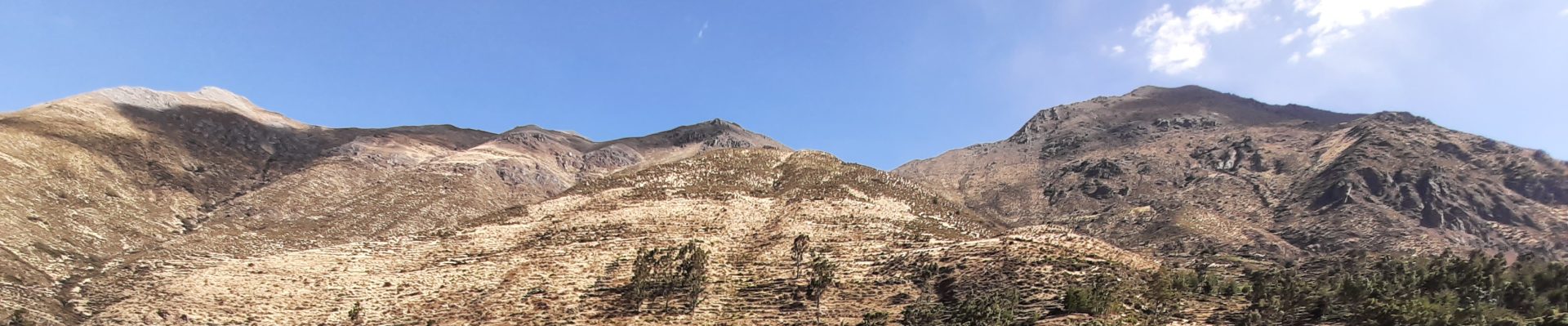
IBEDs Crystal McMichael hard at work sampling sediments in the Andes
Insights into recent field work in Ecuador by a team lead by Crystal McMichael can be found in a recent blog from our collaborators at the Instituto Geofisico, Escuela Politecnica Nacional, Quito (Ecuador).
Each project was set up to test a particular ecological or biogeographic hypothesis. Investigations included the exploration of the role of humans in modifying ecosystems in Amazon, the nature of the pre-farming landscape in the the Netherlands, and how to chemically identify fossil charcoal. In undertaking their projects individual students had the opportunity to variously develop skills in microscopy, spatial modelling, or analytical chemistry. The high quality of the data produced means that hopefully many of these data sets can be used in future scientific publications. Well done to all!
If you are interested in conducting a similar project (at any academic level) with us please do not hesitate to get in contact. For further details of ongoing research within the Department of Ecosystems & Landscape Dynamics visit our web pages by clicking here.
The MSc Biological Sciences at the University of Amsterdam is open to international students (taught in English) and offers four ‘tracks’ so you can specialize to your particular interest:
In addition as part of this MSc degree you will conduct research projects and have opportunities for internships. For further information to click here or watch our recent webinar with the program coordinator Joost Duivenvoorden.
The Institute for Biodiversity & Ecosystem Dynamics (IBED) at the University of Amsterdam currently has a vacancy for a Full Professor in Earth Surface Science. IBED is seeking to appoint a world leading scientist whose research and teaching skills compliment those that already exist within the Research Group of Earth Surface Science (ESS). Key themes within the ESS group are: biotic and abiotic interactions, biogeochemistry, geomorphology, and soil chemistry, biodiveristy and management. The work of the ESS group is closely related to other research groups within IBED, and in particular, the Palaeoecology & Landscape ecology (P&L) group which I lead.
15:00-15:30 Frank Wesselingh & the PRIDE team How high can you get? Mountain uplift driving diversification in Pontocaspian lakes before humans bring down the unique aquatic biota?
15:30-16:00 Christiaan van Baak Mediterranean-Paratethys connectivity during the late Miocene to recent
– 16:00-16:15 tea/coffee break –
16:15-17:15 Keith Richards Studies in Caspian palynology: Vegetation, climate and sea level change
My undergraduate studies were interdisciplinary in nature: I did a BSc Beta-Gamma (Institute for Interdisciplinary Studies (IIS), UvA) where students are taught to collaborate between different disciplines. Ecology has always been an interest of mine, so I was quick to specialize in that field. In my final year of my bachelor I came in contact with paleoecology and did not hesitate to make sure my first master’s project (MSc Biological Science, IBED, UvA) would be with the P&L research group (IBED) – a worked on a project on tropical rainforest dynamics in Miocene Amazonia. After that I got the chance to test my skills outside research institutes: during the Tesla consultancy Minor (IIS) I got firsthand practical experience in developing urban green areas from start to finish for the municipality of Amsterdam. The focus of that project was to increase the ecologic, educational, scientific, and social value of the natural areas on Amsterdam Science Park. It was great to see my scientific background put to good use outside the research community. The project is still active today.
After a short period of working in education and sustainability consultancy I seized the opportunity to, once more, join the P&L research group – this time as a Ph.D. student under the watchful eyes of William Gosling and Boris Jansen. My project revolves around characterizing biomarker and modern pollen-rain signals across the altitude of the Ecuadorian Andes vegetation. A great opportunity at the frontier of tropical research!
If the first week is any indication, I foresee to a lot of collaboration, hard work, exploration and adventure in the coming years!
Past environmental change on Mauritius has been the focus of research with the Palaeoecology & Landscape Ecology group at the University of Amsterdam (UvA) for a number of years. This research has been lead by Erik de Boer and Henry Hooghiemstra and has already resulted in a number of key publications on the environmental history of the island (de Boer et al., 2013, 2014, 2015). One current past environmental change research project working on Mauritius is being undertaken by Jona de Krui; a student within the UvA BSc Biology program supervised by myself and Erik. Jona’s is working on a study site (modern day swamp) on the north-east of the island and is focused on improving our understanding changes in the:
vegetation (macro-fossils) over the last c. 1000 years.
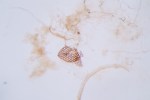
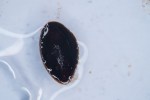
Jona has now completed the analysis of all his samples and we are currently collating the data sets; however, a number of the macro-fossils which he has discovered remain unidentified. Below are images of the unknown macro-fossils if you have any suggestions on identifications please comment, or get in touch directly.










 Ecology of the past