
Bakker, E.S., Gill, J.L., Johnson, C.N., Vera, F.W.M., Sandom, C.J., Asner, G.P. & Svenning, J. (2015) Combining paleo-data and modern exclosure experiments to assess the impact of megafauna extinctions on woody vegetation. Proceedings of the National Academy of Sciences. DOI: 10.1073/pnas.1502545112

Bakker, E.S., Pagès, J.F., Arthur, R. & Alcoverro, T. (2015) Assessing the role of large herbivores in the structuring and functioning of freshwater and marine angiosperm ecosystems. Ecography DOI:10.1111/ecog.01651

Dillehay, T.D., Ocampo, C., Saavedra, J., Sawakuchi, A.O., Vega, R.M., Pino, M., Collins, M.B., Scott Cummings, L., Arregui, I., Villagran, X.S., Hartmann, G.A., Mella, M., Gonzalez, A. & Dix, G. (2015) New Archaeological Evidence for an Early Human Presence at Monte Verde, Chile. PLoS ONE 10, e0141923. DOI: 10.1371/journal.pone.0141923

Göldel, B., Kissling, W.D. & Svenning, J. (2015) Geographical variation and environmental correlates of functional trait distributions in palms (Arecaceae) across the New World. Botanical Journal of the Linnean Society. DOI: 10.1111/boj.12349

Pardi, M.I. & Smith, F.A. (2015) Biotic responses of canids to the terminal Pleistocene megafauna extinction. Ecography.  DOI: 10.1111/ecog.01596

Roy, N., Woollett, J. & Bhiry, N. (2015) Paleoecological perspectives on landscape history and anthropogenic impacts at Uivak Point, Labrador, since AD 1400. The Holocene 25, 1742-1755. DOI: 10.1177/0959683615591350

Paleontologia: Cenários de Vida – Paleoclimas Volume 5Bush, M.B., de Oliveira, P.E., Raczka, M.F., Gosling, W.D., Mayle, F.E., McMichael, C.H. & Urrego, D.H. (2014) Paleoclimates of Amazonia: An ice-age view. IN: Ribeiro F. & Carvalho, I. (eds.) Paleontologia: Cenários de Vida – Paleoclimas Volume 5. Editora Interciência Ltda., Brazil, pp. 353-368. ISBN: 9788571933439

Frazer on climate change & insects – AGU video

September 8, 2014
WDG

Frazer Matthews-Bird’s video on his PhD research examining long-term (>50 year) climate change from fossil insects (chironomids) has been shortlisted for the American Geophysical Union (AGU) student competition prize. Please watch Frazer’s video and “Like”; the most liked video will win free entry into the AGU Fall meeting 2014.

View all the videos on the AGU YouTube channel.

Two studentships avaliable

January 9, 2013
WDG

Two NERC algorithm funded PhD studentships are currently available with the PCRG. The projects are focused on understanding past environmental change in west tropical Africa and Amazonian-Andean Ecuador. Both projects will involve field work and build on on-going research within the lab.

Closing date 31/01/2013

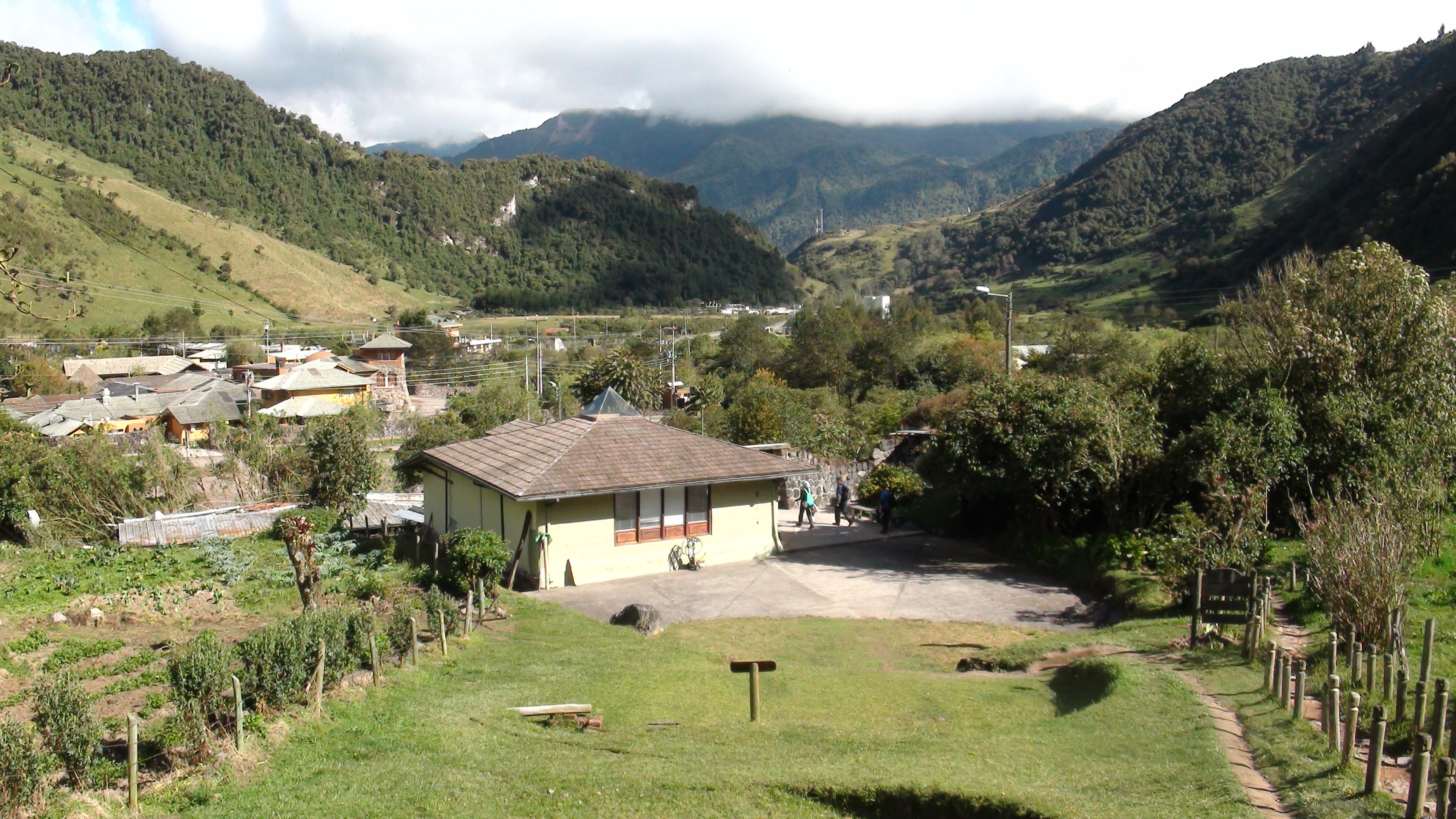
Fieldwork in 2012 near Papallacta (Ecuador).

One project will work on samples collected during fieldwork in 2012 near Papallacta (Ecuador).

Further project details and how to apply below…
Continue Reading

Atlantic control of tropical climate

October 2, 2012
WDG

PUBLISHED:
Nicole A. S. Mosblech, Mark B. Bush, William D. Gosling, David Hodell, Louise Thomas, Peter van Calsteren, Alexander Correa-Metrio, Bryan G. Valencia, Jason Curtis & Robert van Woesik (2012) North Atlantic forcing of Amazonian precipitation during the last ice age. Nature Geoscience, 5: 817-820.

Thinking about proxies

January 31, 2012
Fray

COMMENT ON DISCUSSION OF PROXIES IN HUNTLEY (2012)
All areas of research have strengths and limitations which are readily acknowledged by the scientists involved. The reconstruction of past climates (palaeoclimates) from biological indicators contained within the fossil record (proxies) presents some specific challenges; for example key limitations might be gaps in a sedimentary sequence or post-depositional degradation of samples. Understanding and interpreting data sets in the face of these challenges require the researcher to develop a wide range of skills. Huntley (2012) focuses upon the uncertainties within palaeoclimate reconstruction which he considers to be “frequently overlooked” (p. 2) by scientists making climate reconstructions from proxy records. Specifically Huntley urges researchers to consider carefully:

  • What a given proxy is actually capable of reconstructing, i.e. what climate variables controls its distribution?
  • What other variables might be influencing the proxy, i.e. could there be multiple influences, might these vary through time?
  • What is the spatial relevance of the proxy, i.e. macro versus micro scale?
  • Can multiple proxies be compared, either within or between sites?

In other words: which and how many climatic variables can be reconstructed form any one aspect of the fossil record?

Below I review and comment on some key arguments made by Huntley (2012) related to the use of proxies in reconstructing palaeoclimates.

REFERENCE
Huntley, B. (2012) Reconstructing palaeoclimates from biological proxies: Some often overlooked sources of uncertainty. Quaternary Science Reviews 31: 1-16.

Continue Reading

Blog at WordPress.com.