The third of a seminars in the Mapping Ancient African project took place on Monday 17 January 2022 and was given by Emmanuel Ndiema (National Museums of Kenya). You can watch the seminar now on the Ecology of the Past YouTube channel. Seminar details can be found here.
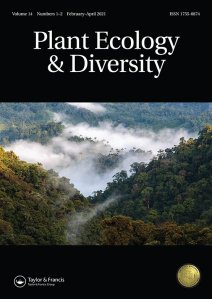
Gosling WD, Maezumi SY, Heijink BM, Nascimento MN, Raczka MF, van der Sande MT, Bush MB, McMichael CNH. 2021. Scarce fire activity in north and north-western Amazonian forests during the last 10,000 years. Plant Ecology & Diversity. DOI: 10.1080/17550874.2021.2008040
As a Subject Editor for Plant Ecology & Diversity I would like to take a moment to highlight two recent papers published under the theme “Global Change & Vegetation”.
The first Somoldi et al. takes us back to the roots of the concept of “Potential Natural Vegetation” (PNV) cover which has long been widely used and often debated in the literature. In their research article Somoldi et al. revisit the German text of the article that originally set out this idea (Tüxen 1956) and provide (re-) translated versions of key sections. The purpose of this is, the authors argue, to get a tighter definition and encourage a more precise usage of the term to avoid miss-use and miss-interpretation of the concept. They argue that the PNV concept is still a valid one despite the increasing human modification of landscapes and environments, but that its usage should be restricted more closely to the idea as it was originally formulated by Tüxon.
The second, Huntley & Allen, use palaeoecological data to test the hypothesis related to the expansion of pine woodlands during the Holocene (last 11,700 years) in Scotland. The examination of multiple sites in the Scottish Highlands reveals a dynamic mosaic landscape, and that the trajectory of change was influenced by climate, dispersal and preceding vegetation patterns. This new understanding of trajectories of change can help to anticipate how landscapes in the Scottish Highlands might alter under ongoing climate change.
References and links to the articles are below, please check out the journal for a wide range of articles related to Evolution & Systematics, Global Change & Vegetation Dynamics, Environment & Plant Functioning, Biotic Interactions and Biogeography. We accept articles on all these themes in standard “original research” format, shorter “rapid communications”, longer “reviews” and opinion related “perspectives”. Therefore, if you have a article that fits with these themes please consider submitting to Plant Ecology & Diversity.
The recently published volume of the Palaeoecology of Africa series contains a number of different types of papers: research articles, reviews, perspectives and data papers. One of the key reasons I was motivated to become involved in the project was to help mobilise palaeoecological data from Africa towards open access datasets (African Pollen Database, Neotoma). To hopefully get greater recognition to the great work done over the years and to help facilitate synthetic work that will provide a greater understanding of spatial variance in past climate change. Ultimately, four short data papers were included in the volume: an enhanced c. 16,000 year pollen record from the Bale Mountains in Ethiopia (Gil-Romera et al. 2021), two pollen and charcoal record from the southern Cape Coast in South Africa, c. 3200 and 650 years long respectively (du Plessis et al. 2021a; du Plessis et al. 2021b), and a c. 700 year long record from Madagascar (Razanatsoa et al. 2021). The records provide new insights in to landscape scale environmental change driven by both humans and climate. To find out more check out the open access articles and the data at:
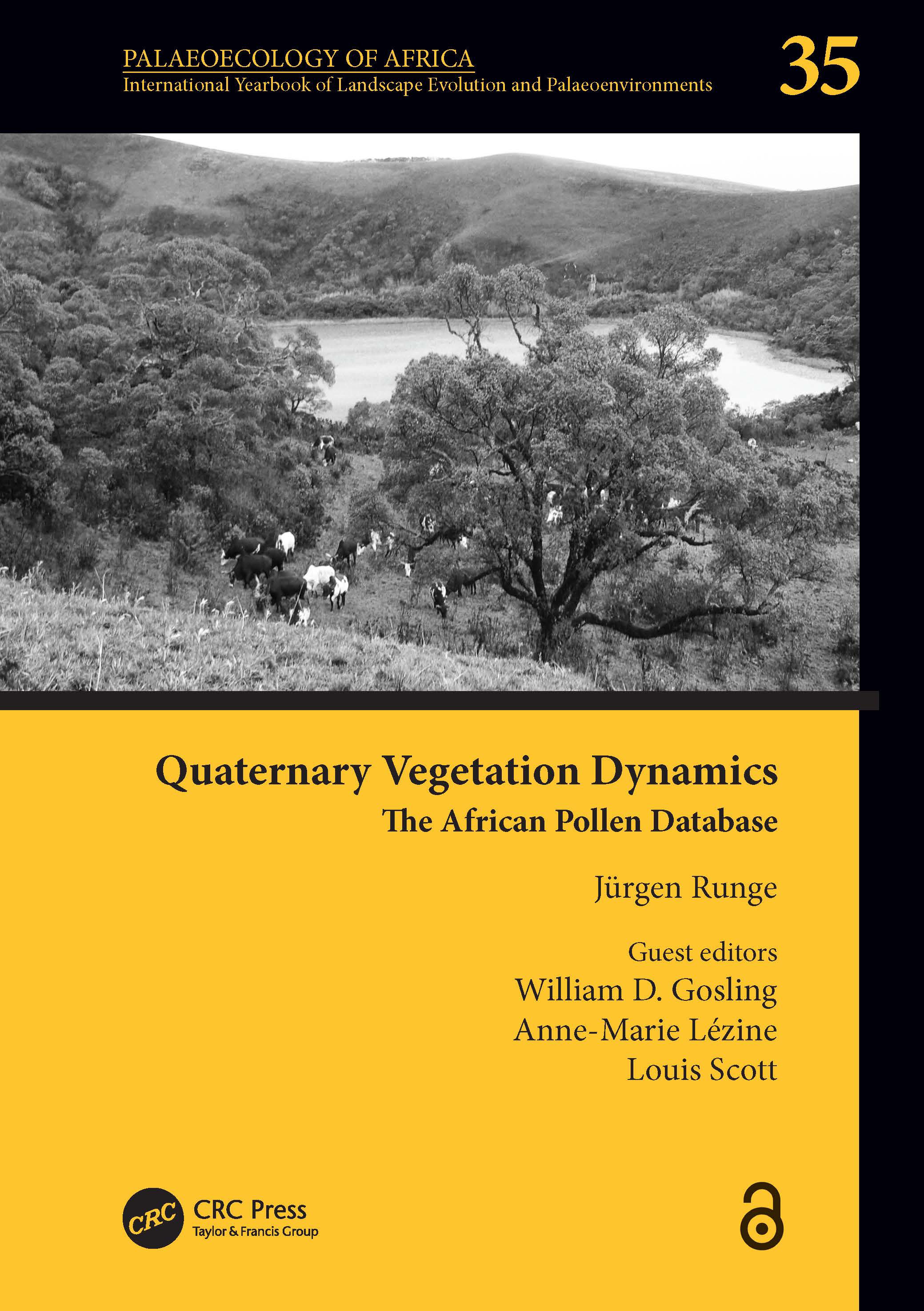
I am delighted to announce the publication of the new volume in the Palaeoecology of Africa series. I had the privilege to guest edit this with Anne-Marie Lézine and Louis Scott. The final version is now available OPEN ACCESS online.
Gosling, W.D., Lézine, A.-M. & Scott, L., eds. (2021) Quaternary Vegetation Dynamics: The African Pollen Database. Series editor: Runge, J. Palaeoecology of Africa: Volume 35. CRC Press. ISBN: 9780367755089 DOI: 10.1201/9781003162766
The kick off meeting of the INQUA funded Mapping Ancient Africa project took place on the 14 and 15 October 2021. This hybrid meeting linked up face-to-face meetings in Kenya, South Africa, Germany and the USA online. In total around 35 people participated in the meeting over the two days. It was great to start to get researchers back into rooms together, and to take advantage of the online link ups to connect people within regions who could not travel, and people in different continents. The purpose of the meeting was to introduce the researchers to each other and to start to think about how we can work together to deliver the project goals of collating and synthesising data related to past climate, vegetation and hominin activity from across the continent.
To start discussion during the Mapping Ancient Africa kick off meeting (October 2021) lead author Stefanie Kaboth-Bahr has recorded an introduction to her recent paper proposing a novel tropical based climate mechanism for driving climatic change across Africa.
Kaboth-Bahr S, Gosling WD, Vogelsang R, Bahr A, Scerri EML, Asrat A, Cohen AS, Düsing W, Foerster V, Lamb HF, et al. 2021. Paleo-ENSO influence on African environments and early modern humans. Proceedings of the National Academy of Sciences 118(23):e2018277118. https://doi.org/10.1073/pnas.2018277118
The first meeting of the, INQUA funded, Mapping Ancient Africa project will take place on the 14 and 15 of October 2021 with face-to-face meetings at four locations (Nairobi, Kenya; Port Elisabeth, South Africa; Potsdam, Germany; Portland, Oregon, USA) being linked up online.
I am pleased to announce that the new, open access, volume of Palaeoecology of Africa (PoA) should be available to download in October. The “Quaternary Vegetation Dynamics” volume comprises 24 chapters, produced by more than 70 authors, and contains extensive review papers, personal perspectives on hot topics, as well as new research and data papers.
To find out more on the volume visit the publishers web site: PoA Vol. 35
Over the next few months I aim to blog about the various specific chapters to showcase some of the key findings. I hope that this book will provide a useful resource to all researchers working on past climate, environmental and vegetation change in Africa, and will provide a springboard for the start of the new “Mapping Ancient Africa” project that will kick off in October.
Maezumi SY, Gosling WD, Kirschner J, Chevalier M, Cornelissen HL, Heinecke T, McMichael CNH. 2021. A modern analogue matching approach to characterize fire temperatures and plant species from charcoal. Palaeogeography, Palaeoclimatology, Palaeoecology 578:110580. https://doi.org/10.1016/j.palaeo.2021.110580




 Ecology of the past