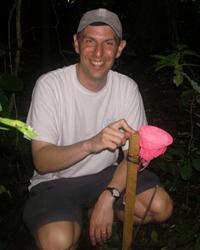
William Gosling pollen trapping in west Africa. A studentship on the new grant will investigate modern pollen-vegeation relationships
Fully funded NERC PhD studentship tied to 500,000 years of solar irradiance, climate and vegetation changes project.
To start October 2013 now avaliable with the Palaeoenvironmental Change Research Group.
Title: Tropical vegetation, environment and climate: The present is the key to the past
Supervisors:
William D. Gosling (The Open University),
Wesley Fraser (Oxford Brookes University),
Barry Lomax (University of Nottingham),
Mark Sephton (Imperial College London) &
Yadvinder Malhi (University of Oxford)
- Investigate the dynamics of modern tropical forest and savannah ecosystems
- Training in micro fossil and organic geochemical analysis
- Develop a comprehensive understanding of modern pollen-vegetation relationships
- Field work in Ghana, in conjunction with Forestry Research Institute of Ghana
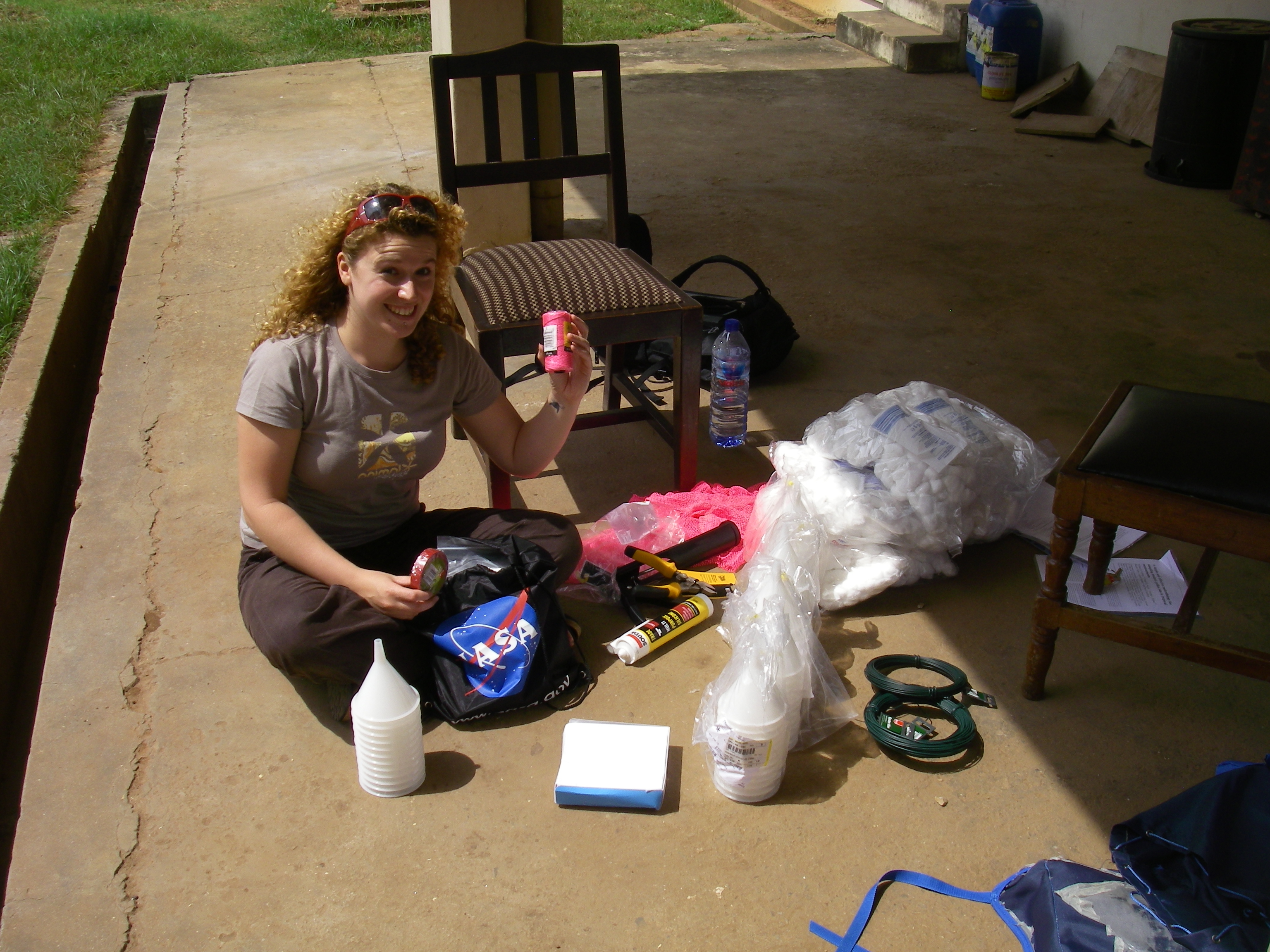
Making pollen traps on field work in Ghana
Understanding how vegetation responded to past climate change requires the development of well constrained relationships between living floras, environment and climate. This project will help constrain the great uncertainty which exists as to how tropical ecosystems are represented in the fossil record by examining the relationship between modern vegetation and the pollen it produces. The project will analyse modern pollen rain using a combination of traditional microscopic analysis [1] and cutting edge geochemical techniques [2]. We anticipate that the findings will provide new insight into past vegetation and climatic change.
For further information on the project and how to apply see the full advert: NERC PhD advert. Prior to applying please check eligibility for NERC funding by clicking here.
Closing date: 25th April, interviews will be held at The Open University during May.
To find out more about the department, research environment and student life at The Open Univerity visit the Department of Environment, Earth & Ecosystems, the Centre for Earth, Planetry, Space & Astronomical Research (CEPSAR) and OU RocSoc web pages.
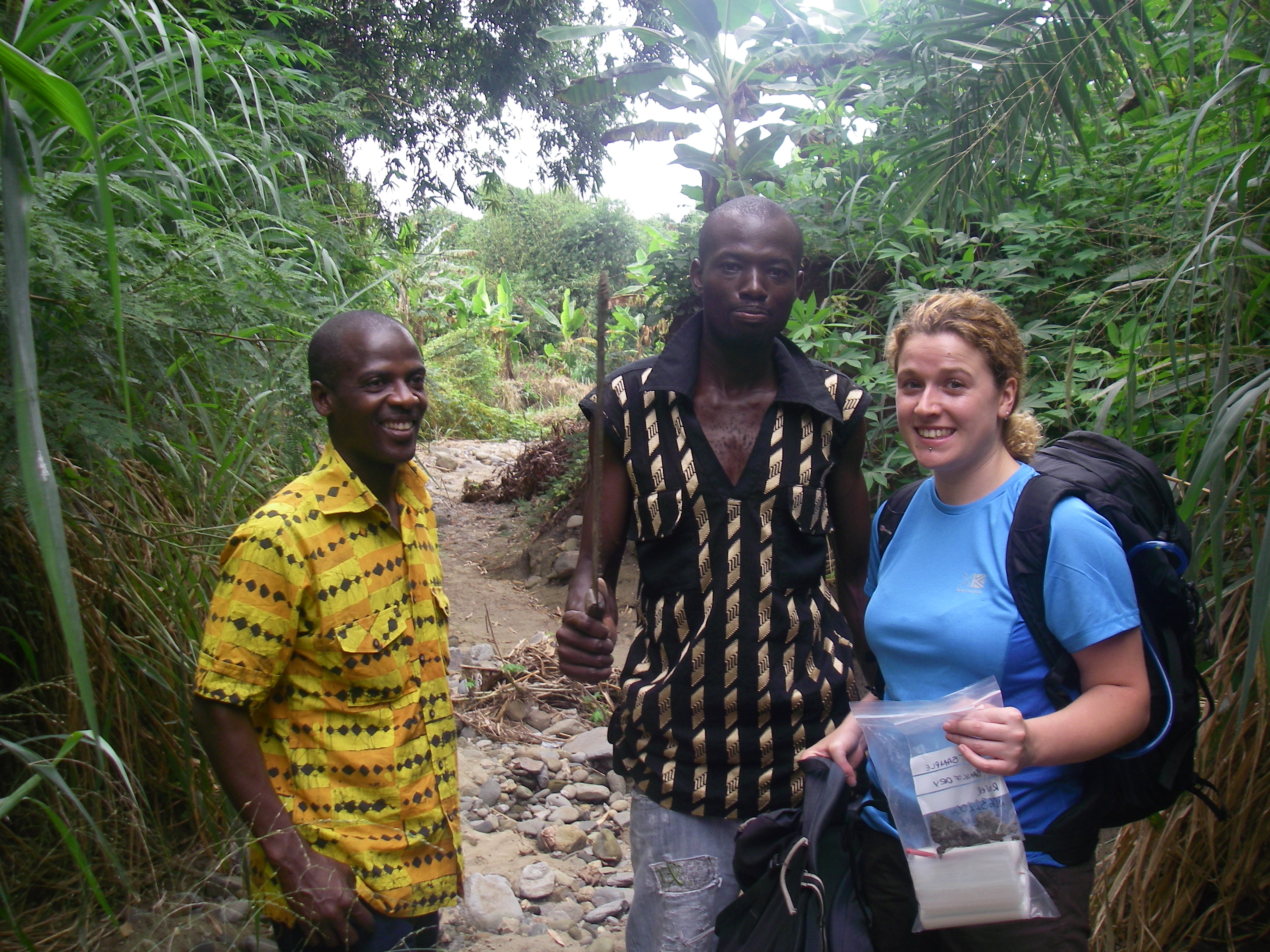
Work as part of a larger research team in the UK and abroad.
References:
[1] Gosling, W.D., et al., Differentiation between Neotropical rainforest, dry forest, and savannah ecosystems by their modern pollen spectra and implications for the fossil pollen record. Review of Palaeobotany and Palynology, 2009. 153(1-2): p. 70-85.
[2] Lomax, B.H., et al., Plant spore walls as a record of long-term changes in Ultraviolet-B radiation. Nature Geoscience, 2008. 1(9): p. 592-596.
 Ecology of the past