During the Mapping Ancient Africa writing workshop in Kenya (3-6 June 2024) Stefanie Kaboth-Bahr conducted a series of short interviews with the scientists attending. Below you can find part 2 (of 2) of the interviews with the participants in the workshop. Watch the videos to find out their scientific stories and top tips for academic writing. Watch all the Mapping Ancient Africa videos on the Mapping Ancient Africa YouTube Playlist.
The participants (part 2 of 2)
Ruth Kiely (University of Amsterdam, Netherlands)
Husna Mashaka (Arizona State University, USA & National Museums of Kenya, Kenya)
During the Mapping Ancient Africa writing workshop in Kenya (3-6 June 2024) Stefanie Kaboth-Bahr conducted a series of short interviews with the scientists attending. During the interviews she asked the participants and instructors to describe their scientific background, what had motivated them to take part in the writing workshop, and what they thought the most important thing they had gained from it. You can now meet the first four of these scientists now by watching the videos below, or catch up with all the latest videos on the Mapping Ancient Africa YouTube Playlist.
The participants (part 1 of 2)
Olugbenga Boboye (University of Ibadan, Nigeria)
Angela Effiom (University of the Witwatersrand, South Africa)
Bremond, L., Aleman, J.C., Favier, C., Blarquez, O., Colombaroli, D., Connor, S.E., Cordova, C.E., Courtney-Mustaphi, C., Dabengwa, A.N., Gil-Romera, G., Gosling, W.D., Hamilton, T., Montade, V., Razafimanantsoa, A.H.I., Power, M.J., Razanatsoa, E., Yabi, I. & Vannière, B. (2024) Past fire dynamics in sub-Saharan Africa during the last 25,000 years: Climate change and increasing human impacts. Quaternary International.DOI: 10.1016/j.quaint.2024.07.012
On the 25 July 2024 the 19th Mapping Ancient Africa (MAA) seminar, entitled Climate frameworks for the Middle Stone Age and Later Stone Age in Northwest Africa, was delivered by Solène Boisard (University Montreal). In the seminar Solène presented two lines of evidence for past climate change in north-western Africa over the last c. 70,000 years. One from mechanistic climate models (via the PastClim package, for more details see: Leonardi et al. 2023) and one from reconstructions based on archaeological evidence. She found good agreement between the two approaches and linked climatic changes to the transition from Middle Stone Age to Late Stone Age technologies.
COLLABORATION OPPORTUNITY: The TIP-TOP project, funded through the Dutch Research Council (NWO) and awarded to Rick Hennekam at the NIOZ Royal Netherlands Institute for Sea Research (NIOZ), is running from 2024-2029 and aims to use sediments accumulated in front of North African rivers to study environmental tipping points in North Africa. Specifically, the project focuses on available sediments from the Nile River delta, a now-dormant river system in Libya, as well as material from in front of the Senegal and Gambia rivers that will be acquired during a cruise early 2025. A multidisciplinary group of scientists is collaborating within this project, including scientists from NIOZ, GFZ Potsdam, ETH Zürich, Wageningen University, and the Utrecht University, using especially (in)organic and palynological proxies. Yet, we are keen to start new collaborations, especially with scientists based in northwest Africa. Potentially we could aim for the INQUA Fellowship Program For International Mobility (deadline 15 of September, 2024) for someone to gain international experience at one of the involved institutes for the duration of 3–6 months. If you are interested to link up with Rick please join the seminar to speak with him, or contact him directly. Note that participation in the 2025 expedition to the coasts of Gambia, Senegal, and Mauritania can be discussed too, but available places are very limited.
This video was recorded after the 19th online Mapping Ancient Africa seminar given by Solène Boisard, to watch her seminar on the past climate of north-western Africa and others in the series click here. To find out more about the Mapping Ancient Africa project click here.
During the Mapping Ancient Africa (MAA) workshop in Kenya (3-6 June 2024) the session delivered by Rahab Kinyanjui (National Museums of Kenya) was recorded for those that could not make it. The seminar was focused on how to deal with reviewer comments. While this was targeted for participants focused on developing their manuscripts for the MAA special issue of Quaternary International (for full details click here). This seminar is relevant to all those facing reviewer comments on their scientific manuscripts.
Dealing with reviewer comments (Rahab Kinyanjui, National Museums of Kenya)
On the 20 June 2024 the 18th Mapping Ancient Africa (MAA) seminar was delivered by Kumar Akhilesh (Sharma Centre for Heritage Education). This seminar was a little different to most MAA seminars in that it focused on another INQUA project, rather than a specific research line. In the talk Kumar outlined the INQUA funded “PalaeoHome” project and highlighted work on hominin evolution in the Indian sub-continent.
Title: Climate frameworks for the Middle Stone Age and Later Stone Age in Northwest Africa
Related publication: Boisard, S. & Arous, E.B. (2024) A critical inventory and associated chronology of the Middle Stone Age and Later Stone Age in Northwest Africa. Journal of Open Archaeology Data 12, 5. DOI: 10.5334/joad.121
The seminar will be delivered via Zoom. The link for the seminar can be obtained from the MAA Slack channel or by contacting the chair of this seminar (William Gosling). If you want to know more about the Mapping Ancient Africa project visit our web pages and please do not hesitate to get in contact if you want to get involved.
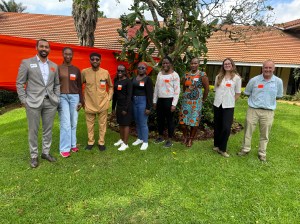
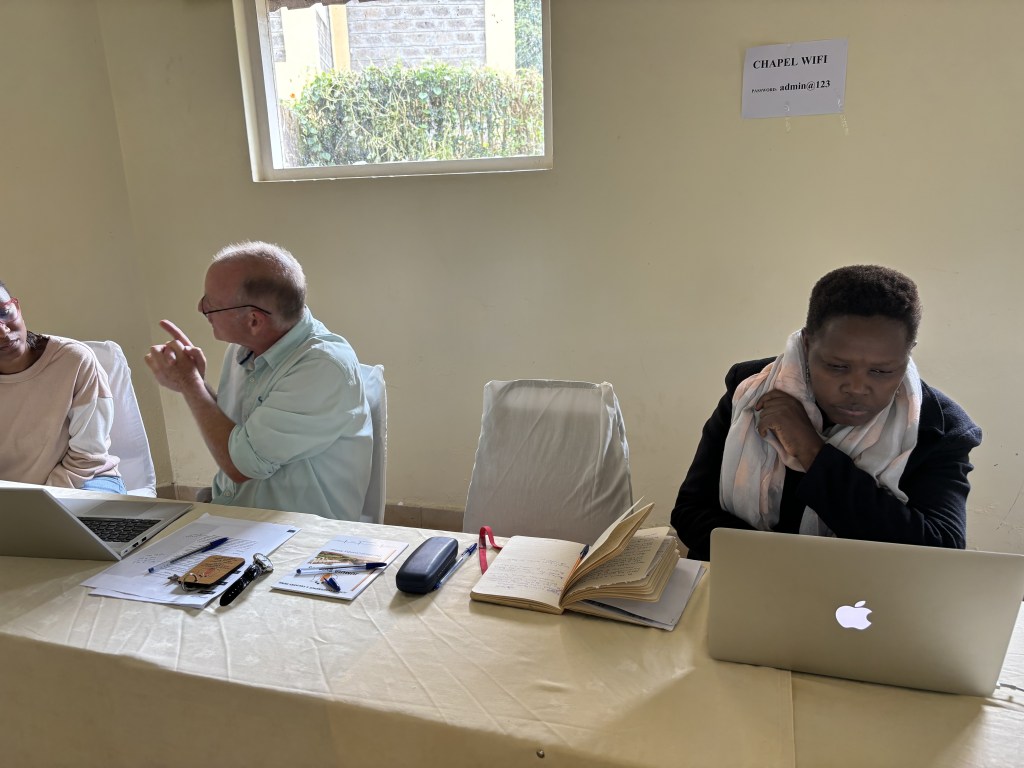
The Mapping Ancient Africa (MAA) writing workshop is currently in full swing in Kenya. Running from 3 June until the 6 June 2024 a diverse range of skills related to academic publishing is being delivered by our international team, including: structuring a scientific article, managing references and revision strategies. There is also plenty of time set aside for writing and getting feedback from more experienced academic writers. The manuscripts being developed at the workshop are being designed to be submitted to the MAA special issue of Quaternary International.
On the 20 June 2024 (17:00-18:00 CEST) the next Mapping Ancient Africa (MAA) online seminar will take place. This talk will introduce a parallel INQUA funded project “PalaeoHome” (@PalaeoHome). It is hoped that there can be complimentary lines of research identified between PalaeoHome and the MAA projects.
Title: PalaeoHome Palaeolithic Hominins and Habitats: Out of Africa to South Asia
Abstract: Evidence of enduring preference among hominins for particular geographic places or habitats over long periods is a global phenomenon in the Palaeolithic. Sites such as Attirampakkam (India), have evidence of Early Pleistocene Acheulian occupation contemporary with some sites in East Africa and elsewhere. Ongoing work at Sendrayanpalyam in the vicinity of ATM, suggest more variability than expected in Lower Palaeolithic assemblages in India. Comparative studies between Lower Palaeolithic assemblages and their ecological settings in key areas of both Africa and India as well as along regions of population migration, carry implications for investigating debates on the routes and timing of migrations and evolution of Oldowan and Acheulian technocomplexes. Here, we discuss aspects of research that seeks to bring together experts working in India, Africa, Arabia, and SW and E Asia to address major issues related to multiple questions on the ‘Out of Africa’ story as related to chronology, palaeoenvironments and behavioural variability over the Lower Palaeolithic (Early to Middle Pleistocene), exploring similarities as also differences in evolutionary trajectories. We plan to establish inclusive global networks of scientists with similar interests, embracing diversity and differences in views, to organise hybrid meetings (online, in-person in India and Ethiopia) uniting established scientists and with a prominent ECR component. A key part includes skill development amongst ECRs who will also join us in engaging in public outreach and science communication to generate an awareness of prehistory among children, teachers and the wider public. Above all, this project seeks to build global networks of scientists from diverse disciplines to share ideas that can culminate in publications that explore diverse opinions on topics of key interest in the Lower Palaeolithic of India and Africa.
The seminar will be delivered via Zoom. The link for the seminar can be obtained from the MAA Slack channel or by contacting the chair of this seminar (Stefanie Kaboth-Bahr). If you want to know more about the Mapping Ancient Africa project visit our web pages and please do not hesitate to get in contact if you want to get involved.










 Ecology of the past