As part of my MSc Biological Sciences (University of Amsterdam) research project entitled “Assessing the effect of human induced fire regime changes on vegetation in the Drakensberg mountains” (for further details click to see previous post). I’ve travelled to Africa, where I’ll be staying a month. During this mini blogpost series I’ll take you with me on my travels!
During the first poster session, I presented my poster which went into detail on how we are developing a proxy to reconstruct past fire using micro-Fourier Transformed Infrared Spectroscopy (µFTIR). These reconstructed fire temperatures can then be compared with phytolith or pollen data to assess the effects of different fire temperatures on local vegetation over time. The presentation and poster were well received!
After my poster presentation there were two more congress days which were filled with interesting talks and beautiful posters.
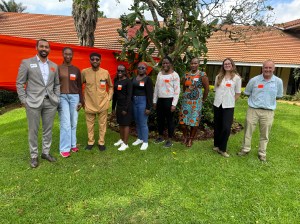
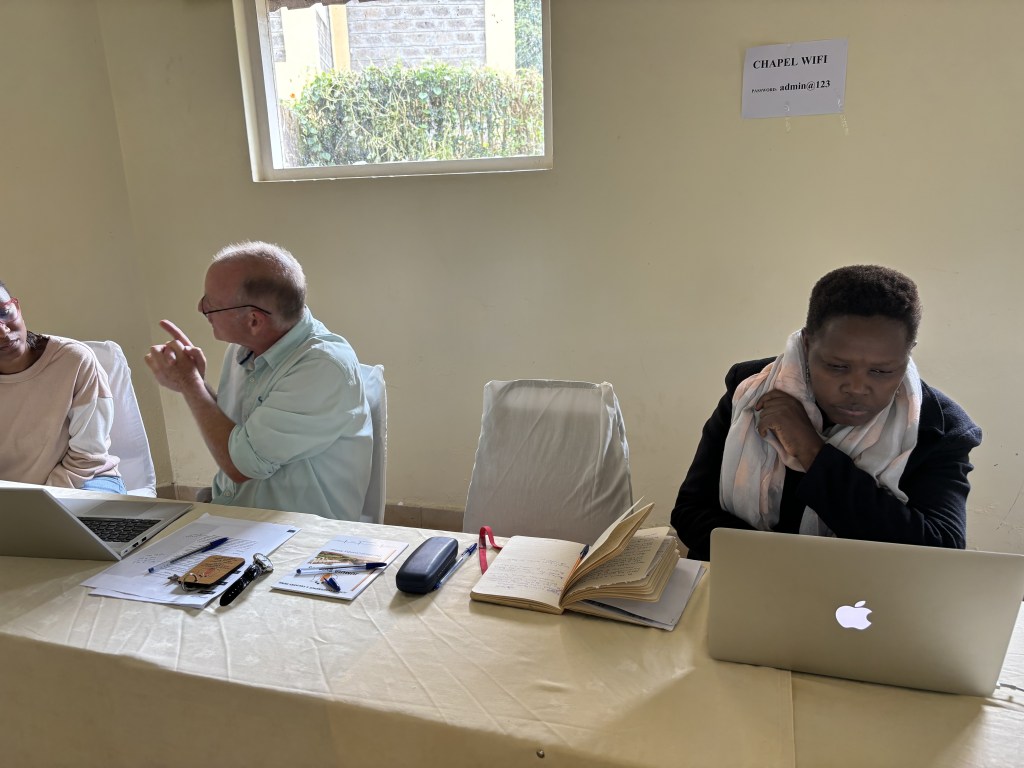
The Mapping Ancient Africa (MAA) writing workshop is currently in full swing in Kenya. Running from 3 June until the 6 June 2024 a diverse range of skills related to academic publishing is being delivered by our international team, including: structuring a scientific article, managing references and revision strategies. There is also plenty of time set aside for writing and getting feedback from more experienced academic writers. The manuscripts being developed at the workshop are being designed to be submitted to the MAA special issue of Quaternary International.
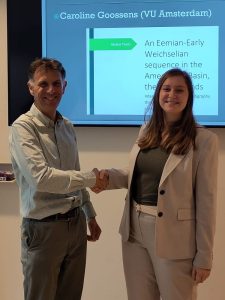
On Friday 24 May 2024 the Palynologische Kring (Dutch palynological society) held a seminar series and laboratory workshop at the Institute for Biodiversity & Ecosystem Dynamics (University of Amsterdam). During the afternoon we had the annual meeting of the society, the presentation of our MSc Thesis prize, four seminars and two laboratory demonstrations. The MSc thesis prize “Florschütz Award” was won by Caroline Goossens (VU Amsterdam) for her thesis entitle: “An Eemian-Early Weichselian sequence in the Amersfoort Basin, the Netherlands”; the project was supervised by Natalie Van der Putten, Cees Kasse and Jeroen Schokker. We hope that Caroline will present her thesis at a future Palynologishe Kring meeting.
Teye Aukes presenting on the diatoms of ancient Rome
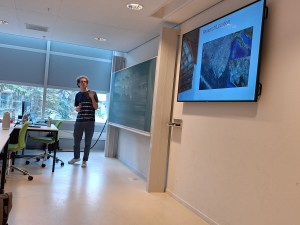
The talk series was kicked off by Nina Witteveen (University of Amsterdam) who presented part of her PhD thesis (currently awaiting defense), entitled: “Long-term forest recovery in Amazonia insights from phytolith analysis”. Nina discussed the impact of past peoples on the vegetation of Suriname based on her work identifying phytoliths in soil samples collected at varying distances from an archaeological site. The second talk was given my Amanda Henry (Leiden University) who demonstrated how the analysis of starch grains extracted from archaeological context can provide insights in to past diets. She used these evidences to suggest that early humans and Neanderthals had a similar diversity of plants in their diets. The third talk was given by University of Amsterdam MSc researcher Teye Aukes and focused upon his identification of diatoms from an swampy lagoon environment near Ostia (Italy). He drew conclusions from these data about the antiquity of salt production in ancient Rome. The final talk was given online by Welmoed Out (Moesgaard Museum) who presented a detailed analysis of inter- and intra-analyst variability in phytolith morphometric analysis.
After the seminars we moved upstairs to the microscope laboratory where Nina Witteveen and Ana Smuk (University of Groningen) showed off phytoliths from their study site in South America and the Netherlands.
Some of the Palynologische Kring members enjoying some refreshment after the event.
The SASQUA congress will kick off next week (19-24 May 2024) in Cango Valley (South Africa). Sessions cover many aspects of Quaternary science and range from archaeology through palaeoclimate to geological topics. The full program is now available to download.
Quick, L.J & Asithandile, N. (2024) Proceedings of the XXIV Biennial Congress of the Southern African Society for Quaternary Research (SASQUA), Cango Valley, South Africa, 19-24 May 2024. DOI: 10.5281/zenodo.11125697
To find out more about the meeting and other SASQUA activities you can also visit the organizations web pages: https://sasqua.co.za/
During the Mapping Ancient Africa workshop in Rome I conducted short interviews with the scientists involved. The first of these, Alfred Houngnon can be viewed here, below are four more, and more will follow as I get them uploaded. I hope they provide interesting insights into the diverse range of skills and backgrounds our scientists have.
Interview 2: Busisiwe Hlophe (University of the Witwatersrand)
Interview 3: Angela Effion (University of the Witwatersrand)
Interview 4: Bahru Zinaye Asegahegn (University of Cologne)
Interview 5: Michela Leonardi (University of Cambridge)
To find out more about the Mapping Ancient Africa project click here.
The second part of the Mapping Ancient Africa session at the INQUA Rome congress contained eight talks. Busisiwe Hlophe (University of the Witwatersrand) kicked us off by showing us the power of looking at wood anatomy preserved in charcoal microfossils to determine the nature of past vegetation and climate. RahabKinyanjui (National Museums of Kenya) presented phytolith work from archaeological sites revealing a mixed woody and grassy vegetation associated with archaic Homo sapiens in Kenya.
Three talks from the Cape Region in South Africa then followed with Saul Manzano (University of Leon), StellaMoscher (University of Utah), and Asithandile Ntsondwa (Nelson Mandela University) using various palaeo ecological approaches to explore climate, vegetation and fire regime shifts during the Holocene. Adele Julier (University of Portsmouth) then took us a little further north to Namibia to think about the challenges of parameterising modern pollen-vegetation relationships in arid regions. The final southern African talk was given by Gemma Poretti (University of Cape Town) explored a new approache to tracking change in past rainfall patterns using charcoal material.
My name’s Alfred Houngnon, native of Benin Republic in West Africa. I hold an agricultural engineering degree in “Rangeland Management and Conservation” (Abomey-Calavi University). After gaining relevant field experience, I obtained a French Government Bursary to pursue an MSc degree in “Tropical Plant Biodiversity” at Montpellier (France). There, I learned about how to use indicators of past environmental and climatic change to give insights into projected future change.
It was a great scientific experience to participate in-person at the XXI INQUA Congress 2023 in Rome (Italy). This opportunity came under the supervision of William Gosling, and with the support of the Mapping Ancient Africa (MAA) project funded by INQUA’s Palaeoclimate commission (PALCOM). I have been working with Will for a number of years and published a first paper related to this work in 2021; a checklist of vascular plants from a ‘relict’ forest in Benin (Houngnon et al., 2021). A second manuscript is under development and was accepted for poster and oral presentation at INQUA 2023 congress that brought together around 4000 abstracts.
Interview 1: Alfred Houngnon (AGIR)
The bursary from the MAA project allowed me to also attend the MAA Rome workshops held at the Royal Netherlands Institute in Rome (12-13 July 2023). During the workshops, I was trained in two novel approaches to palaeoclimate modeling. The first based on interfacing paleoclimate models through the “pastclim” R package (Michela Leonardi), and the second on reconstructing palaeoclimates on the basis of ancient pollen data using the “CREST” program (Manu Chevalier). The workshops helped me to sharpen the communication of my ideas and in so doing strengthened the manuscript in preparation for submission to an international journal for publication.
The June 2023 meeting of the Dutch palynological society (Palynologische Kring) took place at the offices of the Dutch National Cultural Heritage Agency (Rijksdienst Cultureel Erfgoed) in Amersfoort. The focus of this meeting was the past forest landscape of the Netherlands. The meeting included the annual report of the society, three scientific talks, and a prize giving for the best MSc thesis.
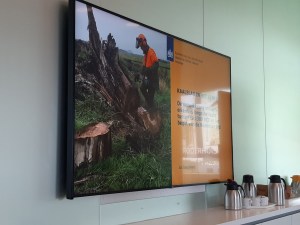
Presentation of Jos Bazelmans showed the huge amount of woody material extracted from Dutch peat bogs.
The scientific part of the meeting was kicked off my Roy van Beek who presented results from his ongoing project on the peatlands of the Netherlands which suggest peatland expansion occurred between 5500 and 3500 years ago (van Beek et al., 2023). The second talk was by our host, Otto Brinkkemper, and traced the history of woodlands across the Netherlands on the basis of macrofossil finds; including huge tree stumps remarkably preserved in peatlands (Bazelmans et al., 2021; Kooistra et al., 2006). The final talk was given by Jos Bazelmans who showed the remarkably high volume of tree stumps that have been recovered from the Netherlands, and how tree rings from these 100s of record are being used to reconstruct forest histories and past climate change. It was interesting to hear that the average age of the tree stumps found was around 250 years, and that some of the trees had lived to around 400 years in exceptional cases.
Kelly with her proud supervisors Stefan Uitdehaag (right), and I (left)
The final section of the meeting was the prize giving. Corrie Barkels, on behalf of the independent judging panel, announced Kelly van Leeuwen as the winner for her thesis entitled “Using soils samples and footwear to improve forensic palynology”. Her thesis was conducted at the University of Amsterdam as part of her MSc Earth Sciences degree and was conducted in collaboration with the Netherlands Forensic Institute. Congratulations Kelly!
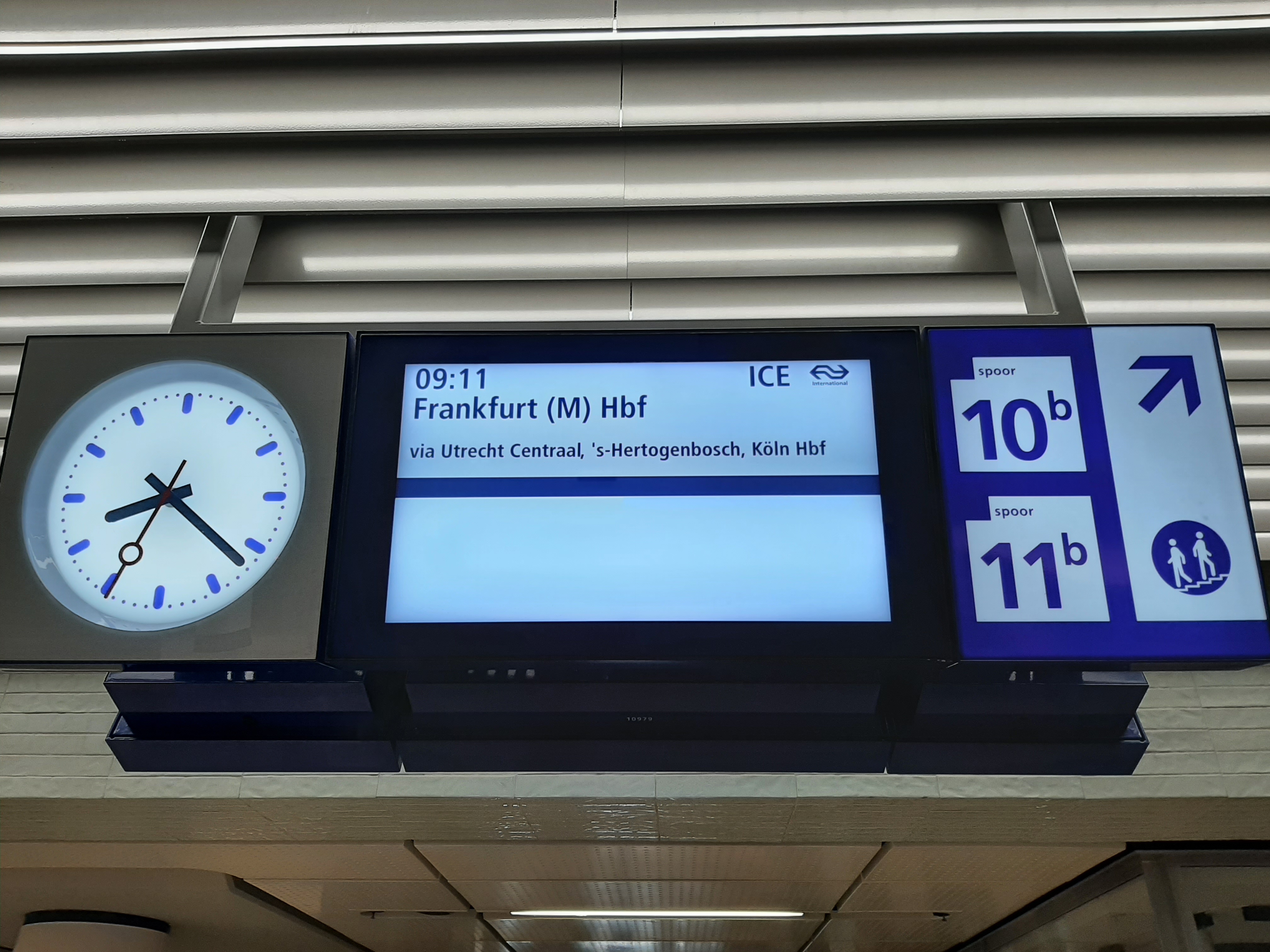
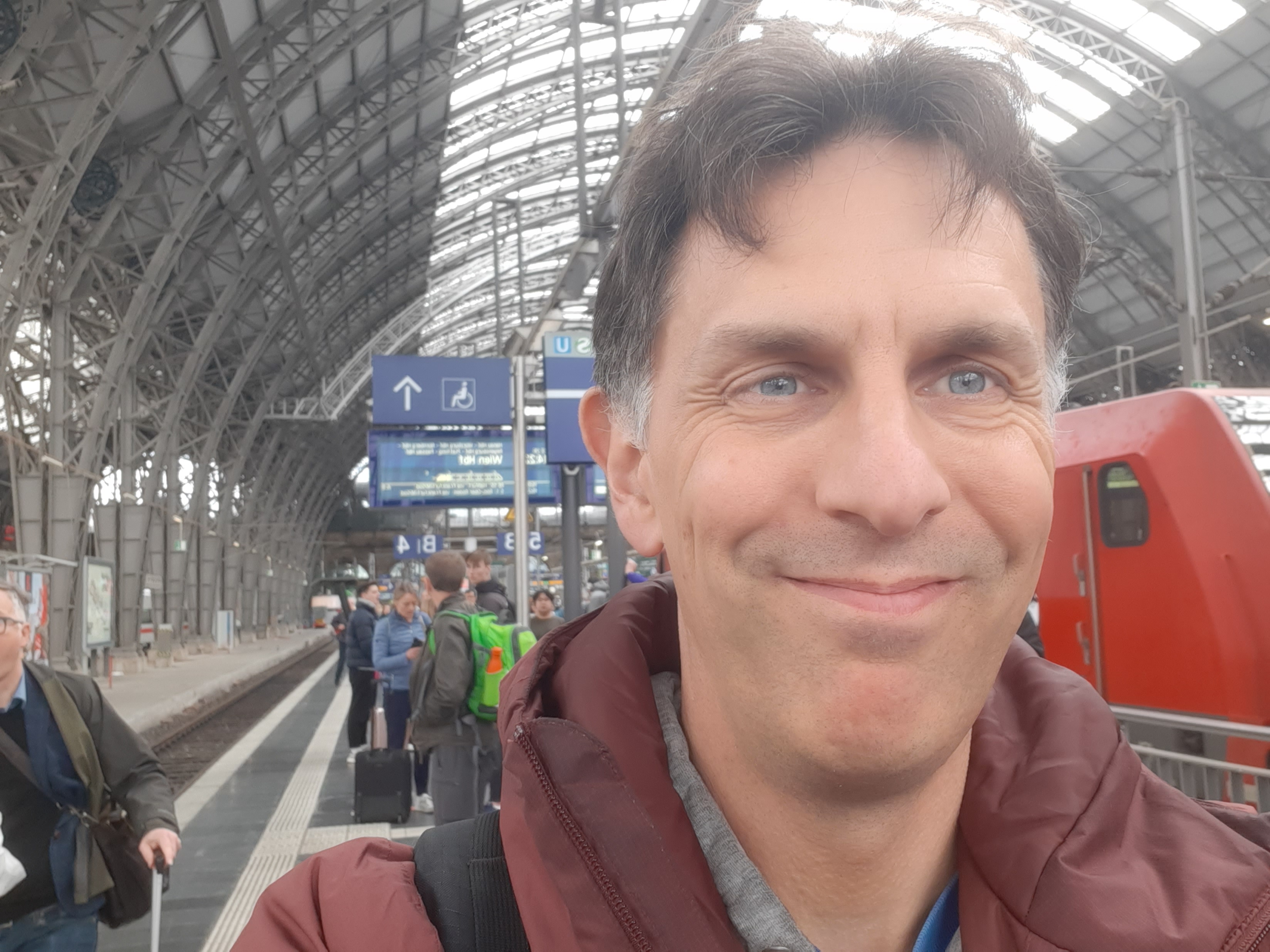
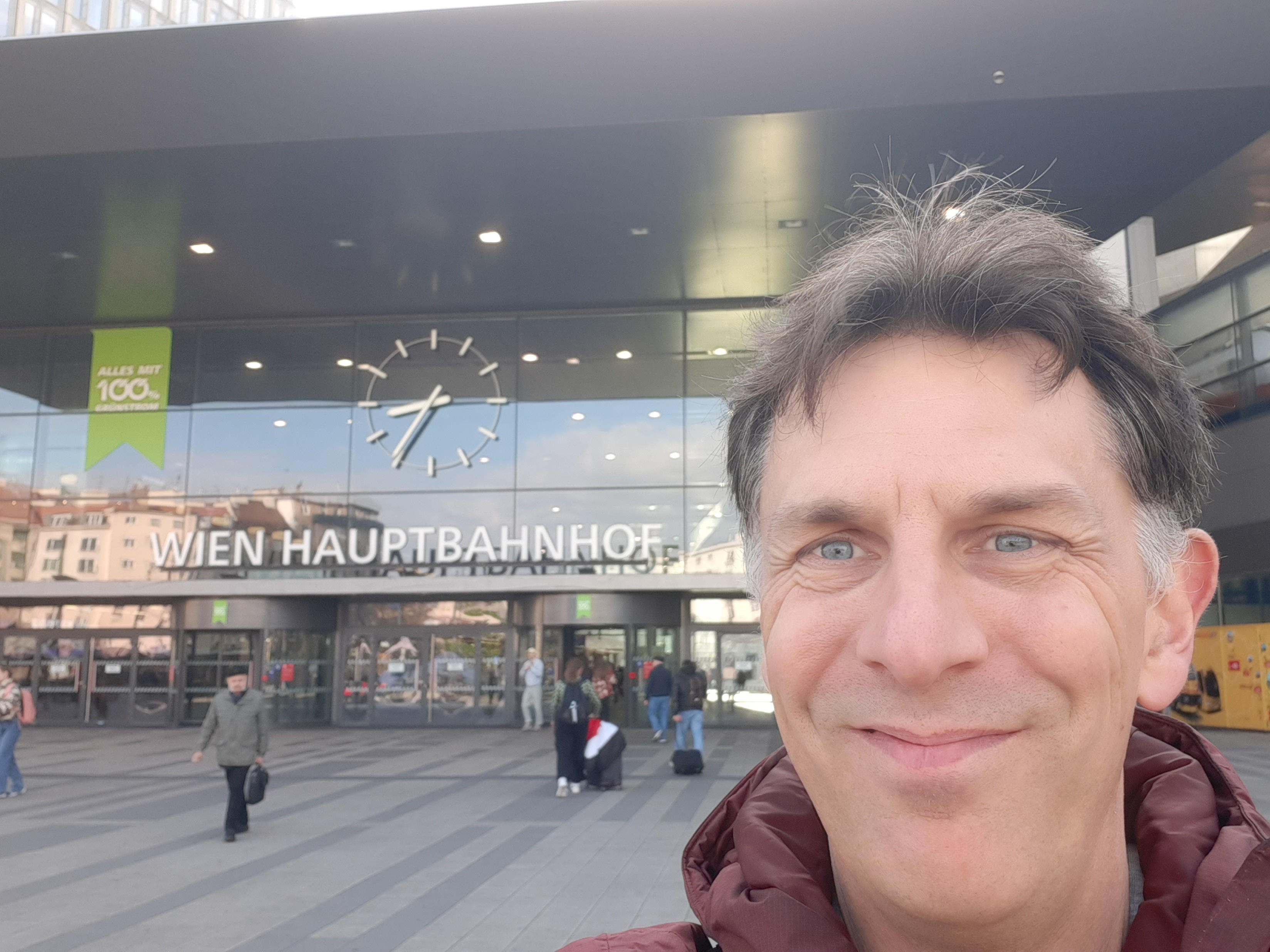
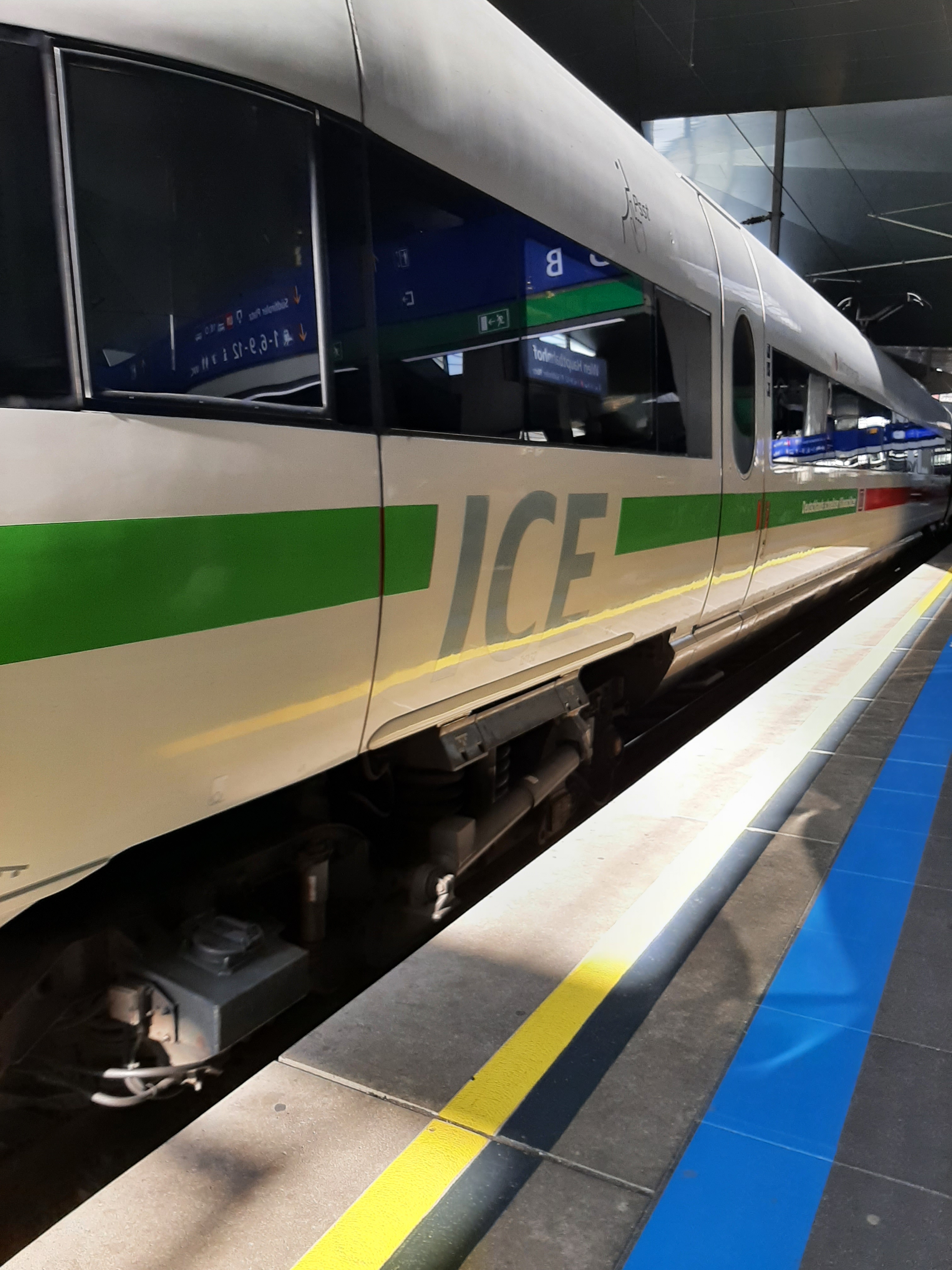
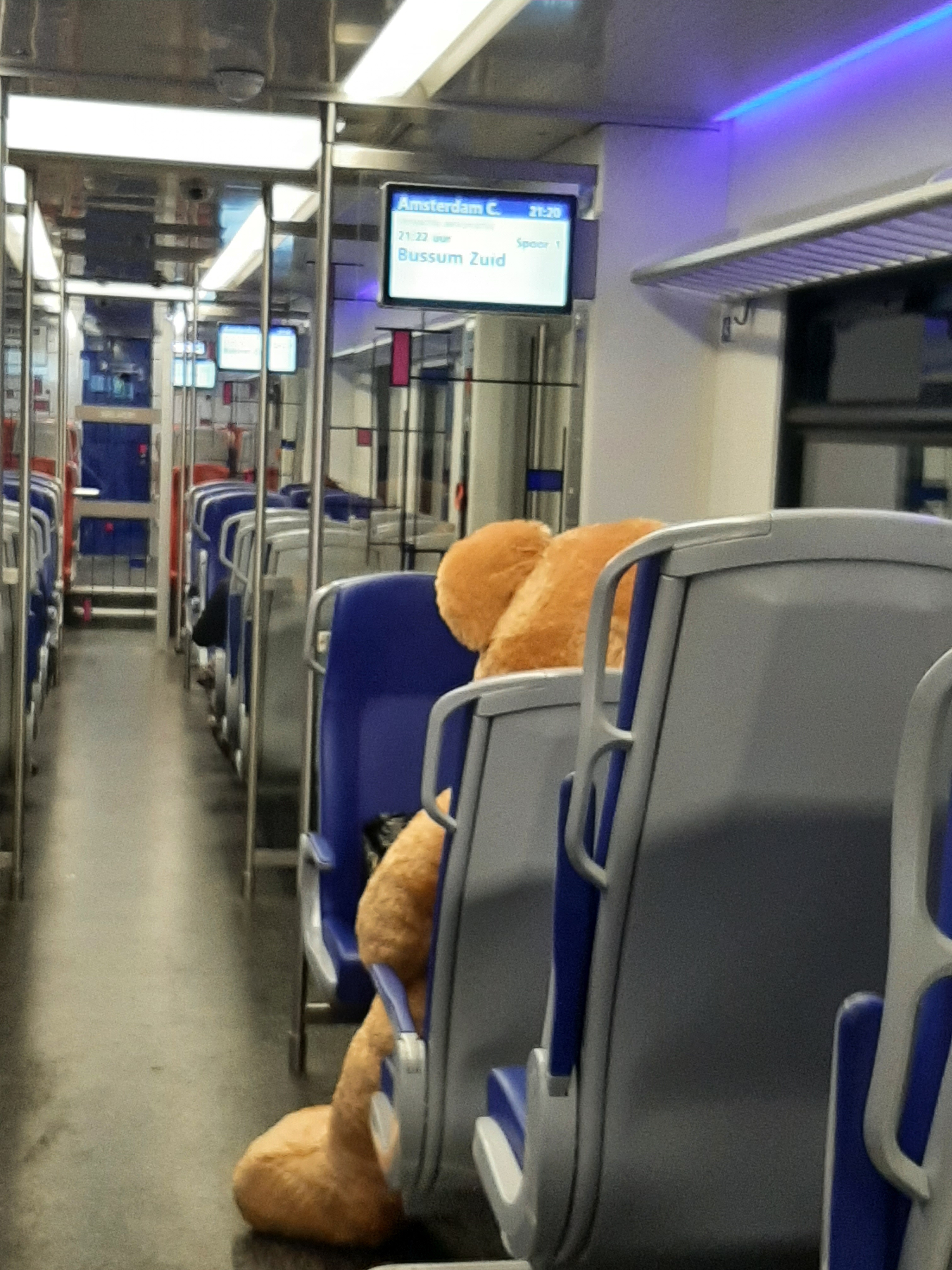
The European Geophysical Union General Assembly is taking place in Vienna this week (23-28 April 2023). Thousands of scientists from around the world have come together at the Austria Centre to discuss the latest discoveries related to our understanding of how the Earth system functions. This year I choose to travel to EGU by train from Amsterdam. It was not until later that I discovered that #Train2EGU was a “thing” (see photos below). I was not able to stay in Vienna for the whole congress so I am now back in Amsterdam. However, my time at the congress was excellent:
Listening to a wide range of talks (including sessions on past environmental change in Africa, the role of fire in shaping ecosystems and landscapes, and how we can develop new methods to extract information from sedimentary records),
Holding in-person scientific meetings with colleagues to try and figure out what the datasets mean on various projects (mainly focused on wiggly lines generated from long lake records), and
Meeting up with friends and colleagues who I had not seen for many years…
I hope all those still at EGU are having fun. While I see the necessity of scientists to get together in the same physical space to advance our field I also see the tension with the environmental impacts of travel. Getting together at big congresses such as this maybe the most travel efficient way to solve this conundrum? Anyway, I hope at least people think about their travel plans and I for one enjoyed by #Train2EGU experience; all connections met and – apart from 1 hour of very crowded conditions after leaving Frankfurt – a very pleasant experience in which I could easily work / sleep / eat.
On the 19 May the Palynologische Kring (Dutch palynological society) held a hybrid seminar meeting under the theme “Dutch palynologists then and now”.
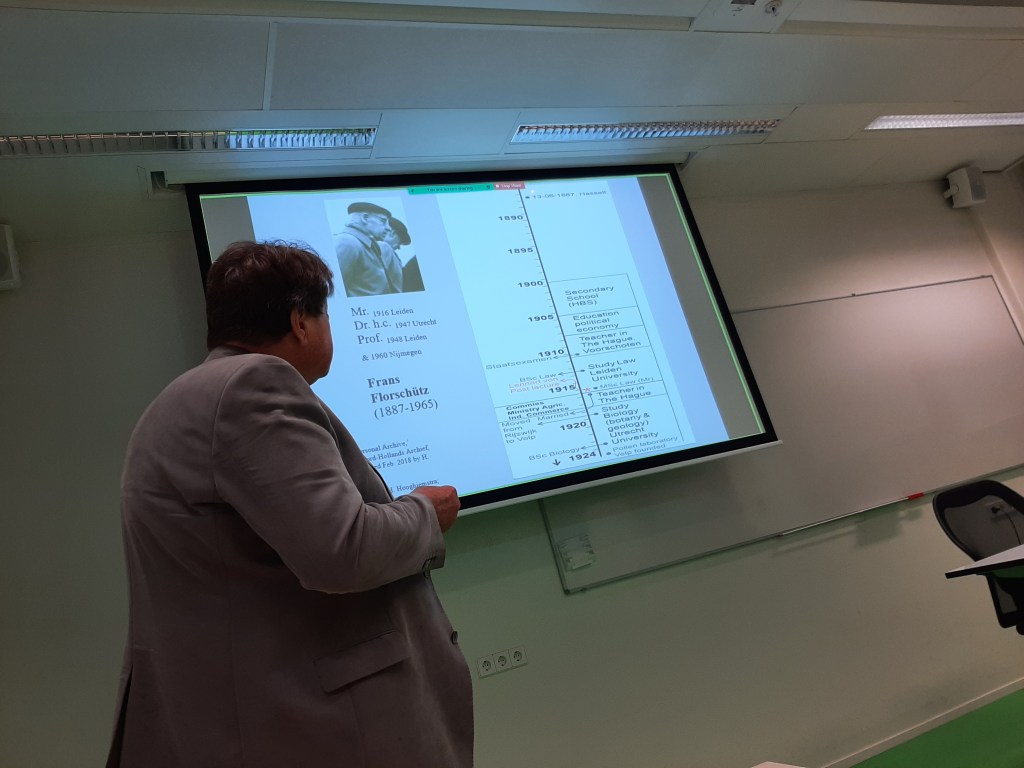
The meeting was opened by Prof. dr. Henry Hooghiemstra (University of Amsterdam) who focused on the “then” and presented a biopic of pioneering Dutch palynologist Frans Florschütz. Florschütz became one of the major figures in establishing palynology within the Netherlands during the 1900s. Originally, he studied political economy and law, but went on to become the Secretary to the Board of Governors of the Agricultural School in Wageningen. From his position in Wageningen Florschütz had a base to develop his interests in palynology and past environmental change. He started work on the seminar work “Nederland in Ijstijd” (The Netherlands in the Ice Age) in 1939 and it was published in 1950. During his career Florschütz also held positions at Utrecht University (obtaining his doctorate), University of Leiden (endowed chair, until 1958) and University of Nijmegen (post retirement). Click here for further information on Frans Florschütz visit.
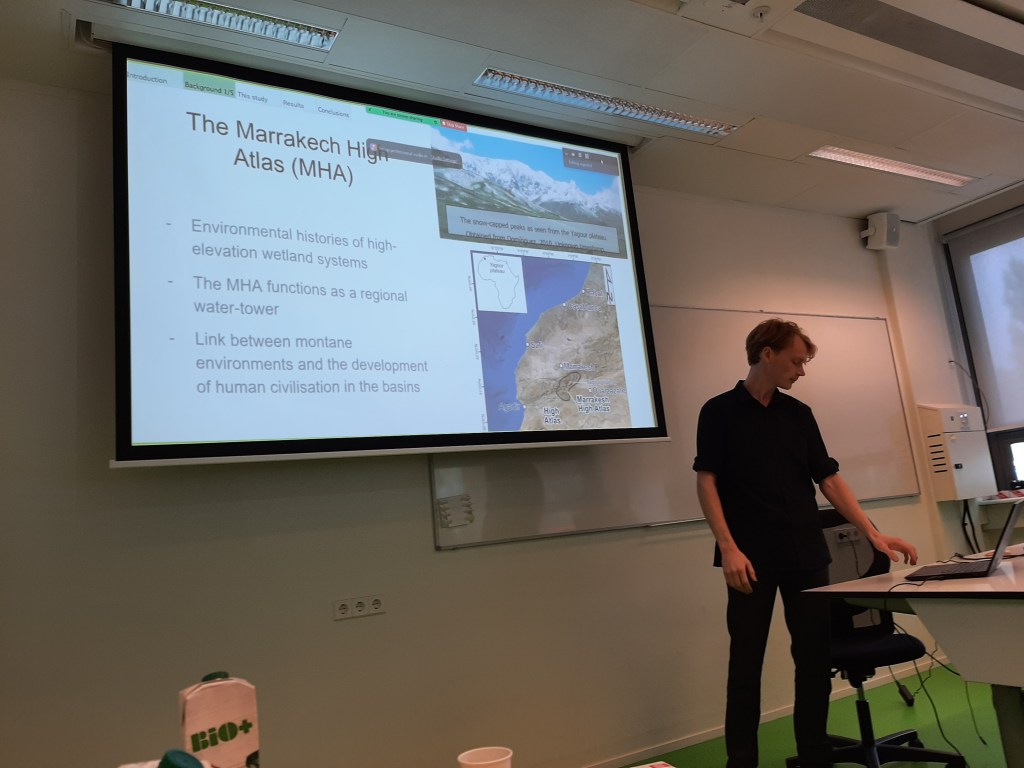
The second part of the meeting focused on the “now” with presentations form three Dutch researchers engaged in research abroad. First up with Eric de Boer (Universidad de Granada, Spain), then Thya van den Berg (University of Hull, UK), and finally Henk Cornelissen (University of Manchester, UK). Eric presented new data on the human and climate impacts on the Iberian Peninsula. Thya presented her work in two parts focused on the new datasets on past environmental change from Yorkshire (UK) and then the development of modelling approached to estimate landscape cover on the basis of pollen datasets. Henk took us to the high atlas of Morocco and showed how pollen and chemical data can be integrated to reveal past human presence and impacts.
The next scheduled event will be in the annual excursion which this year will be to Leiden. For further details and to find out more about the Palynologische Kring visit the web pages here.


















 Ecology of the past