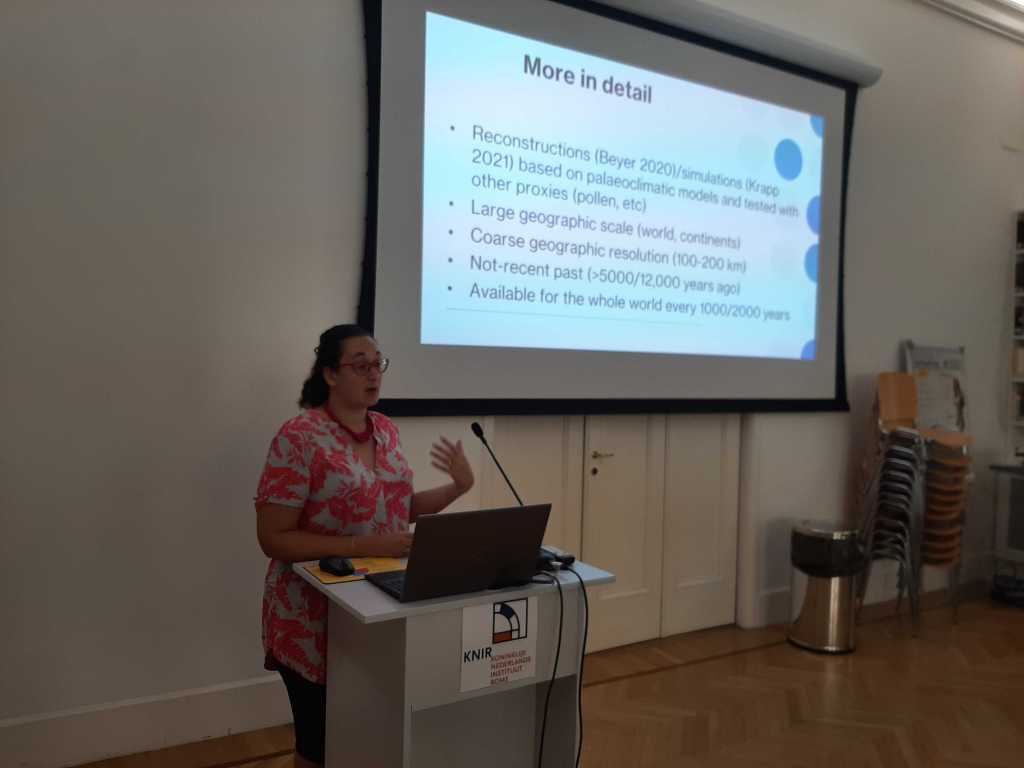
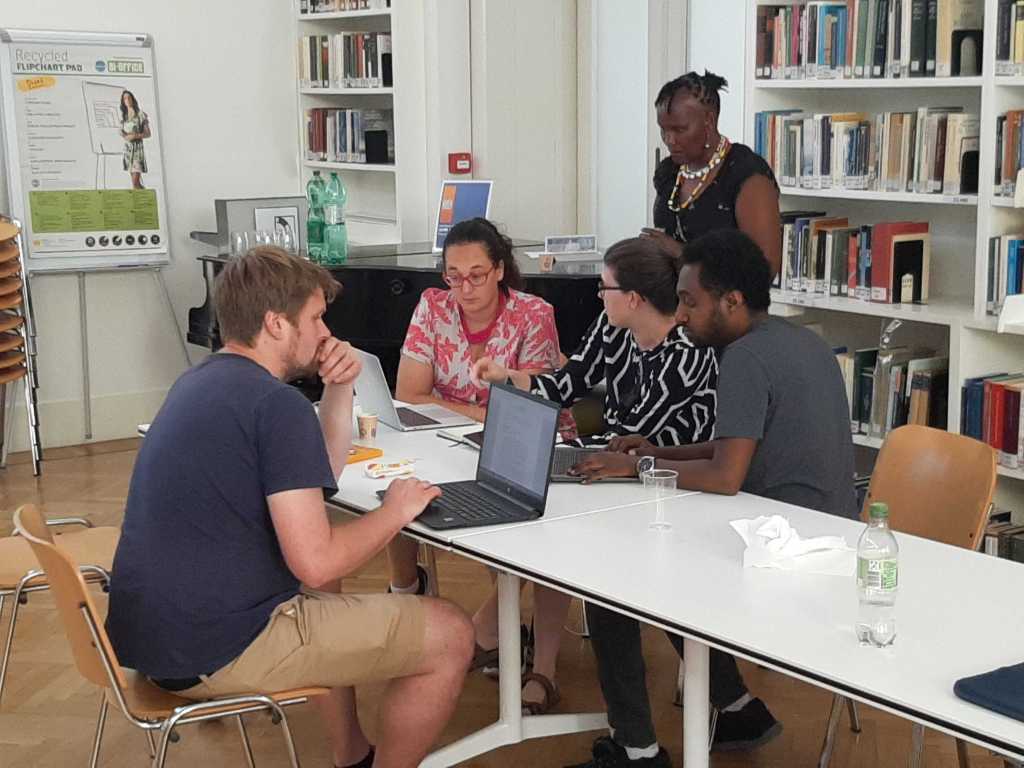
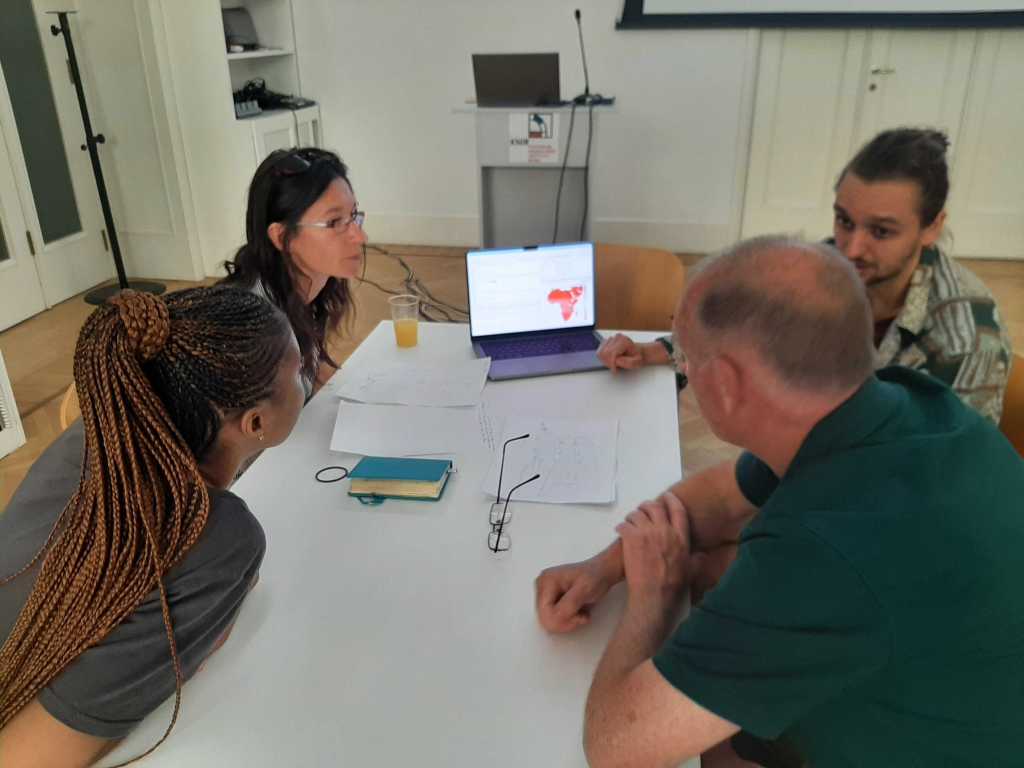
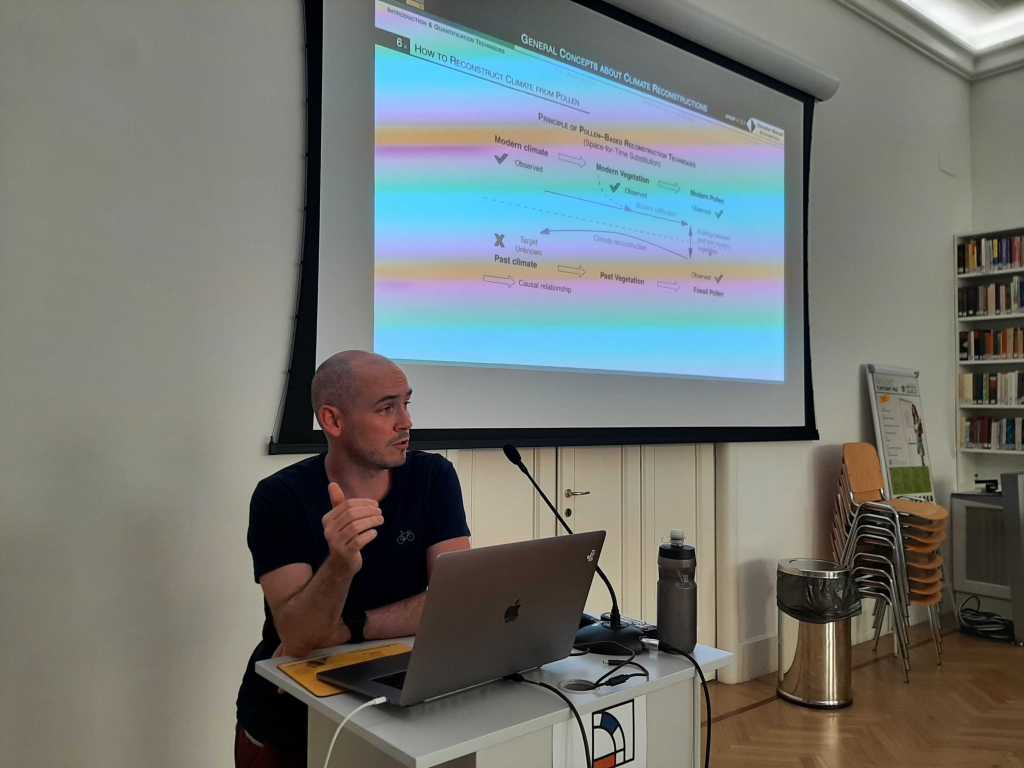
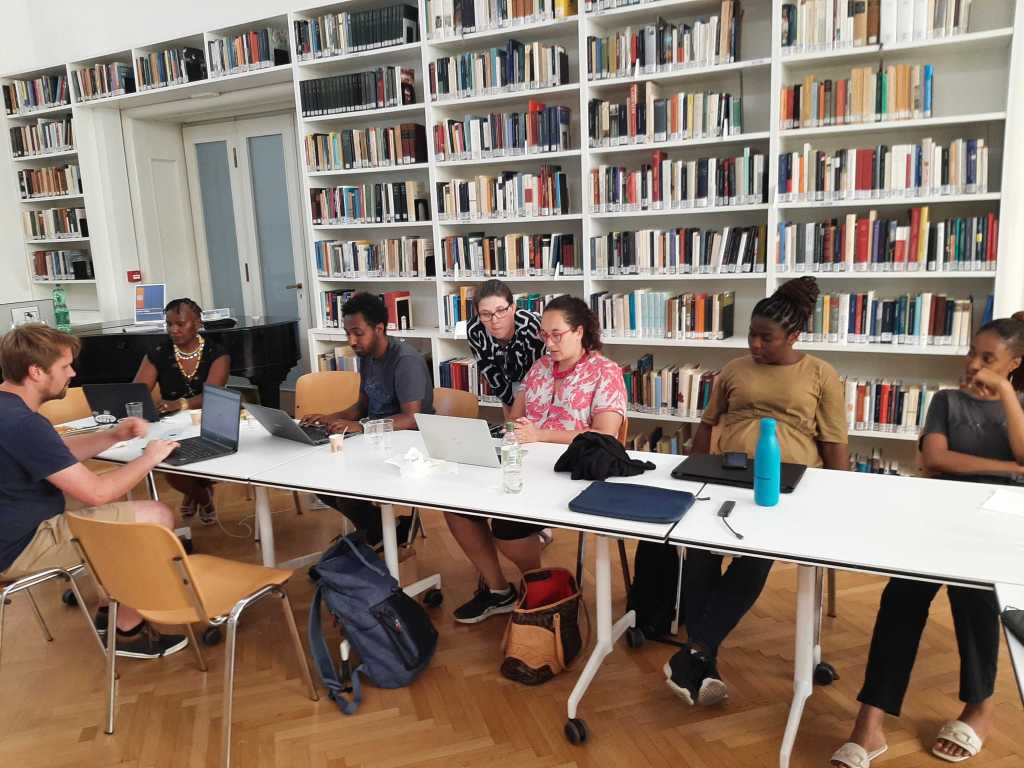
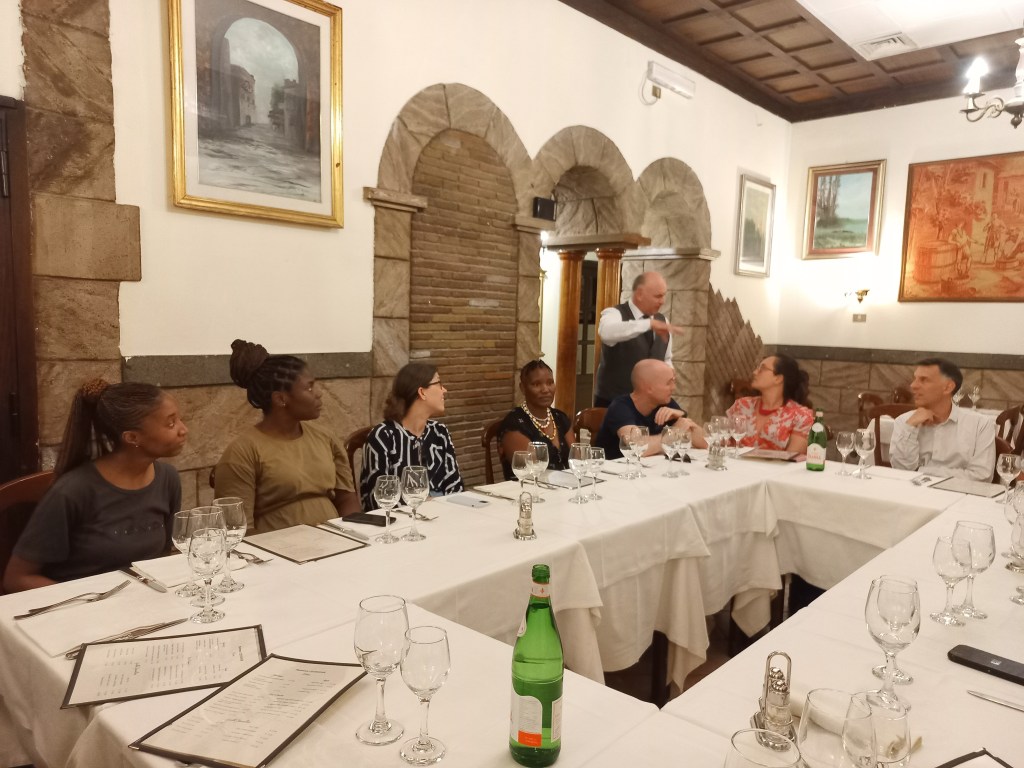
The Mapping Ancient Africa workshop took place on the 12-13 July 2023 at the Royal Netherlands Institute in Rome. At this INQUA funded workshop we played with palaeoclimate models and discussed past environmental change across the continent. Here are some picture of us in action. To find out more click here.
Day 1: Modelling past climate through the pastclim package, and reconstructing past climate through CREST
Day 2: Planning the proposed special issue and the future of the project
Interfacing palaeoclimate models through the “pastclim” R package. Lead by Michela Leonardi.
Reconstrucing palaeclimate on the basis of ancient pollen data using the CREST program. Lead by Manu Chevalier.
The aim of the workshop was to promote interaction between scientists working across Africa and across disciplines (palaeoclimate, palaeoecology, archaeology, modelling). The plenary session was joined by participants who could not make it to Italy via Zoom. This session was recorded and you can watch it below. In the plenary session outputs from the workshop, the planned special issue of Quaternary International, and the future of the Mapping Ancient Africa project were discussed.
A recent open letter to Wiley from Associate Editors working for the Journal of Biogeography posted by Lucie Zinger and others highlighted a dispute between the editors and the publishers in relation to: (i) the proposed switch of the journal to a pure open access model, (ii) financial barriers to publication, (iii) the proposed increase in throughput of manuscripts to maximise profits, and (iv) the manuscript referral process (see @LucieZinger, read tweet here, dated 28 June 2023). This got me thinking about these issues in relation to the journal that I am most involved with editing which also published papers related to biogeography; Plant Ecology & Diversity.
Plant Ecology & Diversity is the journal of the Botanical Society of Scotland. It is published in association with Taylor & Francis and any profits are split between the publishers and the academic society. To promote diversity and inclusion among authors the journal has a policy of double blind peer review (and has done for many years). Further, there are no publication fees for authors to publish in this journal, however, this does mean that published papers are behind a pay wall. An “Open Access” option is available to all authors for a fee (hybrid model), although the invited “Grubb Reviews” series is automatically published Open Access. Subject Editors and Associate Editors “work” for the journal gratis (for free) and the love of furthering the field.
If you have manuscripts related to biogeography, and prefer this mode of publishing, then please consider the fit of your paper to Plant Ecology & Diversity and send them our way. Or indeed if you have manuscripts related to one of our other key themes:
evolution and systematics,
global change and vegetation dynamics,
environment and plant functioning, and
biotic interactions.
The journal accepts original research articles (c. 7000 words), rapid communications (c. 2500 words), review articles (c. 12,000 words), and perspectives (c. 2500 words). Other options for publishing are of course also available 🙂
Henry Hooghiemstra (University of Amsterdam) began working on “long” continental pollen records during his PhD (Hooghiemstra, 1984). After a long and distinguished career working around the Henry has just published a retrospective discussing the challenges, benefits, and prospects for investing in this aspect of palaeoecological research (Hooghiemstra, 2023).
References
Hooghiemstra, H. (2023) Making a Long Continental Pollen Record, a Fabulous and Bizarre Enterprise: A 50-year Retrospective. Palynology 47, 1-4. DOI: 10.1080/01916122.2023.2191257
Hooghiemstra, H. (1984) Vegetational and climatic history of the high plain of Bogota, Colombia: A continuous record of the last 3.5 million Years Gantner Verlag, Vaduz.
The Mapping Ancient Africa (MAA) project has a double session of talks and a poster session at the INQUA congress in Rome 2023. Our session will be on Wednesday 19 July.
Giosan et al. When the desert was a lake: Providing context for Homo sapiens development in the northern Kalahari
Chase et al. Paleolakes and socioecological implications of glacial “greening” of the South African interior
Biddulph et al. Spatiotemporal variability in the initiation and development of peatlands across the central Congo Basin
Blinkhorn et al. Evaluating refugia in recent human evolution in Africa
Aureli et al. Homo sapiens behaviour and adaptation in East Africa. New evidence from an open-air site in a modern Ethiopian savannah environment: the GOT10 site
Dembele Climatic fluctuations during the last millenium and their impact on political history and human settlements in West Africa
Porchier et al. Annually resolved hydroclimate variability in the East African Rift Valley at a time critical for hominin dispersion
Effiom et al. Late Holocene palaeoecological studies at Lake St Lucia, KwaZulu-Natal
I would like to draw readers attention to the “Unissued Diplomas” exhibition that documents stories of students killed in the ongoing war in Ukraine. This exhibition is currently on display in the entrance hall of the Science Faculty building of the University of Amsterdam. You can view the exhibition online at: https://www.unissueddiplomas.org/
Witteveen NH, White C, Sanchez Martinez BA, Booij R, Philip A, Gosling WD, Bush MB, McMichael CNH. 2023. Phytolith assemblages reflect variability in human land use and the modern environment. Vegetation History and Archaeobotany. DOI: 10.1007/s00334-023-00932-2
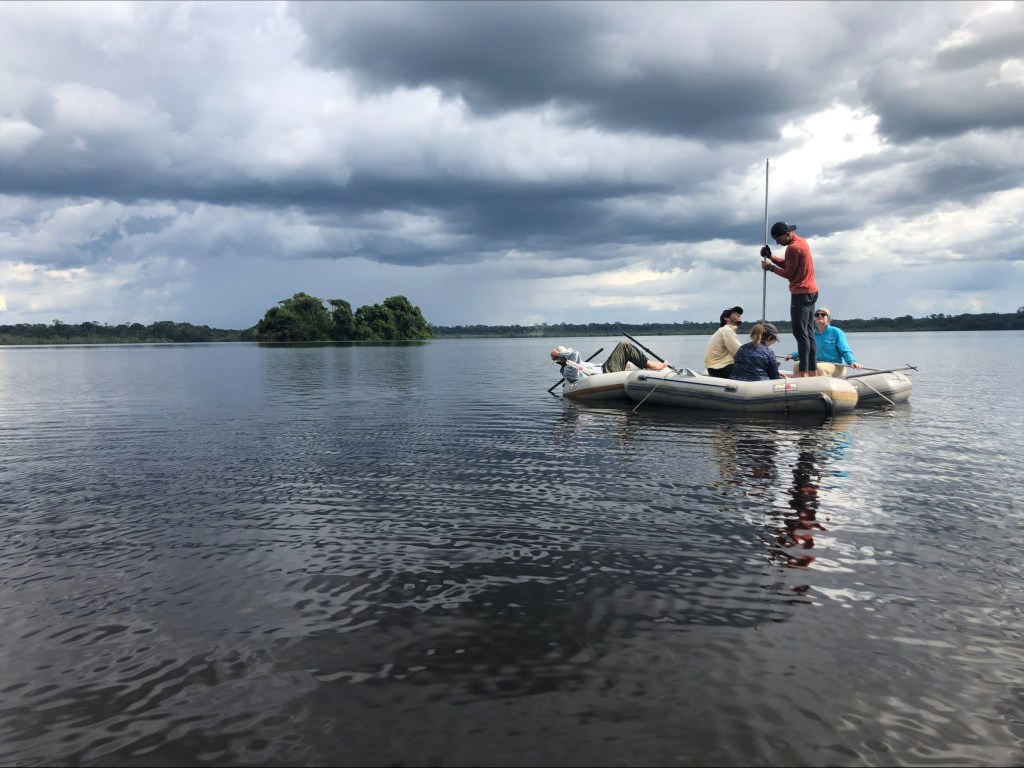
Fieldwork in Ecuador, Lake CubeCoring lake Zancudo Cocha (Ecuador)
Ansis Blaus is a Latvian postdoctoral research associate exploring patterns of climatic and anthropogenic change in the Neotropical Paleoecology Research Group led by Mark Bush at Florida Institute of Technology. He earned his Ph.D. in Earth Sciences from Tallinn University of Technology, Estonia. Supervised by Dr. Triin Reitalu he worked on modern pollen-plant relationships and palaeoecological reconstructions of peatlands and calcareous spring fens with an emphasis on biodiversity and plant functional trait reconstructions.
Currently, at Florida Tech, Ansis works on pollen data and other proxies from the sediment cores collected in the tropical Amazon. He investigates the tropical forest changes in relation to the global climate from a historical perspective, particularly during the Last Glacial Period and the Last Interglacial ca. 130 thousand years ago. His work will shed light on the history of dynamics and climate tipping points in the Amazonian rainforest. This research is particularly important in the face of the current global climate crisis and could help to anticipate the tropical forest response to the changing climate in the future.
Another objective of Ansis’s work is to study the pollen signature of human disturbance in the Amazon Basin as a means to model and interpret human presence and activities in the past and to understand human-nature interactions in tropical forest ecosystems in different spatial and temporal scales. For that, he is collaborating with the University of Amsterdam, Institute for Biodiversity and Ecosystem Dynamics, and working on a project aiming to quantify tropical pollen assemblages led by Crystal McMichael.
Ansis is fascinated by the potential revelations that come with the intersection of neoecology and paleoecology and human interactions. His interest in paleoecology, biodiversity, and various natural processes comes through the sense of pursuing a higher purpose for society and the well-being of our planet, and from the concern that humans have altered tropical forests and most other ecosystems in the world to the level of a negative rebound effect. Ansis believes that we must study and understand these ecosystems from different perspectives to decrease the current damage, predict future scenarios and to develop conservation strategies for both nature and human well-being.
The Mapping Ancient Africa (MAA) workshop in Rome will take place on the 12 and 13 July 2023. The workshop supported by International Union for Quaternary Research (INQUA) and hosted by the Royal Netherlands Institute in Rome. During the workshop we will be working towards aims of the MAA project to strengthen the research community of Quaternary scientists working across Africa, and to further our scientific goals of understanding past climate change. To achieve this we will work collaboratively to:
simulate past climate change in Africa,
develop the proposed Special Issue of Quaternary International, and
plan the next steps for the MAA project.
Twenty-seven people are registered for the workshop and we look forward to seeing them in Rome. If you are not registered for the workshop but still want to participate this is possible. On the 13 July between 15:00 and 18:00 CEST the workshop sessions will be online via Zoom. To obtain the Zoom link either visit the MAA Slack channel, or contact William Gosling. During the online part of the meeting we will present the outputs from the palaeoclimate mapping activity, the plans for the special issue, and outline the ideas future of MAA. Feedback from the wider MAA community will be very welcome.
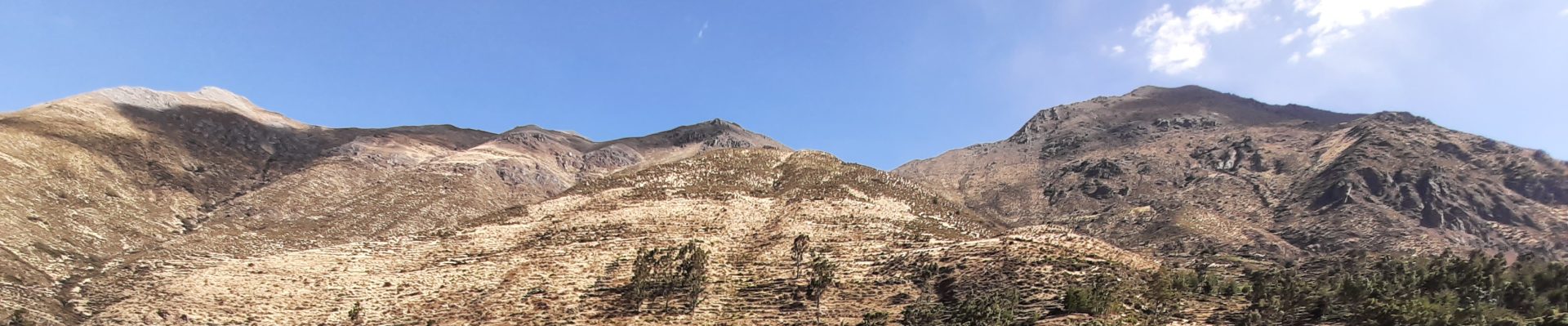
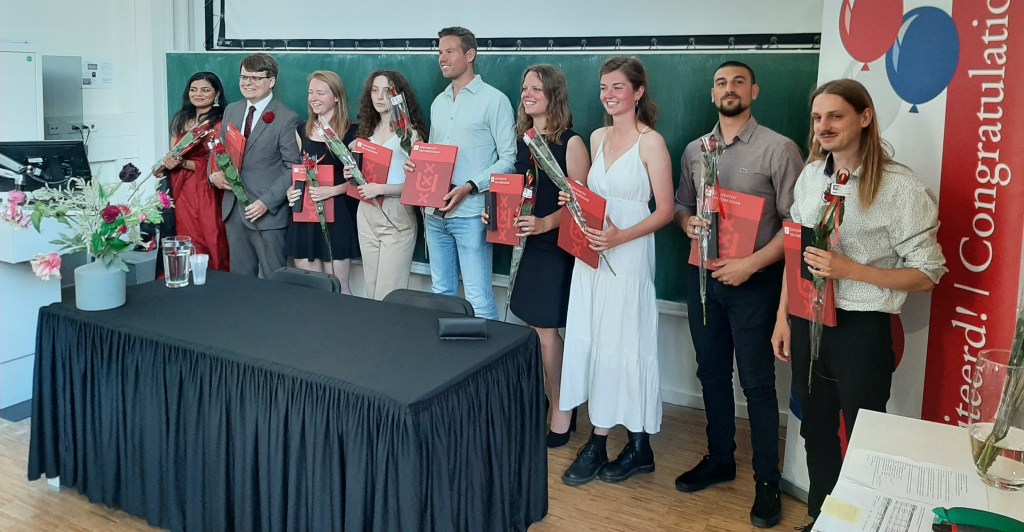
Yesterday evening, in my capacity as chair of the exam board MSc Earth Sciences, I had the pleasure of handing out degree certificates to graduates of both our Earth Science and Biological Science programs. It was unusual to have a combined event, but very nice given that I teach on both programs. It was great to meet up with some familiar faces and recount tales from past courses, notably the Field Course “Geoecological Systems”, and the associated adventures in the high Andes, came up a number of times! It was impressive to note the span of the research projects that students had been engaged with; from molecular biology to carbon cycle dynamics, and environmental policy. I think that all concerned had a great time at the ceremony, and throughout their studies at the University of Amsterdam. Congratulations again to all!
If you are interested to also become a happy graduate in a few years time sign up online for programs starting in September 2023:







 Ecology of the past