Menu

  • Home
  • About this blog
  • Who we are
  • On film
  • Palaeo research
    • Student research projects
  • Mapping Ancient Africa
    • Background and goals
    • Regional hubs
    • Participants
    • Schedule
    • Past events
    • Literature

Ecology of the past

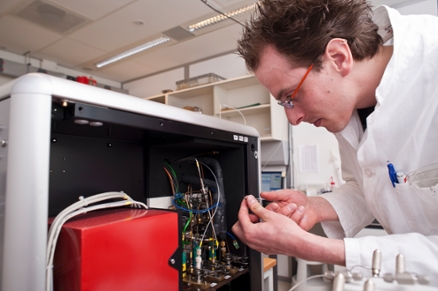
Job: Physical-chemical research technician with management skills

October 5, 2017
WDG

Vacancy: Physical-chemical research technician with management skills (salary scale 10)
Institute for Biodiversity & Ecosystem Dynamics
University of Amsterdam
Closing date: 22 October 2017

This position will link strongly with the IBED Department of Ecosystem & Landscape Dynamics which aims to improve our understanding of the functioning and dynamics of abiotic and biotic components of (geo-)ecosystems across landscapes through time. To achieve this aim we make use of a wide range of state-of-the-art research facilities provided by IBED (for more information on facilities click here).

For full details of the vacancy and how to apply click here, or visit Academic Transfer.


Categories: News, William Gosling • Permalink

Sustaining Earth’s Biodiversity

August 31, 2017
WDG

Exciting new edition of the Past Global Changes (PAGES) magazine focused on the sustainability of Earth’s biodiversity. Includes articles by Ecology of the Past blog contributors Dr. Encarni Montoya and Dr. Macarena Cardenas.

To find out more check out the full issue (free):

  • Gillson, L., Gell, P. & von Gunten, L. (2017) Past Global Changes Magazine: Sustaining the Earth’s Biodiversity 25(2): 76-130. DOI: 10.22498/pages.25.2
Encarni Montoya
Encarni Montoya
Macarena Cardenas
Macarena Cardenas

Categories: Encarni Montoya, Journal articles, Macarena Cardenas, Publications • Tags: biodiversity, Earth, PAGES, palaeoecology, Past Global Changes, Sustainability • Permalink

An undergraduate eye-view of an Andean lake-coring expedition

August 25, 2017
WDG

Part 2: Progresso
by Molly Kingston (a BSc Biological Sciences student at Florida Institute of Technology, taking part in an expedition lead by Prof. Mark Bush)

Progresso 1
Progresso 2

With a fresh set of clothes and a shower after almost a week without one, it was time to set off for the next lake, Progresso.

Continue Reading

Categories: Field work, Reports • Tags: Andea, Andes, bathymetric, BSc Biological Sciences, Chachapoya, Chachapoyans, Colinvaux-Vohnout, El Progresso, FIT, Florida Institute of Technology, Florida Tech, GPS, Huayabamba, Lake, Livingstone corer, Mark Bush, Peru, piston corer, Progresso, sediment, Universal corer • Permalink

An undergraduate eye-view of an Andean lake-coring expedition

August 23, 2017
WDG

Part 1: Huayabamba
by Molly Kingston (a BSc Biological Sciences student at Florida Institute of Technology, taking part in an expedition lead by Prof. Mark Bush)

When I first heard about this class in Peru, I had no idea that I was going to experience so much in such a short period. Our goal was to visit two lakes in Peru and raise sediment cores for paleoecology. The first lake that we went to was Laguna Huayabamba, which sits at about 3250 m elevation in the La Libertad region of the Peruvian Andes.

However, getting to this lake was no easy task. Before the hike even started, we had to obtain the necessary permits and permission from the local people. After several days of visiting different town officials and waiting for approval, we could set out on our adventure.

Huayabamba 4
Huayabamba 3
Huayabamba 2
Huayabamba 1

Continue Reading

Categories: Field work, Reports • Tags: Andean, Andes, BSc Biological Sciences, Chachapoyans, field work, FIT, Florida Institute of Technology, Florida Tech, grave robbers, Laguna Huayabamba, Livingstone corer, Mark Bush, mummies, ossuary, Peru, Polylepis, skeletons, Uchucmarca, undergraduate, Universal sampler, woodland • Permalink

The modern pollen-vegetation relationships of a tropical forest-savannah mosaic landscape, Ghana, West Africa

August 22, 2017
WDG

Julier, A.C.M., Jardine, P.E., Adu-Bredu, S., Coe, A.L., Duah-Gyamfi, A., Fraser, W.T., Lomax, B.H., Malhi, Y., Moore, S., Owusu-Afriyie, K. & Gosling, W.D. (2017) The modern pollen-vegetation relationships of a tropical forest-savannah mosaic landscape, Ghana, West Africa. Palynology online. DOI: 10.1080/01916122.2017.1356392

Categories: Adele Julier, Journal articles, Phil Jardine, Publications, Wesley Fraser, William Gosling • Tags: Bosumtwi, Ghana, palaeoecology, Poaceae, pollen, savannah, transitions • Permalink

Ancient monsoons on the Roof of the World

August 21, 2017
WDG

Natasha Barbolini

Natasha Barbolini getting a free mud treatment after some heavy rain.

Recent findings of monsoonal activity in Asia as old as 45 million years raises the fascinating possibility that these Monsoons may have triggered a global shift from the warm ice-free Greenhouse world, to the bi-polar Icehouse conditions the Earth still experiences today. Increased erosion and weathering of the uplifted Tibetan Plateau and Himalayas is currently advocated as the primary trigger for the enigmatic pCO2 drawdown that led to global cooling and rapid growth of the Antarctic ice sheet.

I am Natasha Barbolini, a new postdoctoral researcher in the Department of Ecosystem & Landscape Dynamics. Hosted by Dr Carina Hoorn, I joined the University of Amsterdam working on the MAGIC research project: (Monsoons of Asia caused Greenhouse to Icehouse Cooling). This ERC-funded project is headed by Dr Guillaume Dupont-Nivet at the University of Potsdam, Germany.

Xining Basin

A playa lake in the Xining Basin, surrounded by Oligocene red beds.

Continue Reading

Categories: News • Tags: Asia, Asian monsoon, Comsolidator, Eocene-Oligocene Transition, ERC, Greenhouse world, Ice house, MAGIC, Middle Eocene Climatic Optimum, monsoon, Paleocene-Eocene Thermal Maximum, palynology, pCO2, pollen, Qinghai-Tibet Plateau, Tibetan Plateau • Permalink

Pollen art…

July 29, 2017
WDG

Pollen grains created with glue, salt and paint on card.

Day 1 of my summer holiday raining = art with the kids.

Categories: Online resources, William Gosling • Tags: art, glue, holiday, kinds, paint, painting, palynology, pollen, rain, salt • Permalink

Fields and feasts

July 28, 2017
WDG

If you have exciting new research on past ecological change similar to this please consider submitting it for consideration to be published in Vegetation History & Archaeobotany.

If you have exciting new research on past ecological change please consider submitting it to Vegetation History & Archaeobotany.

Two articles recently published on-line in the journal Vegetation History & Archaebotany (of which I am an Associate Editor) recently caught my attention.These explore:

  • agricultural practices of people living in the Netherlands c. 3000-2000 years ago  (Arnoldussen & van der Linden, 2017), and
  • what it was the ancient Maya feasted upon (Cagnato, 2017)!

For more detailed thoughts on these papers read on…

Continue Reading

Categories: Reading, William Gosling • Tags: ancient agriculture, animals, archaeobotany, Bronze Age, Celtic fields, charcoal, Chultun, Climate change, drums, feast, geochemistry, Guatemala, La Corona, macrobotanical, Maya, Netherlands, north-west Europe, pit, plants, pollen, Raarakker, raised bed agriculture, ritual, Roman period, Vegetation History & Archaeobotany, whistles • Permalink

Field work in Ecuador

July 27, 2017
WDG

IBEDs Crystal McMichael hard at work sampling sediments in the Andes

IBEDs Crystal McMichael hard at work sampling sediments in the Andes

Insights into recent field work in Ecuador by a team lead by Crystal McMichael can be found in a recent blog from our collaborators at the Instituto Geofisico, Escuela Politecnica Nacional, Quito (Ecuador).

Trabajo colaborativo entre Volcanólogos y Palenólogos potenciará el conocimiento sobre el Paleoclima en el Valle de Latacunga en los últimos 20 mil años by Patricia Mothes

Categories: Field work, News, Reports, William Gosling • Tags: comunidad, ecosystem, Ecuador, Escuela Politecnica Nacional, IBED, IGEPN, Institute for Biodiversity & Ecosystem Dynamics, Instituto Geofisico, Landscape, palaeoecology, palenología, sediments, University of Amsterdam, UvA • Permalink

Images of modern pollen from Ghana

July 26, 2017
WDG

The images taken by Adele Julier to help her with pollen identifications during her PhD at The Open University (UK) are now available to download. Please note these images are not of reference material but identifications, made by Adele and myself, of the pollen grains found within her pollen traps. The pollen traps were deployed within vegetation study plots in wet evergreen forest, semi-deciduous moist forest, and the forest-savanna transition zone in Ghana. Further publications on this work and a thesis coming soon…

Julier, A.C.M. & Gosling, W.D. (2017) Modern pollen types, Ghana (v.2). Figshare. doi: 10.6084/m9.figshare.5240956.v2

Example of pollen images collated by Adele

Categories: Adele Julier, Data archive, Publications, William Gosling • Tags: Ankasa, Bobiri, forest-savanna transition, forest-savannah transition, Ghana, images, Kogyae, modern pollen rain, moist semi-deciduous forest, palynology, pollen, Pollen trap, tropics, wet evergreen forest • Permalink

← Older posts
Newer posts →
Blog at WordPress.com.
Ecology of the past
Blog at WordPress.com.
  • Subscribe Subscribed
    • Ecology of the past
    • Join 170 other subscribers
    • Already have a WordPress.com account? Log in now.
    • Ecology of the past
    • Subscribe Subscribed
    • Sign up
    • Log in
    • Report this content
    • View site in Reader
    • Manage subscriptions
    • Collapse this bar
 

Loading Comments...