PCRG July

August 2, 2013
WDG

Fluctuation in woodland resources in the high Andes have varied through the last 5000 years and influenced human societal development.

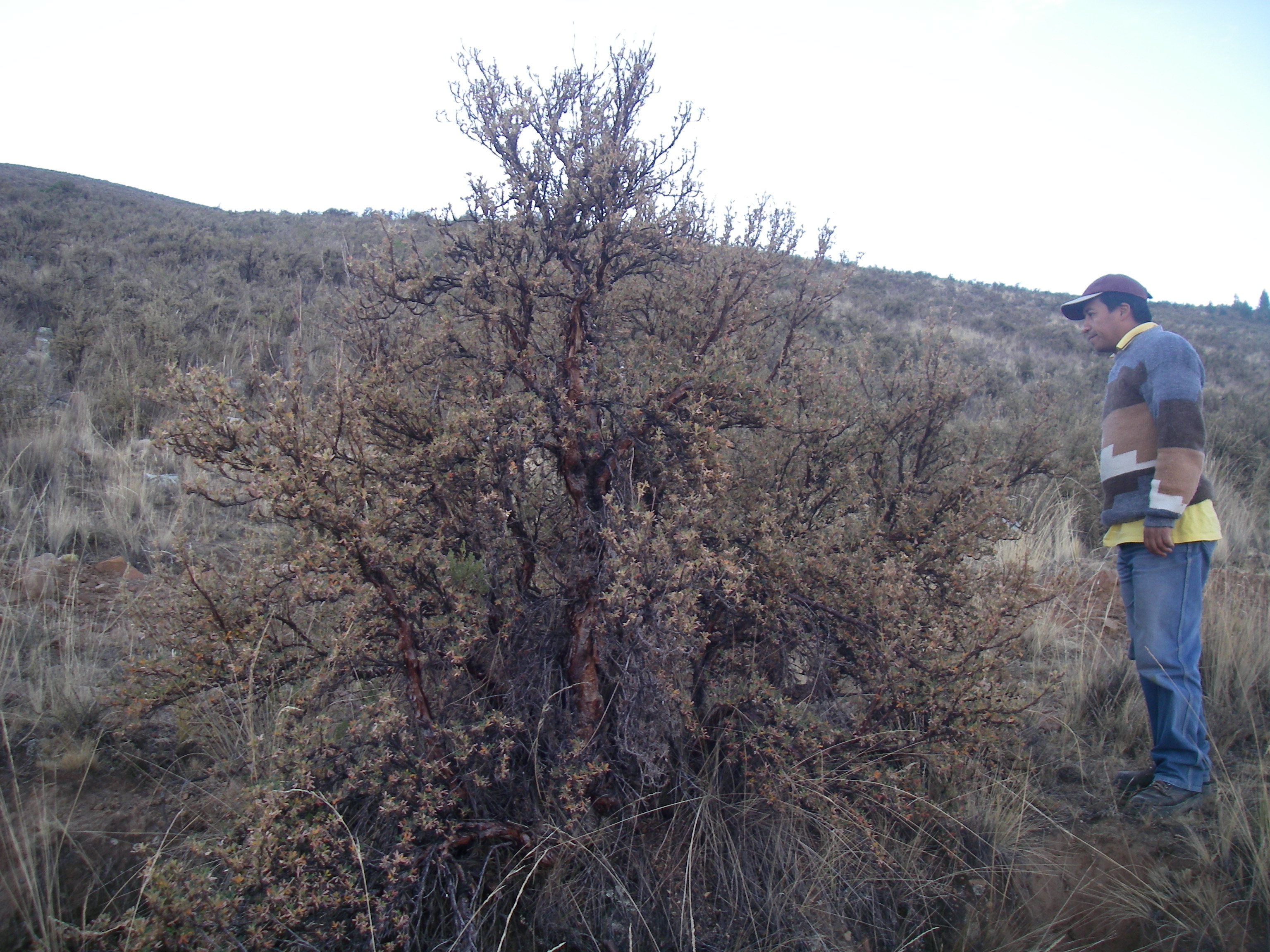
Woodland resources in the high Andes have varied through the last 5000 years and influenced human societal development. The relationship between people and natural resources in the Andes is explored in the recently published Gosling & Williams (2013); http://dx.doi.org/doi:10.1177/0959683613496296

In July we have managed to get a number of individual blog posts out so teaching activity on summer school, publications and conference reports have already been covered. Behind the scenes progress in the lab has continued despite the hot weather:

  • Frazer has commenced writing of his Chironomid training data set paper, and analysis of a fossil chironomid record.
  • Hayley has been plugging away at the analysis of pollen from Mera, and has got the first of her wood macrofossil samples prepared for thin sectioning (fingers crossed next month we may start to get some identifications on these!).
  • Lottie, Natalie and Bryan are keeping their supervisors very busy with reading material as they continue a pace with writing up.
  • Phil is setting up the Bosumtwi pollen chemistry project (we now have an offical grant code!) and is settling in; hopefully he should be moved down to MK very soon!
  • And Encarni is multi tasking and organising everything as usual 🙂
Ecosystem service provision sets the pace for pre-Hispanic societal development in the central Andes

July 31, 2013
WDG

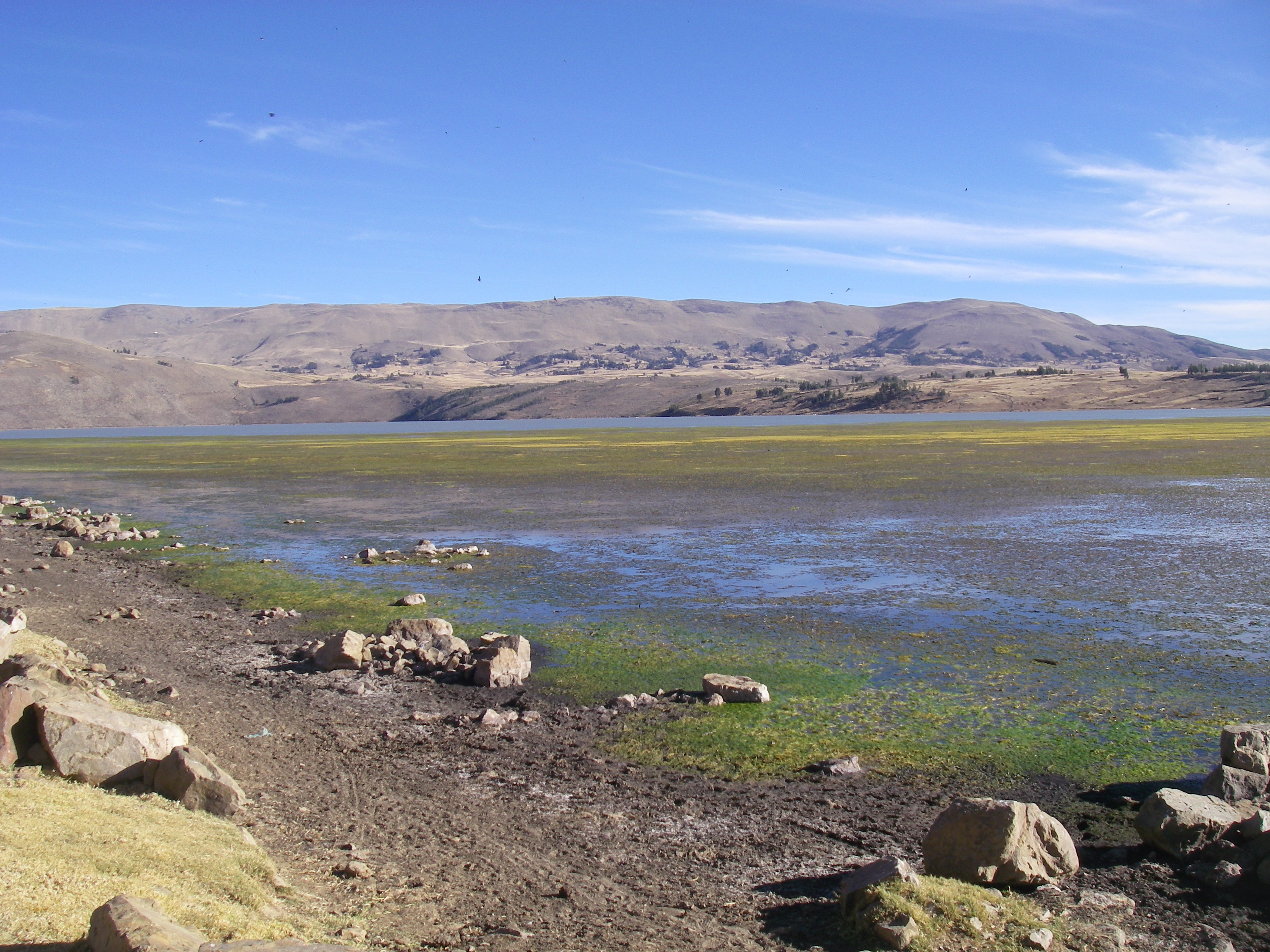
Water resources in the Vacas region (near Cochabamba, Bolivia) deminished around the time of the founding of the urban centre at Tiawanaku

Water resources in the Vacas region (near Cochabamba, Bolivia) deminished around the time of the founding of the urban centre at Tiawanaku

Gosling, W.D. & Williams, J.J. (2013) Ecosystem service provision sets the pace for pre-Hispanic societal development in the central Andes. The Holocene, 23(11): 1617-1622. doi: 10.1177/0959683613496296

Click here to download an open access version of this manuscript via The Open University Open Reseach Online repository.

Sedimentary Rocks and Fossils in the Field

July 31, 2013
WDG


Students examining the sedimentary deposits at Howick Haven

Students examining the sedimentary deposits at Howick Haven

SXG288 Practical science: Earth and environment
Sedimentary Rocks & Fossils in the Field
23-29 July 2013

Face-to-face teaching of practical skills in field geology is one of the most interesting and rewarding aspects of being a lecturer at The Open University. Over the last few days I have been lucky enough to participate in the running of the Sedimentary Rocks & Fossils in the Field topic within our second level Practical Science module (SXG288). This is one of two opportunities that students taking this module get to head into field, examine rocks, develop observational skills and test scientifc hypotheses; the other field based topic is Igneous & Metamorphic Rocks in the Field.

Sedimentary Rocks & Fossils is based from Longridge Towers School in Northumberland (whilst the regular students are away). Longridge provides the ideal base for this topic because of its close proximity to some world class sedimentary rock and fossil exposures. Over an intensive three day field experience students examine sedimentary deposits from the Silurian and Carboniferous exposed mainly along the Northumberland coast; however, this is not a simple guide to the geology of the region. The topic is founded on the principle of problem based learning and at each field location students are expected to make observations, record them accurately and interpret the past environment. Findings are consolidated and dicussed during evening lab sessions.

On the rocks at Scremerston

On the rocks at Scremerston

This year we were delighted to welcome >40 students, some of who flew in from abroad, to study this topic over two sessions. Given the positive feeback recieved so far I think all enjoyed the topic and gained important geological field skills (for evidence of this also see photos below). I wish them all luck in their future studies and hope that they continue to be interested in Earth Science and progress towards our Natural Science degree qualification.

For further photos see below, follow #SXG288 on twitter, or visit the SXG288 Facebook page.

  Continue Reading

Dead heads

July 30, 2013
encarnimontoya

DeadHeads12th International Workshop on Subfossils Chironomids
10-13th June, New Forest, UK

Last month Frazer and Encarni attended the 3-days “dead heads” workshop that was held at the Beaulieu Hotel , in the New Forest National Park (UK). It was perfectly organised by Pete Langdon and Steve Brooks,  and was a great opportunity for both of us who are relatively new to the midges’ community. With around 40 participants from Europe, America and Asia, we greatly enjoyed the discussions that came up about the state-of-the-art for this interesting proxy and the implications for palaeoclimatology, palaeolimnology, and different aspects of ecology like conservation, restoration or community assemblages. In addition, useful topics such as current methodological problems with age-depth model uncertainties, the usefulness and limitations of transfer functions, and taxonomy were also debated.

Besides oral and poster presentations, the workshop offered several tutorials during the afternoons, key amoung these were an introduction to R carried out by Richard Telford and Steve Juggins, and taxonomic support for head capsules ID leaded by Steve Brooks and Oliver Heiri.

In our specific case, Frazer contributed with an oral presentation titled Understanding the modern distributions and ecological tolerances of the Neotropical Chironomidae fauna: The potential as a palaeoecological proxy” base on his PhD research. We were both so glad to make contact with other people working in South America, in particular Julieta Massaferro and Alberto Araneda presented very interesting data from Argentina and Chile.

Although these meetings are normally biannual, next conference location and date is yet to be decided, but we hope to have the chance to join this very friendly and supporting community again. We encourage people with all kind of experience (or lack of) to attend any further events.

Palaeo-Caribbean

July 30, 2013
WDG

Earlier this month Rachel Gwynn (Geography, UCL) visited the PCRG to use our core splitter to reveal what was contained within two cores collected from the Carribean. She has also been kind enough to provide photos of the sediments and an insight into the story so far:

Sediments from Fresh Water Pond Barbuda (Photograph Rachel Gwynn)

Sediments from Fresh Water Pond Barbuda (Photograph Rachel Gwynn)

Lake sediment cores covering the past few hundred to thousand years have been taken from two lakes, Wallywash Great Pond in Jamaica and Freshwater Pond in Barbuda. The sediments form part of the NERC-funded project Neotropics1k (PI Prof. Jonathan Holmes), which is concerned with climate variability in the northern Neotropics over the past millennium. The sediment cores show marked changes in composition and colour, from pale marl to dark organic mud. These colour changes, which are clearly visible in the photographs, represent changes in sediment composition that are in turn related to lake-level variations caused by long-term climate shifts. Deeper, open-water conditions under wetter climate are represented by the marls, whereas lowered lake levels, caused by direr climate, are associated with organic-rich sediments.

Wallywash Great Pond– core section W2

  • Thirteen separate units have been identified through the 1 m core length, varying between light coloured marl, dark organic and shelly sediments.
  • The abundance of preserved Ostracod valves increases throughout the marl and shell rich layers but drops significantly in the organic rich material.

Barbuda Freshwater Pond- core section FWP

  • This core has four distinct units. 0-23 cm is a calcareous mud with a diffused lower boundary into a shelly calcareous mud at 25-35.5 cm. 35.5-38 cm and 38-52 cm is two variations of calcareous mud.
  • These units, as with the W2 core, have been defined using a Munsel Soil Chart.
  • The Ostracod valves are thought to be abundant throughout the core due to the high marl content.
Wallywash Great Pond Jamaica (photograph Rachel Gwynn)

Wallywash Great Pond Jamaica (photograph Rachel Gwynn)

Lake coring equipment

July 17, 2013
WDG

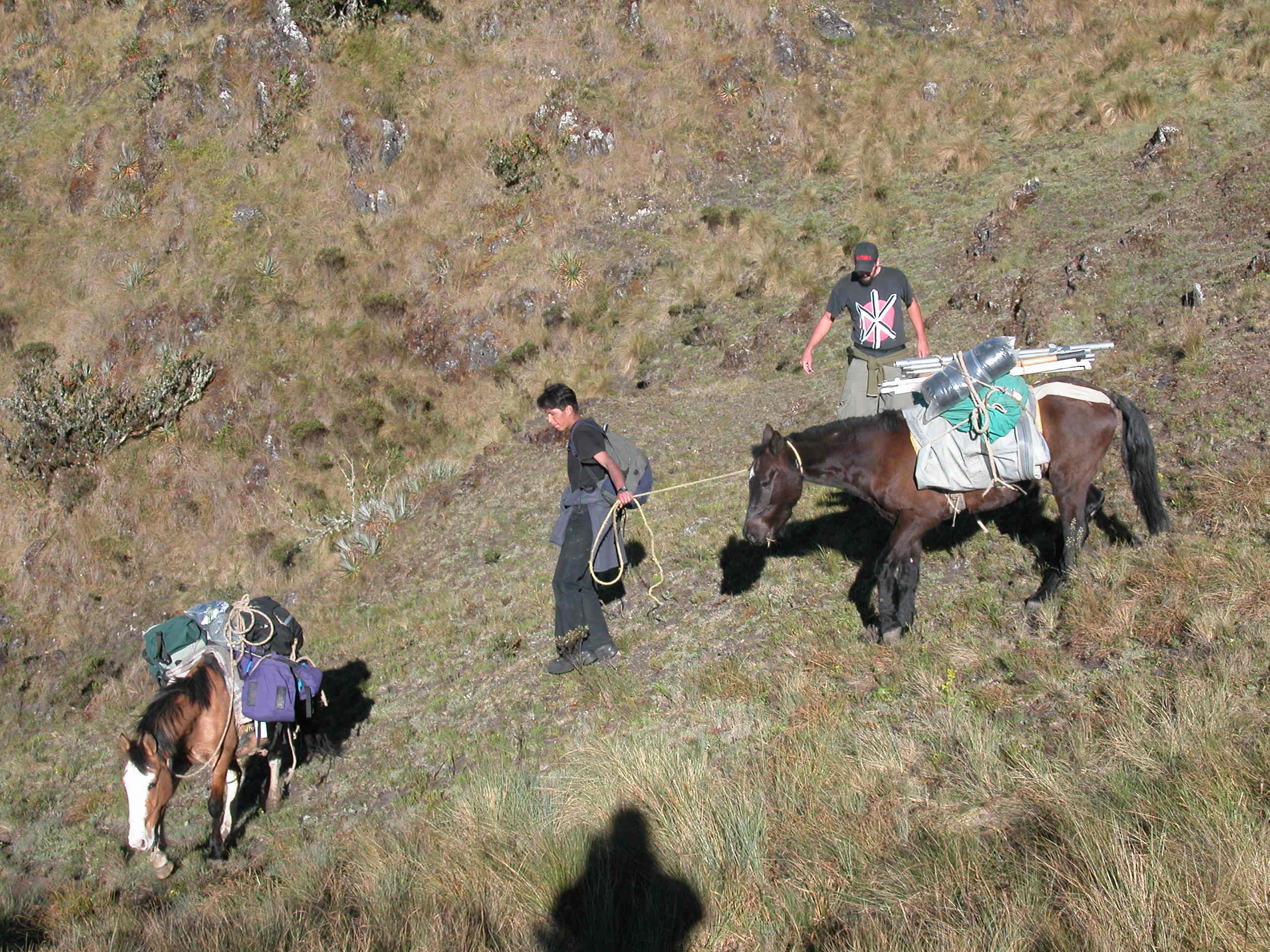
Trecking with sediment corer in the high Andes of Peru

Trecking with sediment corer in the high Andes of Peru

When it comes to collecting sediments from lakes its all about having the right tools for the job. Working in remote areas of the tropics we tend to favour the Colinvaux-Vohnout corer; supplied by Vince Vohnout at Geo-core). The advantages of this system are:

  1. its light-weight nature (can be backpacked or donkeyed into field sites), and 
  2. the cam system (which allows hammering to penetrate tough sediments).

    Eric Martinez carrying an Avon Redstart back out from Laguna Khomer Kotcha (Williams et al., 2011)

    Eric Martinez carrying an Avon Redstart back out from Laguna Khomer Kotcha (Williams et al., 2011a)

With the right platform (two banana boats and an A-frame) we have manged to retrive c. 20 m of sediment from  20 m of water (c. 40 m of drill rod extended); Lake Pacucha, Peru (Hillyer et al., 2009). More typically we use two Avon Redstart inflatables and a platform following the design of Colinvaux et al. (1999).

Recent debate on the International Paleolimnology Association list server saw recommendations for a number of other systems.

Including: UWITECH gravity corer, Pylonex gravity corer, Aquatic Research Instrument products, and modified systems by Jason Curtis at University of Florida.

I would be interested if anyone has any thoughts on the relative merits of these systems (or others) and there capabilities.

Photos and references below:

Continue Reading

PCRG June

July 5, 2013
WDG

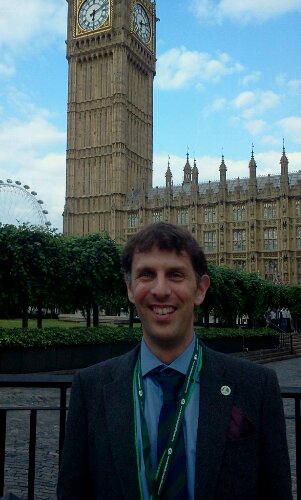
PCRGs William Gosing at the Houses of ParliamentJune has been a month of exciting and unusual (for me at least) science communciation. It all started with the end of Sex & Bugs & Rock ‘n’ Roll at Wychwood, saw the publication of an article on environmental research in the Open Minds magazine, and went on to a parliamentry reception celebrating the British Ecological Society Centenary and launching the new Ecological Issues policy document “The impact of exterme events on freshwater ecosystems”.

More regular type activities have also continued. Hayley is working on the protocol for thin sectioning wood here. Frazer is picking midges and becoming increasingly media savey. While Bryan, Lottie and Natalie are all writing theses!

Mud for Mars

July 2, 2013
WDG

Alex Barret (left) and Will Gosling (right) looking at a bucket of mud

Alex Barret (left) and Will Gosling (right) looking at a bucket of mud

Recently PCRG members helped Alex Barrett out extracting mud from a lake so that he had some sediments to play with for his freeze/thaw experiments. I return Alex has written us a short post on his PhD research project.

GUEST POST: Alex Barrett (main supervisor Matt Balme)

Metre scale Sorted patterned ground on Tindastóll, Northern Iceland. This circle is approximately 1.5 m across and consists of a fine domain made up of silt and gravel sized particles, surrounded by a coarse domain consisting of cobble to boulder sized material. It is part of a larger net which extends across large regions of the hilltop.

Metre scale Sorted patterned ground on Tindastóll, Northern Iceland. This circle is approximately 1.5 m across and consists of a fine domain made up of silt and gravel sized particles, surrounded by a coarse domain consisting of cobble to boulder sized material. It is part of a larger net which extends across large regions of the hilltop.

I am researching possible occurrences of sorted patterned ground on the Northern Plains of Mars. I am conducting experiments to try to simulate freeze thaw sorting in the lab, under both terrestrial and martian conditions. This requires the use of fine grained silts as these are known to be frost susceptible. Experiments will be conducted to see whether lenses of coherent ice can be formed in this soil, initially under earth like conditions, but later at much colder temperatures, using salts of the sort known to occur on mars to depress the freezing point. If ice lenses can be formed at temperatures entirely below 0oC then it would provide another strand of evidence that martian features with similar morphology to terrestrial periglacial sites could have formed though the same processes.

Bucket of mud

Bucket of mud

New PCRG members

June 7, 2013
WDG

PhillipJardine

Dr Phil Jardine joining us from the University of Birmingham

We are pleased to announce the imminent arrival of three new PCRG members Phil Jardine, Adele Julier and Nicholas Loughlin. Phil and Adele will be working on the African based, NERC funded, “500,000 years of solar irradiance, climate and vegetation changes” project as PDRA and PhD student respectively. While Nick will be working on South American palaeoenvironmental records looking at “Tropical forests response to past global climate change” as a NERC/CEPSAR funded PhD student. Phil will start in the department on Monday and the others will arrive with the October PhD student intake… exciting times.

Blog at WordPress.com.