Ivory, S.J., MacDougal, E., Mason, A., Pereboom, E., Garelick, S., Ficken, K., Wooller, M.J., Nakileza, B. & Russell, J. (2024) Highland forest dynamics across equatorial East Africa during the end of the African humid period. Quaternary International. DOI: 10.1016/j.quaint.2024.10.007
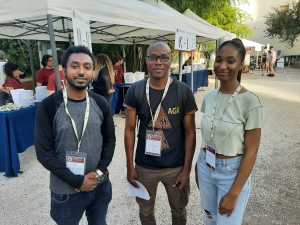
Mapping Ancient Africa participants at the INQUA Rome ice breaker event ready for action! Left to right: Bahru Zinaye Asegahegn, Alfred Houngnon, Busisiwe Hlophe.
The Mapping Ancient Africa (MAA) project has a double session of talks and a poster session at the INQUA congress in Rome 2023. Our session will be on Wednesday 19 July. Unfortunately a number of the originally planned speakers could not make it to Rome due to a combination of not obtaining visas, logistical challenges and ill health. We wish them all well and hope that they will continue to be involved in the project. Further, many thanks to all those who have agreed to step up and give a presentation at a late notice. Below is an updated schedule correct as of Sunday 16 July based on the information contained on the INQUA Rome App; if you are aware of any further problems or changes please let me know ASAP!
Giosan et al. When the desert was a lake: Providing context for Homo sapiens development in the northern Kalahari
Chase et al. Paleolakes and socioecological implications of glacial “greening” of the South African interior
Blinkhorn et al. Evaluating refugia in recent human evolution in Africa
Aureli et al. Homo sapiens behaviour and adaptation in East Africa. New evidence from an open-air site in a modern Ethiopian savannah environment: the GOT10 site
Effiom et al. Late Holocene palaeoecological studies at Lake St Lucia, KwaZulu-Natal
Tallavaara et al. Pan-African Climate and Vegetation over the Quaternary and Implications for Human Distribution
Quick et al. Palaeoenvironments of the Cape Floristic Region: New research & current developments
The seminar delivered by Emma Mbua (National Museums of Kenya) on the 13th April 2023 was the twelfth in the Mapping Ancient Africa series. The seminar highlighted new finds from archaeological sites in eastern Africa that have yielded bones of various animals, including early humans.
Title: Newly discovered fossil sites in Kenya and their implications in human evolution discussions
Related publication: Mbua, E., Kusaka, S., Kunimatsu, Y., Geraads, D., Sawada, Y., Brown, F.H., Sakai, T., Boisserie, J., Saneyoshi, M., Omuombo, C., Muteti, S., Hirata, T., Hayashida, A., Iwano, H., Danhara, T., Bobe, R., Jicha, B. & Nakatsukasa, M. (2016) Kantis: A new Australopithecus site on the shoulders of the Rift Valley near Nairobi, Kenya. Journal of Human Evolution 94, 28-44. DOI: 10.1016/j.jhevol.2016.01.006
The seminar will be delivered via Zoom. The link for the seminar can be obtained from the MAA Slack channel or by contacting the chair of this seminar Rahab Kinyanjui. If you want to know more about the Mapping Ancient Africa project visit our web pages and please do not hesitate to get in contact if you want to get involved.
The final day of talks at AFQUA 2018 took a more applied approach in the first session “Applying the Quaternary: The role of the past in supporting the future”. This session focused on how we can focus Quaternary science to produce outputs that directly meet concerns and needs of society. Examples included the quantification of the fossil charcoal record to provide insights into the nature and impact of fires in the past (C. Adolf), how we can use information on past vegetation change and disturbance factors to anticipate how ecosystems on Madagascar might respond to future changes (E. Razanatsoa), and how climate histories can be extended through tree ring data (D. Colombaroli).
The fifth day of the AFQUA conference started with the second session on “Archaeological Landscapes”. Talks included: (i) a tribute to the work of Dick Grove in Quaternary work in Africa since the 1950’s, including possibly the earliest definition of the African humid period in his paper Grove & Warren (1968) (D.S.G. Thomas), and (ii) a highlight of new work on the Kisese II Rock Shelter in Tanzania (K. Ranhorn). Then to take us up to lunch Prof. David Nash treated us to a tour de force through the use of historical records in reconstructing past climates; including quotes from the fantastically named Holloway Helmore a missionary to Lekatlong in 1851 commenting on drough and how to turn this type of information into a regional/continental synthesis!
The afternoon session focused around the theme of “East Africa”. This session started with two talks on one of the “least known ancient civilization” in Ethiopia the Aksumite and pre-Aksumite peoples, and the resilience of these peoples to environmental and land-use change (V. Terwilliger and Z. Eshetiu). Other work presented on the morphometry of hominin skulls showing gradual development from 500,000 to 315,000 years ago which lead up to the appearance of anatomically modern humans (E. Mbua).
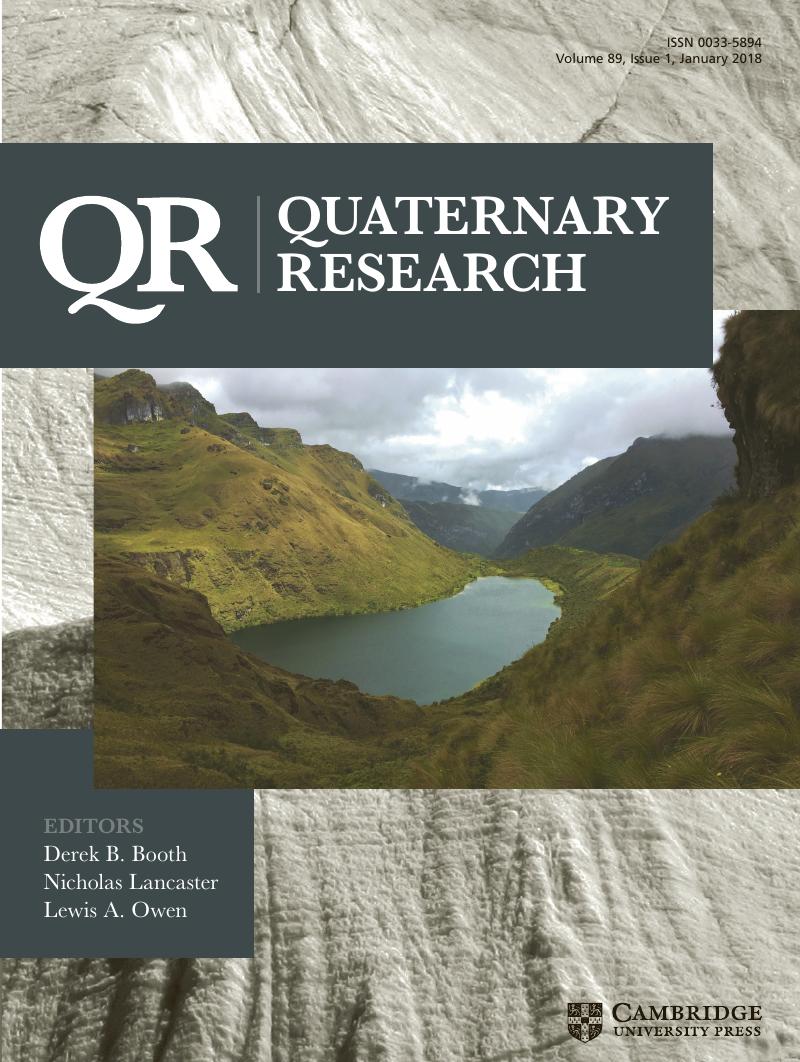
Mark Bush and I are proud to announce that a tribute to Prof. Daniel Livingston and Prof. Paul Colinvaux has recently been published in Quaternary Research. Dan and Paul were both pioneers of tropical pal(a)eoecology and both died in the spring of 2016 . To mark their passing Mark and I have guest edited ten new papers on palaeoecology drawn from researchers, and regions, of the tropics in which Dan and Paul worked (Bush & Gosling, 2018). We would like to thank Quaternary Research Senior Editor Derek Booth for giving us this opportunity and assisting greatly in the process of compiling the manuscripts. We would also like to thank all to contributing authors for their hard work and dedication to the project. We hope that you will enjoy reading the manuscripts and find them a fitting tribute to the life and work of these two great researchers.





 Ecology of the past