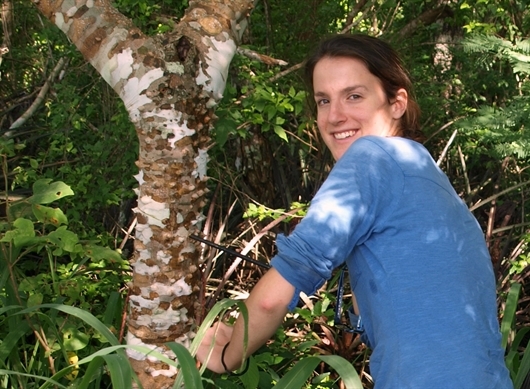
Uncovering Ecuador’s landscapes and cultures: A student adventure

August 16, 2023
Bianca Tacoronte Gomes

By: Lina Cabrera Sáenz and Bianca Gomes

We invite you to join us on an incredible journey through the heart of Ecuador, where a group of adventurous students from Florida Institute of Technology embarked on a life-changing experience as part of the Neotropical Archaeoecology summer field course. Buckle up as we delve into the marvels of nature, indigenous cultures, and unforgettable experiences. Let’s dive right in!

Unveiling the Andes

Our adventure began with a breath-taking visit to the Paramo at Cayambe-Coca National Park. Paramos are high altitude (3000-4000 metres) wet grasslands above the tree line and below the snow line within the equatorial Andes. Our tour guides Patricio and Byron gave us information about the local vegetation, focusing on the Polylepis tree (locally known as “paper tree”), which is unique to this sort of habitat. They also told us about some of the fascinating wildlife that can be seen here, such as the Andean Bear (Tremarctos ornatus) and the Andean Puma (Puma concolor).

We then descended through the cloud forest (3,600–3,400 meters) and lower montane rainforest (3,400–2,500 meters). Across these various habitats, we documented changes in hummingbird abundance and recorded their behaviour at four different feeder points: Guango Lodge, La Brisa, San Isidro Lodge, and Cascada el Hollin. The sheer diversity of hummingbird species left us in awe, and we marvelled at their iridescent feathers and incredible agility. 

We explored a waterfall near San Isidro Lodge (https://cabanasanisidro.com), and we were able to observe pre-Inca pottery. At the lodge we also saw a diverse array of bird species, which was delightful! The forest’s nightlife brought us close encounters with a group of nocturnal monkeys, and to our surprise, we stumbled upon a very rare mountain tapir. The following morning we saw a small agouti (a small rodent) prowling around the lodge, and ended our adventures in the cloud forest on a high note. 
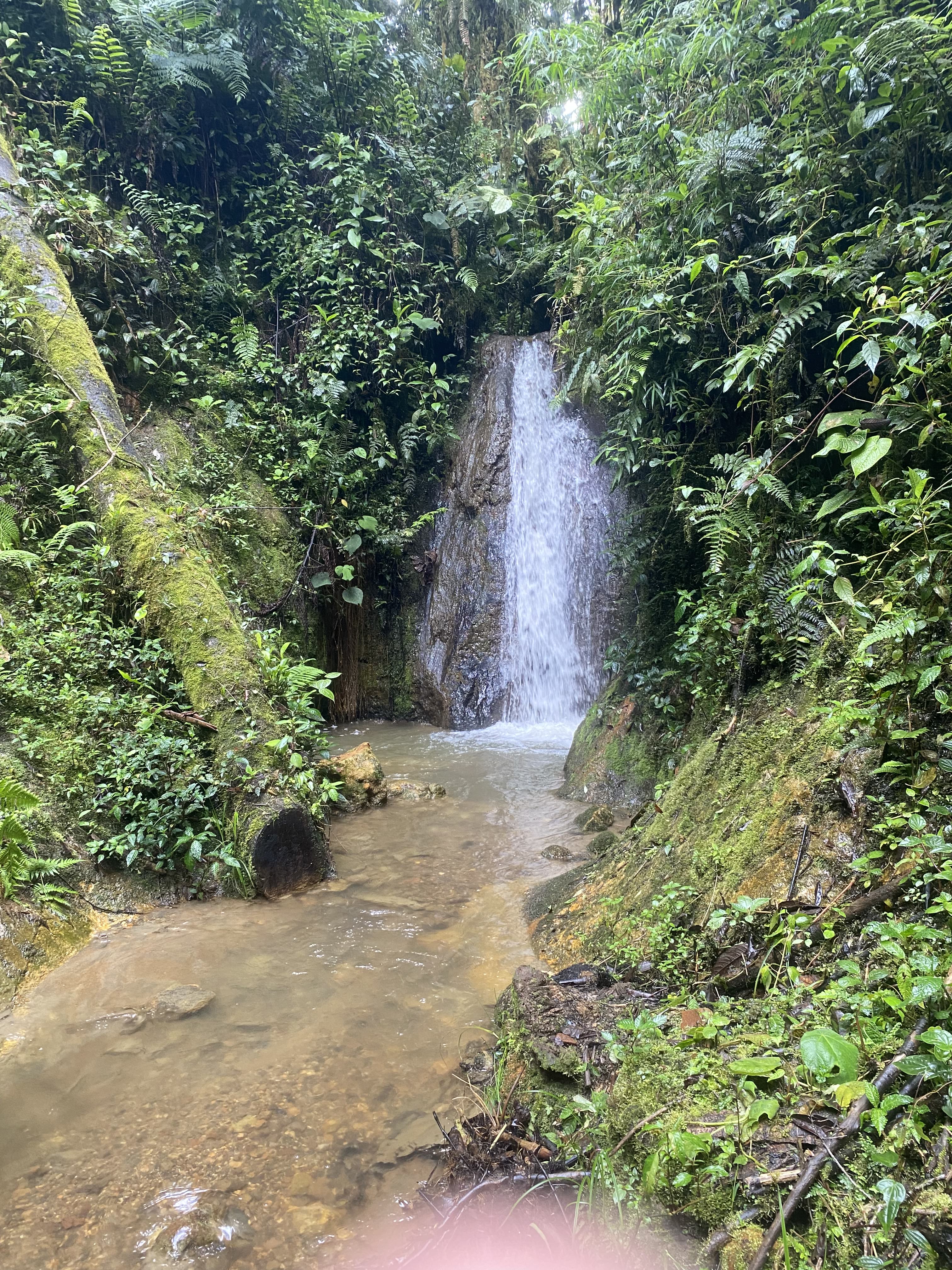
San Isidro waterfall and some of the animal diversity we observed

Continue Reading
Job: PhD Palaeoecology & Community Ecology

March 24, 2021
WDG

Mark BushMark Bush is looking to recruit a PhD researcher to the “Neotropical Palaeoecology Research Group” at Florida Institute of Technology.

Applications are invited from qualified and highly-motivated students for an exciting PhD studentship in the areas of paleoecology and community ecology of South American lowland rainforests.

Continue Reading

“Can you go back?” by Mark Bush – Part 3

September 23, 2019
WDG

Mark Bush

Mark Bush

The third of three guest blog posts by Prof. Mark Bush (Florida Institute of Technology). Click here to read Part 1. Click here to read Part 2.

Fast forward to 2019, the Aguarico is now lined by small homesteads interspersed with larger settlements, some laid out by the oil companies, and a couple of oil ports. I asked our guide how far the park was ahead of us, and he looked surprised and said “We are in it”. When we arrived at the Zancudo River there was a cell tower and a village of probably 30-50 houses on the junction with the Aguarico. Ten minutes downstream was a tourist lodge. What a difference! The frontier had expanded ~140 km down the Aguarico. One family with a shotgun eliminates all game larger than a marmoset within 5 km, and these homesteads were packed so tight it was unsurprising that we saw almost no wildlife.

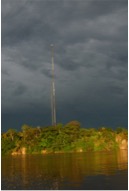
The cell tower at the village of Zancudococha. Photo: M. Bush.

The cell tower at the village of Zancudococha. Photo: M. Bush.

The next day we ventured onto Zancudococha. The Zancudo stream was still pretty, overhung by trees, and had no barriers to navigation. Three boats full of tourists passed us coming out of the lake, clearly having spent the night there. There were no logs to clear, and the path through the Montricardia marsh was two boats wide. There are only two patches of high, dry land on the edge of the lake. One was regularly used as a campsite and the other had a lodge built on it that was operated intermittently by the Zancudo community.

We saw no monkeys, let alone tapirs, this was an empty forest. But we weren’t there to be ecotourists, we were there to raise a sediment core. This time our questions were about the Pre-Columbian use of the lake. Was the lake occupied prior to European arrival? How much did people alter the forest? Was there a surge of forest regrowth following Conquest?  Given these questions, the 1 m of sediment that we recovered with a Universal piston corer was all that we needed. One meter of mud from this system spans about 1500 years and that would provide us with the trajectory of use (or non-use) into the colonial period and its aftermath. Our mood in camp was happy, we had been successful in our intent. So, my message is you can’t go back to find what was there before, but that doesn’t mean that it will be a bad experience. Shifting baselines apply to nature in every setting, but they also apply to science as our questions and interests undergo inter-generational changes.

Mark Bush is a Professor of Biological Science at the Florida Institute of Technology, Melbourne, FL, USA.


A Study in Green

July 5, 2019
WDG

By Rachel Sales (Florida Institute of Technology, USA)

My bike is angry at me.

I’m rattling down an unpaved road in the Ecuadorian Amazon. The brakes screech at every turn, and the chain is close to falling off. Unsurprisingly, the rain is pouring, turning the road into a maze of puddles and mud. The road follows the Anzu River, and I can hear its roar off to my right.

I’m forcing a perfectly innocent bike to brave the Amazon because this road leads to the Herbario Amazónico of the Universidad Estatal Amazónica (ECUAMZ). ECUAMZ (an acronym for “Ecuador Amazon”) is the only herbarium in the Amazon, and contains a repository of plant specimens for preservation and help with field identifications. It was established by Dr. David Neill, a specialist in the Fabaceae (legume) family and world-renowned expert in tropical botany, and Dr. Mercedes Asanza, the coordinator of the herbarium. They have agreed to mentor me over the summer and teach me about tropical plants. The Herbario Amazónico, which contains over 17,000 vascular plant species, is the perfect place to learn.

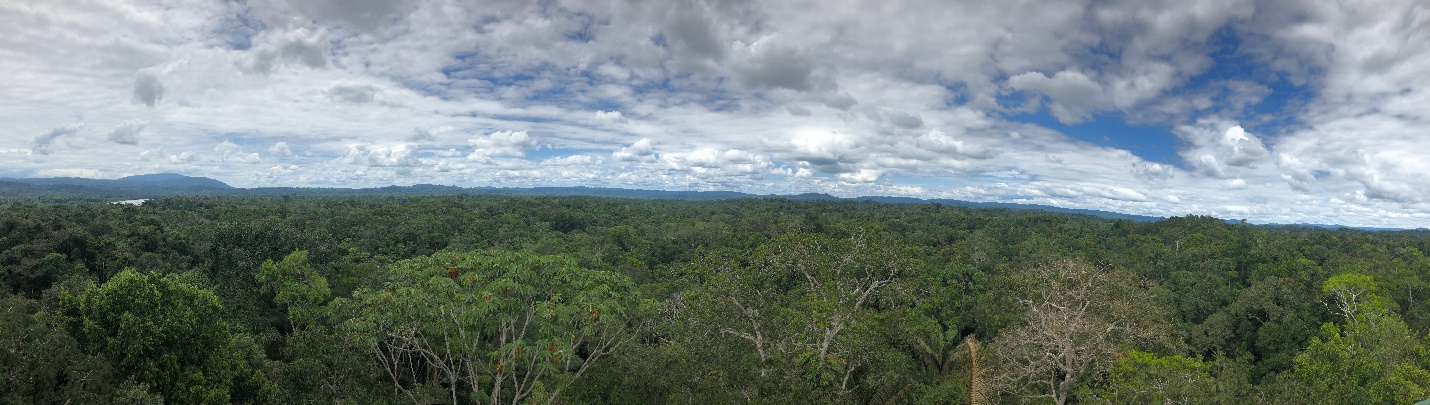
The view from the top of the tower at Jatun Sacha.

Continue Reading

An undergraduate eye-view of an Andean lake-coring expedition

August 25, 2017
WDG

Part 2: Progresso
by Molly Kingston (a BSc Biological Sciences student at Florida Institute of Technology, taking part in an expedition lead by Prof. Mark Bush)

With a fresh set of clothes and a shower after almost a week without one, it was time to set off for the next lake, Progresso.

Continue Reading

An undergraduate eye-view of an Andean lake-coring expedition

August 23, 2017
WDG

Part 1: Huayabamba
by Molly Kingston (a BSc Biological Sciences student at Florida Institute of Technology, taking part in an expedition lead by Prof. Mark Bush)

When I first heard about this class in Peru, I had no idea that I was going to experience so much in such a short period. Our goal was to visit two lakes in Peru and raise sediment cores for paleoecology. The first lake that we went to was Laguna Huayabamba, which sits at about 3250 m elevation in the La Libertad region of the Peruvian Andes.

However, getting to this lake was no easy task. Before the hike even started, we had to obtain the necessary permits and permission from the local people. After several days of visiting different town officials and waiting for approval, we could set out on our adventure.

Continue Reading

Rubicon project to link fossil pollen with plant traits

July 20, 2017
WDG

Dear Ecology of the past blog readers,

This time you are reading a message from a non-expert in paleoecology. My name is Masha and I will spend the next two years on a very exciting postdoctoral fellowship funded by NWO (Dutch National Science Foundation) under their Rubicon scheme in close collaboration with William Gosling (University of Amsterdam).

Continue Reading

Valencia PhD thesis 2014

March 5, 2015
WDG

Bryan-Kuelap-gate-2010-smallValencia Castillo, B.G. (2014) From glacial to modern conditions: Vegetation and climate change under human influence in the Central Andes. PhD Thesis, Department of Environment, Earth & Ecosystems, The Open University.

Abstract
Conservation, restoration and management strategies are employed to maintain Earth’s biological diversity and physical environment to a near “natural” state. However, the concept of “natural” is generally inexact and may include degraded landscapes. In absence of long-term empirical data of natural baselines, impacted assemblages (human altered baselines) could be falsely assumed to be natural and set as conservation or restoration goals. Therefore, the identification of long-term ecological baselines becomes a pressing requirement especially in threatened biodiversity hotspots such as the tropical Andes that were under human pressure for several millennial.

This thesis aims to identify ecological baselines for tropical Andean ecosystems based on multi-proxy palaeoecological reconstructions from three Andean lakes. Trends of vegetation change are used to identify when landscapes became anthropogenic in the Andes. Because vegetation assemblages at c. 10 ka experienced negligible anthropogenic impacts and had modern-like climate condition, this time was considered the most recent period likely to provide insight into natural ecological baseline conditions.

Changes in vegetation assemblages were evaluated over time departing from 10 ka around Miski and Huamanmarca, two sites that remained virtually impervious to human impacts. Baselines in Miski and Huamanmarca drifted continuously over time and showed that baselines are dynamic entities. The vegetation assemblages derived from Miski and Huamanmarca suggest that that human impact was not homogeneous throughout the Andean landscape.

Once baselines were defined it was possible to evaluate if the spatial distribution of Andean woodlands represented by Polylepis was a product of human impacts. A MaxEnt model generated based on 22 modern environmental variables and 13 palaeoecological vegetation reconstructions showed that Polylepis woodlands were naturally fragmented before humans arrived in South America (14 ka). However, the influence of humans during the mid and late Holocene enhanced the patchiness of the forest generating a hyper-fragmented landscape.

Supervisors: Dr. William D. Gosling , Dr. Angela L. Coe (both The Open University) and Prof. Mark B. Bush (Florida Institute of Technology).

Examined by: Dr. Robert Marchant (University of York), and Prof. David Gowing (The Open University).

To borrow a copy from The Open University Library click here.

Tropical pollen database online

April 7, 2014
WDG

PollenTo facilitate the our ability to identify pollen in the fossil record we have been building a searchable digital tropical pollen database. Our work builds upon the architecture provided by Bush & Weng (2007) for their Neotropical pollen database (Palaeoecology labFlorida Institute of Technology). We have used Bush & Weng’s freeware tool and expanded it to include an additional 364 pollen and spore types from tropical Africa. The images are of pollen reference material collected over the career of Prof. Dan Livingstone and curated in the Department of BiologyDuke University; full collection details of each specimen are indicated on each individual electronic record. In conjunction with the open access publication “Atlas of the tropical West African pollen flora” (Gosling et al., 2013) we have made the entire updated pollen database available. We hope that this will prove to be a useful tool for palynologists working in Africa and the wider tropics and that it will encourage others to develop the database further.

Continue Reading

Pollen counting tool

March 21, 2014
WDG

Extracting data from tropical pollen records can be difficult, and time consuming, because of the high floristic diversity. Ecology of the past contributor and PhD researcher Bryan Valencia has developed a method for turning your computer into a tally counter. Bryan’s method allows the easy recording of diverse assemblages, and saves time on data entry. The tally counter can be used to count whatever you like…

Watch the video to find out how:

Use the R-project code below to make it happen.

Continue Reading

Blog at WordPress.com.