
JOB: PhD candidate in Palaeoecology & Landscape Ecology

July 28, 2015
WDG

UvAInstitute for Biodiversity & Ecosystem Dynamics
Faculty of Science

University of Amsterdam

Characterization of Neotropical ecosystems by their modern pollen spectra and organic chemical composition

  • Develop skills in pollen identification, pollen chemical characterization, and the analysis of organic biomarkers.
  • Examine ecological variation across an altitudinal gradient of nearly 4000 meters on the tropical western Andean flank.
  • Improve understanding of how ecosystems function in a biodiversity hotspot, and how they might be identified in the fossil record.

Mashpi (25)The considerable biodiversity of Neotropical ecosystems is under pressure from projected climate change and human activity. Modern ecosystems can be characterized by their pollen rain and organic chemistry, which can in turn provide information about ecosystem health and functioning. However, little is known about how pollen assemblage and chemical composition (of pollen and plants) vary along environmental gradients. Altitudinal transects provide an opportunity to study a range of environments and ecosystems with a relatively small geographic area. By improving our understanding of modern ecosystems we can improve our interpretation of fossil records, and consequently better understand how modern ecosystems came into being.

The main objectives of this PhD project are to:

  1. Generate the first modern pollen assemblage and chemical data set for the Neotropics,
  2. Characterize the landscape-scale variation in pollen assemblage and chemistry composition, and
  3. Identify the key environmental drivers that determines pollen assemblage and chemistry composition variation.

Publication date: 27 July 2015
Closing date: 18 September 2015
Level of education: University (Masters)
Hours: 38 hours per week
Salary indication: €2,125 to €2,717 gross per month
Vacancy number: 15-286

Applications should be emailed to application-science@uva.nl, with in the subject line the position you are applying for and vacancy number (15-286). Please make sure all your material is attached in only one pdf. Applications should include a detailed CV including educational experiences, a list of research projects and/or publications, a letter of motivation, relevant work experience, and the names and contact addresses of two academic referees from whom a reference for the candidate can be obtained.

For more details, including information on how to apply, click here (UvA), or here (via academic transfer).

For further information visit the Palaeoecology & Landscape Ecology web pages, or contact Dr. William D. Gosling  directly.
Past environmental change in the Amazon basin – AGU video

September 8, 2014
WDG

Hayley Keen’s video “Past environmental change in the Amazon basin” has been shortlisted for the American Geophysical Union (AGU) student video prize. Please watch and like Hayley’s video; top “Liked” videos will win entry to the AGU 2014 Fall meeting.

View all the videos on the AGU YouTube channel.

Newspaper articles:

Exclusive: Found after 500 years, the wreck of Christopher Columbus’s flagship the Santa Maria by David Keys, The Independent.

Scientific articles:

Cole, L.E.S., Bhagwat, S.A. & Willis, K.J. (2014) Recovery and resilience of tropical forests after disturbance. Nat Commun, 5, Article number 3906.
Summary (Will): Varying factors have disturbed tropical forests which have recovered at varying rates.

Hoorn, C., Wesselingh, F.P., ter Steege, H., Bermudez, M.A., Mora, A., Sevink, J., Sanmartín, I., Sanchez-Meseguer, A., Anderson, C.L., Figueiredo, J.P., Jaramillo, C., Riff, D., Negri, F.R., Hooghiemstra, H., Lundberg, J., Stadler, T., Särkinen, T. & Antonelli, A. (2010) Amazonia Through Time: Andean Uplift, Climate Change, Landscape Evolution, and Biodiversity. Science, 330, 927-931.

Montade, V., Ledru, M.-P., Burte, J., Martins, E.S.P.R., Verola, C.F., Costa, I.R.d. & Magalhães e Silva, F.H. (2014) Stability of a Neotropical microrefugium during climatic instability. Journal of Biogeography, 41, 1215-1226.
SUMMARY (Will): Thoughts on what happened to species when in Amazonia.

One short story and five scientific papers thinking about different aspects of ecological change through time.

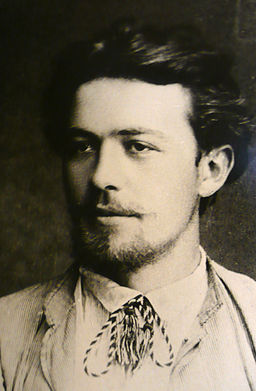
Chekhov in 1889

Chekhov in 1889 (http://tinyurl.com/ny2msd9)

Short story:

Checkhov, A. (1889) The Pipe

SUMMARY (Will): People have long been concerned about environmental change. Observations of phenological shifts, degradation of ecosystem services and climate change are clearly presented in Checkhov’s “The Pipe” (1889).The key difference is today we have a better idea of why these things are happening!?

Scientific papers:

Garcia, R.A., Cabeza, M., Rahbek, C. & Araújo, M.B. (2014) Multiple dimensions of climate change and their implications for biodiversity. Science 344 1247579
SUMMARY (Phil): This review highlights the alternative metrics used to quantify climate change at different spatial scales, each with its own set of threats and opportunities for biodiversity. It’s a very relevant paper for palaeoecologists, with implications for how we think about climatic estimates we generate, how we interpret ecological shifts in the assemblages we study, and for demonstrating the importance thinking spatially as well as temporally. It also shows how important palaeoecological data is for setting baselines and putting projected climatic change into context.

Garzón-Orduña, I.J., Benetti-Longhini, J.E. & Brower, A.V.Z. (2014) Timing the diversification of the Amazonian biota: butterfly divergences are consistent with Pleistocene refugia. Journal of Biogeography, early online.
SUMMARY (Will): Butterfly species diverged in the Neotropics during the Pleistocene (probably).

Mitchard, E.T.A. et al. (2014) Markedly divergent estimates of Amazon forest carbon density from ground plots and satellites. Global Ecology and Biogeography, early online.
SUMMARY (Will): It is difficult to work out how much carbon is in a tropical forest.

Stansell, N.D., Polissar, P.J., Abbott, M.B., Bezada, M., Steinmann, B.A. and Braun, C. (2014) Proglacial lake sediment records reveal Holocene climate changes in the Venezuelan Andes. Quaternary Science Reviews. 89, 44 – 55.
SUMMARY (Hayley): A study of three lake sediment records in the Venezuelan Andes to look at patterns of glacial variability, and how glaciers might have responded to changing climatic conditions during the last c. 12,000 years.

Still, C.J., Foster, P.N. & Schneider, S.H. (1999) Simulating the effects of climate change on tropical montane cloud forests. Nature, 398, 608–610.
SUMMARY (Nick): The paper attempts to model the impact of climate change on a number of cloud forests around the world by simulating atmospheric parameters at the last glacial maximum (LGM) and at twice today’s CO2 level. The models agrees with palaeoecological data of a downslope migration of the cloud forest at the LGM, while the 2xCO2 model shows reduced cloud cover and increased evapotranspiration, which results in a significant reduction in cloud forest supporting land area.

Ecuador Fieldwork : Lake Huila

January 14, 2014
nicholasloughlin

Lake Huila

Lake Huila

So we’re back from a hot and humid Ecuador to the joys of a British winter. Ecuador is an amazing country and the diversity of the flora and fauna surpasses anything that I have experienced before. Continue Reading

Royal Geographical Society (with IBG) annual international conference – 2013

August 30, 2013
HayleyKeen

Palaeo-people at the RGS-IBG meeting plotting future papers and grants.

Palaeo-people at the RGS-IBG meeting plotting future papers and grants. Left-right: Encarni Montoya, Joe Williams, Hayley Keen and Frazer Bird.

RGS – IBG Annul International Conference 2013
27th – 30th August, London

Yesterday (29th August) four members of the Palaeoenvironmental Change Research Group (PCRG) went down to London for the third day of the Royal Geographical Society with IBG (RGS – IBG) international conference for a day of informative talks. Two of the morning sessions were of particular interest to us with the sessions entitled ‘Human – environment interactions in the Neotropics: historical impact to current challenges’ organised by John Carson, Lizzy Rushton and Sarah Metcalfe.

Continue Reading

Dead heads

July 30, 2013
encarnimontoya

DeadHeads12th International Workshop on Subfossils Chironomids
10-13th June, New Forest, UK

Last month Frazer and Encarni attended the 3-days “dead heads” workshop that was held at the Beaulieu Hotel , in the New Forest National Park (UK). It was perfectly organised by Pete Langdon and Steve Brooks,  and was a great opportunity for both of us who are relatively new to the midges’ community. With around 40 participants from Europe, America and Asia, we greatly enjoyed the discussions that came up about the state-of-the-art for this interesting proxy and the implications for palaeoclimatology, palaeolimnology, and different aspects of ecology like conservation, restoration or community assemblages. In addition, useful topics such as current methodological problems with age-depth model uncertainties, the usefulness and limitations of transfer functions, and taxonomy were also debated.

Besides oral and poster presentations, the workshop offered several tutorials during the afternoons, key amoung these were an introduction to R carried out by Richard Telford and Steve Juggins, and taxonomic support for head capsules ID leaded by Steve Brooks and Oliver Heiri.

In our specific case, Frazer contributed with an oral presentation titled Understanding the modern distributions and ecological tolerances of the Neotropical Chironomidae fauna: The potential as a palaeoecological proxy” base on his PhD research. We were both so glad to make contact with other people working in South America, in particular Julieta Massaferro and Alberto Araneda presented very interesting data from Argentina and Chile.

Although these meetings are normally biannual, next conference location and date is yet to be decided, but we hope to have the chance to join this very friendly and supporting community again. We encourage people with all kind of experience (or lack of) to attend any further events.

Palaeo-Caribbean

July 30, 2013
WDG

Earlier this month Rachel Gwynn (Geography, UCL) visited the PCRG to use our core splitter to reveal what was contained within two cores collected from the Carribean. She has also been kind enough to provide photos of the sediments and an insight into the story so far:

Sediments from Fresh Water Pond Barbuda (Photograph Rachel Gwynn)

Sediments from Fresh Water Pond Barbuda (Photograph Rachel Gwynn)

Lake sediment cores covering the past few hundred to thousand years have been taken from two lakes, Wallywash Great Pond in Jamaica and Freshwater Pond in Barbuda. The sediments form part of the NERC-funded project Neotropics1k (PI Prof. Jonathan Holmes), which is concerned with climate variability in the northern Neotropics over the past millennium. The sediment cores show marked changes in composition and colour, from pale marl to dark organic mud. These colour changes, which are clearly visible in the photographs, represent changes in sediment composition that are in turn related to lake-level variations caused by long-term climate shifts. Deeper, open-water conditions under wetter climate are represented by the marls, whereas lowered lake levels, caused by direr climate, are associated with organic-rich sediments.

Wallywash Great Pond– core section W2

  • Thirteen separate units have been identified through the 1 m core length, varying between light coloured marl, dark organic and shelly sediments.
  • The abundance of preserved Ostracod valves increases throughout the marl and shell rich layers but drops significantly in the organic rich material.

Barbuda Freshwater Pond- core section FWP

  • This core has four distinct units. 0-23 cm is a calcareous mud with a diffused lower boundary into a shelly calcareous mud at 25-35.5 cm. 35.5-38 cm and 38-52 cm is two variations of calcareous mud.
  • These units, as with the W2 core, have been defined using a Munsel Soil Chart.
  • The Ostracod valves are thought to be abundant throughout the core due to the high marl content.
Wallywash Great Pond Jamaica (photograph Rachel Gwynn)

Wallywash Great Pond Jamaica (photograph Rachel Gwynn)

PCRG publications 2009

February 15, 2013
WDG

Gosling, W.D., Hanselman, J.A., Knox, C., Valencia, B.G. & Bush, M.B. (2009) Long term drivers of change in Polylepis woodland distribution in the central Andes. Journal of Vegetation Science, 20, 1041-1052

Gosling, W.D., Mayle, F.E., Tate, N.J. & Killeen, T.J. (2009) Differentiation between Neotropical rainforest, dry forest, and savannah ecosystems by their modern pollen spectra and implications for the fossil pollen record. Review of Palaeobotany and Palynology, 153, 70-85

Marchant, R., Cleef, A., Harrison, S.P., Hooghiemstra, H., Markgraf, V., Van Boxel, J., Ager, T., Almeida, L., Anderson, R., Baied, C., Behling, H., Berrio, J.C., Burbridge, R., Björck, S., Byrne, R., Bush, M., Duivenvoorden, J., Flenley, J., De Oliveira, P., Van Gee, B., Graf, K., Gosling, W.D., Harbele, S., Van Der Hammen, T., Hansen, B., Horn, S., Kuhry, P., Ledru, M.P., Mayle, F., Leyden, B., Lozano-García, S., Melief, A.M., Moreno, P., Moar, N.T., Prieto, A., Van Reenen, G., Salgado-Labouriau, M., Schäbitz, F., Schreve-Brinkman, E.J. & Wille, M. (2009) Pollen-based biome reconstructions for Latin America at 0, 6000 and 18 000 radiocarbon years ago. Climate of the Past, 5, 725-767

Blog at WordPress.com.