During the Mapping Ancient Africa writing workshop in Kenya (3-6 June 2024) Stefanie Kaboth-Bahr conducted a series of short interviews with the scientists attending. Below you can find part 2 (of 2) of the interviews with the participants in the workshop. Watch the videos to find out their scientific stories and top tips for academic writing. Watch all the Mapping Ancient Africa videos on the Mapping Ancient Africa YouTube Playlist.
The participants (part 2 of 2)
Ruth Kiely (University of Amsterdam, Netherlands)
Husna Mashaka (Arizona State University, USA & National Museums of Kenya, Kenya)
During the Mapping Ancient Africa writing workshop in Kenya (3-6 June 2024) Stefanie Kaboth-Bahr conducted a series of short interviews with the scientists attending. During the interviews she asked the participants and instructors to describe their scientific background, what had motivated them to take part in the writing workshop, and what they thought the most important thing they had gained from it. You can now meet the first four of these scientists now by watching the videos below, or catch up with all the latest videos on the Mapping Ancient Africa YouTube Playlist.
The participants (part 1 of 2)
Olugbenga Boboye (University of Ibadan, Nigeria)
Angela Effiom (University of the Witwatersrand, South Africa)
A workshop will be held at the National Museums of Kenya (Nairobi, Kenya) in June 2024. The aim of the workshop is to help authors prepare articles for the Mapping Ancient Africa (MAA) special issue proposed for publication in Quaternary International and lead by Dr. Stefanie Kaboth-Bahr. The workshop will be associated with the “1st Joint International Scientific Conference” (3-6 June). The MAA workshop is being organized by Dr. Rahab Kinyanjui, and the congress organization is being lead by Dr. Emmanuel Ndiema (click here to watch his 2022 MAA seminar) and Dr. Esther Kioko (Acting Director National Repository and Research).
For further information on attending the MAA workshop please contact Rahab directly.
To find out more about the Mapping Ancient Africa project click here.
The 10th Mapping Ancient Africa seminar took place on Tuesday 7th February 2023. The seminar was delivered by Cecile Blanchet (Helmholtz-Zentrum Potsdam) and highlighted recent work linking river sediments from the Nile with change in global climate systems, including El Nino.
Blanchet, C.L., Osborne, A.H., Tjallingii, R., Ehrmann, W., Friedrich, T., Timmermann, A., Brückmann, W. & Frank, M. (2021) Drivers of river reactivation in North Africa during the last glacial cycle. Nature Geoscience 14, 97-103. DOI: 10.1038/s41561-020-00671-3
Blanchet, C.L., Tjallingii, R., Schleicher, A.M., Schouten, S., Frank, M. & Brauer, A. (2021) Deoxygenation dynamics on the western Nile deep-sea fan during sapropel S1 from seasonal to millennial timescales. Climate of the Past 17, 1025-1050. DOI: 10.5194/cp-17-1025-2021
Blanchet, C.L., Ionita, M., Ramisch, A., Tjallingii, R., Brauer, A., Laruelle, L., Bagge, M. & Klemann, V. (2023) Pacemakers of extreme floods during warmer and wetter climates of the “Wild Nile” stage. PREPRINT (Version 1) available at Research SquareDOI: 10.21203/rs.3.rs-3051876/v1
The International Union for Quaternary Research (INQUA) supports a number of commissions which focus on more specific aspects of Quaternary research. One of these, the Human & Biosphere Commission, or HABCOM, has recently launched a podcast introducing its members and activities. To find out more about HABCOM listen to the podcast below, or click this link to visit the related INQUA web pages.
On Wednesday 19 July 2023 the Mapping Ancient Africa session of the INQUA Rome congress took place. We were delighted to have an full program of speakers despite some late cancellations. The first session featured seven speakers.
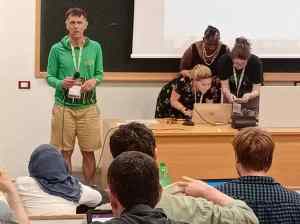
No panic as we set up for session 1…
The first two talks focused on southern Africa. The first talk by Liviu Giosan (Woodshole Oceanographic Institute) focused on new sediment cores extracted from the Okavango – Makgadikgadi region and new efforts to obtain sediment cores that can provide information on the dispersal of hominins. Brian Chase (CNRS) then looks us to the Karoo highlighting recent findings that suggest that this currently arid region was more habitable in the past and that a proliferation of stone tools suggests past peoples utilised the region extensively (Carr et al., 2023).
Gosling, W.D. & McMichael, C.N.H. (2023) The use of micro infrared spectroscopy in reconstructing past ecological and environmental change. Reference Module in Earth Systems and Environmental Sciences (ed. by R. Bradshaw) Elsevier. DOI: 10.1016/B978-0-323-99931-1.00087-8
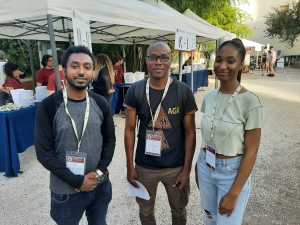
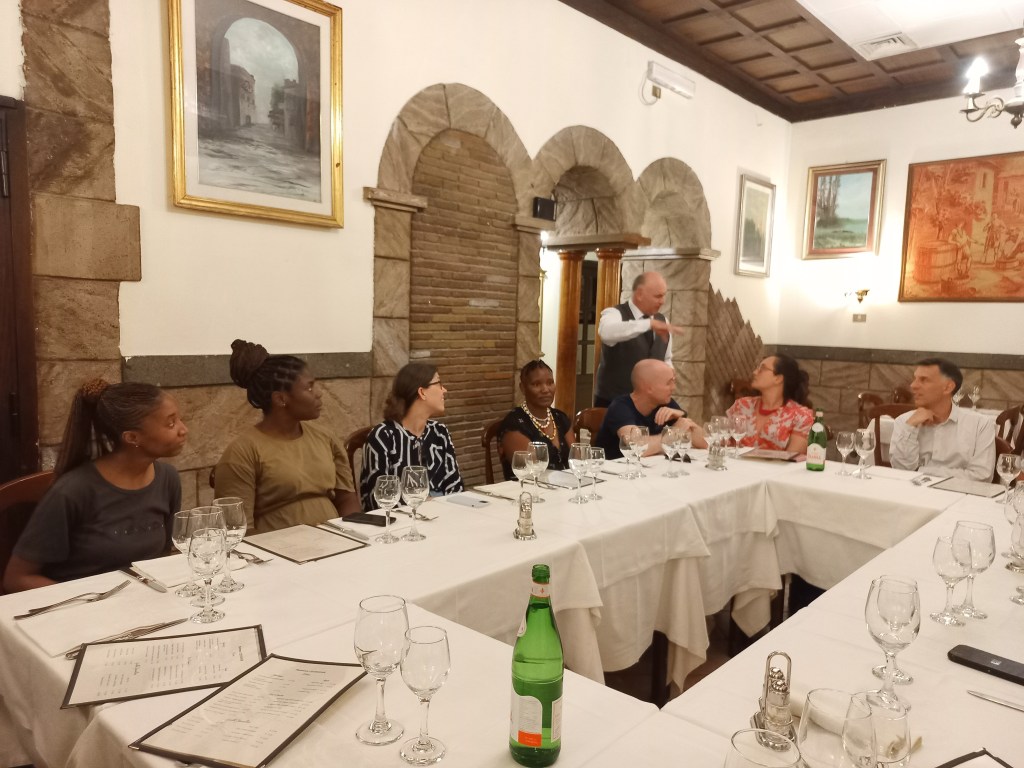
Mapping Ancient Africa participants at the INQUA Rome ice breaker event ready for action! Left to right: Bahru Zinaye Asegahegn, Alfred Houngnon, Busisiwe Hlophe.
The Mapping Ancient Africa (MAA) project has a double session of talks and a poster session at the INQUA congress in Rome 2023. Our session will be on Wednesday 19 July. Unfortunately a number of the originally planned speakers could not make it to Rome due to a combination of not obtaining visas, logistical challenges and ill health. We wish them all well and hope that they will continue to be involved in the project. Further, many thanks to all those who have agreed to step up and give a presentation at a late notice. Below is an updated schedule correct as of Sunday 16 July based on the information contained on the INQUA Rome App; if you are aware of any further problems or changes please let me know ASAP!
Giosan et al. When the desert was a lake: Providing context for Homo sapiens development in the northern Kalahari
Chase et al. Paleolakes and socioecological implications of glacial “greening” of the South African interior
Blinkhorn et al. Evaluating refugia in recent human evolution in Africa
Aureli et al. Homo sapiens behaviour and adaptation in East Africa. New evidence from an open-air site in a modern Ethiopian savannah environment: the GOT10 site
Effiom et al. Late Holocene palaeoecological studies at Lake St Lucia, KwaZulu-Natal
Tallavaara et al. Pan-African Climate and Vegetation over the Quaternary and Implications for Human Distribution
Quick et al. Palaeoenvironments of the Cape Floristic Region: New research & current developments
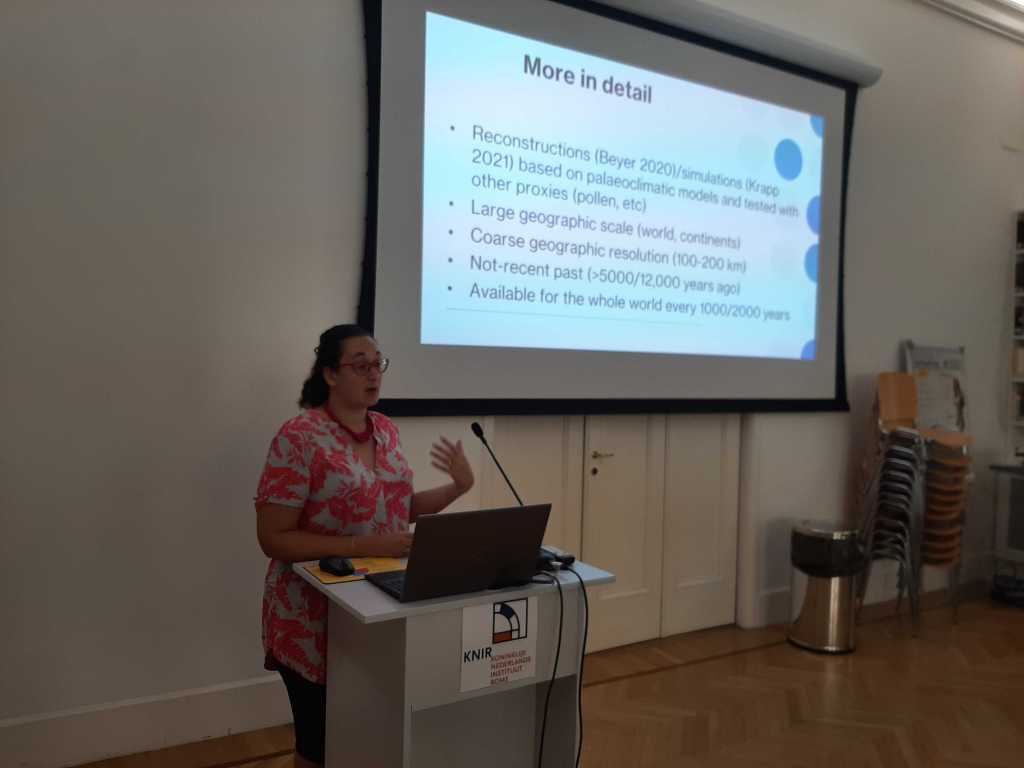
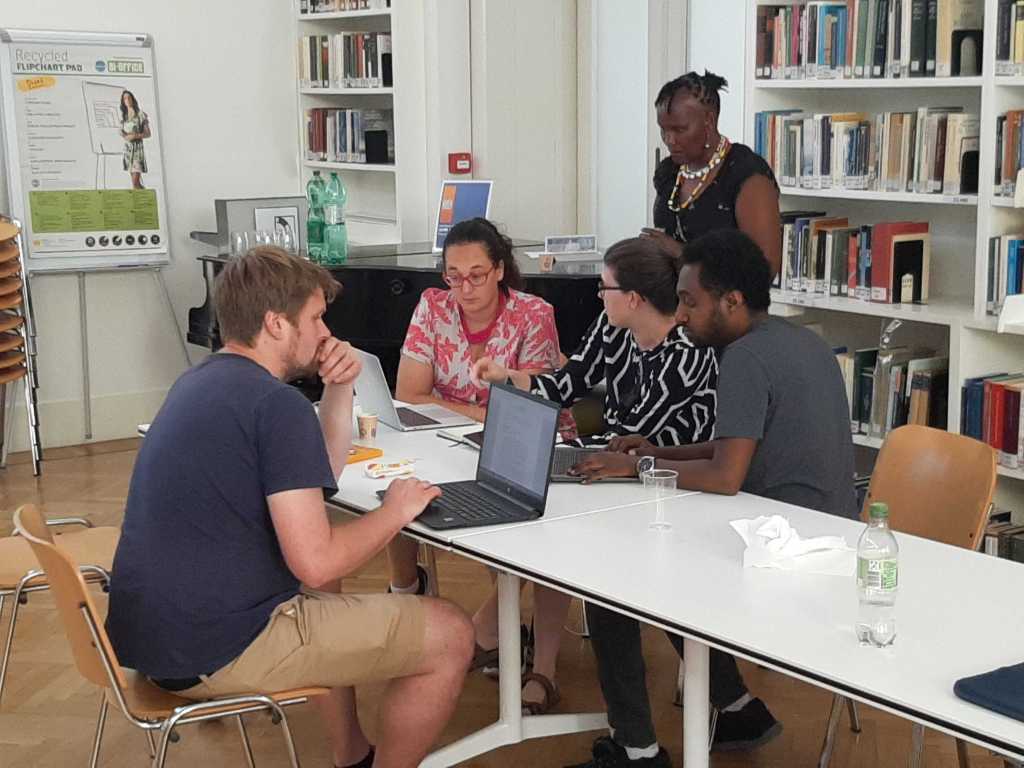
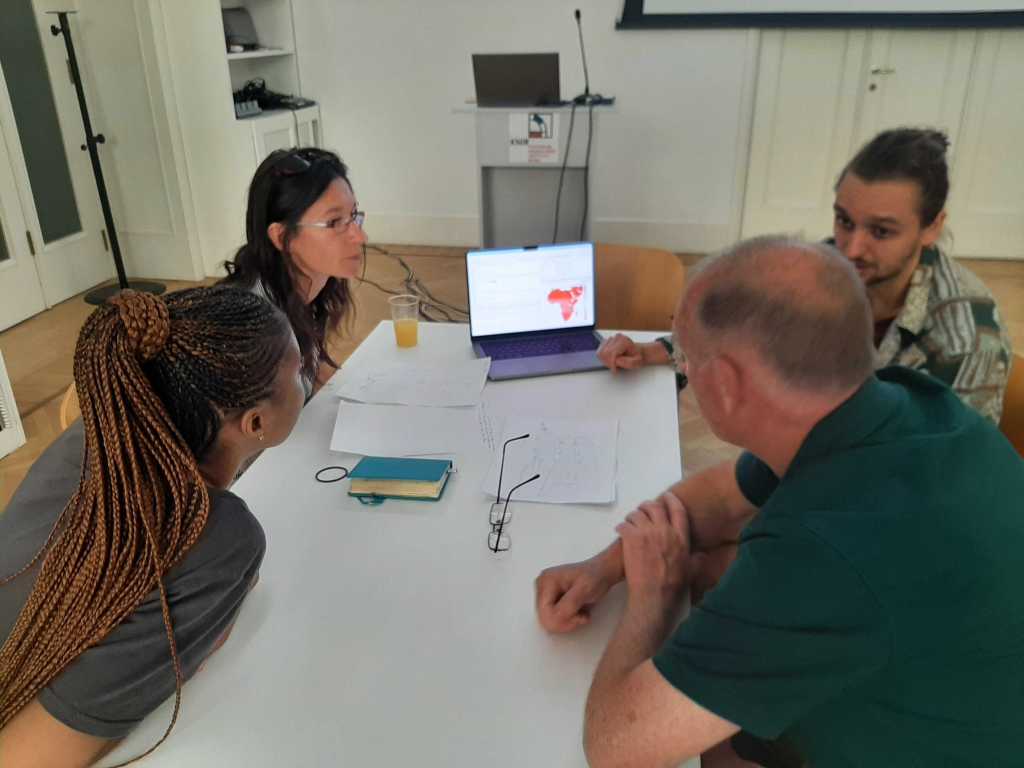
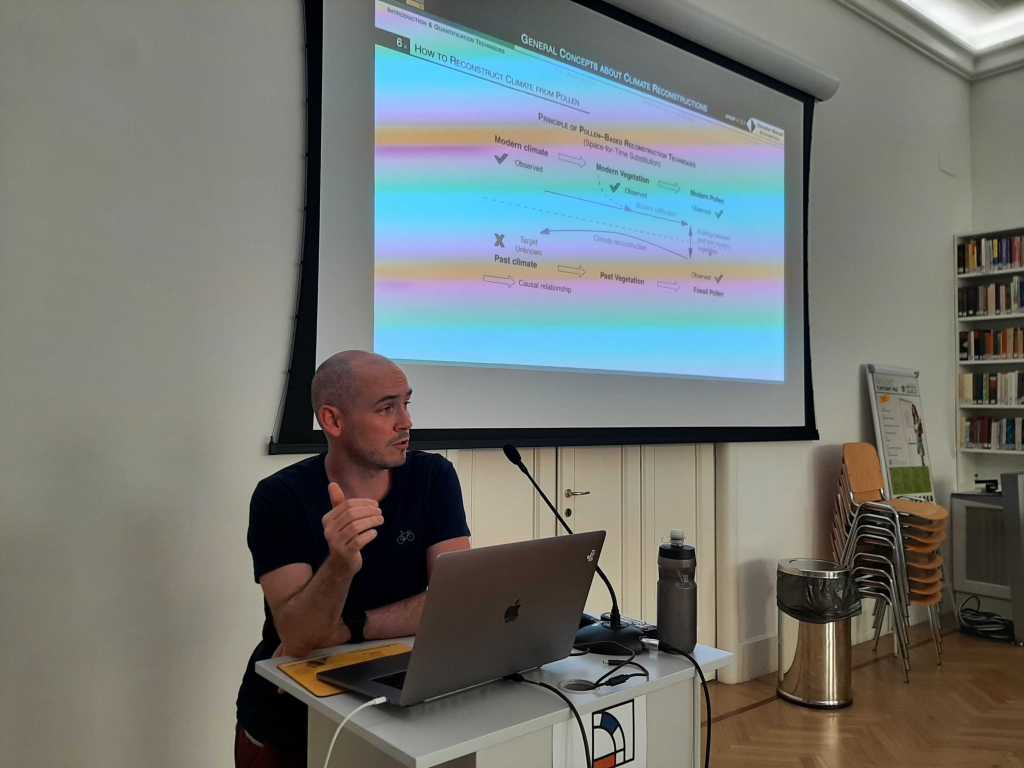
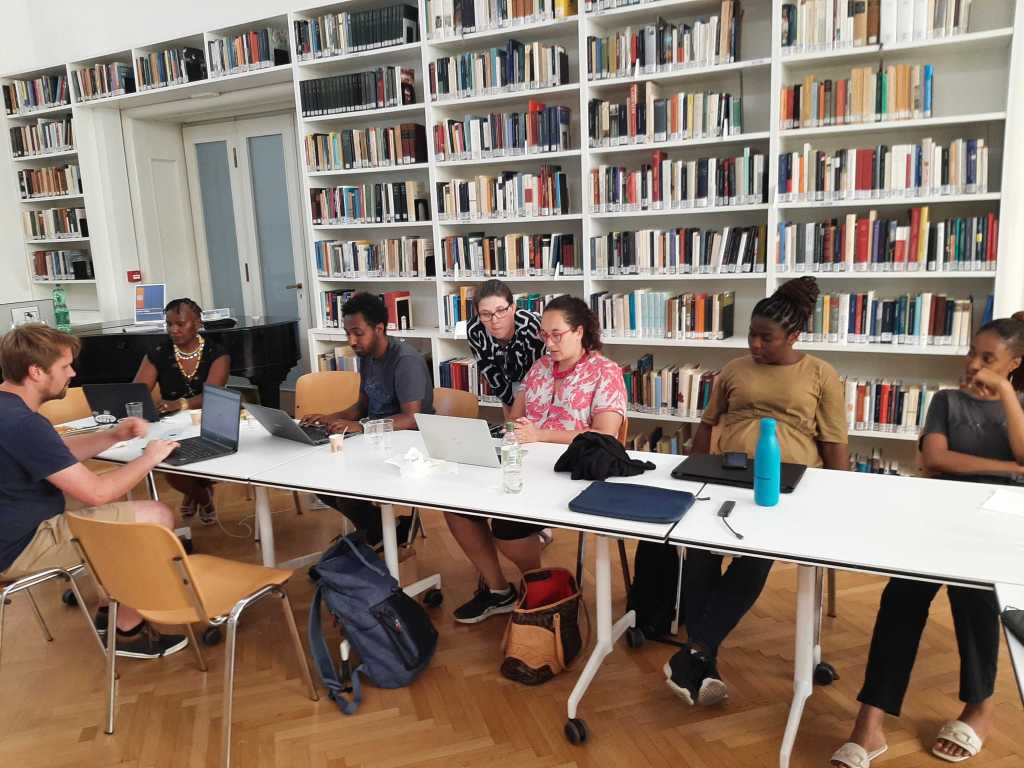
The Mapping Ancient Africa workshop took place on the 12-13 July 2023 at the Royal Netherlands Institute in Rome. At this INQUA funded workshop we played with palaeoclimate models and discussed past environmental change across the continent. Here are some picture of us in action. To find out more click here.
Day 1: Modelling past climate through the pastclim package, and reconstructing past climate through CREST
Day 2: Planning the proposed special issue and the future of the project








 Ecology of the past