Gosling, W.D., Miller, C.S. & Livingstone, D.A. (2013) Atlas of the tropical West African pollen flora. Review of Palaeobotany and Palynology, 199: 1-135. doi: 10.1016/j.revpalbo.2013.01.003
Photo taken close by the study site. The road that pass through Eastern Andes, and the magnificent Montane forest of western Amazonia behind. (Photo by M. L. Cárdenas)
Who would have thought that building a road in Andes would have allowed us to gain new and unique insight of pristine western- Amazonian forests? (I would have thought completely the opposite). Initially Patricia Mothes, chief of the volcanologist section of the Intituto de Geofisica in Ecuador, was called to look at sediments exposed by road works on the eastern flank of the Ecuadorian Andes. Arriving at the site she found thick (>20 vertical meters) deposits of grayish and dark brown interbedded layers of sediments which looked like they have been recently deposited. At closer inspection Patricia discovered that there were even wood pieces and leaves within the dark sediments (now known to be highly organic) that had the appearance of have been deposited within modern time. She wanted to know more. So a PhD student was recruited (a.k.a. Macarena Cárdenas) to work with the sediments at the Palaeoenvironmental Change Research Group at the Open University under the supervision of Dr William Gosling… And so the study began.
After several years spent dating the sediments, analyzing their composition (physical and elemental) and the fossils (pollen and wood) contained within them preliminary insights into vegetation change on the eastern Andean flank during the middle Pleistocene (c. 200,000-300,000 years ago) were revealed and published (Cárdenas et al., 2011a; Cárdenas et al., 2011b). Further work covering stratigraphically lower sediments (older than those previously published; c. 500,000 year) and more detailed sedimentary and fossil analysis of the entire sequence completed a PhD thesis (Cárdenas, 2011).
I am now pleased to announce that the extended work included in my PhD thesis has now been published in a new article in Palaeogeography, Palaeoclimatology, Palaeoecology (Cárdenas et al., online). The new paper is an extended version from previous publications from the same research and provides further evidence of the unique insights that can be gained from palaeoenvironmental studies in this region. These are some of the oldest Quaternary sediments ever discovered and studied from the mid-elevation eastern Andean flank / western Amazon and upon their analyses we were able to get for the first time an insight of how human-untouched Amazonian forests were back in time (up to 500,000 years ago!), how was their diversity and how they responded to intense volcanic activity and climatic change.
By Dr Macarena L. Cárdenas
REFERENCES
Cárdenas, M.L. (2011) The response of western Amazonian vegetation to fire and climate change: A palaeoecological study. In: Department of Earth & Environmental Sciences, p. 242. The Open University, Milton Keynes
Cárdenas, M.L., Gosling, W.D., Pennington, R.T., Poole, I., Sherlock, S.C. & Mothes, P. (online) Forests of the tropical eastern andean flank during the middle pleistocene. Palaeogeography, Palaeoclimatology, Palaeoecology. DOI:10.1016/j.palaeo.2013.10.009
Cárdenas, M.L., Gosling, W.D., Sherlock, S.C., Poole, I., Pennington, R.T. & Mothes, P. (2011a) The response of vegetation on the Andean flank in western Amazonia to Pleistocene climate change. Science, 331, 1055-1058. DOI: 10.1126/science.1197947
Cárdenas, M.L., Gosling, W.D., Sherlock, S.C., Poole, I., Pennington, R.T. & Mothes, P. (2011b) Response to comment on “the response of vegetation on the Andean flank in western Amazonia to Pleistocene climate change”. Science, 333, 1825. DOI: 10.1126/science.1207888
Woodland resources in the high Andes have varied through the last 5000 years and influenced human societal development. The relationship between people and natural resources in the Andes is explored in the recently published Gosling & Williams (2013); http://dx.doi.org/doi:10.1177/0959683613496296
In July we have managed to get a number of individual blog posts out so teaching activity on summer school, publications and conference reports have already been covered. Behind the scenes progress in the lab has continued despite the hot weather:
Frazer has commenced writing of his Chironomid training data set paper, and analysis of a fossil chironomid record.
Hayley has been plugging away at the analysis of pollen from Mera, and has got the first of her wood macrofossil samples prepared for thin sectioning (fingers crossed next month we may start to get some identifications on these!).
Lottie, Natalie and Bryan are keeping their supervisors very busy with reading material as they continue a pace with writing up.
Phil is setting up the Bosumtwi pollen chemistry project (we now have an offical grant code!) and is settling in; hopefully he should be moved down to MK very soon!
And Encarni is multi tasking and organising everything as usual 🙂
The PDRA project will descover more about past vegetation and climate change in Lake Bosumtwi (Ghana)
We are seeking a PDRA to study past climate and vegetation change in tropical West Africa as part of the NERC-funded “500,000 years of solar irradiance, climate and vegetation changes” project. You will join a multidisciplinary collaborative research team and will work with an international network of project partners. The project will utilise cutting-edge organic geochemical techniques to generate the longest continuous record of fossil pollen chemistry change. The study will build upon previous research into the sediments recovered from Lake Bosumtwi (Ghana). The data generated will shed new light on the role of climate in driving vegetation change in the tropics.
You will already hold a PhD, or be near to completing your PhD, in a relevant scientific discipline with a background in the Earth or Environmental sciences. You must have substantial experience of organic geochemistry or tropical palynology, with well-developed self-management skills and the ability to prioritise effectively.
The PDRA will work with an associated PhD student looking at modern pollen-vegetation relationships in the same region.
The PDRA will be part of an international team; partners based at University of Nottingham, Oxford Brooks University, Imperial College London, Oxford University, University of Texas at Austin and the Forestry Research Institute of Ghana
Understanding how vegetation responded to past climate change requires the development of well constrained relationships between living floras, environment and climate. This project will help constrain the great uncertainty which exists as to how tropical ecosystems are represented in the fossil record by examining the relationship between modern vegetation and the pollen it produces. The project will analyse modern pollen rain using a combination of traditional microscopic analysis [1] and cutting edge geochemical techniques [2]. We anticipate that the findings will provide new insight into past vegetation and climatic change.
For further information on the project and how to apply see the full advert: NERC PhD advert. Prior to applying please check eligibility for NERC funding by clicking here.
Closing date: 25th April, interviews will be held at The Open University during May.
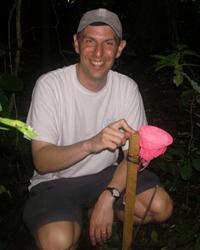
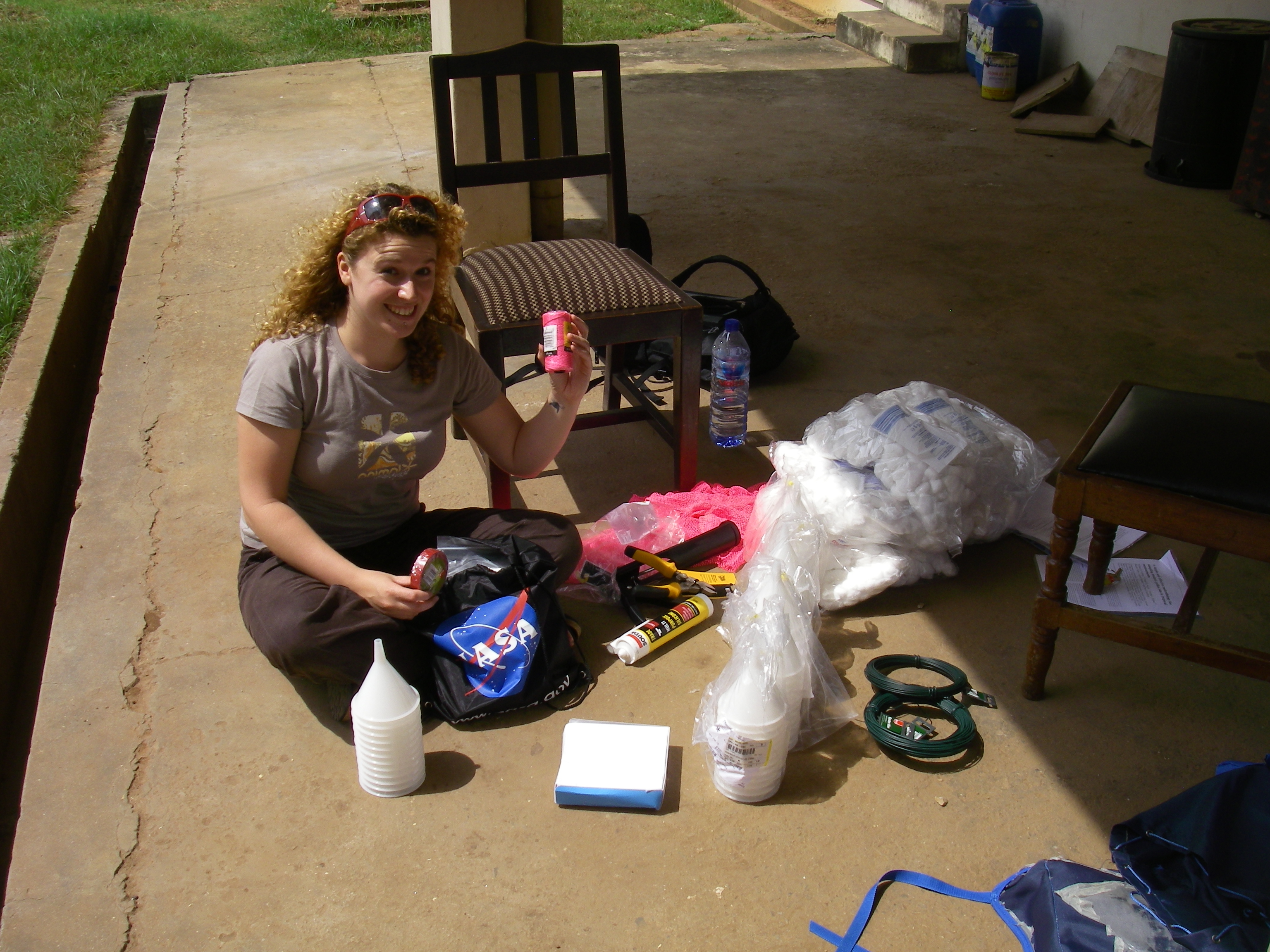
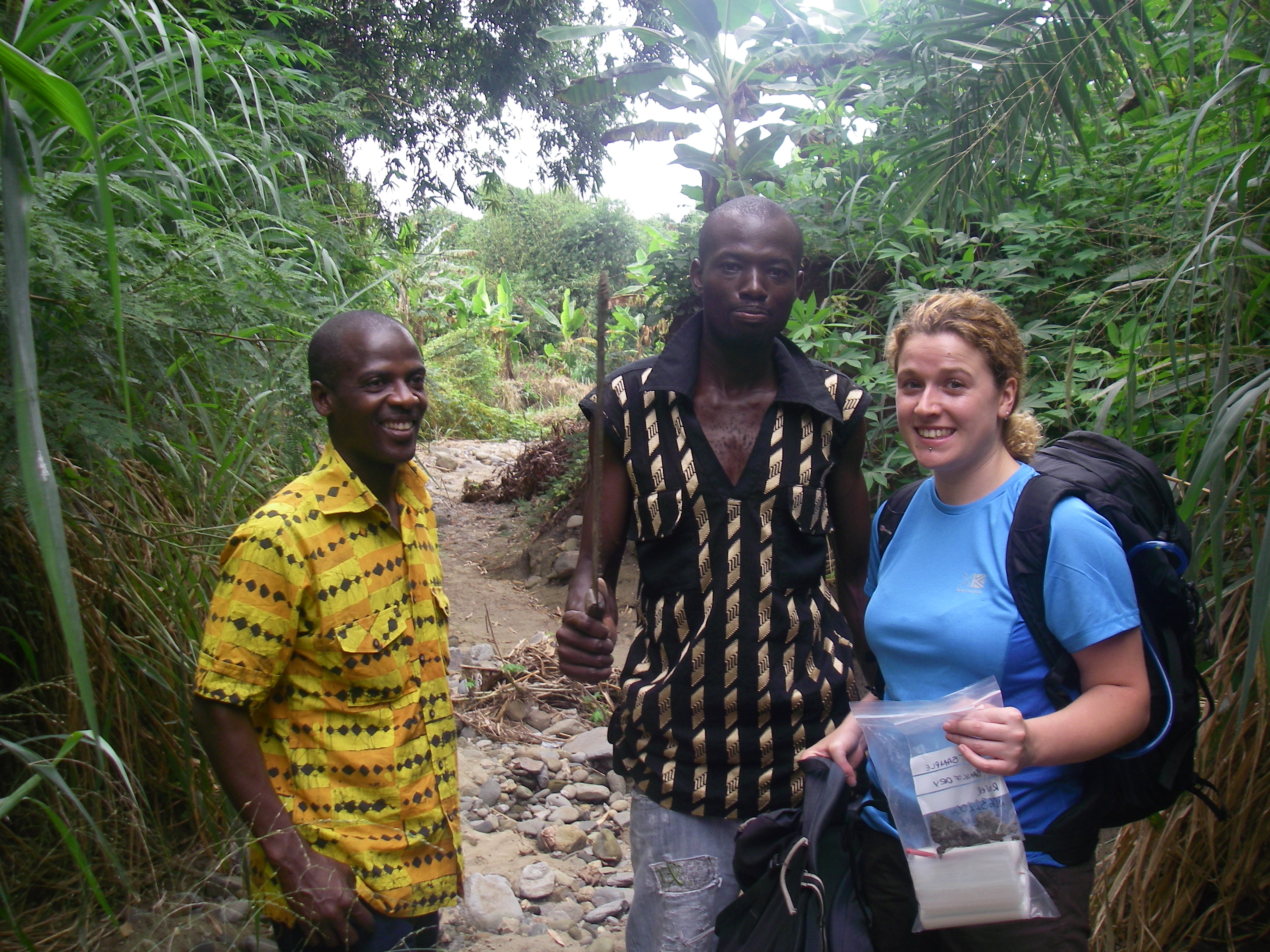
William Gosling pollen trapping in west Africa. A studentship on the new grant will investigate modern pollen-vegeation relationships from tropical West Africa.
I am delighted to be able to report that the PCRG has recently obtained a NERC standard grant to investigate “500,000 years of solar irradiance, climate and vegetation changes” (NE/K005294/1).





 Ecology of the past