The Mapping Ancient Africa (MAA) project has a double session of talks and a poster session at the INQUA congress in Rome 2023. Our session will be on Wednesday 19 July.
Giosan et al. When the desert was a lake: Providing context for Homo sapiens development in the northern Kalahari
Chase et al. Paleolakes and socioecological implications of glacial “greening” of the South African interior
Biddulph et al. Spatiotemporal variability in the initiation and development of peatlands across the central Congo Basin
Blinkhorn et al. Evaluating refugia in recent human evolution in Africa
Aureli et al. Homo sapiens behaviour and adaptation in East Africa. New evidence from an open-air site in a modern Ethiopian savannah environment: the GOT10 site
Dembele Climatic fluctuations during the last millenium and their impact on political history and human settlements in West Africa
Porchier et al. Annually resolved hydroclimate variability in the East African Rift Valley at a time critical for hominin dispersion
Effiom et al. Late Holocene palaeoecological studies at Lake St Lucia, KwaZulu-Natal
Having recently traveled to South Africa as part of the Landscape Dynamics field course run by our graduate school, and to be thinking again about trying to obtain funding to further research in Africa, I thought it might be fun to turn to the journals in which I have an editorial hand (Plant Ecology & Diversity, Vegetation History & Archaeobotany, and The Holocene) and see what new work was coming out on African ecosystem dynamics. From each of these journals I have selected two recent papers to highlight here.
The papers come from across the continent and all have a component of the ecology of the past, but they range in focus from developing methods to extract new insights about past ecological change (Le Moyne et al., 2023) through to the application of our understanding of past ecosystems to the management of conservation areas (Wilkinson et al., 2022).
The study by Le Moyne et al. (2023) examined modern reference material of nine grass species to determine how they might be better identified in the archaeological and palaeoecological record from the phytoliths they produce. Three of the studies use different lines of evidence of past ecological dynamics to explore change over the last few thousands of years.
Champion et al. (2023) shed light on past agricultural practices in western Africa (Nigeria) through the examination of macro-botanical evidence from 50 archaeological sites and dating back c. 3500 years, hypothesizing a new route for the spread of pearl millet out of the central Sahara into the central Nigerian savannahs.
Prader et al. (2023) present a c. 4000 year geochemical, palynological and and charcoal record from Table Mountain National Park in South Africa, showing changes in the abundance of fynbos and forest plants and how this was modified by people.
Hildebrand et al. (2022) collated multiple lines of evidence of past environmental change from eastern Africa to assess changes in human activity during and after the African Humid Period (15,000-5000 years ago), highlighting the complex relationship between changes in human resource acquisition practice (fishing, hunting, gathering, and pastoralism) and environmental change.
The longest timescale perspective is provided by Milton et al. (2022) who investigated plant speciation in the Namib Desert. They combined a phylogenetic, morphometric and experimental genetic approaches to explore the evolutionary history of Senecio flavus and S. engerianus and produce palaeo-distribution models. From these data they suggest that the wider ranged species (S. flavus) is in fact derived from the smaller ranged parent (S. engerianus) and that this separation was caused by aridification during the Pleistocene.
The final paper, Wilkinson et al. (2022), take evidence for past abundances of elephants and compare them with the abundances in national parks today. They argue that modern elephant densities in national parks could be higher than the historical levels and that this could be detrimental to the flora and other fauna in the parks.
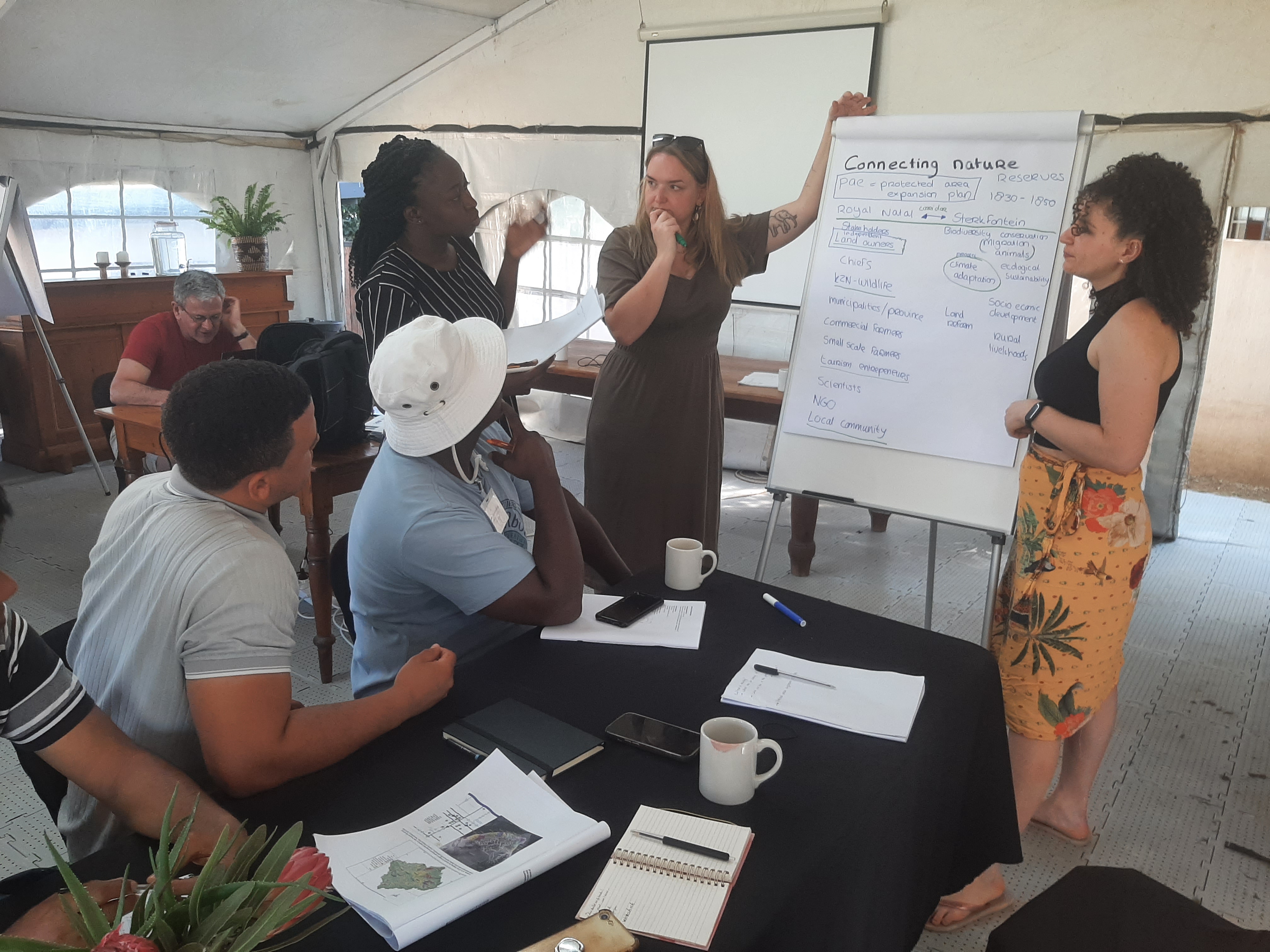
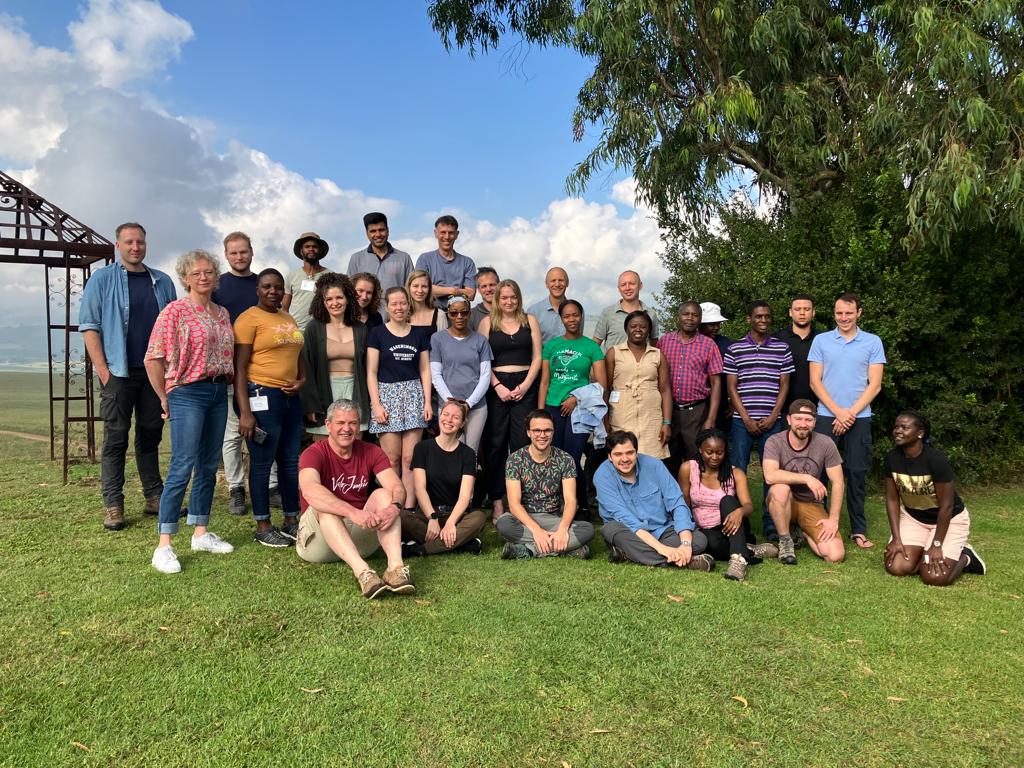
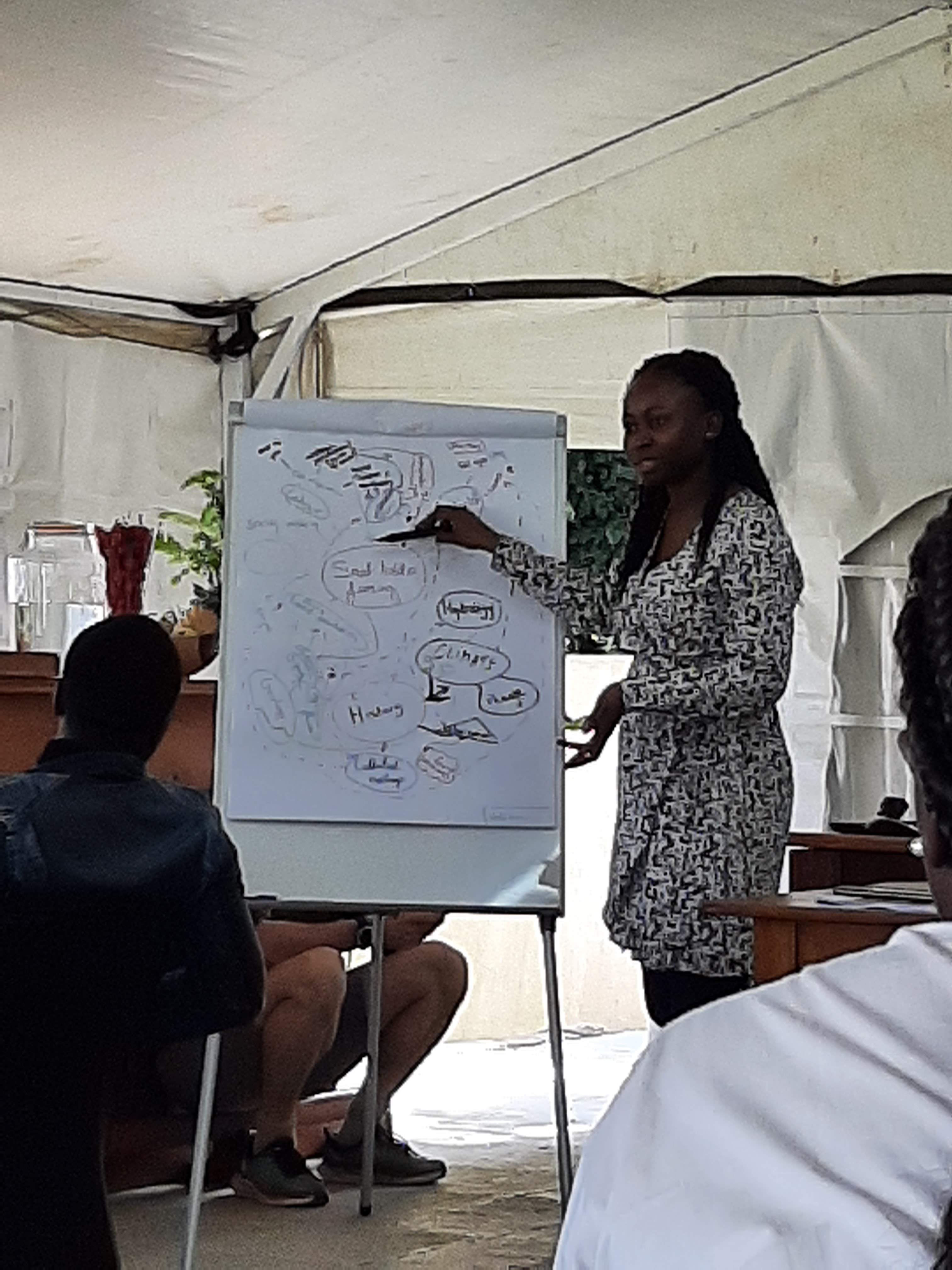
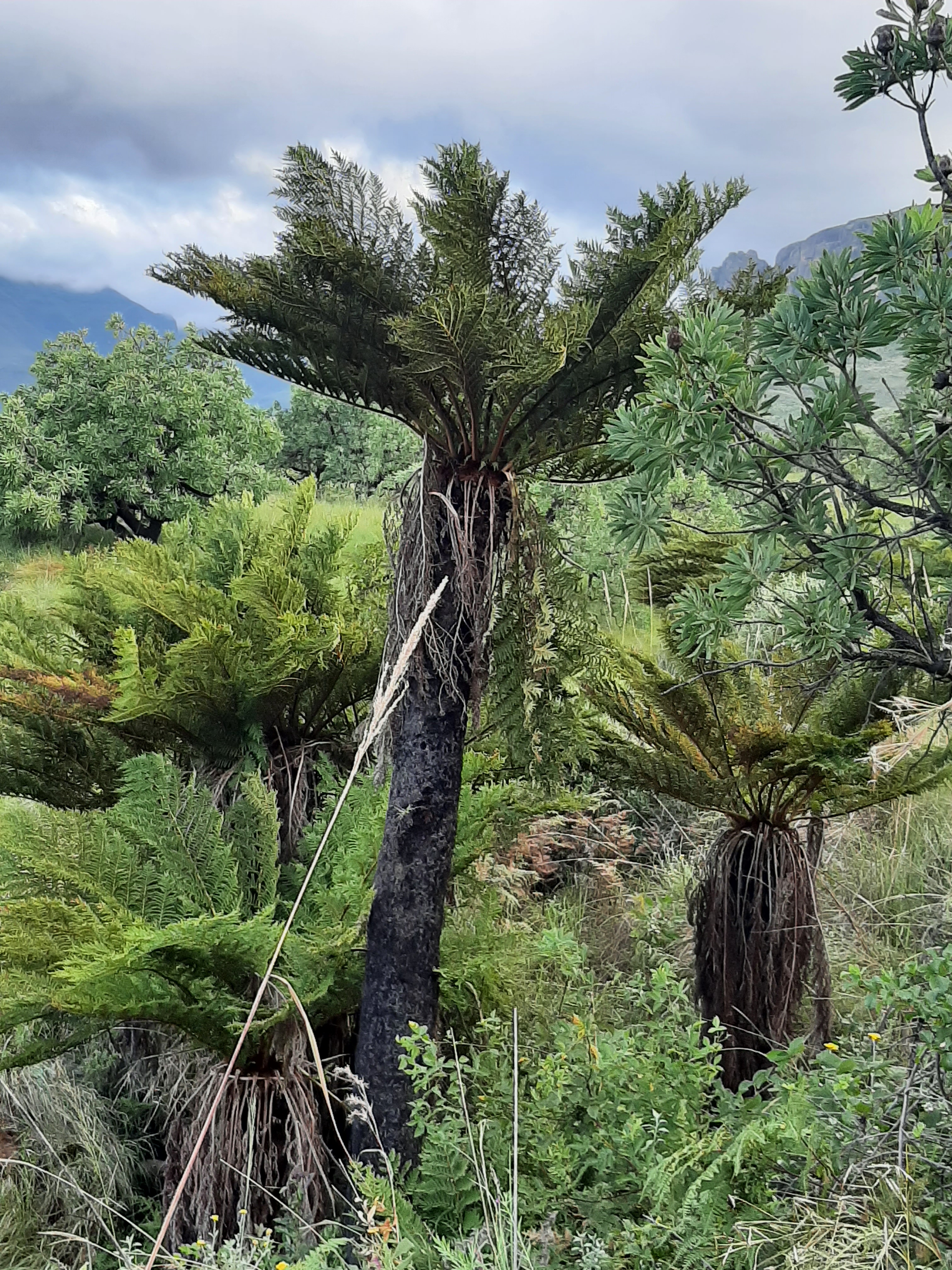
The course “Landscape Dynamics in an era of change: Learning from the past to face the future” took place in the Drakensberg Mountains of South Africa between 5 and 15 March 2023. The course was run by the Graduate School for Production Ecology and Resource Conservation (PERC) and participants were drawn from universities in the Netherlands and South Africa. The main goal of the course was to investigate the past and current dynamics of the region and predict possible futures in an inter- / trans-disciplinary context. Consequently the content of the course was incredibly diverse including: geology, geomorphology, palaeoecology, cultural history, vegetation studies, soil science, farming systems and forestry. These topics were integrated into four group projects centered on invasive species, rewilding, commercial farming and small scale farming.
The second in my series highlighting papers in the recent volume of Palaeoecology of Africa (published entirely open access online) focuses on the research articles. The research articles make up the ‘guts’ of the volume, comprising 10 of the 24 papers. Three of these are from western Africa (Dinies et al.; Gosling et al.; Lemonnier & Lézine), two from eastern Africa (Githumbi et al.; Kinyanjui et al.), two from central Africa (Richards; Gaillard et al.), and three from southern Africa (Chevalier et al.; Hill & Finch, Hill et al.). These research articles present new data and key insights into past environmental change in Africa, which fall into two broad categories, providing information on: (i) how we can extract information from pollen data sets, and (ii) the processes operating to drive vegetation.
The recently published volume of the Palaeoecology of Africa series contains a number of different types of papers: research articles, reviews, perspectives and data papers. One of the key reasons I was motivated to become involved in the project was to help mobilise palaeoecological data from Africa towards open access datasets (African Pollen Database, Neotoma). To hopefully get greater recognition to the great work done over the years and to help facilitate synthetic work that will provide a greater understanding of spatial variance in past climate change. Ultimately, four short data papers were included in the volume: an enhanced c. 16,000 year pollen record from the Bale Mountains in Ethiopia (Gil-Romera et al. 2021), two pollen and charcoal record from the southern Cape Coast in South Africa, c. 3200 and 650 years long respectively (du Plessis et al. 2021a; du Plessis et al. 2021b), and a c. 700 year long record from Madagascar (Razanatsoa et al. 2021). The records provide new insights in to landscape scale environmental change driven by both humans and climate. To find out more check out the open access articles and the data at:
The transition from Early Career Researcher (ECR) to head of a new laboratory
When you are in the midst of working on your PhD you feel that this must surely be the toughest challenge you’ll ever face, only to emerge on the other side and realise that it was a holiday in comparison to the academic journey post-PhD.
I completed my PhD at the University of Cape Town (South Africa) and immediately launched myself into a postdoctoral fellowship embedded in a relatively large international research initiative. Building on the expertise and knowledge I gained from my postgraduate work, I generated new pollen and microcharcoal records from the southern Cape and west coast regions of South Africa in order to reveal details about how climate and associated environmental conditions have changed during the Holocene. I found the transition from working almost entirely independently on my PhD to collaborating within the context of a large multidisciplinary and multinational team equally very exciting, and very challenging. At this time imposter syndrome hit me hard and I had a bit of an existential crisis (I’m overqualified, too specialized and not earning enough, what the hell am I doing with my life? – I know we’ve all been there!). Just as I was about to give up on academia, I was approached by Nelson Mandela University, one of the smaller, lesser known, public universities in South Africa, situated in Port Elizabeth in the Eastern Cape Province. After a lot of soul searching, I accepted a research fellowship at NMU, moved out of my home in Cape Town (where I had lived my entire life) and relocated to a new city – by myself, with no contacts, friends or family there.












 Ecology of the past