Two NERC algorithm funded PhD studentships are currently available with the PCRG. The projects are focused on understanding past environmental change in west tropical Africa and Amazonian-Andean Ecuador. Both projects will involve field work and build on on-going research within the lab.
Closing date 31/01/2013
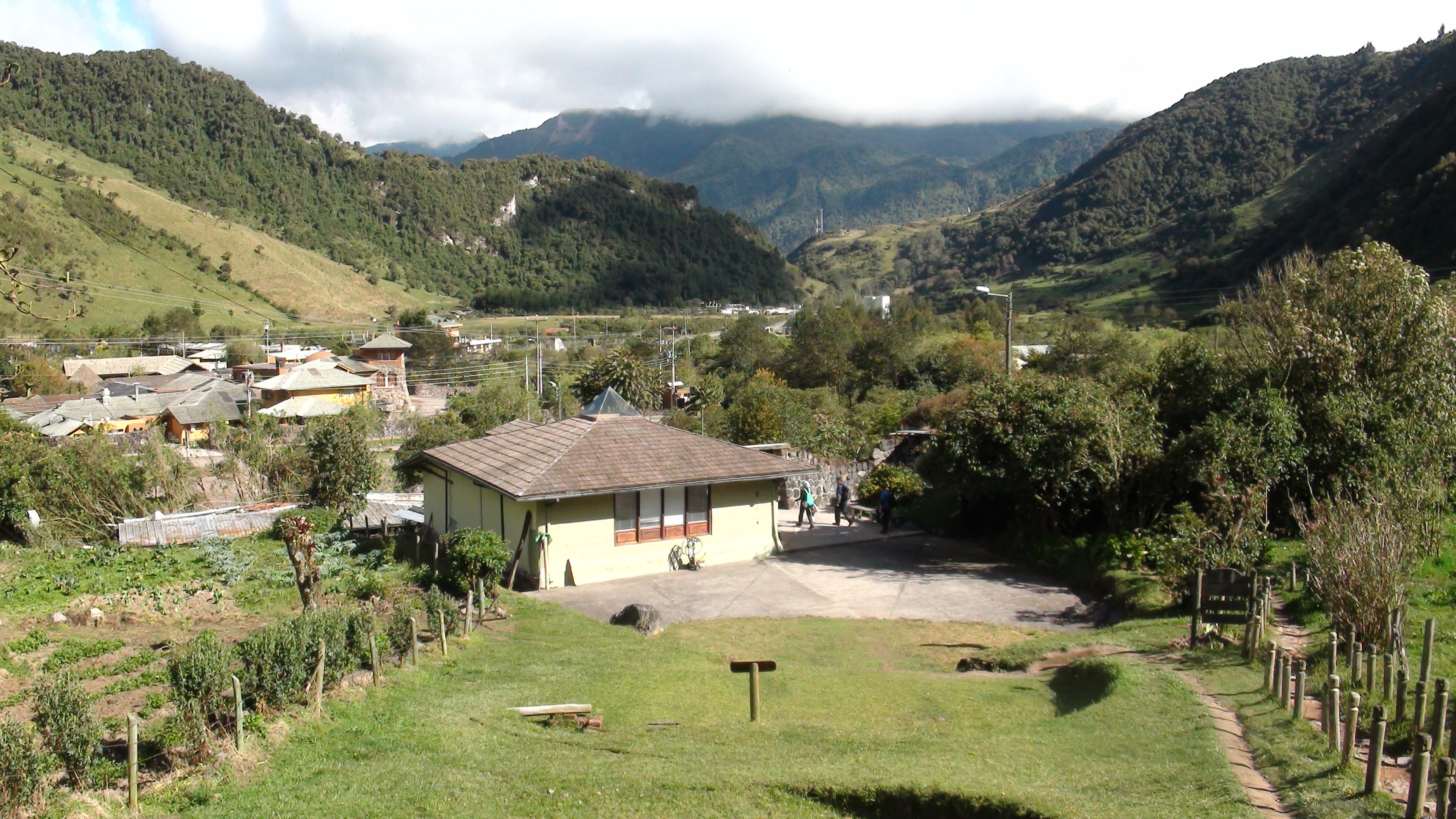
One project will work on samples collected during fieldwork in 2012 near Papallacta (Ecuador).
Further project details and how to apply below… Continue Reading
I am a NERC Research Fellow with a project entitled “Evaluation of forests sensitivity to past climatic changes” (FORSENS), which will be running until September 2015. The project is based on a multi-site, multi-proxy and multi-disciplinary approach to aid the understanding of Neotropical forests’ dynamics since the Last Glacial Maximum (LGM; c. 21,500 years ago).
I presented details in a poster at the recent INTIMATE/CELL-50k Join Workshop this 12-15th November at Budapest, Hungary. Click here to view my poster and find out more details about the project.
Prior my arrival to PCRG, I was working at The Botanical Institute of Barcelona (CSIC-ICUB, Palynology and Paleoecology Lab) and the Autonomous University of Barcelona (Tropical and High Mountain Paleoecology). I am a palaeoecologist mainly focused on Late Glacial environmental change in Neotropics, being interested in the climate-vegetation-human relationships. For this purpose, I mainly use pollen, microscopic charcoal and non-pollen palynomorphs. I am also involved in several editor tasks, as regular referee os several Q1 journals, and the editor of the “Humans and Biosphere Commission” Newsletter.
If you are interested in my project please do not hesitate to get in contact.
The back end of September and October has been very busy as I have tried to catch up with the teaching, administration and research activity which somewhat accumulated whilst on field work!
Major tasks have been:
1) the marking and coordination for level 3 Geological Record of Environmental Change (S369) module examination,
2) getting used to my new role as Post Graduate Tutor looking after all things related to a doctoral students in the Department of Environment, Earth & Ecosystems, and
3) trying to find time to finish off three manuscripts for submission!
Other members of the lab have also been busy: * Encarni has arrived from Valenti Rull‘s lab at the Botanical Institute in Barcelona as a NERC Fellow and is settling in to life in Milton Keynes, more details soon…
* Lottie is getting into data analysis and writing up of the Lake Bosumtwi pollen an N isotope data,
* Natalie is writing, crunching numbers and waiting for a machine to be fixed…
* Bryan is working on gelling biogeographic data together in GIS
Imagae of a Toarcian foraminifera taken by Alice Kennedy facilitated by the new cable which allows our microscope camera to talk to a computer – hooray!
* Hayley has been preparing for talking at the Linnean Society palynology meeting on 1st November “Understanding pollen and spore diversity”, and helping “steal” a microtome for sectoning her wood macrofossils,
* Frazer has started to plot Andean and Amazonian midge distributions against temperature, and
* Alice has been taking photos…
In the midst of all this fun I was sent this great video which brightened my day. I hope you enjoy it as well…
The four fellowships are advertised in four areas of Earth & Environmental Science; however, applications from exceptional scientists in related fields are also welcome.
PCRG members taking part in the Milton Keynes NSPCC Half Marathon, 8 July (left to right: Charlotte Miller, Wesley Fraser and William Gosling)
I have been really excited with the increase in the number of posts and various contributions to this blog over the last month or so. So thanks to everyone who has contributed. The excellent content allows me to focus on just a few research and teaching events which have not been previously covered.
1) Welcome to Wesley Fraser who has joined us officilally as a visiting postdoc for a few months. We hope to develop a paper and another grant submission looking at pollen/spore chemistry during this time; for further details see “Do plants wear sunblock” post.
2) Well done to Frazer and Hayley for performing well in their end of year 1 mini-vivas. Both projects are progressing well and we are all looking forward to field work at the end of the month. Hopefully most of the prepartation and equipment are now in place…
3) Potential for more exiting collaborations was also developed at two meetings. The first, at the Natural History Museum and, in conjunction with long term collaborator Steve Brooks was with old friends Mick Frogley (Sussex) and Alex Chepstow-Lusty. Both Mick and Alex taught me when I was at Cambridge and it would be super exiting to develop a new collaboration with them looking at Chironomids in Andean lakes. The second was at the Univesity of Nottingham as I took part in a UK Tropical Peatlands meeting which brought together ecologists and palaeoecologists from Nottingham, Leeds, Leicester and The OU. The aim of the meeting was to coordinate papers and grant applications.
4) At the end of July beginning of August I taught on the “Sedimentary Rocks and Fossils in the field” topic for the new Practical Science, Earth & Environment (SXG288) module which The OU now offers. Longridge Towers School (no children around this time of year) provided the perfect base for investigating the sedimentary geology of the region. The small group of students had the opportunity to make field observations and test hypotheses related to past environmental change. Everyone was very excited to find numerous fossils and interesting sedimentary structres and had fun trying to work out what they all meant! Congratulations to Angela Coe for putting together this great event.
I have been engaged with two major activities during June: 1) submission of a research proposal to NERC, and 2) excitement of my first online teaching module going live to students, Cyprus activity, within Practical science: Earth and environment module (SXG288). Other members of the group have been writing up methods chapters (Natalie), number crunching and submitting abstract to the International Paleolimnology Symposium (Lottie), and submitting first year probation reports (Hayley and Frazer).
Laboratory activity has continued through February with progress on pollen counts (Lottie and Hayley) and chironomid (non-biting midges) picking (Frazer). Hayley also managed to escape the microscope lab for a short period: 1) to commence work on selecting samples from tephras for Ar-Ar dating, and 2) to counduct loss-on-ignition analysis of organic samples to identify the constituents of her sediment. I did not make it on to the microscope 😦
I was however very pleased to welcome Macarena Cardenas back into the lab as a visiting Research Fellow. Maca will be working on the pollen reference collection, assisting with PhD student analysis and continuing to write papers during her renewed association.
Frazer, Hayley and I have also begun planning for field work in Ecuador for April-May. We will be working in collaboration with the Instituto Geophisico in Quito and the plan is to visit the Mera site which Hayley is working on, and to collect lake surface samples for Frazer to examine the midges. In preparation for the collection of midges samples expert, and project co-supervisor, Steve Brooks (Natural History Museum) visited for a day to brief us on how best to do this.
Away from research I have been working on writing exam questions and tutor marked assignments for the level 3 module The geological record of environmental change (S369, to those familliar with OU codes!). Hopefully, I have managed to set some interesting and challenging tasks for our students. . .
The 21st The Open University Les Irvine Memorial Relay was held yesterday (29/02/2012) and four teams from the Environment, Earth & Ecosystems department were entered amoung the 40 which took part. Run over four legs and covering a 1.1 mile course at Walton Hall it was another fun event.
For the third year running a team of palaeoecologists took part. This year “Team Palaeo” comprised Hayley Keen, myself, Frazer Bird and Lottie Miller (left to right on photo) and we were the fastest finishing team from the department!




 Ecology of the past