Title: Climate frameworks for the Middle Stone Age and Later Stone Age in Northwest Africa
Related publication: Boisard, S. & Arous, E.B. (2024) A critical inventory and associated chronology of the Middle Stone Age and Later Stone Age in Northwest Africa. Journal of Open Archaeology Data 12, 5. DOI: 10.5334/joad.121
The seminar will be delivered via Zoom. The link for the seminar can be obtained from the MAA Slack channel or by contacting the chair of this seminar (William Gosling). If you want to know more about the Mapping Ancient Africa project visit our web pages and please do not hesitate to get in contact if you want to get involved.
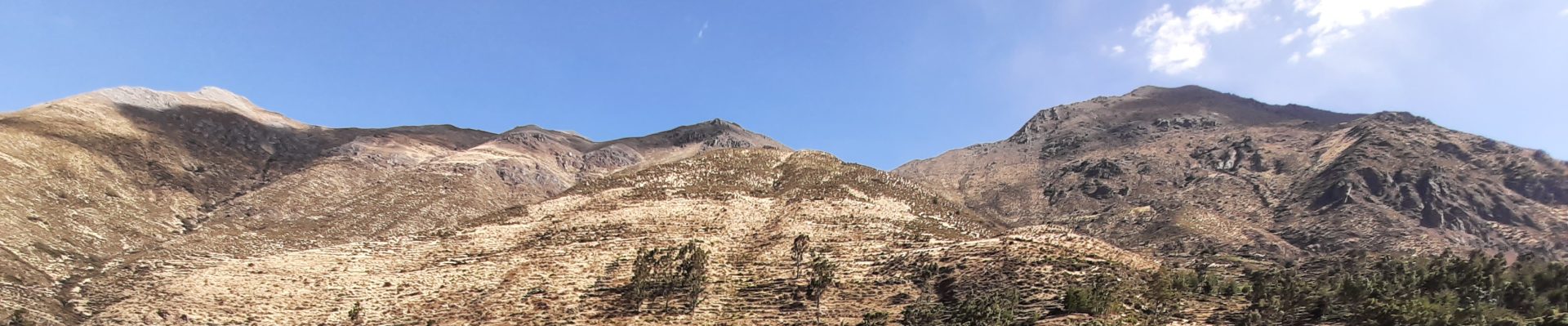
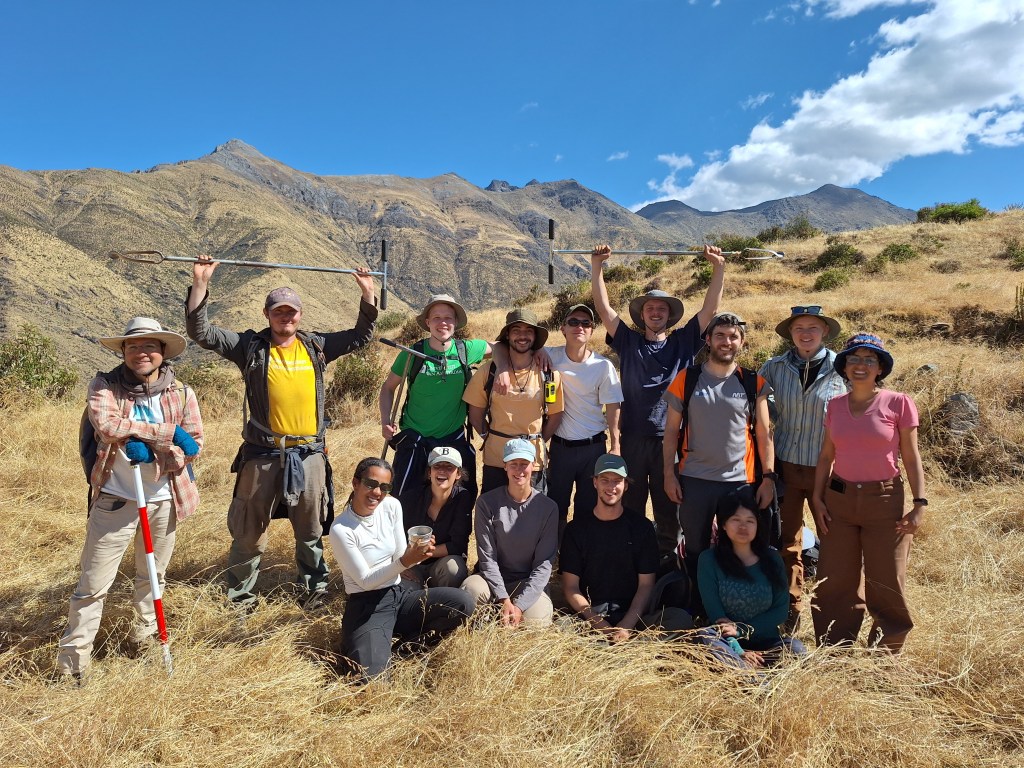
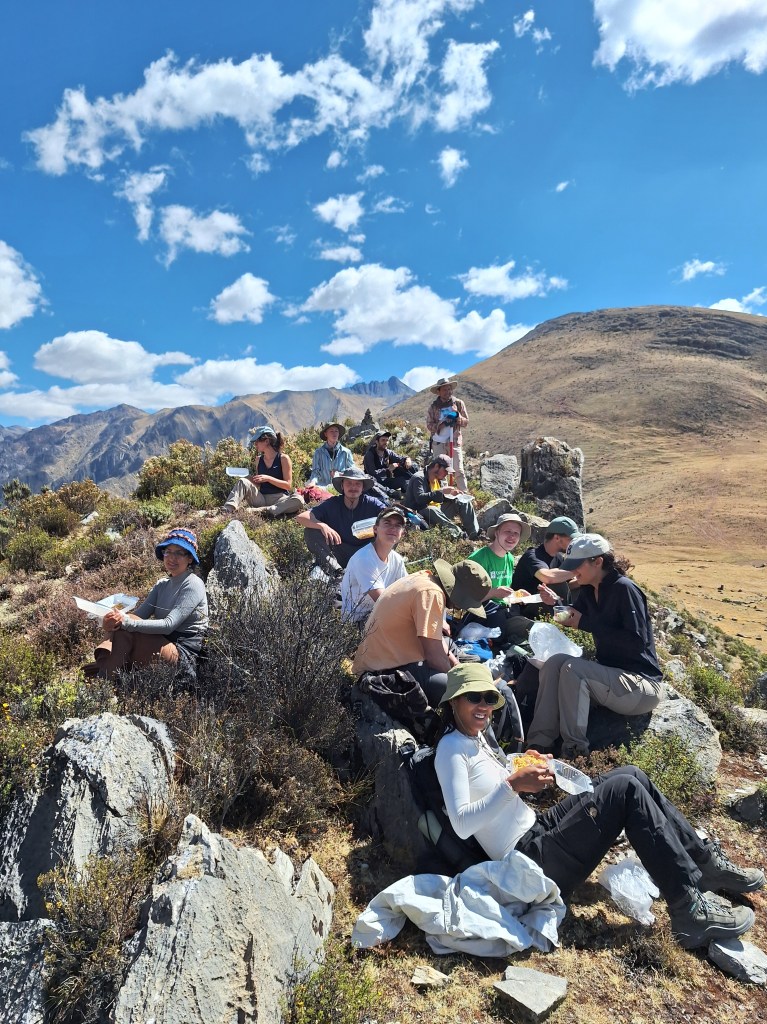
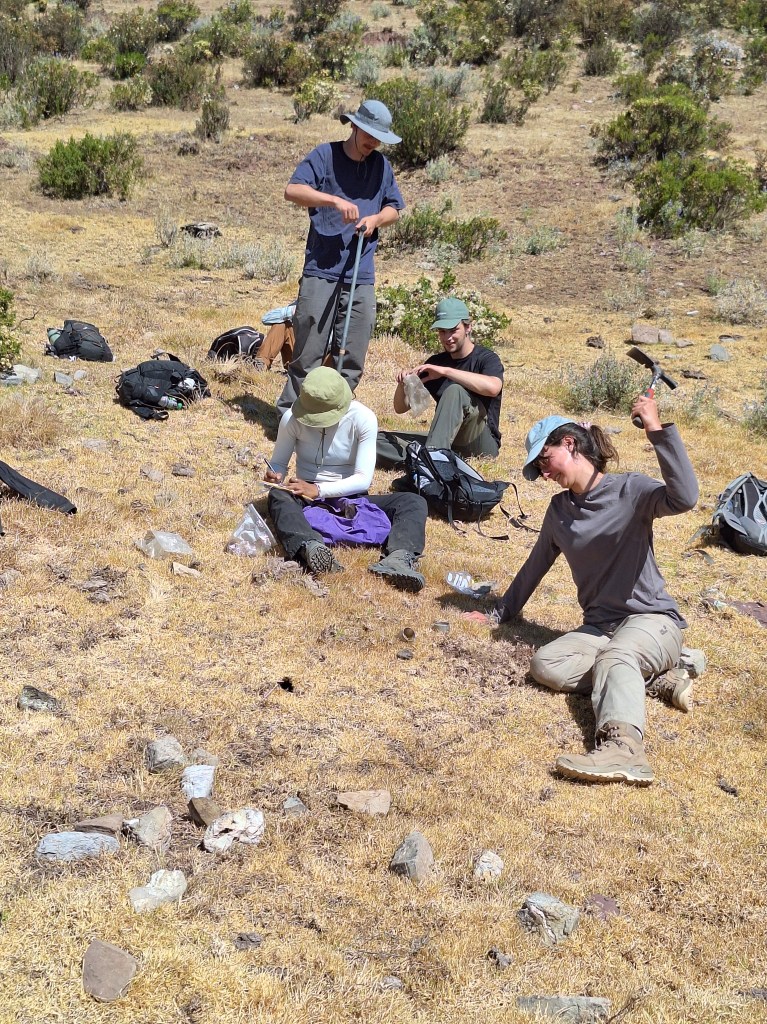
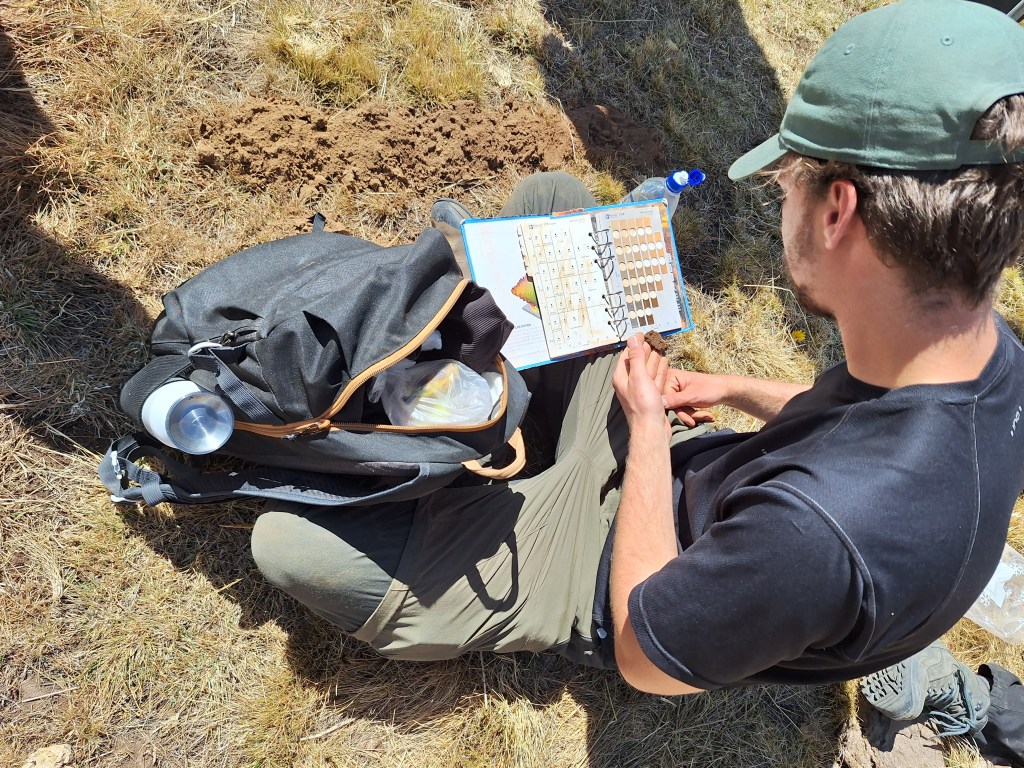
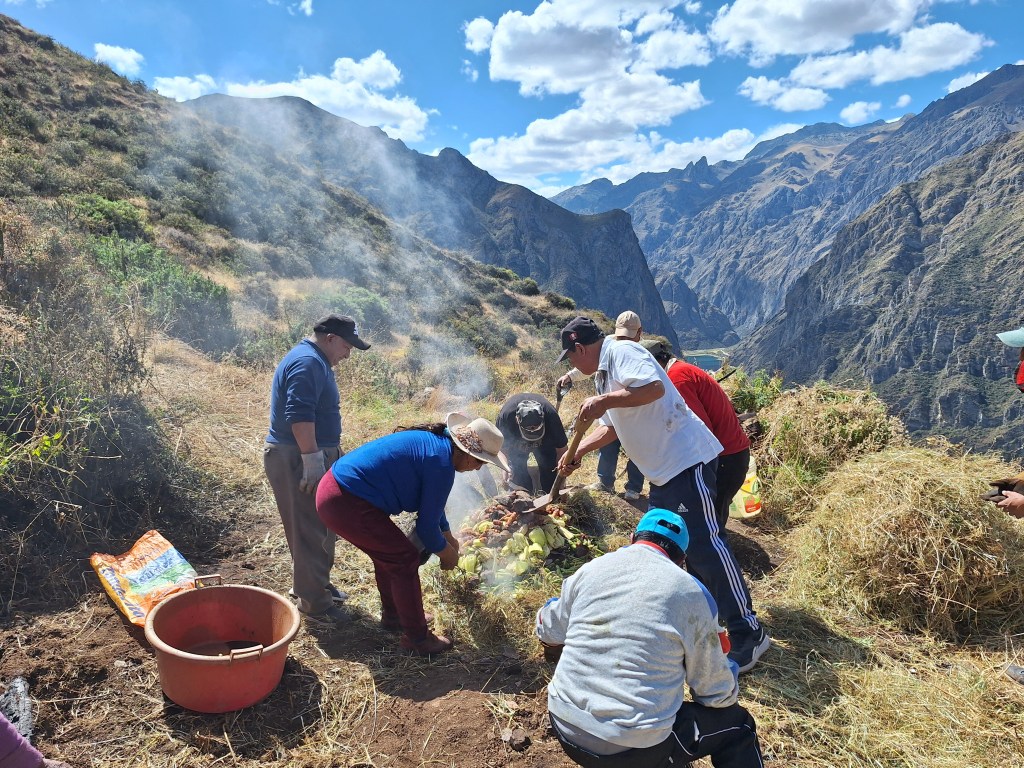
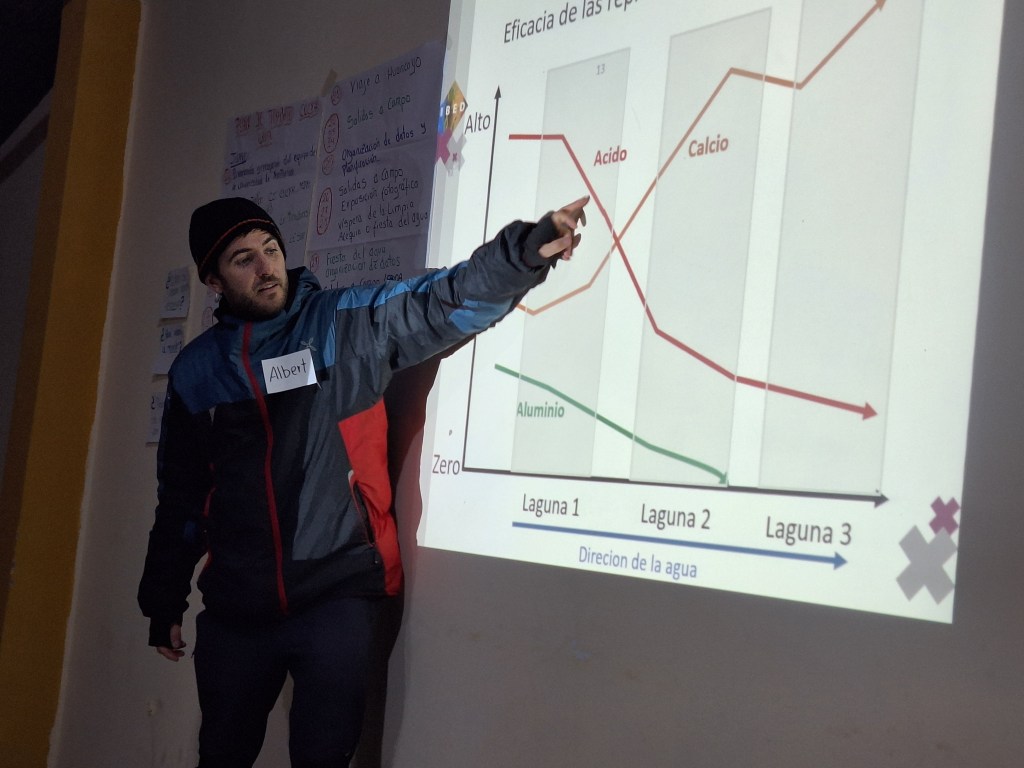
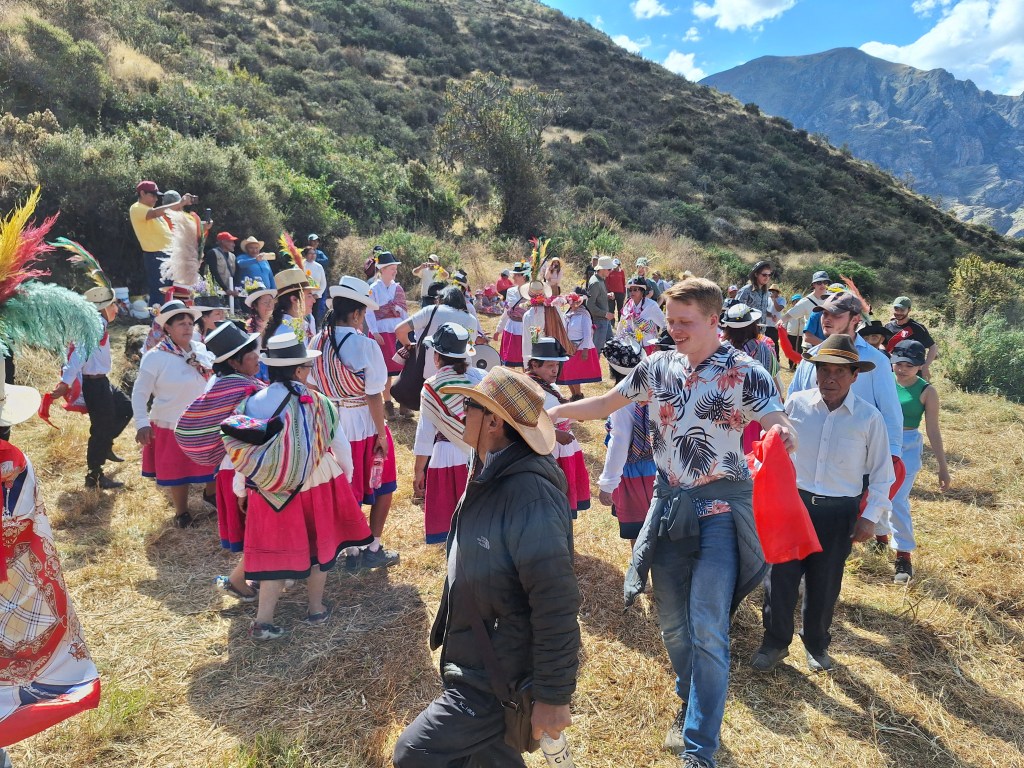
The University of Amsterdam MSc Earth Sciences “Geoecological Systems” field course took place this year in Miraflores (Peruvian Andes) during June and July. Eighteen students, including three from Peruvian institutions, spent four weeks exploring the high Andes. During this time the students developed scientific projects to address interests of the local population related to soil quality, environmental pollution, water resources and cultural heritage. Access to the area and embedding within the community was enabled by The Mountain Institute Peru. During the course the students gained extensive ‘hands on’ field experience, developed teamworking skills and discovered the benefits of a participatory approach to research.
This course runs once every two years (to find out about the 2022 expedition click here). Want to join us on a future expedition? Check out our degree program here to enroll.
Images from the University of Amsterdam Peru field course 2024
The “Fire in Human Evolution” international Symposium will take place at the University of Leiden (10-11 June 2024). The meeting is being organized by Femke Reidsma and Amanda Henry. The meeting will include talks and discussion on:
As part of my MSc Biological Sciences (University of Amsterdam) research project entitled “Assessing the effect of human induced fire regime changes on vegetation in the Drakensberg mountains” (for further details click to see previous post). I’ve travelled to Africa, where I’ll be staying a month. During this mini blogpost series I’ll take you with me on my travels!
During the first poster session, I presented my poster which went into detail on how we are developing a proxy to reconstruct past fire using micro-Fourier Transformed Infrared Spectroscopy (µFTIR). These reconstructed fire temperatures can then be compared with phytolith or pollen data to assess the effects of different fire temperatures on local vegetation over time. The presentation and poster were well received!
After my poster presentation there were two more congress days which were filled with interesting talks and beautiful posters.
Hello Ecology of the Past readers, my name is Jelle Kraak and I’m currently doing a research project for my MSc Biological Sciences (University of Amsterdam) supervised by William Gosling (University of Amsterdam), Jemma Finch (University of KwaZulu-Natal), and Trevor Hill (University of KwaZulu-Natal). The project is entitled: “Assessing the effect of human induced fire regime changes on vegetation in the Drakensberg mountains”. During the project I will visit South Africa to work at the University of KwaZulu-Natal and visit field site thanks to partial funding from the Amsterdam University Funds.
Research project outline
As many of you know, humans have been interacting with the environment for millennia in various ways. One of the ways in which humans interact with the environment is through the ignition of fires. By doing so, humans may change fire regimes (fire frequency, severity and/or intensity), which in turn can cause changes in vegetation composition and structure. By using a combination of phytolith (local vegetation) and charcoal (fire) data from two sediment cores obtained from wetland environments in the Drakensberg mountains, we aim to assess the effect of fire regime changes on vegetation over the last 6000 years.
The phytoliths (biogenic silica microfossils) allow for the reconstruction of the past vegetation. Charcoal fragments characterize all aspects of past fire regimes: (i) frequency (time series analysis of charcoal data), (ii) severity (abundance of charcoal in samples reflecting biomass consumed), and (iii) intensity (spectral properties of individual charcoal fragments reflecting combustion temperature).
The most interesting part of this project (in my humble opinion) is that this study is the first to use micro-Fourier Transformed Infrared Spectroscopy (µFTIR) to reconstruct fire temperatures from field samples ánd combine these accurately reconstructed temperatures with local vegetation data! It is important to accurately estimate fire temperatures, as the temperature of a fire dictates the type of plant materials which are consumed in a fire (the higher the temperature, the greater the proportion of woody material burning up). Similar studies have been conducted previously, however, these studies compared fire severity i.e. total burnt biomass with vegetation data. Although this works decently, total burnt biomass is not an accurate representation of fire intensity or temperature, as at very high temperatures biomass turns to ash, which cannot be detected in sediment cores. Through parameterizing both the vegetation changes and the fire regime we will provide a comprehensive picture of how changing human fire use practices modified the vegetation. We anticipate that: (i) a decrease in fire intensity resulted in woody encroachment of the surrounding vegetation, which was concomitant with the arrival of agropastoralists c. 600 years ago, and (ii) a shift in the proportion of C3 and C4 grass species in reaction to temperature changes in the Drakensberg mountains.
On the 20 June 2024 (17:00-18:00 CEST) the next Mapping Ancient Africa (MAA) online seminar will take place. This talk will introduce a parallel INQUA funded project “PalaeoHome” (@PalaeoHome). It is hoped that there can be complimentary lines of research identified between PalaeoHome and the MAA projects.
Title: PalaeoHome Palaeolithic Hominins and Habitats: Out of Africa to South Asia
Abstract: Evidence of enduring preference among hominins for particular geographic places or habitats over long periods is a global phenomenon in the Palaeolithic. Sites such as Attirampakkam (India), have evidence of Early Pleistocene Acheulian occupation contemporary with some sites in East Africa and elsewhere. Ongoing work at Sendrayanpalyam in the vicinity of ATM, suggest more variability than expected in Lower Palaeolithic assemblages in India. Comparative studies between Lower Palaeolithic assemblages and their ecological settings in key areas of both Africa and India as well as along regions of population migration, carry implications for investigating debates on the routes and timing of migrations and evolution of Oldowan and Acheulian technocomplexes. Here, we discuss aspects of research that seeks to bring together experts working in India, Africa, Arabia, and SW and E Asia to address major issues related to multiple questions on the ‘Out of Africa’ story as related to chronology, palaeoenvironments and behavioural variability over the Lower Palaeolithic (Early to Middle Pleistocene), exploring similarities as also differences in evolutionary trajectories. We plan to establish inclusive global networks of scientists with similar interests, embracing diversity and differences in views, to organise hybrid meetings (online, in-person in India and Ethiopia) uniting established scientists and with a prominent ECR component. A key part includes skill development amongst ECRs who will also join us in engaging in public outreach and science communication to generate an awareness of prehistory among children, teachers and the wider public. Above all, this project seeks to build global networks of scientists from diverse disciplines to share ideas that can culminate in publications that explore diverse opinions on topics of key interest in the Lower Palaeolithic of India and Africa.
The seminar will be delivered via Zoom. The link for the seminar can be obtained from the MAA Slack channel or by contacting the chair of this seminar (Stefanie Kaboth-Bahr). If you want to know more about the Mapping Ancient Africa project visit our web pages and please do not hesitate to get in contact if you want to get involved.
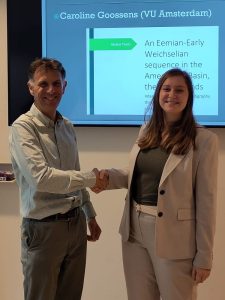
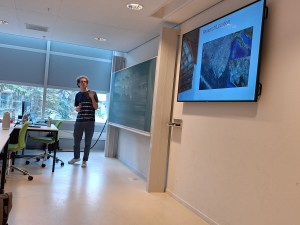
On Friday 24 May 2024 the Palynologische Kring (Dutch palynological society) held a seminar series and laboratory workshop at the Institute for Biodiversity & Ecosystem Dynamics (University of Amsterdam). During the afternoon we had the annual meeting of the society, the presentation of our MSc Thesis prize, four seminars and two laboratory demonstrations. The MSc thesis prize “Florschütz Award” was won by Caroline Goossens (VU Amsterdam) for her thesis entitle: “An Eemian-Early Weichselian sequence in the Amersfoort Basin, the Netherlands”; the project was supervised by Natalie Van der Putten, Cees Kasse and Jeroen Schokker. We hope that Caroline will present her thesis at a future Palynologishe Kring meeting.
Teye Aukes presenting on the diatoms of ancient Rome
The talk series was kicked off by Nina Witteveen (University of Amsterdam) who presented part of her PhD thesis (currently awaiting defense), entitled: “Long-term forest recovery in Amazonia insights from phytolith analysis”. Nina discussed the impact of past peoples on the vegetation of Suriname based on her work identifying phytoliths in soil samples collected at varying distances from an archaeological site. The second talk was given my Amanda Henry (Leiden University) who demonstrated how the analysis of starch grains extracted from archaeological context can provide insights in to past diets. She used these evidences to suggest that early humans and Neanderthals had a similar diversity of plants in their diets. The third talk was given by University of Amsterdam MSc researcher Teye Aukes and focused upon his identification of diatoms from an swampy lagoon environment near Ostia (Italy). He drew conclusions from these data about the antiquity of salt production in ancient Rome. The final talk was given online by Welmoed Out (Moesgaard Museum) who presented a detailed analysis of inter- and intra-analyst variability in phytolith morphometric analysis.
After the seminars we moved upstairs to the microscope laboratory where Nina Witteveen and Ana Smuk (University of Groningen) showed off phytoliths from their study site in South America and the Netherlands.
Some of the Palynologische Kring members enjoying some refreshment after the event.
de Weger, L.A., Verbeek, C., Markey, E., O’Connor, D.J. & Gosling, W.D. (2024) Greater difference between airborne and flower pollen chemistry, than between pollen collected across a pollution gradient in the Netherlands. Science of The Total Environment 172963. DOI: 10.1016/j.scitotenv.2024.172963
The SASQUA congress will kick off next week (19-24 May 2024) in Cango Valley (South Africa). Sessions cover many aspects of Quaternary science and range from archaeology through palaeoclimate to geological topics. The full program is now available to download.
Quick, L.J & Asithandile, N. (2024) Proceedings of the XXIV Biennial Congress of the Southern African Society for Quaternary Research (SASQUA), Cango Valley, South Africa, 19-24 May 2024. DOI: 10.5281/zenodo.11125697
To find out more about the meeting and other SASQUA activities you can also visit the organizations web pages: https://sasqua.co.za/















 Ecology of the past