I am pleased to announce two new vacancies within the Department of Ecosystem & Landscape Dynamics at the University of Amsterdam. These position are part of a recruitment drive across the Institute for Biodiversity & Ecosystem Dynamics triggered by new funding from the Dutch government (Earth & Environmental Science Sector Plan). Both positions will be at the Assistant Professor level (either Tenure Track, or directly tenured following a period of probation; dependent upon the experience of the successful candidate). For full detail, and how to apply, check out the below links:
These positions are designed to compliment, and strengthen, existing expertise within the department in biogeochemistry, Earth surface science, landscape ecology and palaeoecology. We are looking for scientists who are engaged with laboratory, field and/or modelling focused research, have a proven track record of publishing, and are looking for a base to build their own research group. We are looking for enthusiastic and innovative educators keen to lead and develop practical and field based courses and projects for students in our BSc Future Planet Studies and MSc Earth Sciences degree programs.
If you have any question please do not hesitate to get in contact with me directly: William D. Gosling
If you are interested to join IBED but feel you do not fit to one of these position check out our other vacancies at by clicking here.
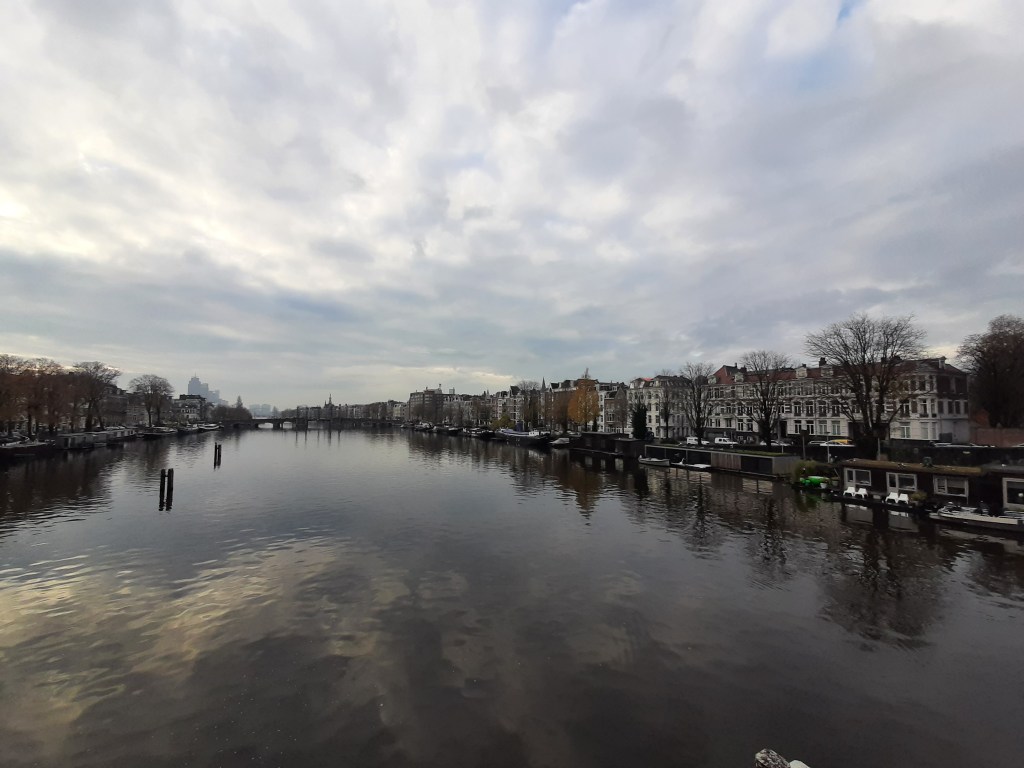
Yesterday I picked up my Professorial Toga from Togamakerij Rhebergen on the Amsteldijk in Amsterdam. For me it was quite a moment as this item symbolizes so much work over so many years, and is thanks to the help, support and training of so many people. I am looking forward to my Oratie (inaugural lecture) on the 22 December and celebrating further with friends and family. I hope that you will agree that the hard work was worth it to have the privilege to wear this gown, and personal thanks to Helen Sahin of Togamakerij Rhebergen for making such a beautiful item of clothing for me!
McMichael, C.N.H., Vink, V., Heijink, B.M., Witteveen, N.H., Piperno, D.R., Gosling, W.D. & Bush, M.B. (2022) Ecological legacies of past fire and human activity in a Panamanian forest. Plants, People, Planet. DOI: 10.1002/ppp3.10344
I am pleased to announce that the eighth online Mapping Ancient Africa seminar will take place on 15 December 2022 (17:00-18:00 CET)
Speaker: Chantal Kabonyi (University of Bukavu) Title: Les trois derniers millénaires d’histoire environnementale autour du lac Kivu: De la dorsale congolaise à la dorsale congo-Nil [The last three millennia of environmental history around Lake Kivu: From the Congolese ridge to the Congo-Nile ridge]
NOTE: This will be a duel language presentation with the presentation given in French and slides containing English text.
The seminar will be delivered via Zoom. The link for the seminar can be obtained from the MAA Slack channel or by contacting the chair of this seminar Manu Chevalier. If you want to know more about the Mapping Ancient Africa project visit our web pages and please do not hesitate to get in contact if you want to get involved.
The University of Amsterdam “Environments Through Time” course is currently underway. This cross-disciplinary course is part of the MSc Biological Sciences program and also attracts many students from the MSc Earth Sciences. During the course students gain an understanding of the importance of having a long-term (centennial to millennial) context to understanding environmental problems, and how datasets can be generated that are relevant to these timescales. To gain an understanding of uncertainty in reconstructing past environmental change students conduct a re-analysis of previously published datasets (such as those archived in Neotoma) and assess if the findings of those papers was robust. To do this students develop skills in data mining, Bayesian probability modelling, multi-variate statistical analysis, and change-point analysis. At the end of the course students have gained experience in the critical evaluation of the scientific literature, transferable numerical skills, and a greater appreciation of Earth history and past environmental change.
Crystal McMichael making statistics fun with the Environments Through Time class of 2022!
The 2022 edition of the Environments Through Time course is taught by:
If you would like to learn more about past environmental change and its relevance to ongoing societal, climatic and ecological change sign up for the MSc Biological Sciences or MSc Earth Sciences and take this course. If this course sparks further your interest in exploring past environmental change then further opportunities exist to take on masters projects in this field with our team.
Chevalier, M. (2022) crestr: an R package to perform probabilistic climate reconstructions from palaeoecological datasets. Climate of the Past18, 821-844. DOI: 10.5194/cp-18-821-2022
I am delighted to announce that the inaugural lecture for my becoming Professor of Palaeoecology & Biogeography will take place at the Aula (Lutherse kerk) of the University of Amsterdam on the 22 December 2022 (16:30). If you would like to attend this event please let me know (via email) before 1 December 2022 so that an appropriate level of catering can be organized.
For further details visit the university web site here.
For my contact details visit my university web page here.
Wei, C., Jardine, P.E., Gosling, W.D. & Hoorn, C. (2023) Is Poaceae pollen size a useful proxy in palaeoecological studies? New insights from a Poaceae pollen morphological study in the Amazon. Review of Palaeobotany and Palynology 308, 104790. DOI: 10.1016/j.revpalbo.2022.104790
I am pleased to announce that the seventh online Mapping Ancient Africa seminar will take place on 10 November 2022 (17:00-18:00 CET – please note change of clocks from summer time)
Related publication: Chevalier, M. (2022) crestr: an R package to perform probabilistic climate reconstructions from palaeoecological datasets. Climate of the Past18, 821-844. DOI: 10.5194/cp-18-821-2022
The seminar will be delivered via Zoom. The link for the seminar can be obtained from the MAA Slack channel or by contacting the chair of this seminar William Gosling. If you want to know more about the Mapping Ancient Africa project visit our web pages and please do not hesitate to get in contact if you want to get involved.









 Ecology of the past