Human modification of the landscape in the Andes (Peru)
Whilst working on intergrating palaeoecological and archaeological data for a recent publication (Gosling & Williams, 2013) I was struck by the range of sources I had to go to to obtain data from the two different disciplines. The paper focuses on the how societies in the high Andes have developed over the last 5000 years and the role, if any, that changes in natural resource (ecosystem service) avaliability might have played in pacing any societal changes. However, when I got the first set of review comments back I was left considering my (academic) resource base, how I accessed this, and how that influenced my ability to conduct research; especially when moving slightly outside the area of my specialism.
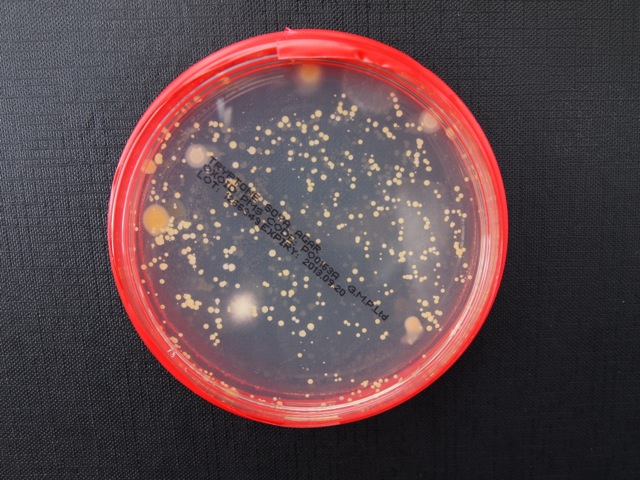
Will’s BES T-shirt logo swabbed at Greenman; for more microbes on festival kit visit the “Hall of shame” on http://www.besfest.org
August was a month for travel with PCRG members heading for Peru (Bryan, and he is still there), Greenman festival (William), INTECOL conference (William and Frazer), and the Royal Geographic Society annual meeting (William, Encarni, Frazer and Hayley). Detailed reports of the UK based travels are already on the blog, and hopefully we will get a post from Bryan on his Peruvian adventure once he is back.
Back in Milton Keynes work progressed with:
Hayley producing a revised full draft of her pollen counting methodology manuscript,
Frazer starting with the first tentative attempts to apply his chironomid training data set to fossil chironomid records,
Phil trialing inverted microscopes and training on the FTIR,
Encarni plotting field work in Ecuador (more travel for November-December),
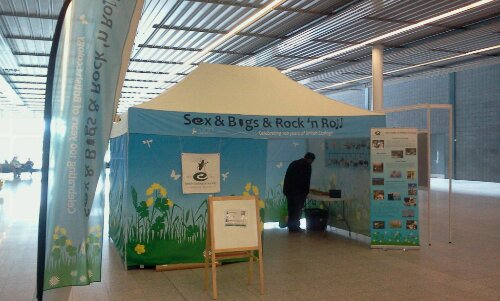
Sex & Bugs & Rock n Roll at INTECOL: The BES sponsored tour of music festivals (http://www.besfest.org) landed at INTECOL. David Price from Science made Simple (http://www.sciencemadesimple.co.uk/) arrived on the Wednesday day afternoon to show what can be achived with professional science busking.
As a palaeoecologist when I came back to the UK from my post doc in Florida I started to get involved with the British Ecological Society (BES) so I could meet neoecologists. Eight years later I am still involved in the society and delighted that the theme of the society’s centenary celebration meeting focuses on change through time: Into the next 100 years. With 11 plenary lectures, dozens of parallel session, hundreds of posters and other activities including Pecha Kucha talks, workshops, field trips and trade stalls I will restrict my post to my thinking about the theme of timescales and the broader messages I got from the meeting.
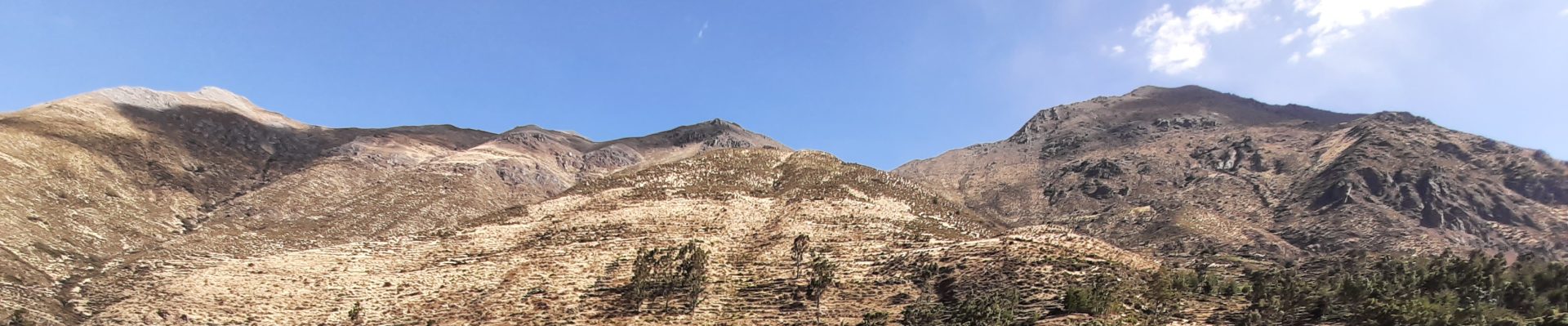
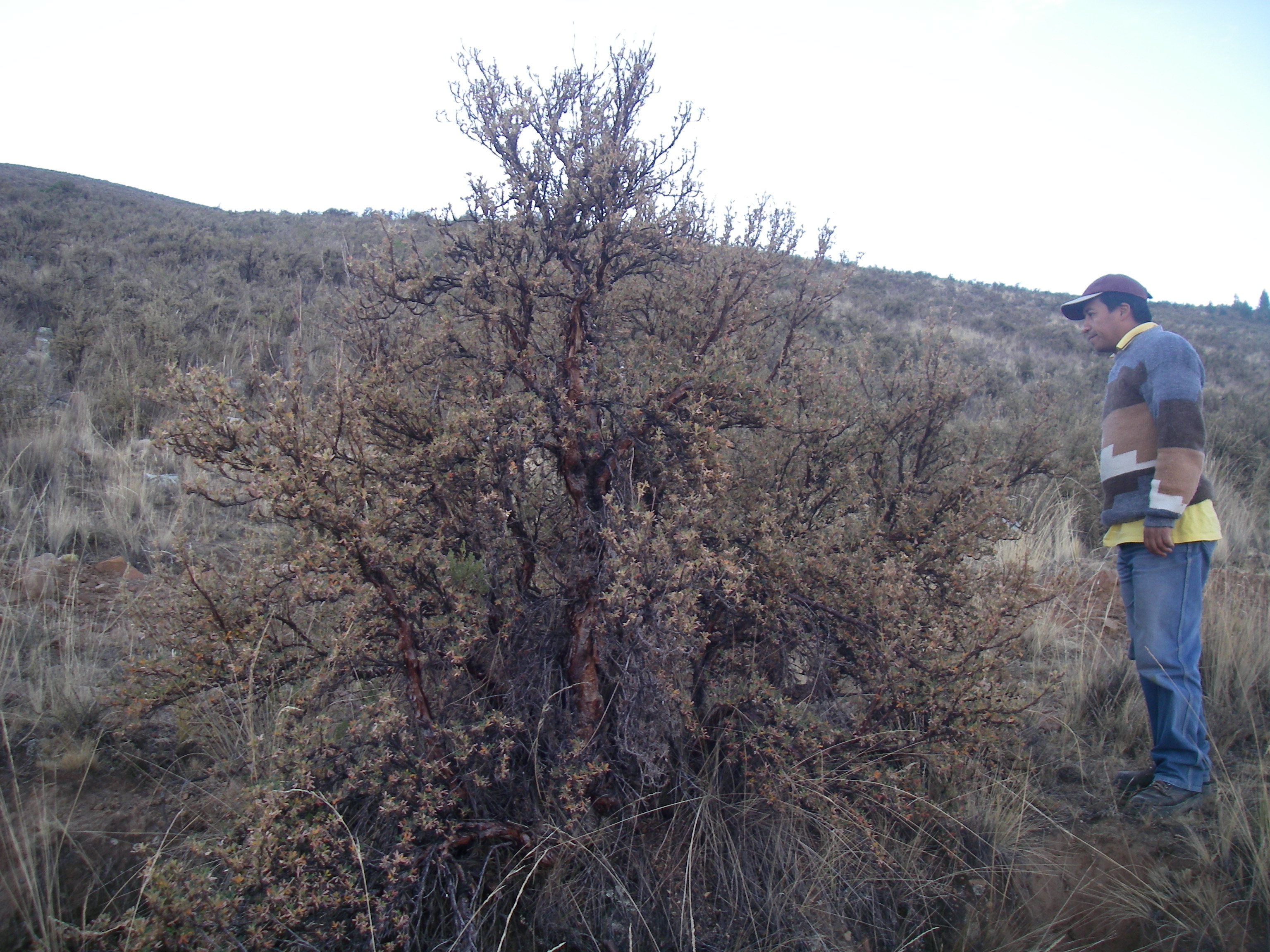
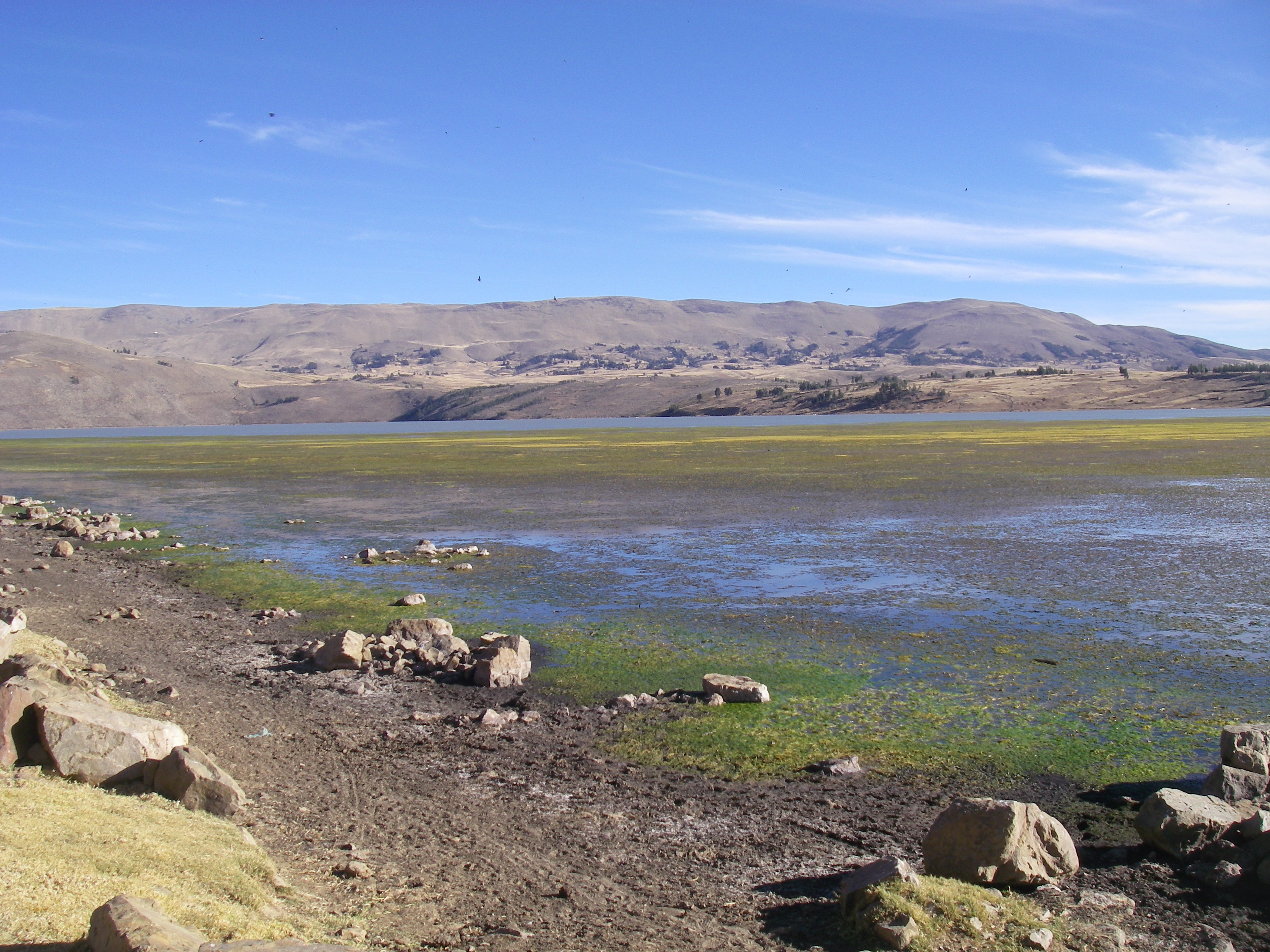
Woodland resources in the high Andes have varied through the last 5000 years and influenced human societal development. The relationship between people and natural resources in the Andes is explored in the recently published Gosling & Williams (2013); http://dx.doi.org/doi:10.1177/0959683613496296
In July we have managed to get a number of individual blog posts out so teaching activity on summer school, publications and conference reports have already been covered. Behind the scenes progress in the lab has continued despite the hot weather:
Frazer has commenced writing of his Chironomid training data set paper, and analysis of a fossil chironomid record.
Hayley has been plugging away at the analysis of pollen from Mera, and has got the first of her wood macrofossil samples prepared for thin sectioning (fingers crossed next month we may start to get some identifications on these!).
Lottie, Natalie and Bryan are keeping their supervisors very busy with reading material as they continue a pace with writing up.
Phil is setting up the Bosumtwi pollen chemistry project (we now have an offical grant code!) and is settling in; hopefully he should be moved down to MK very soon!
And Encarni is multi tasking and organising everything as usual 🙂
Face-to-face teaching of practical skills in field geology is one of the most interesting and rewarding aspects of being a lecturer at The Open University. Over the last few days I have been lucky enough to participate in the running of the Sedimentary Rocks & Fossils in the Field topic within our second level Practical Science module (SXG288). This is one of two opportunities that students taking this module get to head into field, examine rocks, develop observational skills and test scientifc hypotheses; the other field based topic is Igneous & Metamorphic Rocks in theField.
Sedimentary Rocks & Fossils is based from Longridge Towers School in Northumberland (whilst the regular students are away). Longridge provides the ideal base for this topic because of its close proximity to some world class sedimentary rock and fossil exposures. Over an intensive three day field experience students examine sedimentary deposits from the Silurian and Carboniferous exposed mainly along the Northumberland coast; however, this is not a simple guide to the geology of the region. The topic is founded on the principle of problem based learning and at each field location students are expected to make observations, record them accurately and interpret the past environment. Findings are consolidated and dicussed during evening lab sessions.
On the rocks at Scremerston
This year we were delighted to welcome >40 students, some of who flew in from abroad, to study this topic over two sessions. Given the positive feeback recieved so far I think all enjoyed the topic and gained important geological field skills (for evidence of this also see photos below). I wish them all luck in their future studies and hope that they continue to be interested in Earth Science and progress towards our Natural Science degree qualification.
For further photos see below, follow #SXG288 on twitter, or visit the SXG288 Facebook page.
Earlier this month Rachel Gwynn (Geography, UCL) visited the PCRG to use our core splitter to reveal what was contained within two cores collected from the Carribean. She has also been kind enough to provide photos of the sediments and an insight into the story so far:
Sediments from Fresh Water Pond Barbuda (Photograph Rachel Gwynn)
Lake sediment cores covering the past few hundred to thousand years have been taken from two lakes, Wallywash Great Pond in Jamaica and Freshwater Pond in Barbuda. The sediments form part of the NERC-funded project Neotropics1k (PI Prof. Jonathan Holmes), which is concerned with climate variability in the northern Neotropics over the past millennium. The sediment cores show marked changes in composition and colour, from pale marl to dark organic mud. These colour changes, which are clearly visible in the photographs, represent changes in sediment composition that are in turn related to lake-level variations caused by long-term climate shifts. Deeper, open-water conditions under wetter climate are represented by the marls, whereas lowered lake levels, caused by direr climate, are associated with organic-rich sediments.
Wallywash Great Pond– core section W2
Thirteen separate units have been identified through the 1 m core length, varying between light coloured marl, dark organic and shelly sediments.
The abundance of preserved Ostracod valves increases throughout the marl and shell rich layers but drops significantly in the organic rich material.
Barbuda Freshwater Pond- core section FWP
This core has four distinct units. 0-23 cm is a calcareous mud with a diffused lower boundary into a shelly calcareous mud at 25-35.5 cm. 35.5-38 cm and 38-52 cm is two variations of calcareous mud.
These units, as with the W2 core, have been defined using a Munsel Soil Chart.
The Ostracod valves are thought to be abundant throughout the core due to the high marl content.
Wallywash Great Pond Jamaica (photograph Rachel Gwynn)
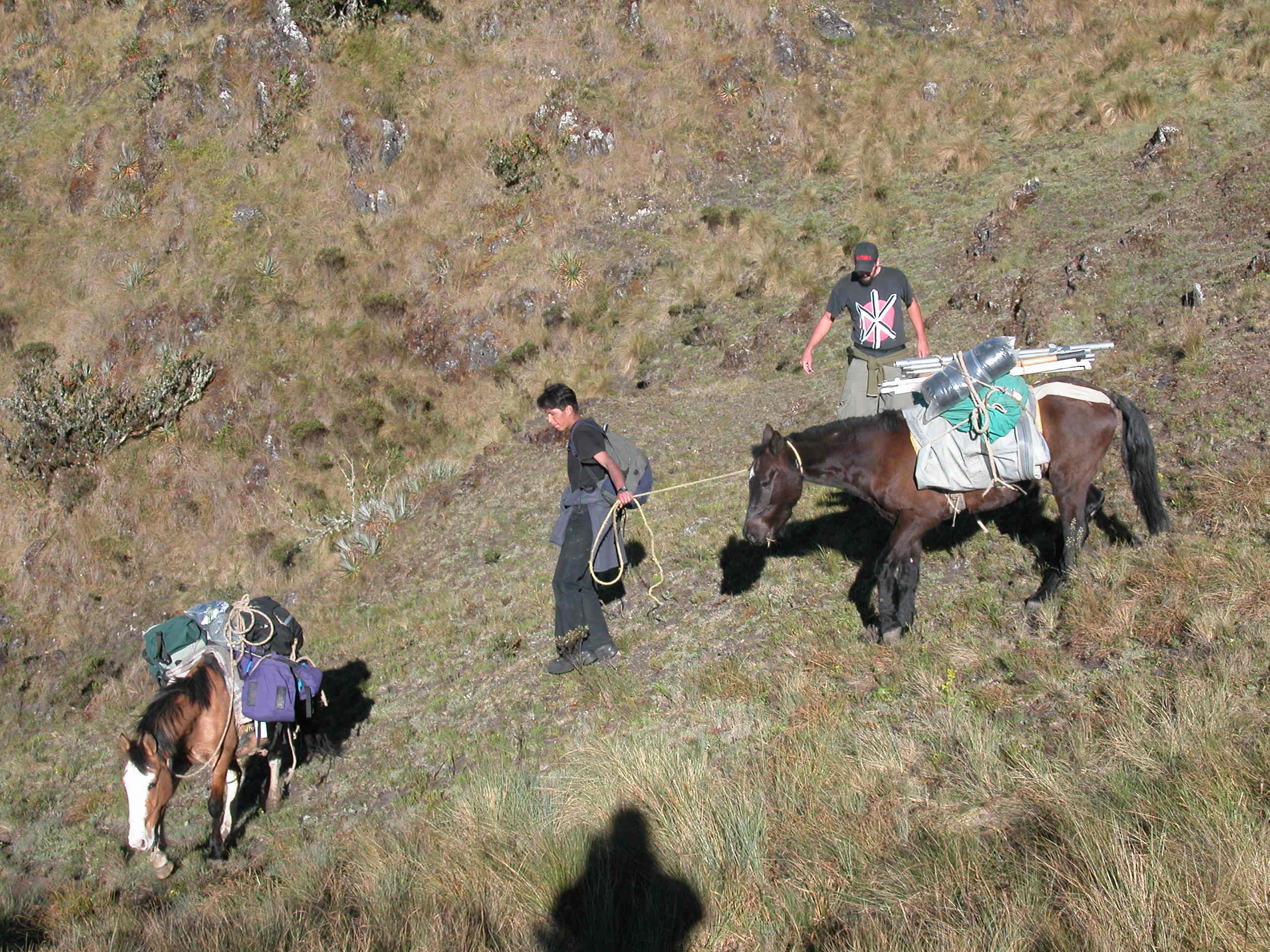
Trecking with sediment corer in the high Andes of Peru
When it comes to collecting sediments from lakes its all about having the right tools for the job. Working in remote areas of the tropics we tend to favour the Colinvaux-Vohnout corer; supplied by Vince Vohnout at Geo-core). The advantages of this system are:
its light-weight nature (can be backpacked or donkeyed into field sites), and
the cam system (which allows hammering to penetrate tough sediments).
Eric Martinez carrying an Avon Redstart back out from Laguna Khomer Kotcha (Williams et al., 2011a)
With the right platform (two banana boats and an A-frame) we have manged to retrive c. 20 m of sediment from 20 m of water (c. 40 m of drill rod extended); Lake Pacucha, Peru (Hillyer et al., 2009). More typically we use two Avon Redstart inflatables and a platform following the design of Colinvaux et al. (1999).
More regular type activities have also continued. Hayley is working on the protocol for thin sectioning wood here. Frazer is picking midges and becoming increasingly media savey. While Bryan, Lottie and Natalie are all writing theses!
Alex Barret (left) and Will Gosling (right) looking at a bucket of mud
Recently PCRG members helped Alex Barrett out extracting mud from a lake so that he had some sediments to play with for his freeze/thaw experiments. I return Alex has written us a short post on his PhD research project.
Metre scale Sorted patterned ground on Tindastóll, Northern Iceland. This circle is approximately 1.5 m across and consists of a fine domain made up of silt and gravel sized particles, surrounded by a coarse domain consisting of cobble to boulder sized material. It is part of a larger net which extends across large regions of the hilltop.
I am researching possible occurrences of sorted patterned ground on the Northern Plains of Mars. I am conducting experiments to try to simulate freeze thaw sorting in the lab, under both terrestrial and martian conditions. This requires the use of fine grained silts as these are known to be frost susceptible. Experiments will be conducted to see whether lenses of coherent ice can be formed in this soil, initially under earth like conditions, but later at much colder temperatures, using salts of the sort known to occur on mars to depress the freezing point. If ice lenses can be formed at temperatures entirely below 0oC then it would provide another strand of evidence that martian features with similar morphology to terrestrial periglacial sites could have formed though the same processes.






 Ecology of the past