Alfred Houngnon was awarded an INQUA Fellowship in 2024 to develop his work on past environmental change in the Dahomey Gap (western Africa). Through the project Alfred is making a series of videos about his fellowship journey. In the first video Alfred introduced his project and collaborators (click here to watch the first part). In the two latest instalments (below) Alfred explains: (i) one of his key methodological approaches (modern pollen trapping), and (ii) the modern vegetation of the region and current threats to the vegetation.
We invite you to join us on an incredible journey through the heart of Ecuador, where a group of adventurous students from Florida Institute of Technology embarked on a life-changing experience as part of the Neotropical Archaeoecology summer field course. Buckle up as we delve into the marvels of nature, indigenous cultures, and unforgettable experiences. Let’s dive right in!
Unveiling the Andes
Our adventure began with a breath-taking visit to the Paramo at Cayambe-Coca National Park. Paramos are high altitude (3000-4000 metres) wet grasslands above the tree line and below the snow line within the equatorial Andes. Our tour guides Patricio and Byron gave us information about the local vegetation, focusing on the Polylepis tree (locally known as “paper tree”), which is unique to this sort of habitat. They also told us about some of the fascinating wildlife that can be seen here, such as the Andean Bear (Tremarctos ornatus) and the Andean Puma (Puma concolor).
We then descended through the cloud forest (3,600–3,400 meters) and lower montane rainforest (3,400–2,500 meters). Across these various habitats, we documented changes in hummingbird abundance and recorded their behaviour at four different feeder points: Guango Lodge, La Brisa, San Isidro Lodge, and Cascada el Hollin. The sheer diversity of hummingbird species left us in awe, and we marvelled at their iridescent feathers and incredible agility.
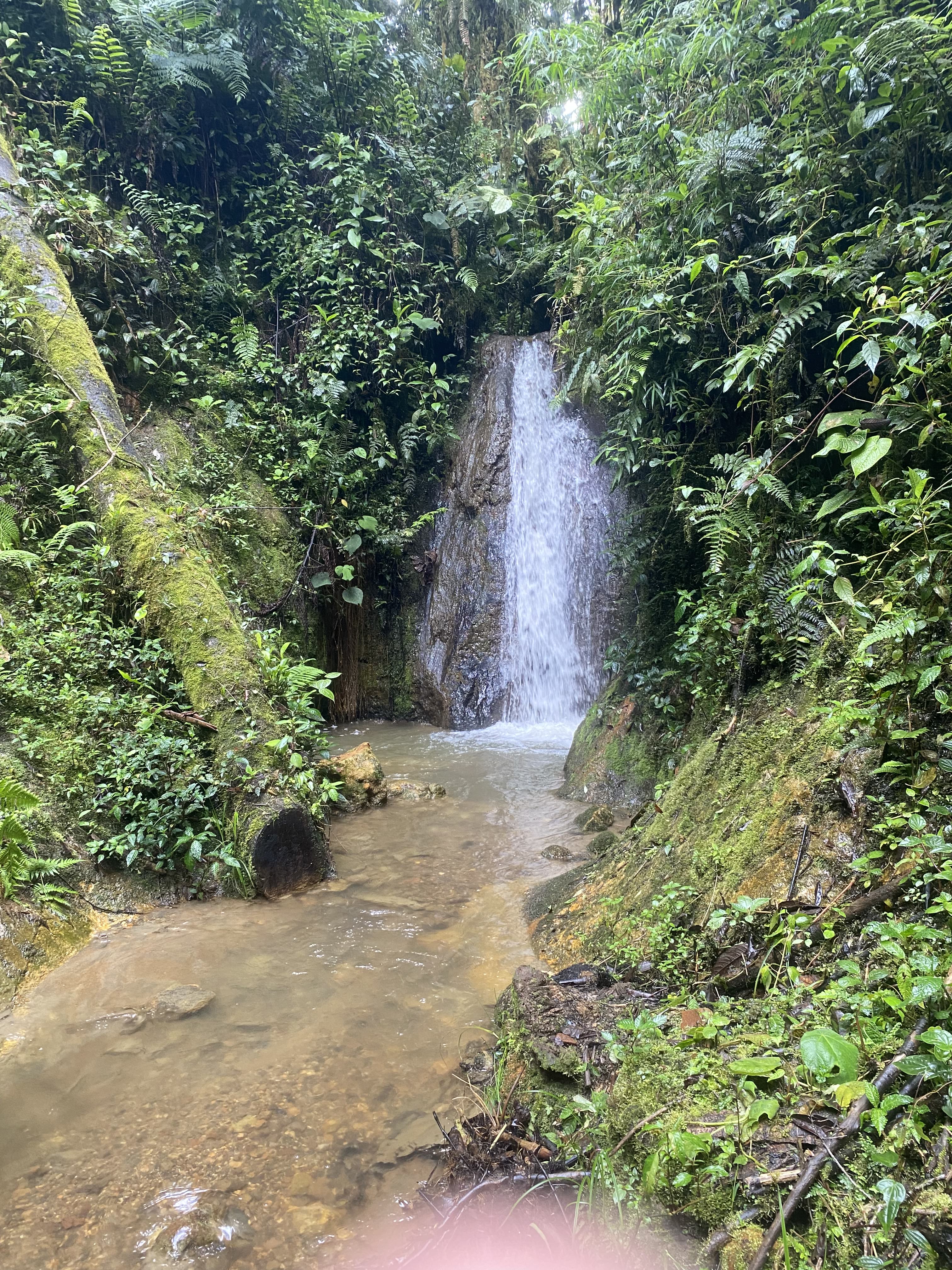
We explored a waterfall near San Isidro Lodge (https://cabanasanisidro.com), and we were able to observe pre-Inca pottery. At the lodge we also saw a diverse array of bird species, which was delightful! The forest’s nightlife brought us close encounters with a group of nocturnal monkeys, and to our surprise, we stumbled upon a very rare mountain tapir. The following morning we saw a small agouti (a small rodent) prowling around the lodge, and ended our adventures in the cloud forest on a high note.
San Isidro waterfall and some of the animal diversity we observed
On Tuesday 16 May 2023 a small team of researchers from the Institute for Biodiversity & Ecosystem Dynamics (University of Amsterdam) visited the Maashorst (Netherlands) to visited an area “re-wilded” with European Bison (Bison bonasus). In addition to the bison the area is also now home to Tauros and Exmoor Ponies The purpose of the trip was to collect soil surface samples to examine for dung fungal spores. Certain fungi grow only on the dung of herbivores and the spores of these fungi can be preserved in the sedimentary record (for more information see Lee et al., 2022). Analysis of dung fungal spore diversity through the sedimentary record can therefore provide insights into the changes in the amount of dung (animals) in the landscape in the past. The purpose of this sampling effort was to see if we can quantify how many, and what type, of spores are representative of this group of bison. This information will help us to be able to interpret ancient records of fungal spores in more detail.
Special thanks to Maurice van Doorn (Gemeente Maashorst) for showing us around.
Bison statueTauros on the moveStudents collecting dataBison enjoying the sun
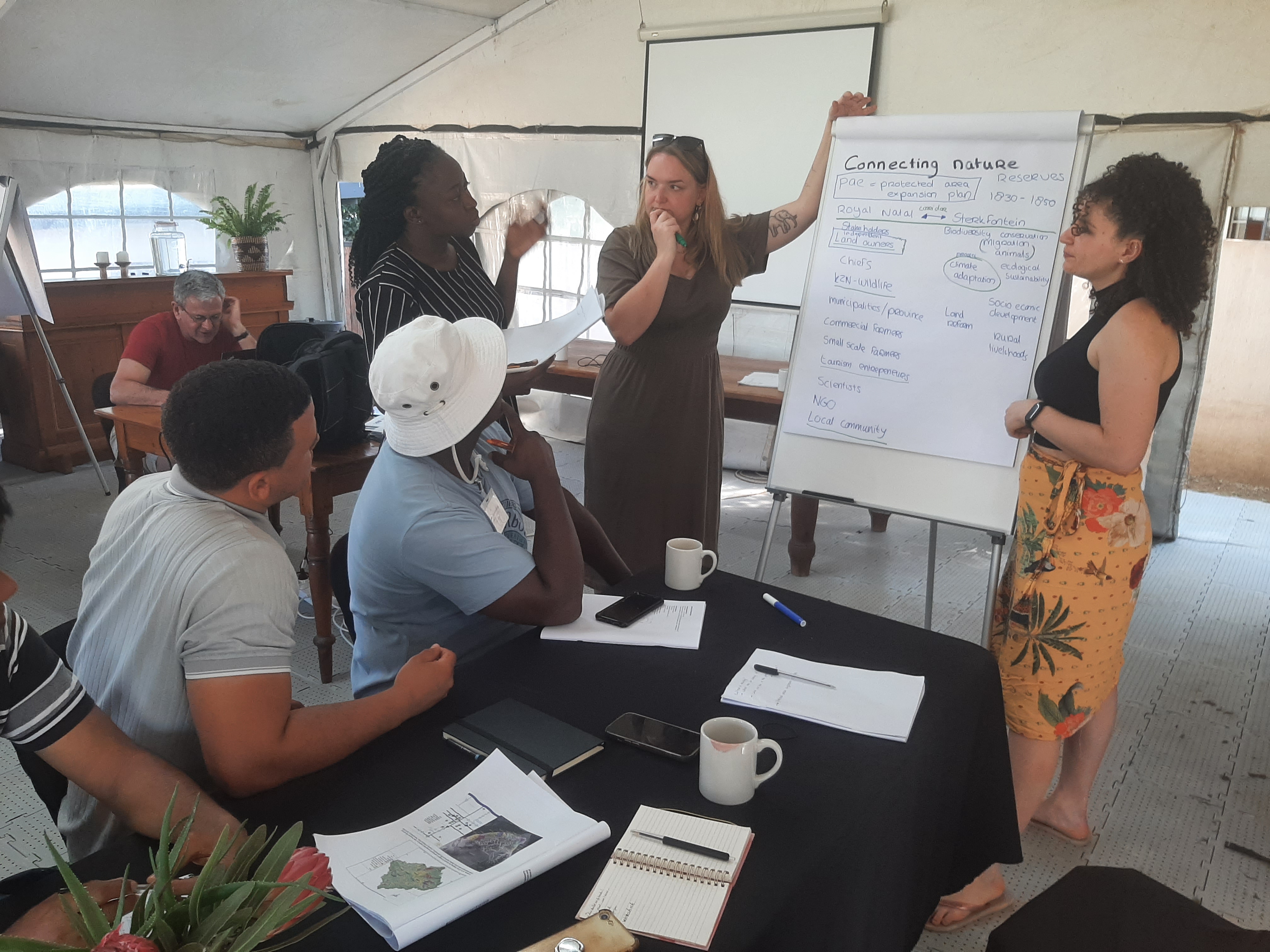
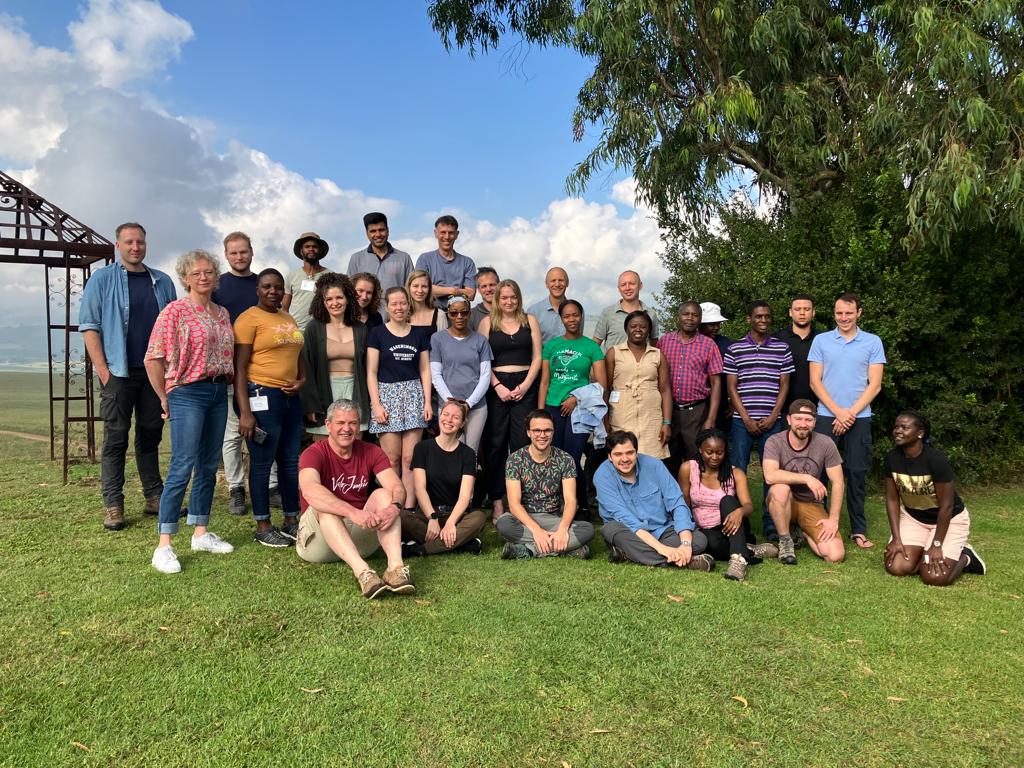
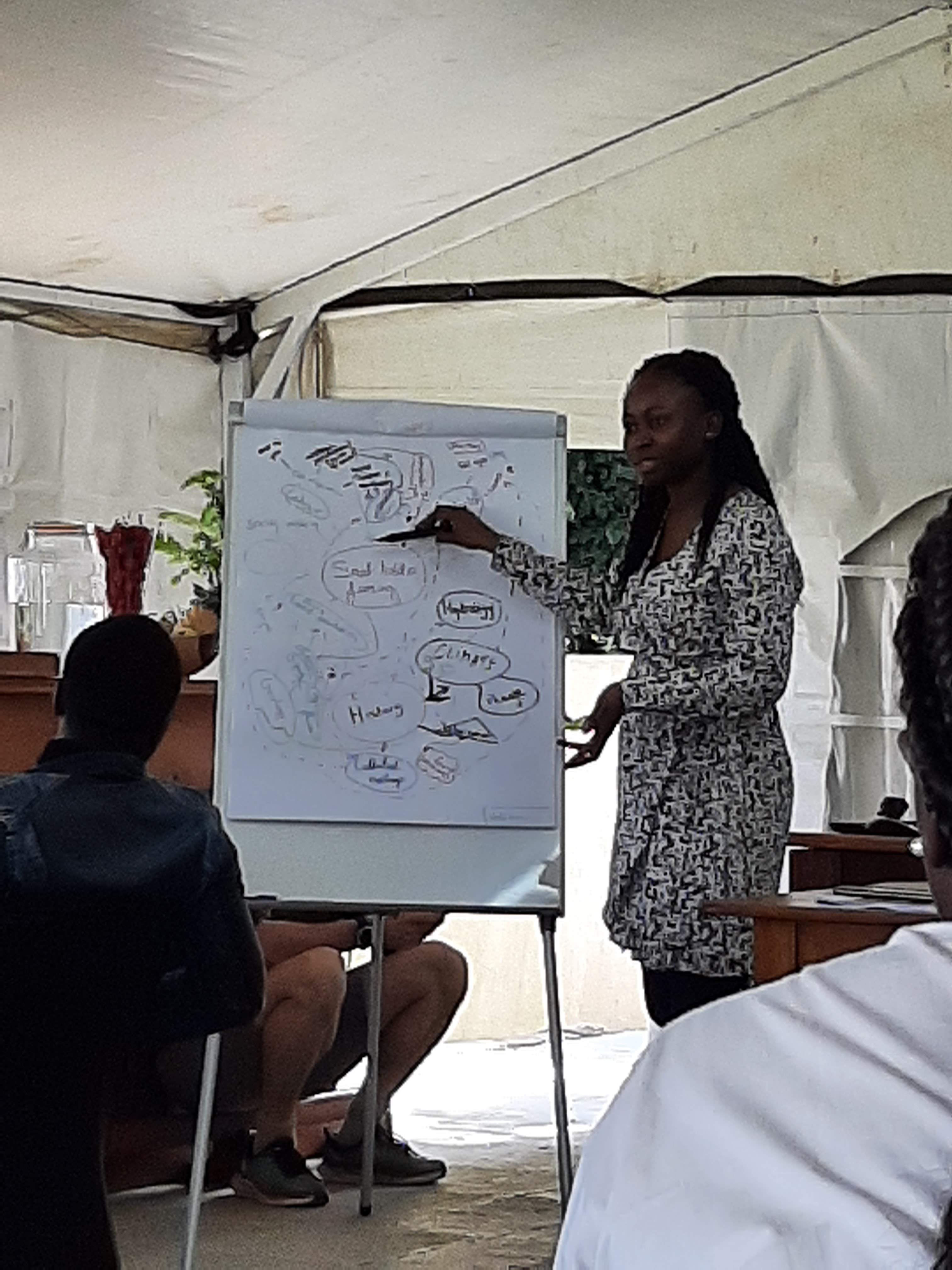
The course “Landscape Dynamics in an era of change: Learning from the past to face the future” took place in the Drakensberg Mountains of South Africa between 5 and 15 March 2023. The course was run by the Graduate School for Production Ecology and Resource Conservation (PERC) and participants were drawn from universities in the Netherlands and South Africa. The main goal of the course was to investigate the past and current dynamics of the region and predict possible futures in an inter- / trans-disciplinary context. Consequently the content of the course was incredibly diverse including: geology, geomorphology, palaeoecology, cultural history, vegetation studies, soil science, farming systems and forestry. These topics were integrated into four group projects centered on invasive species, rewilding, commercial farming and small scale farming.
Week 1 (last week) we got everyone up to speed with the fundamentals of palaeoecology (including: key principles, depositional environments, dating methods) and laboratory skills (pollen, phytolith and macrofossil identification). This week (week 2) we are out and about (coring sediments, surveying vegetation and visiting the archaeology department). By the end of the week the students will (should!?) have generated sufficient data in the laboratory and field to be able to identify the location from which their mini-project “mystery slides” were taken. Next week (week 3) will be number crunching to generate the statistical support for their ideas and inferences.
Students collecting sediments using a Russian corer at Langenboom (September, 2022). These samples were recovered in collaboration with the BosGroep Zuid Nederland as part of an ongoing project to gain new insights into the nature of the past landscape in the Netherlands and aid conservation efforts.
The University of Amsterdam MSc Earth Sciences “Geoecological Systems” field course to Peru took place this year during June and July (2022). A team of 18 students and 4 staff spent four weeks in Miraflores Town (c. 3700 m above sea level) working with, and for, local communities to study geomorphology, geology, land-use, water quality and carbon storage. The students were organized into teams of 3 or 4 each of which tackled a research question in the nearby landscapes that had been developed in conjunction with the local community. Access to the area and embedding within the community was enabled by The Mountain Institute Peru. The student reports will be translated into Spanish who will communicate findings to the community in Miraflores Town.
Want to join us on a future expedition? Check out our degree program here to enroll.
University of Amsterdam MSc Earth Sciences field course to Peru 2022Continue Reading
New sediment coring videos from Lynne Quick and her team at Nelson Mandela University. Find out more about their work on Twitter (@The_Palaeolab) and on their Palaeoecology Lab web pages.
Nelson Mandela University’s Palaeoecology Research Group: Sediment coring fieldwork campaign to the Zuurberg Mountains, Eastern Cape, September 2021. Enjoy…
Luckily, in spite of these trying times, we are allowed to continue our research in Amsterdam and on the Veluwe to determine the effects of air pollution on airborne pollen grains. Unfortunately for us (but generally perhaps one of the few silver linings of this situation), the COVID-19 lockdown has largely eliminated our main variable of interest; air pollution.
With traffic in the city at a minimum, any chemical differences might not be as pronounced between the city and rural areas. However, this may actually provide us with a unique opportunity to get a baseline of the pollen chemistry in Amsterdam with relatively little pollution. This baseline may also be of interest to projects working on urban air quality and greenifying urban spaces, such as the projects in the Amsterdam Knowledge Mile Park, which is included amongst our sampling locations.
This slideshow requires JavaScript.
For more about our project on pollen and pollution in the Netherlands see other posts:
In the coming weeks lots of pollen can be collected. Due to the nice, sunny weather birch trees are in full flower and release their pollen into the air. This is of course not so good news for the individuals sensitized to the pollen of birch because they can suffer from hay fever symptoms.
Next to birch also the ash trees are flowering. The black buds of the ash branches have bursted, releasing the purple anthers (first figure). Among those anthers you can see some that release their yellow pollen (second figure).
For more about our project on pollen and pollution in the Netherlands see other posts:
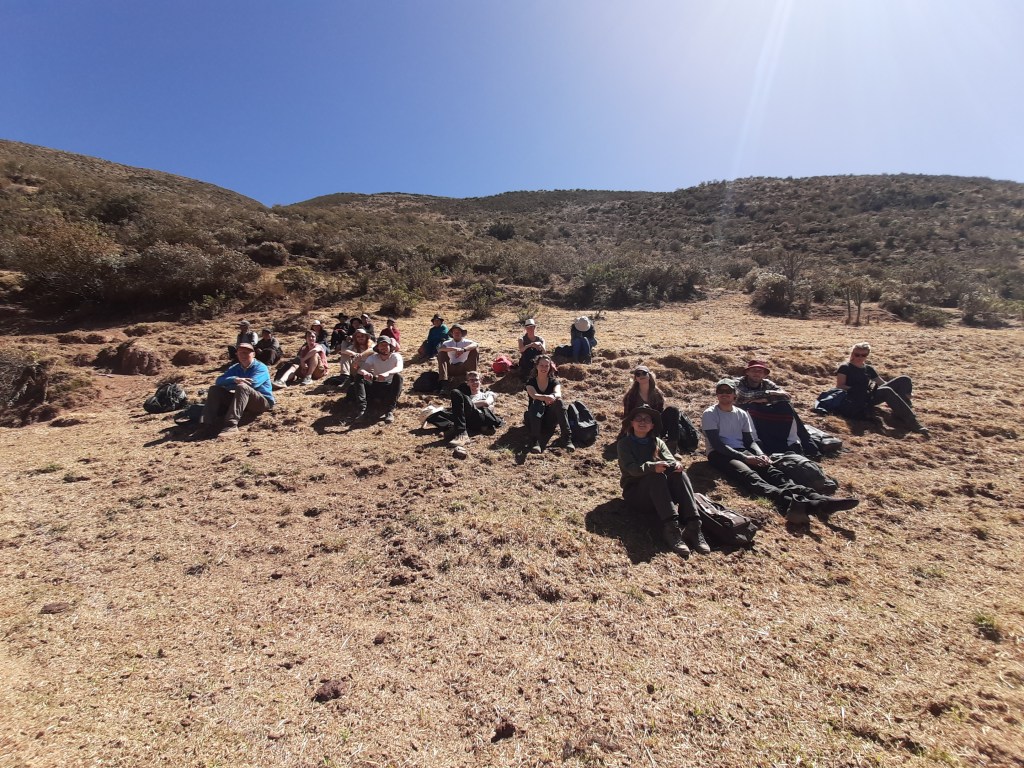
The three part guest blog posts “Can you go back?” by Prof. Mark Bush (Florida Institute of Technology) contained images collated by Mark over his career, here they are all together for you to enjoy.















 Ecology of the past