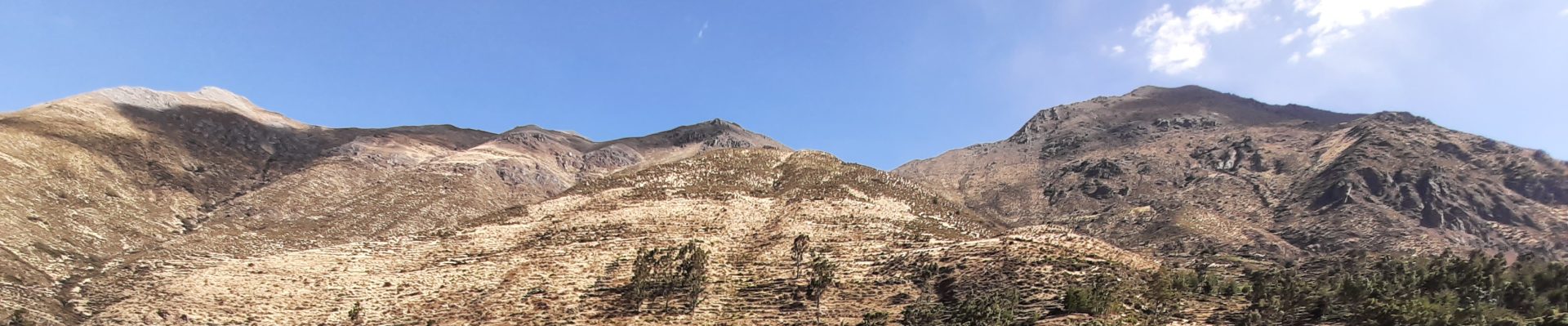
Montoya PhD thesis 2011

May 8, 2014
encarnimontoya

Montoya, E. (2011) Paleocology of the southern Gran Sabana (SE Venezuela) since the Late Glacial to the present. PhD Thesis, Department of Animal Biology, Plant Biology and Ecology, Unitersitat Autonoma de Barcelona.
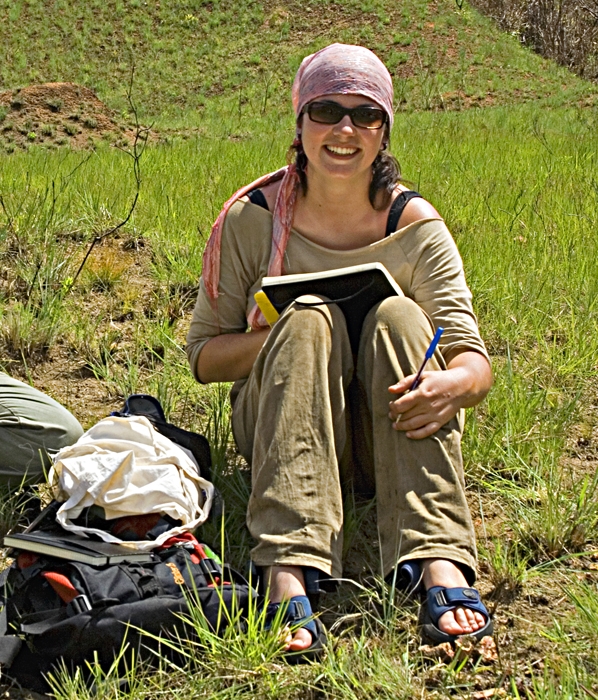
Encarni_07

EM Venezuela (2007)

Abstract:

This thesis is aimed to study the paleoecology of the southern Gran Sabana region (GS; SE Venezuela) since the Late Glacial to the present. This region is characterized nowadays by the occurrence of large extent of savannas in a climate suitable for rainforests. For this purpose, three sequences (two from peat bogs and one from lake sediments) have been analyzed for pollen and spores, non-pollen palynomorphs (NPP), and microscopic charcoal particles. Among the sequences analyzed, two of them are located currently within treeless savannas (Lakes Chonita and Encantada); whereas the third one is placed in the boundary between GS savannas and Amazon forests (El Paují). The Late Glacial interval of Lake Chonita was characterized by a shrubland that was replaced by a treeless savanna at the end of Younger Dryas (YD) and the onset of the Holocene, linked to the occurrence of regional fires since ca. 12.4 cal kyr BP. The beginning of local fires was dated synchronous with the vegetation replacement, ca. 11.7 cal kyr BP. A similar shrubland, though not identical, is located nowadays around 200 m elevation above the lake, so the replacement by surrounding savannas was interpreted as a probably upward displacement of the former vegetation and an increase in average temperatures of approximately 0.7 ‐1.5ºC. This section represents the oldest interval analyzed for GS so far, and the presence of fires during the Late Pleistocene is among the oldest fire records documented for northern South America. The peat bog records of Lake Encantada and El Paují showed the main vegetation trends of the last 8 cal kyr BP, which were characterized by the continuous occurrence of regional fires. In Lake Encantada, the presence of treeless savannas was reported during the whole interval analyzed as the dominant vegetation type, despite variations in forest abundance and composition taxa of the community also occurred. The vegetation changes in this record were interpreted as mainly due to climatic shifts until the Late Holocene. At El Paují, the occurrence of forests and savanna/forest mosaics was reported during the same interval, and fire was postulated to have been the major driver of the vegetation shifts. In this sequence, a treeless savanna was not recorded as the dominant vegetation of the landscape until the last millennia, and the presence of two different indigenous cultures was postulated as responsible of the shifts in fire regime registered, with an interval of human land abandonment between them. This interval was characterized by the cessation of fires, and the establishment of a secondary dry forest. The Late Holocene was characterized, in the three sequences studied, by a sudden increase of fires, which likely favored the expansion of savannas and the establishment of the present GS landscape.

The join interpretation of the records presented in this thesis, together with previous analyses in the region, highlighted some key aspects for understanding the main trends of GS landscape and vegetation, e.g., the appearance and establishment of morichales (Mauritia palm stands typical of current southern GS landscapes) has been restricted to the last two millennia, synchronous with the increase in fire incidence. Moreover, it has been possible to gather empirical evidence for testing some previous hypothesis regarding GS. For example, the proposal of an extended aridity prior the Holocene has been rejected, whereas the hypothesis about the postglacial expansion of morichales has been supported. In this sense, with all the available information to date, some suggestions have been proposed: (i) Climate and fire have been the major forcing factors operating in the GS; (ii) During the Late Glacial and the beginning of the Early Holocene, the landscape of southern GS was likely formed by a mosaic of forests, shrubs, and savannas, without the current supremacy of the last vegetation type, which only established during the last 2 cal kyr BP onwards; (iii) Some general climatic trends have been inferred for the study area, as for example an increase in average temperatures around the Late Glacial/Early Holocene transition, a dry interval from 8 to 5 cal kyr BP, and a wetter phase during the Mid-Holocene centered around 4 cal kyr BP; (iv) The establishment of Mauritia in the region has been likely driven by a synergism between biogeographical, climatic and anthropogenic factors, as well as the likely pyrophilous nature of this palm given its synchronous appearance with the increase of fires; (v) The settlement of the modern indigenous culture (Pemón) occurred at least since around ca. 2000 cal yr BP onwards, 1500 yr earlier than previously thought, but previous human presence in the region has been also documented; and (vi) The fire activity observed in the long-term has caused a huge impact on GS landscape.

Supervisor: Dr Valenti Rull (Botanic Institute of Barcelona); Tutor: Dr Iñigo G. de la Cerda (Universitat Autonoma de Barcelona)

Examined by: Prof. Jose S. Carrion (Univesity of Murcia), Dr Toby Pennington (Royal Botanic Garden of Ediburgh), Prof. Francisco LLoret (Autonomous University of Barcelona), Dr Fred Stauffer, (Conservatoire et Jardin botaniques Ville de Geneve), and Dr Walter Finsinger (CNRS).

To access to this thesis PF file from the library service of the Autonomous University of Barcelona, please click here.

Continue Reading

An interview with Wes Fraser

May 6, 2014
philjardine

Our next video to be uploaded to the ‘Ecology of the past’ Youtube channel is a short interview with Wes Fraser, Co-Investigator on the Bosumtwi project and developer of the pollen chemistry ultraviolet-B proxy. Wes talks about his role on the project, his background, and what excites him most about this current research. Similar ‘talking heads’ style interviews will follow over the coming weeks for each of the key researchers on the project.

For more videos check out the “Ecology of the past” YouTube channel.

BES Tropical Ecology Meeting

April 23, 2014
WDG

The 7th Early Career Research meeting 2014

The University of York, August 14th and 15th 2014

Tropical ecosystems – from process to policy

SIG_TropEcol_final-300x214Keynote speakers:

After six successful meetings, the legendary BES-TEG Early Career Research Meeting returns. Day one will focus on Ecology and Ecosystem Processes, while day two will focus on Practical Applications and links to Policy such as conservation, livelihood, policy and development.

All early-career researchers, both PhD and Post-Docs, are welcome to present their tropical ecology related research with a poster and/or oral presentation. There shall be a competition for both with prizes. This event will take place at Derwent College (D/L//047) and the accommodation at Alcuin College (see map link below).

Continue Reading

Highlights of articles members of the group read recently.

Newspaper articles:

The natural historian faces extinction: Overspecialism and funding cuts could end a vital scientific tradition, claim experts by Joe Kavanagh in The Independent

Fires could turn Amazon rainforest into a desert as human activity and climate change threaten ‘lungs of the world’, says study by Steve Connor in The Independent.

Linked to this article:

Scientific papers:

Giesecke, T., Ammann, B. and Brande, A. (2014) Palynological richness and evenness: insights from the taxa accumulation curve. Vegetation history and archaeobotany. 32, 217 – 228.

SUMMARY (Hayley): “A new method is presented on splitting the log – transformed taxa accumulation curve into sections (natural breaks where the curve deviates from a linear trend), with the hypothesis that breaks in the curve could indicate shifts in abundance between high (e.g. wind pollinated taxa) and low producers of pollen (e.g. insect pollinated taxa), this hypothesis is tested on pollen diagrams from three separate pollen diagrams from varying landscapes.”

Katifori, E., Alben, S., Cerda, E., Nelson, D.R. & Dumais, J. (2010) Foldable structures and the natural design of pollen grains. Proceedings of the National Academy of Sciences of the United States of America, 107, 7635-7639.

SUMMARY (Adele): “This elegant paper highlights the changeability of pollen grains and their responses to their environment, giving those of us who identify pollen based on morphological characteristics plenty to think about.”

Gosling PhD thesis 2004

April 10, 2014
WDG

Gosling, W.D. (2004) Characterisation of Amazonian forest and savannah ecosystems by their modern pollen spectra.  PhD Thesis, Department of Geography, University of Leicester.

PhD-wdg

WDG Bolivia (2002)

Abstract:

Controversy surrounds the Quaternary palaeoenvironmental history of Amazonia. It is unclear whether moist evergreen forest, savannah or seasonally dry forest dominated the Amazon basin at the last glacial maximum (c. 21,000 years B.P.). In part the uncertainty surrounding the palaeoenvironmental history of Amazonia stems from a poor understanding of the ecological significance of the fossil pollen records from the region. In order to improve interpretations of the fossil pollen record it is essential to better understand the nature of the pollen rain produced by modern ecosystems.

In this thesis, three Neotropical ecosystems equivalent to those alluded to above were characterised by their modern pollen rain. This was achieved by examining samples collected in artificial pollen traps located within permanent (50 x 200 m) vegetation plots in the Noel Kempff Mercado National Park area, Bolivia. In each plot 10 traps were sampled for one field season (September 1998 to September 1999, or September 2000 to September 2001) and 5 traps were sampled from two additional field seasons (between 1998 and 2001). Pollen counts of at least 100 grains were made for each trap. In total 318 pollen taxa were distinguished, of which 116 were identified. The characteristic pollen from each of the three ecosystems were determined through a series of steps: spatial and temporal variations were explored using Spearman’s Rank correlations, the distinctive taxa of each ecosystem were identified using Principal Components Analyses (PCA), and the representativity of the pollen for each ecosystem was examined by comparing pollen and vegetation abundances. These analyses revealed a small number of taxa that can be used to characterize these ecosystems. Further PCA showed that it is possible to differentiate between the ecosystems by assessing the relative proportions of Didymopanax, Alchornea, Anadenanthera, Melastomataceae/Combretaceae, Moraceae/Urticaceae, Myrtaceae, Palmae, Pteropsidia (trilete), Poaceae and Solanum. These findings mean that it is now possible to detect these ecosystems in the fossil pollen record and consequently further information regarding the nature of the vegetation change in the Amazon basin can be gained.

Supervisors: Dr. Francis Mayle (University of Leicester, now at University of Reading) and Dr. Nicholas Tate (University of Leicester)

Examined by: Prof. Henry Lamb (University of Aberystwyth) and Prof. Andrew Millington (University of Leicester, now at Texas A & M), April 2004.

To borrow a copy from University of Leicester Library (item ID 7507349613), or download directly: Volume 1, Volume 2, and CD, or via the University of Leicester FigShare.

Continue Reading

Macroecology workshop

April 9, 2014
encarnimontoya

Phil Jardine taking charge at the macro-ecology meeting

Phil Jardine taking charge at the macro-ecology meeting

On 1st April, Alice, Encarni, Hayley and Nick attended the joint British Ecological Society Macroecology Special Interest Group and Palaeontological Association workshop held in the Natural History Museum, called Challenges in Macroecology – Scaling the Time Barrier. The workshop was co-organised by our member Phil Jardine (jointly with Victoria Herridge, Adriana de Palma and Isabel Fenton), and it was a mix between deep and shallow time, neoecologists and other researchers interested in any kind of macroecology topics.

We enjoyed so much how this one-day meeting was scheduled, with some formal approach including four plenary and lighting talks, and other informal initiatives such as speed dating and discussion groups. This way, all participants could interact with other non-directly related researchers.

The focuses of the plenary talks were related to different fields within macroecology. In this sense:

  1. Andy Purvis opened the session with the definition of macroecology, the trends and shifts of study topics it has carried out since the discipline began and ended with what macroecology is not any longer.
  2. David Jablonski explored through examples of bivalves studies how climate in time and space affects the studies of diversity dynamics, mainly addressed to three key questions: a) Extinctions, b) Latitudinal Diversity Gradients, and c) Geographical ranges.
  3. Lee Hsiang Liow encouraged us to evaluate both processes and observations, and highlighted the importance of modelling both to take into account the “unobservable” or latent truth including examples of capture-recapture and occupancy methods.
  4. Kathy Willis gave a review of the trends followed for conservation strategies since 1980s, until the development of the “ecosystems services” idea of given an economic value to biodiversity. Her main statement was focused on how palaeo-data can help in providing information to some “knowledge gaps” related to human resources including: a) trends in biomass, b) trends in nutrient cycling, c) trends in in final ecosystems services, and d) sustainability of ecosystems services.

Lighting talks were related to more specific study cases of macroecology, including specific researches about turtles, fungi, beetles, crocodiles, foraminifera or dinosaurs, in several spatial and temporal scales .

We would like to thank again Phil, Victoria, Adriana and Isabel for the great day that finished with a nice and warm wine reception sponsored by BMC Ecology. We hope to attend further events like this soon.

For more on this meeting see blog post by @protohedgehog “Macroecology – scaling the time barrier”  and storify of the twitter feed, click here.

The geology of mankind

April 8, 2014
adelecmj

Adele Julier on:

Malm, A. & Hornborg, A. (2014) The geology of mankind? A critique of the Anthropocene narrative. The Anthropocene Review, 1, 62-69.

Malm and Hornborg’s paper ‘The geology of mankind? A critique of the Anthropocene narrative’ raises some important points about the terminology of climate science and how this not only affects perceptions of who or what is to blame, but also of what can be done to address  it and by who. The main thrust of their argument is that the use of the term Anthropocene distances people from the effects of man-made climate change through the argument that human nature inescapably led to large CO2 emissions and therefore the havoc being wreaked upon ecosystems is essentially inevitable. They go on to discuss that this ignores the fact that a tiny percentage of humanity actually set into motion the huge changes which we are only now beginning to address, that humanity as a whole at no point decided to take this path and that the use of the term Anthropocene is actually counter-productive, in that it removes the onus of solving environmental problems from the small group of humans that actually caused them, instead spreading it out so thinly that it loses its power.

The argument that Anthropocene is perhaps not the best term to use for the present situation is persuasive, but the idea that it apportions blame too widely does not take into consideration the fact that developing countries are now largely following in the footsteps of developed countries in terms of both habitat destruction and carbon emissions. Although all of humanity may not have started global change, the practices initiated by the few are now being endlessly replicated. The reasons behind this are economic; currently, and largely in the short term, it pays countries and large corporations to continue unsustainable practices. They ignore pressure to change if it undermines economic growth or affects profit margins, not because they do not think they are part of the problem. Academics could choose to call this the ‘Anthropocene’ the ‘OnePercentocene’ or the ‘ThisIsYourFault,Sir,Yes,YouInTheGreySuit,StopPlayingWithYour PhoneAndListen-ocene’, but it will not make the slightest difference until these basic problems are addressed.

Tropical pollen database online

April 7, 2014
WDG

PollenTo facilitate the our ability to identify pollen in the fossil record we have been building a searchable digital tropical pollen database. Our work builds upon the architecture provided by Bush & Weng (2007) for their Neotropical pollen database (Palaeoecology labFlorida Institute of Technology). We have used Bush & Weng’s freeware tool and expanded it to include an additional 364 pollen and spore types from tropical Africa. The images are of pollen reference material collected over the career of Prof. Dan Livingstone and curated in the Department of BiologyDuke University; full collection details of each specimen are indicated on each individual electronic record. In conjunction with the open access publication “Atlas of the tropical West African pollen flora” (Gosling et al., 2013) we have made the entire updated pollen database available. We hope that this will prove to be a useful tool for palynologists working in Africa and the wider tropics and that it will encourage others to develop the database further.

Continue Reading

Blog at WordPress.com.