Hugo de Vries prize 2025

December 16, 2025
WDG

The annual PhD thesis prize from the Koninklijk Nederlandse Botanische Vereniging (Royal Dutch Botanical Association) is now open. The prize of EURO 5000 will be awarded to the best PhD thesis defended between January and December 2025 at a Dutch university. The subject matter of the thesis is broadly defined within the field of botany, and includs topics such as taxonomy, (palaeo- / macro-) ecology, and cell biology.

For details of past winners, and how to nominate someone for this years prize visit:
https://www.knbv.eu/hugo-de-vries-prijs/

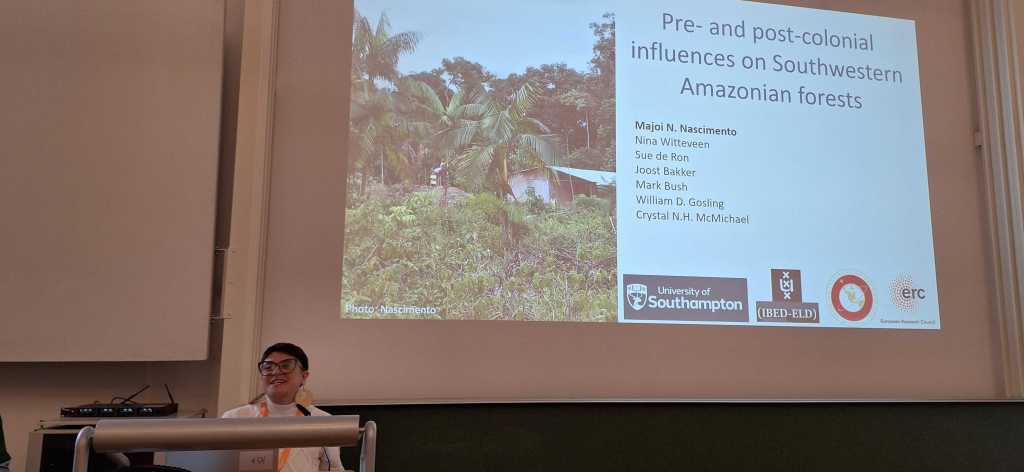
The winner of the prize last year was one of our blog contributors, Nina Witteveen, read about her thesis and award here.

Hugo de Vries Prijs 2024

December 2, 2024
WDG

The annual PhD thesis prize from the Koninklijk Nederlandse Botanische Vereniging (Royal Dutch Botanical Association) is now open. The prize of EURO 5000 will be awarded to the best PhD thesis defended between January and December 2024 at a Dutch university. The subject matter of the thesis is broadly defined within the field of botany, and includs topics such as taxonomy, (palaeo- / macro-) ecology, and cell biology.

For details of past winners, and how to nominate someone for this years prize visit:
https://www.knbv.eu/hugo-de-vries-prijs/

Highland forest dynamics across equatorial East Africa during the end ofthe African humid period

November 6, 2024
WDG

MAPPING ANCIENT AFRICA QUATERNARY INTERNATIONAL SPECIAL ISSUE ARTICLE #2

Ivory, S.J., MacDougal, E., Mason, A., Pereboom, E., Garelick, S., Ficken, K., Wooller, M.J., Nakileza, B. & Russell, J. (2024) Highland forest dynamics across equatorial East Africa during the end of the African humid period. Quaternary International. DOI: 10.1016/j.quaint.2024.10.007

European Conference of Tropical Ecology: Call for abstracts open

October 10, 2024
WDG

ABSTRACT DEADLINE: 23 October 2024. Click here to submit your abstract NOW.

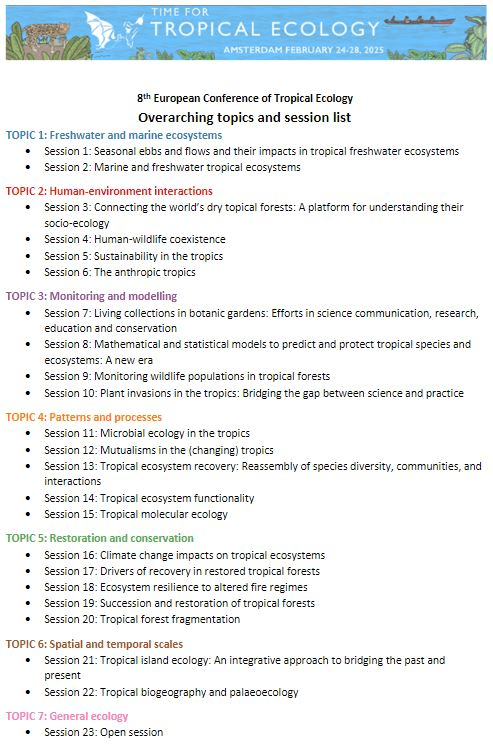
The European Conference of Tropical Ecology will take place in Amsterdam between 24 and 28 February 2025. The event will be centered around thematic oral and poster sessions. There are twenty-three different thematic sessions organized into seven broad topics:

  • Freshwater and marine ecosystems
  • Human-environment interactions
  • Monitoring and modelling
  • Patterns and processes
  • Restoration and conservation
  • Spatial and temporal scales
  • General ecology

For full details on the thematic sessions click here to download our Thematic Session booklet.

Or click here to explore the conference webpages:

Click here to submit your abstract NOW.

Quantifying local-scale changes in Amazonian forest cover using phytoliths

March 1, 2024
WDG

Open access:

Witteveen, N.H., Blaus, A., Raczka, M.F., Herrick, C., Palace, M., Nascimento, M.N., Van Loon, E.E., Gosing, W.D., Bush, M.B. & McMichael, C.N.H. (2024) Quantifying local-scale changes in Amazonian forest cover using phytoliths. Frontiers of Biogeography. DOI: 10.21425/F5FBG62254

“Plant Ecology & Diversity” & Biogeography

July 6, 2023
WDG

Plant Ecology & Diversity

A recent open letter to Wiley from Associate Editors working for the Journal of Biogeography posted by Lucie Zinger and others highlighted a dispute between the editors and the publishers in relation to: (i) the proposed switch of the journal to a pure open access model, (ii) financial barriers to publication, (iii) the proposed increase in throughput of manuscripts to maximise profits, and (iv) the manuscript referral process (see @LucieZinger, read tweet here, dated 28 June 2023). This got me thinking about these issues in relation to the journal that I am most involved with editing which also published papers related to biogeography; Plant Ecology & Diversity.

Plant Ecology & Diversity is the journal of the Botanical Society of Scotland. It is published in association with Taylor & Francis and any profits are split between the publishers and the academic society. To promote diversity and inclusion among authors the journal has a policy of double blind peer review (and has done for many years). Further, there are no publication fees for authors to publish in this journal, however, this does mean that published papers are behind a pay wall. An “Open Access” option is available to all authors for a fee (hybrid model), although the invited “Grubb Reviews” series is automatically published Open Access. Subject Editors and Associate Editors “work” for the journal gratis (for free) and the love of furthering the field.

If you have manuscripts related to biogeography, and prefer this mode of publishing, then please consider the fit of your paper to Plant Ecology & Diversity and send them our way. Or indeed if you have manuscripts related to one of our other key themes:

  • evolution and systematics,
  • global change and vegetation dynamics,
  • environment and plant functioning, and
  • biotic interactions.

The journal accepts original research articles (c. 7000 words), rapid communications (c. 2500 words), review articles (c. 12,000 words), and perspectives (c. 2500 words). Other options for publishing are of course also available 🙂

The Ecology of the Past: Inagueral lecture

January 12, 2023
WDG

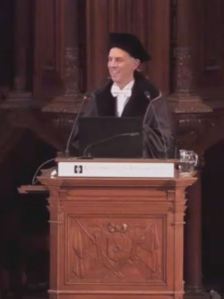
William Gosling giving his oratie “The Ecology of the Past” at the Aula (University of Amsterdam), 22 December 2022.

On the 22 December I gave my oratie (inaugural lecture), entitled “The Ecology of the Past”, related to my appointment as Professor of Palaeoecology & Biogeography at the University of Amsterdam. I really enjoyed the opportunity to mark this personal milestone with some many colleagues, friends and family. In case you missed the event you can watch it online via the universities portal by clicking here (or on the photo).

Note: (1) to flip between seeing the slides and the video feed just click on the screen, (2) running time of lecture until 50 minutes.

Reference

Gosling, W.D. (2022) The Ecology of the Past
Inaugural speech, University of Amsterdam.

University of Amsterdam Toga!

December 1, 2022
WDG

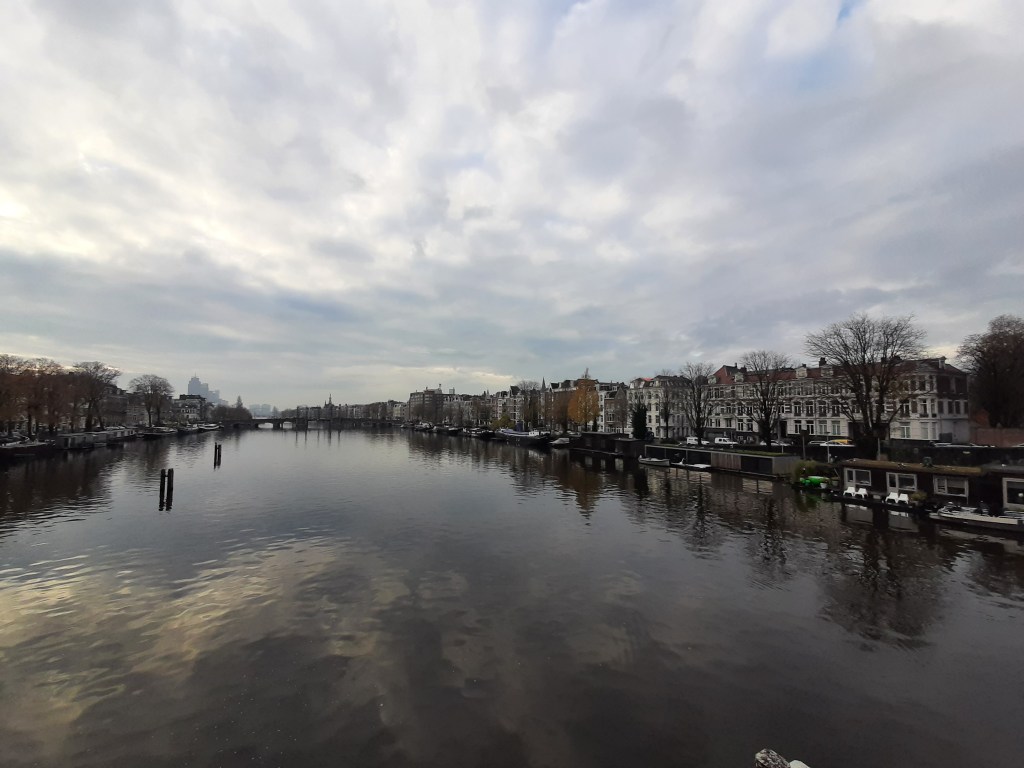
Yesterday I picked up my Professorial Toga from Togamakerij Rhebergen on the Amsteldijk in Amsterdam. For me it was quite a moment as this item symbolizes so much work over so many years, and is thanks to the help, support and training of so many people. I am looking forward to my Oratie (inaugural lecture) on the 22 December and celebrating further with friends and family. I hope that you will agree that the hard work was worth it to have the privilege to wear this gown, and personal thanks to Helen Sahin of Togamakerij Rhebergen for making such a beautiful item of clothing for me!

Inaugural lecture: The ecology of the past

November 9, 2022
WDG

William D. Gosling ©KIRSTENVANSANTEN

I am delighted to announce that the inaugural lecture for my becoming Professor of Palaeoecology & Biogeography will take place at the Aula (Lutherse kerk) of the University of Amsterdam on the 22 December 2022 (16:30). If you would like to attend this event please let me know (via email) before 1 December 2022 so that an appropriate level of catering can be organized.

For further details visit the university web site here.

For my contact details visit my university web page here.

Job: PhD Caribbean Palaeoecology

September 9, 2022
WDG

The Palaeoecology Research Group within the Department of Archaeology at the Max Planck Institute for Geoanthropology, Jena, Germany is pleased to announce a new vacancy for a doctoral student exploring human-environment interactions in the Caribbean. The position will be based in Jena, Germany for a period of 3 years with the option for extensions and supervised by Dr. Yoshi Maezumi.

The Palaeoecology Research Group analyses palaeoecological and archaeobotanical proxies from sedimentary archives, including pollen, phytoliths, charcoal and stable isotopes to examine topics including the legacy of human land-use on ecosystems, spatio-temporal patterns of natural and human-driven fire activity, and the influence of natural and human disturbance regimes on the biogeographic distribution of plants and animals in past ecosystems.

Closing date: 30 September 2022

For full details and how to apply click here.

For further information contact Dr. Yoshi Maezumi.

Blog at WordPress.com.