The third Mapping Ancient Africa (MAA) workshop took place in South Africa during March 2026. This workshop was supported by the International Union for Quaternary Research as part of the MAA multi-year project. The aim of this work shop was to provide specialist training in developing research projects and writing of scientific articles. During the workshop each participant developed, and progressed, their own personal work plan. These personal programs allowed the training to be tailored to the participants needs. They included a wide range of challenged ranging from the development of project ideas through to dealing with reviewer comments on manuscripts, and inclusivity, equality and diversity issues.
In addition to the academic program, social activities and excursions were designed to help build academic networks and promote informal discussion of past environmental change issues. These included hikes to the Holley Shelter archaeological site (Bader & Conrad, 2023) and Game Pass shelter rock art site (Hoerle, 2005).
Mapping Ancient Africa Quaternary International special issue article #5
Kiely, R.E., Paine, A.R., McMichael, C.H. & Gosling, W.D. (2025) Heat, hydroclimate and herbivory: A late-Pleistocene record of environmental change from tropical western Africa. Quaternary International 717, 109636. DOI: 10.1016/j.quaint.2024.109636
To find the complete list of articles in the Mapping Ancient Africa special issue of Quaternary International click here.
Mapping Ancient Africa Quaternary International special issue article #4
#openaccess
Boisard, S., Wren, C.D., Timbrell, L. & Burke, A. (2025) Climate frameworks for the Middle Stone Age and Later Stone Age in Northwest Africa. Quaternary International 716, 109593. DOI: 10.1016/j.quaint.2024.109593
To find the complete list of articles in the Mapping Ancient Africa special issue of Quaternary International click here.
INQUA fellow Alfred Hougnon continues his research into past environmental change in the Dahomey Gap (Benin). In the fourth video documenting his progress a short background to the project, and insights into field work, are given. Field work took place near the Ewe-Adakplame forest in the south east of Benin and involved the recovery of sediments using a Russian corer. The video also shows how interactions and engagement with the local community was developed during the research expedition.
To find out more above Alfreds project read posts on:
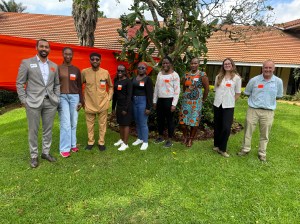
During the Mapping Ancient Africa writing workshop in Kenya (3-6 June 2024) Stefanie Kaboth-Bahr conducted a series of short interviews with the scientists attending. Below you can find part 2 (of 2) of the interviews with the participants in the workshop. Watch the videos to find out their scientific stories and top tips for academic writing. Watch all the Mapping Ancient Africa videos on the Mapping Ancient Africa YouTube Playlist.
The participants (part 2 of 2)
Ruth Kiely (University of Amsterdam, Netherlands)
Husna Mashaka (Arizona State University, USA & National Museums of Kenya, Kenya)
During the Mapping Ancient Africa writing workshop in Kenya (3-6 June 2024) Stefanie Kaboth-Bahr conducted a series of short interviews with the scientists attending. During the interviews she asked the participants and instructors to describe their scientific background, what had motivated them to take part in the writing workshop, and what they thought the most important thing they had gained from it. You can now meet the first four of these scientists now by watching the videos below, or catch up with all the latest videos on the Mapping Ancient Africa YouTube Playlist.
The participants (part 1 of 2)
Olugbenga Boboye (University of Ibadan, Nigeria)
Angela Effiom (University of the Witwatersrand, South Africa)
On the 20 June 2024 the 18th Mapping Ancient Africa (MAA) seminar was delivered by Kumar Akhilesh (Sharma Centre for Heritage Education). This seminar was a little different to most MAA seminars in that it focused on another INQUA project, rather than a specific research line. In the talk Kumar outlined the INQUA funded “PalaeoHome” project and highlighted work on hominin evolution in the Indian sub-continent.
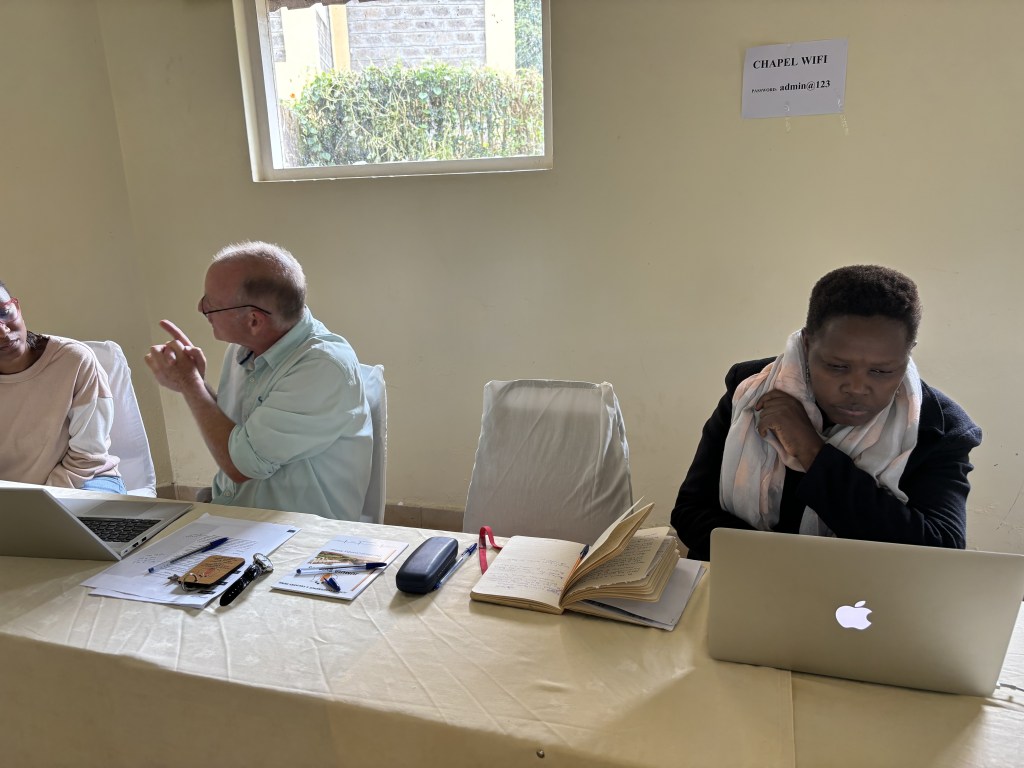
The Mapping Ancient Africa (MAA) writing workshop is currently in full swing in Kenya. Running from 3 June until the 6 June 2024 a diverse range of skills related to academic publishing is being delivered by our international team, including: structuring a scientific article, managing references and revision strategies. There is also plenty of time set aside for writing and getting feedback from more experienced academic writers. The manuscripts being developed at the workshop are being designed to be submitted to the MAA special issue of Quaternary International.







 Ecology of the past