Mapping Ancient Africa: Writing workshop

June 5, 2024
WDG

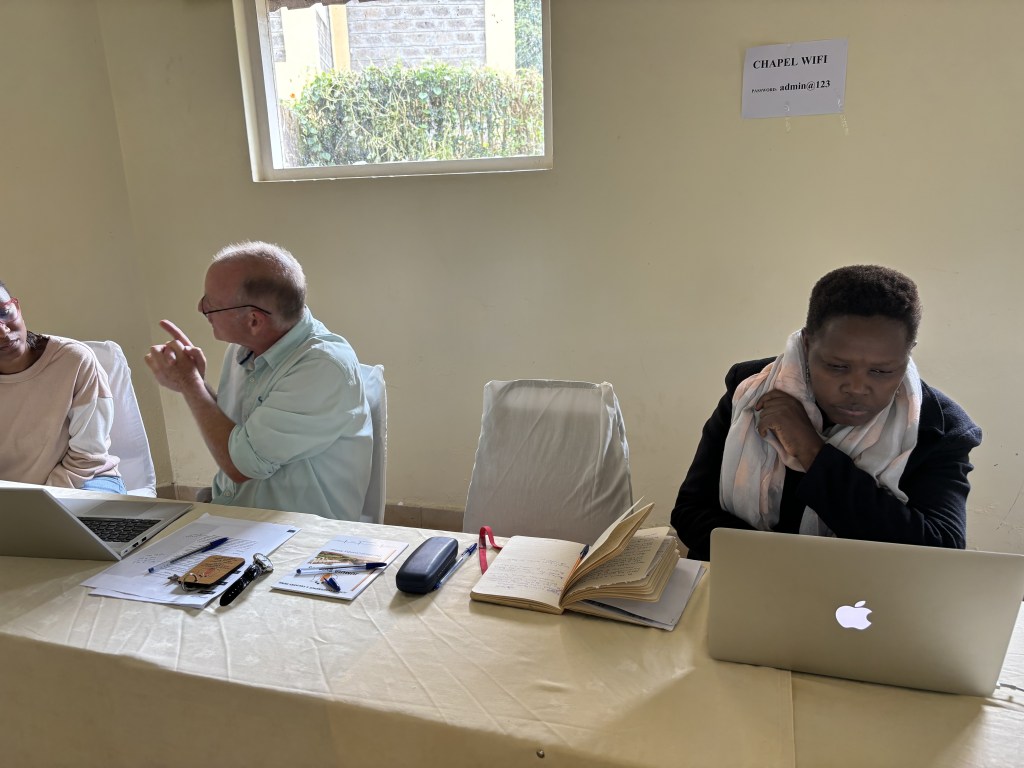
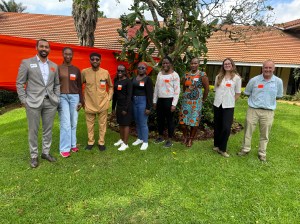
The Mapping Ancient Africa (MAA) writing workshop is currently in full swing in Kenya. Running from 3 June until the 6 June 2024 a diverse range of skills related to academic publishing is being delivered by our international team, including: structuring a scientific article, managing references and revision strategies. There is also plenty of time set aside for writing and getting feedback from more experienced academic writers. The manuscripts being developed at the workshop are being designed to be submitted to the MAA special issue of Quaternary International.

Scientific writing in action:

Continue Reading

Mapping Ancient Africa: Seminar 18

June 4, 2024
WDG

On the 20 June 2024 (17:00-18:00 CEST) the next Mapping Ancient Africa (MAA) online seminar will take place. This talk will introduce a parallel INQUA funded project “PalaeoHome” (@PalaeoHome). It is hoped that there can be complimentary lines of research identified between PalaeoHome and the MAA projects.

  • Speaker:  Kumar Akhilesh1*
  • Co-authors: Prachi Joshi1, Yanni Gunnell2, Anupama K3, Doris Barboni3, Vandana Prasad4, Mohammad Sahnouni5, Sileshi Semaw5, Razika Chelli6

  • Title: PalaeoHome Palaeolithic Hominins and Habitats: Out of Africa to South Asia
  • Abstract: Evidence of enduring preference among hominins for particular geographic places or habitats over long periods is a global phenomenon in the Palaeolithic. Sites such as Attirampakkam (India), have evidence of Early Pleistocene Acheulian occupation contemporary with some sites in East Africa and elsewhere. Ongoing work at Sendrayanpalyam in the vicinity of ATM, suggest more variability than expected in Lower Palaeolithic assemblages in India. Comparative studies between Lower Palaeolithic assemblages and their ecological settings in key areas of both Africa and India as well as along regions of population migration, carry implications for investigating debates on the routes and timing of migrations and evolution of Oldowan and Acheulian technocomplexes. Here, we discuss aspects of research that seeks to bring together experts working in India, Africa, Arabia, and SW and E Asia to address major issues related to multiple questions on the ‘Out of Africa’ story as related to chronology, palaeoenvironments and behavioural variability over the Lower Palaeolithic (Early to Middle Pleistocene), exploring similarities as also differences in evolutionary trajectories. We plan to establish inclusive global networks of scientists with similar interests, embracing diversity and differences in views, to organise hybrid meetings (online, in-person in India and Ethiopia) uniting established scientists and with a prominent ECR component. A key part includes skill development amongst ECRs who will also join us in engaging in public outreach and science communication to generate an awareness of prehistory among children, teachers and the wider public. Above all, this project seeks to build global networks of scientists from diverse disciplines to share ideas that can culminate in publications that explore diverse opinions on topics of key interest in the Lower Palaeolithic of India and Africa.

The seminar will be delivered via Zoom. The link for the seminar can be obtained from the MAA Slack channel or by contacting the chair of this seminar (Stefanie Kaboth-Bahr). If you want to know more about the Mapping Ancient Africa project visit our web pages and please do not hesitate to get in contact if you want to get involved.

Continue Reading

XXIV Biennial Congress of the Southern African Society for Quaternary Research (SASQUA)

May 17, 2024
WDG

The SASQUA congress will kick off next week (19-24 May 2024) in Cango Valley (South Africa). Sessions cover many aspects of Quaternary science and range from archaeology through palaeoclimate to geological topics. The full program is now available to download.

  • Quick, L.J & Asithandile, N. (2024) Proceedings of the XXIV Biennial Congress of the Southern African Society for Quaternary Research (SASQUA), Cango Valley, South Africa, 19-24 May 2024. DOI: 10.5281/zenodo.11125697

To find out more about the meeting and other SASQUA activities you can also visit the organizations web pages: https://sasqua.co.za/

Mapping Ancient Africa: Video of seminar 17

May 17, 2024
WDG

The 17th online Mapping Ancient Africa seminar took place on Thursday 16 May 2024. The seminar was delivered by N’dji dit Jacques Dembele and was entitled “Evidence of recent seismicity in the West African Craton: The Bamako seisemites Mali”. In the seminar surprising new evidence for Quaternary seismic activity within the West African Craton – which was thought to be tectonically stable – was presented. Specifically, the identification of clastic dykes and deformation within sedimentary and lacustrine deposits was used to suggest past high magnitude earth quakes in the last 170,000 years.

Details of this seminar can be found here. You can find more Mapping Ancient Africa seminar videos on the “Ecology of the Past” YouTube channel.

INQUAlogo

Mapping Ancient Africa: Seminar 17

May 15, 2024
WDG

The next Mapping Ancient Africa seminar will take place online at 17:00 CEST on 16 May 2024.

  • Speaker: N’dji dit Jacques Dembele (President of WAQUA, Université des sciences sociales et de gestion de Bamako, Mali)
  • Title: Quaternary period seismicity on the West African Craton

The seminar will be delivered via Zoom. The link for the seminar can be obtained from the MAA Slack channel or by contacting the chair of this seminar (Stefanie Kaboth-Bahr). If you want to know more about the Mapping Ancient Africa project visit our web pages and please do not hesitate to get in contact if you want to get involved.
INQUAlogo

Mapping Ancient Africa: Video of seminar 16

April 15, 2024
WDG

The 16th Mapping Ancient Africa seminar took place online on Friday 12th April 2024. The seminar was delivered by Stéphanie Bodin (Senckenberg Research Institute and Natural History Museum Frankfurt). In the seminar Stéphanie demonstrated how the examination of ancient charcoals found in caves used for shelter by hunter-gather populations living in Ethiopia at the end of the African Humid Period (4,000-2,000 years ago) can provide insights into vegetation and human selection of woody resources.

Details of this seminar can be found here. You can find more Mapping Ancient Africa seminar videos on the “Ecology of the Past” YouTube channel.

INQUAlogo

PhD Scholarship program for migrants in the Netherlands

April 5, 2024
WDG

The Dutch science foundation (NWO) currently has a call for proposals to support migrants to the Netherlands to undertake a PhD project.

Applicants must have:

  • a Dutch passport (or residency status),
  • a masters level degree from a university in the Kingdom of the Netherlands, and
  • have been born in specific regions outsides the Netherlands (or be the child of someone born outside the Netherlands)

For full details click here visit the NWO Mozaiek 2.0 call web page.

If you think you might fulfill all the criteria for application, and are interested in conducting a PhD on a “ecology of the past” related theme at the University of Amsterdam, please do not hesitate to get in contact. I am then happy to check eligibility and discuss if your skill set and interests would be appropriate to apply for a PhD scholarship with us. I would be delighted if we would be able to support an applicant to this scheme.

Deadline for applications: 21 May 2024 (but please get in contact as soon as possible so that we can make the relevant eligibility checks and discuss ideas).

Contact: William D. Gosling

Mapping Ancient Africa: Quaternary International special issue

April 5, 2024
WDG

The Mapping Ancient Africa (MAA) special issue of Quaternary International (QI) will open for submission on 30 April and will close 30 July 2024. To submit your article go to the QI submission portal and click “submit new article”, you will then be asked to “select article type”. From the drop down list select “SI: Mapping Ancient Africa”. This will ensure that your manuscript is directed to the guest editorial team. Submissions should follow the standard QI guideline (click here for details) and take account of the advice for submission to this special issue (click here for details).

The special issue is centered around work and papers presented in the MAA Rome workshop and sessions at the INQUA Rome congress (session 1, session 2), however, if you have a manuscript that you think would be appropriate for inclusion given the research themes of the project please also consider submitting. If you have any questions feel free to contact the editorial team in advance.

For further information on:

Presenters in the Mapping Ancient Africa session of the INQUA Rome congress 2023
INQUAlogo

SASQUA 2024

March 27, 2024
WDG

The Southern African Society for Quaternary Research (SASQUA) is hosting its 24th congress 19-24 May 2024 in the Cango Valley, South Africa. The congress will bring together scientists working on all aspects of the Quaternary in southern Africa. Poster and oral presentations possible.

  • Abstract submission and student support application deadline: 31 March 2024
  • Registration deadline: 20 April 2024

For the latest information click here to visit the SAQUA web pages.

Mapping Ancient Africa: Video of seminar 15

March 26, 2024
WDG

The 15th Mapping Ancient Africa seminar took place online on Friday 15th March 2024. The seminar was delivered by Bruk Lemma (Martin Luther University Halle-Wittenberg, Germany; Ethiopian Biodiversity Institute – EBI). In the seminar Bruk presented recent advances made in the application of biomarker and stable isotope techniques in revealing the climate dynamics of the Bale Mountains in Ethiopia. He showed that it is possible to identify some plant types using these approaches, but that degradation of the signal in the sedimentary environment is possible.

Details of this seminar can be found here. You can find more Mapping Ancient Africa seminar videos on the “Ecology of the Past” YouTube channel.

INQUAlogo
Blog at WordPress.com.