Mapping Ancient Africa: INQUA Rome session (updated)

July 16, 2023
WDG

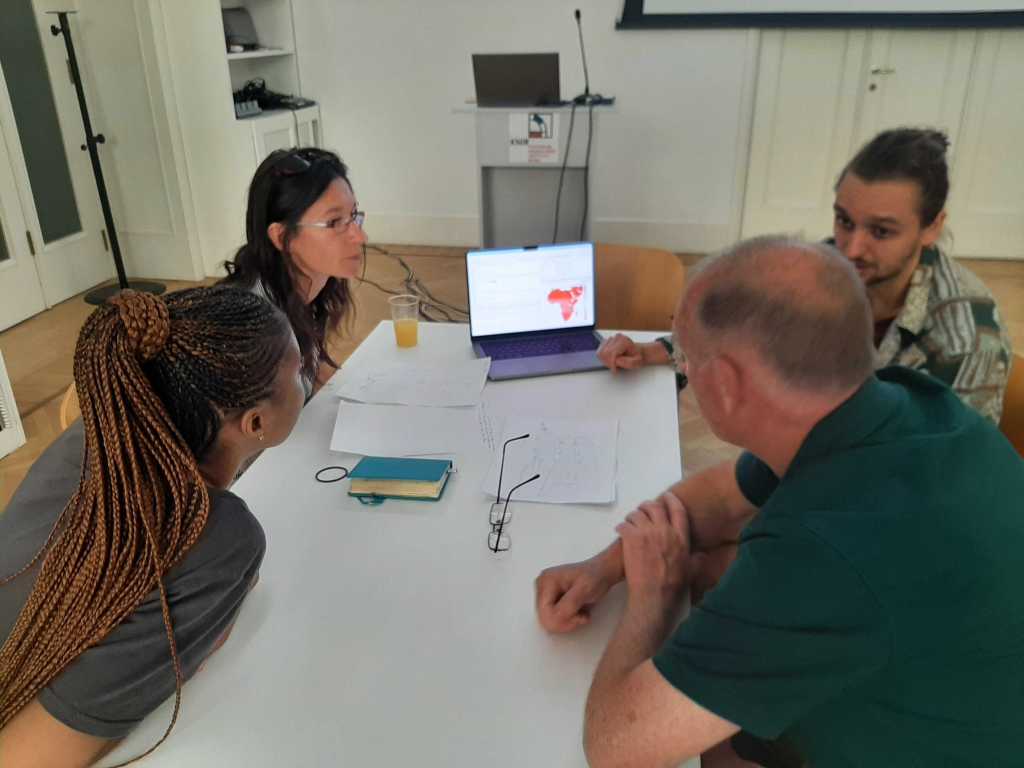
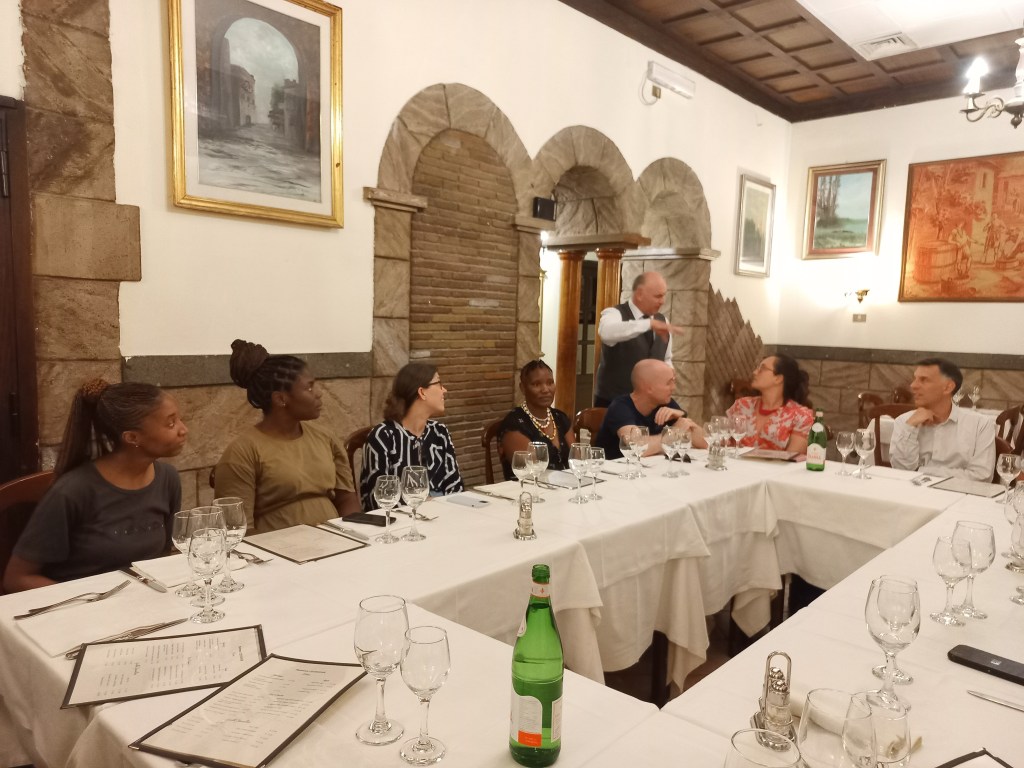
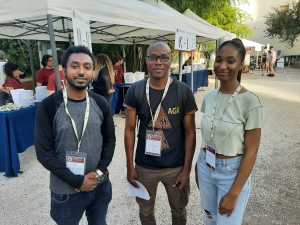
Mapping Ancient Africa participants at the INQUA Rome ice breaker event ready for action! Left to right: Bahru Zinaye Asegahegn, Alfred Houngnon, Busisiwe Hlophe.

The Mapping Ancient Africa (MAA) project has a double session of talks and a poster session at the INQUA congress in Rome 2023. Our session will be on Wednesday 19 July. Unfortunately a number of the originally planned speakers could not make it to Rome due to a combination of not obtaining visas, logistical challenges and ill health. We wish them all well and hope that they will continue to be involved in the project. Further, many thanks to all those who have agreed to step up and give a presentation at a late notice. Below is an updated schedule correct as of Sunday 16 July based on the information contained on the INQUA Rome App; if you are aware of any further problems or changes please let me know ASAP!

If you are at the INQUA Rome congress please come along to our talks and posters in Session 64: Mapping Ancient Africa: Climate, Vegetation & Humans.

Part 1: 08:30-11:00

  • Giosan et al. When the desert was a lake: Providing context for Homo sapiens development in the northern Kalahari
  • Chase et al. Paleolakes and socioecological implications of glacial “greening” of the South African interior
  • Blinkhorn et al. Evaluating refugia in recent human evolution in Africa
  • Aureli et al. Homo sapiens behaviour and adaptation in East Africa. New evidence from an open-air site in a modern Ethiopian savannah environment: the GOT10 site
  • Effiom et al. Late Holocene palaeoecological studies at Lake St Lucia, KwaZulu-Natal
  • Tallavaara et al. Pan-African Climate and Vegetation over the Quaternary and Implications for Human Distribution
  • Quick et al. Palaeoenvironments of the Cape Floristic Region: New research & current developments
Part 2: 11:00-13:00

Continue Reading

Mapping Ancient Africa: Rome workshop – gallery

July 15, 2023
WDG

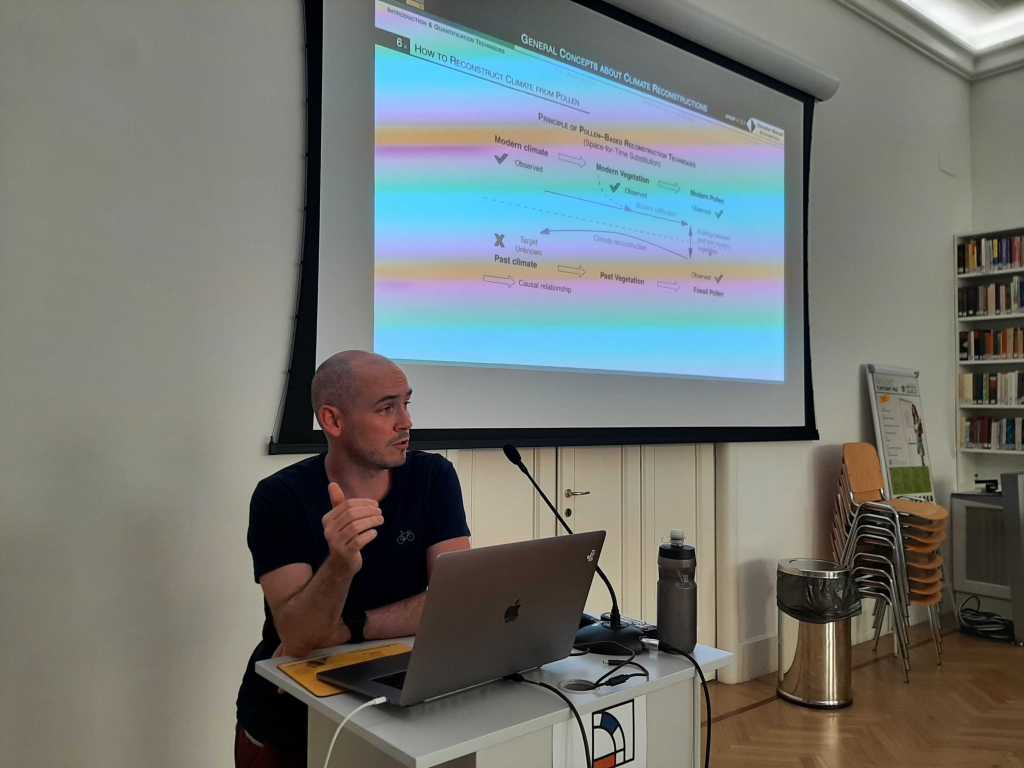
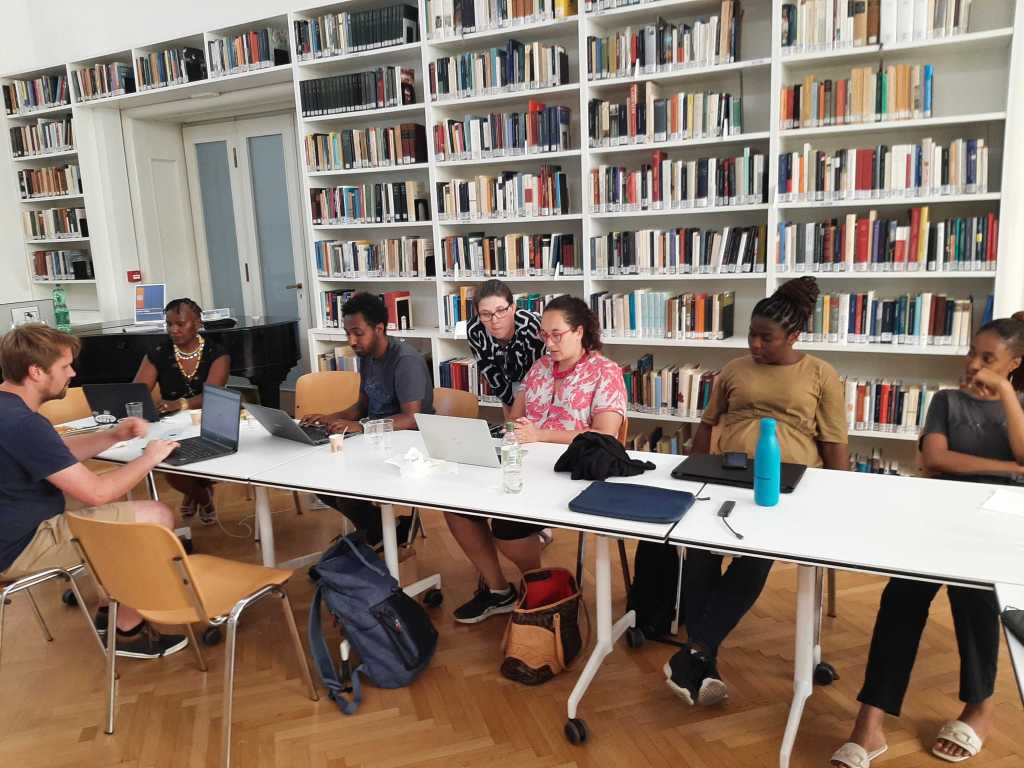
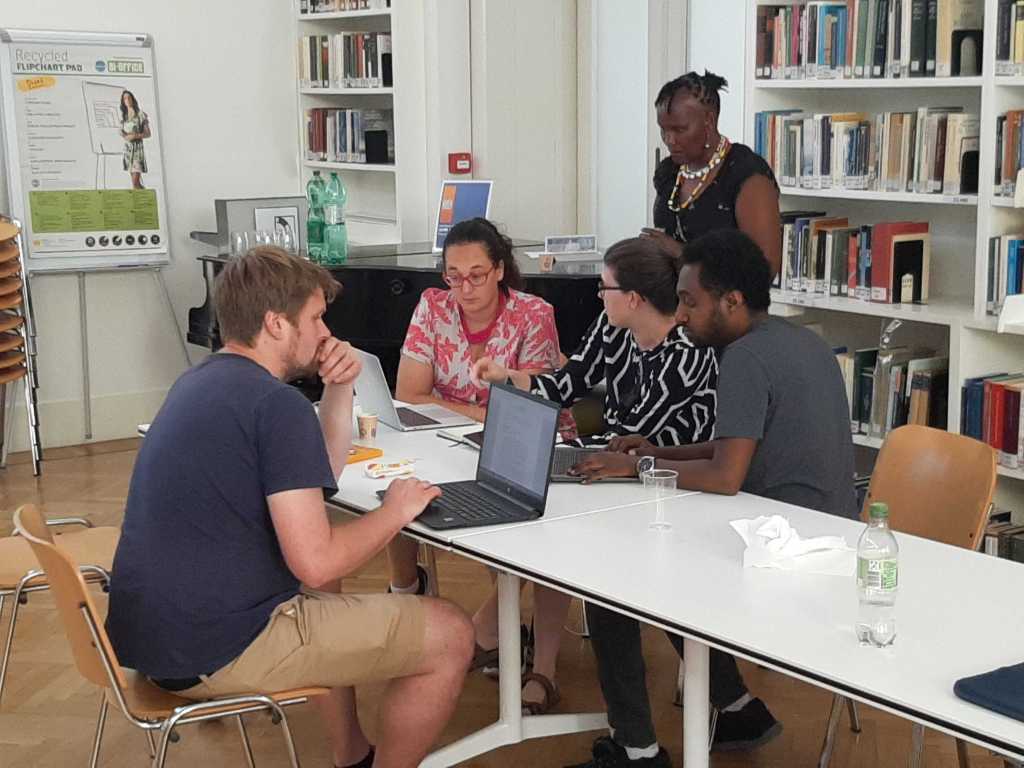
The Mapping Ancient Africa workshop took place on the 12-13 July 2023 at the Royal Netherlands Institute in Rome. At this INQUA funded workshop we played with palaeoclimate models and discussed past environmental change across the continent. Here are some picture of us in action. To find out more click here.

Day 1: Modelling past climate through the pastclim package, and reconstructing past climate through CREST

Day 2: Planning the proposed special issue and the future of the project

Continue Reading

Mapping Ancient Africa: Rome workshop

July 14, 2023
WDG

The Mapping Ancient Africa workshop took place at the Royal Netherlands Institute in Rome on the 12 and 13 July 2023. Participants engaged with two different approaches to palaeoclimate modelling:

  • Interfacing palaeoclimate models through the “pastclim” R package. Lead by Michela Leonardi.
  • Reconstrucing palaeclimate on the basis of ancient pollen data using the CREST program. Lead by Manu Chevalier.

The aim of the workshop was to promote interaction between scientists working across Africa and across disciplines (palaeoclimate, palaeoecology, archaeology, modelling). The plenary session was joined by participants who could not make it to Italy via Zoom. This session was recorded and you can watch it below. In the plenary session outputs from the workshop, the planned special issue of Quaternary International, and the future of the Mapping Ancient Africa project were discussed.

To find out more about the workshop click here.

INQUAlogo
Continue Reading

Mapping Ancient Africa: INQUA Rome session

July 3, 2023
WDG

The Mapping Ancient Africa (MAA) project has a double session of talks and a poster session at the INQUA congress in Rome 2023. Our session will be on Wednesday 19 July.

If you are at the INQUA Rome congress please come along to our talks and posters in Session 64: Mapping Ancient Africa: Climate, Vegetation & Humans.

Part 1: 08:30-10:30

  • Giosan et al. When the desert was a lake: Providing context for Homo sapiens development in the northern Kalahari
  • Chase et al. Paleolakes and socioecological implications of glacial “greening” of the South African interior
  • Biddulph et al. Spatiotemporal variability in the initiation and development of peatlands across the central Congo Basin
  • Blinkhorn et al. Evaluating refugia in recent human evolution in Africa
  • Aureli et al. Homo sapiens behaviour and adaptation in East Africa. New evidence from an open-air site in a modern Ethiopian savannah environment: the GOT10 site
  • Dembele Climatic fluctuations during the last millenium and their impact on political history and human settlements in West Africa
  • Porchier et al. Annually resolved hydroclimate variability in the East African Rift Valley at a time critical for hominin dispersion
  • Effiom et al. Late Holocene palaeoecological studies at Lake St Lucia, KwaZulu-Natal

Part 2: 11:00-13:00

Continue Reading

Mapping Ancient Africa: Workshop in Rome

June 23, 2023
WDG

The Mapping Ancient Africa (MAA) workshop in Rome will take place on the 12 and 13 July 2023. The workshop supported by International Union for Quaternary Research (INQUA) and hosted by the Royal Netherlands Institute in Rome. During the workshop we will be working towards aims of the MAA project to strengthen the research community of Quaternary scientists working across Africa, and to further our scientific goals of understanding past climate change. To achieve this we will work collaboratively to:

  • simulate past climate change in Africa,
  • develop the proposed Special Issue of Quaternary International, and
  • plan the next steps for the MAA project.

Twenty-seven people are registered for the workshop and we look forward to seeing them in Rome. If you are not registered for the workshop but still want to participate this is possible. On the 13 July between 15:00 and 18:00 CEST the workshop sessions will be online via Zoom. To obtain the Zoom link either visit the MAA Slack channel, or contact William Gosling. During the online part of the meeting we will present the outputs from the palaeoclimate mapping activity, the plans for the special issue, and outline the ideas future of MAA. Feedback from the wider MAA community will be very welcome.

INQUAlogo

Mapping Ancient Africa: Video of seminar 13

May 19, 2023
WDG

The thirteenth Mapping Ancient Africa seminar was delivered by Andrea Manica on the 18th May 2023. In the seminar Andrea introduced the pastclim R package and gave examples of how it can be applied to address questions related to human evolution and dispersal.

Details of this seminar can be found here. You can find more Mapping Ancient Africa seminar videos on the “Ecology of the Past” YouTube channel.

INQUAlogo

Mapping Ancient Africa: Seminar 13

May 17, 2023
WDG

The thirteenth Mapping Ancient Africa online seminar will take place on 18 May 2023 (17:00 CEST). 

The seminar will be delivered via Zoom. The link for the seminar can be obtained from the MAA Slack channel or by contacting the chair of this seminar (William Gosling). If you want to know more about the Mapping Ancient Africa project visit our web pages and please do not hesitate to get in contact if you want to get involved.

INQUAlogo

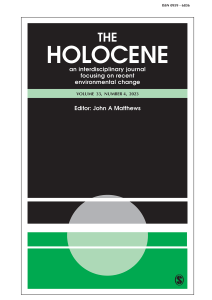
The Holocene

March 24, 2023
WDG

I am excited to announce that I have recently joined the “Advisory Editorial Board” of The Holocene journal. Many thanks to editor-in-chief John Matthews for the invitation. Interesting to join a very experienced team, which includes both my PhD and post-doc supervisors; the esteemed Frank Mayle and Mark Bush! I look forward to receiving interesting new papers to examine.

The Holocene journal publishes research, review and forum papers focused on environmental change during the Holocene (last 11,700 years). It encourages the submission of manuscripts with an interdisciplinary approach covering palaeoenvironments, palaeoclimate, palaeoecology, palaeohydrology, palaeopedology, palaeoceanography and geo-archaeology. So if you have a some research in this area that you are looking for a home for please check out the details aims and scope, and criteria on the journal web page, click here.

Mapping Ancient Africa: Seminar 10

February 1, 2023
WDG

Mapping Ancient Africa (MAA) online seminars are 10! On the 7 February 2023 (17:00-18:00 CET) the following exciting seminar will be given:

The seminar will be delivered via Zoom. The link for the seminar can be obtained from the MAA Slack channel or by contacting the chair of this seminar Stefanie Kaboth-Bahr. If you want to know more about the Mapping Ancient Africa project visit our web pages and please do not hesitate to get in contact if you want to get involved.

INQUAlogo

Mapping Ancient Africa: Video of Seminar 9

January 23, 2023
WDG

The 9th Mapping Ancient Africa seminar, and first of 2023, took place on Thursday 19 January. The seminar was delivered by Celine Vidal (University of Cambridge) and showcased recent work on the dating of volcanic deposits to constrain the age of hominin fossils in eastern Africa.

Details of this seminar can be found here. You can find more Mapping Ancient Africa seminar videos on the “Ecology of the Past” YouTube channel.

References

  • Vidal, C.M., Lane, C.S., Asrat, A., Barfod, D.N., Mark, D.F., Tomlinson, E.L., Tadesse, A.Z., Yirgu, G., Deino, A., Hutchison, W., Mounier, A. & Oppenheimer, C. (2022) Age of the oldest known Homo sapiens from eastern Africa. Nature 601, 579-583. https://doi.org/10.1038/s41586-021-04275-8
  • Vidal, C.M., Fontijn, K., Lane, C.S., Asrat, A., Barfod, D., Tomlinson, E.L., Piermattei, A., Hutchison, W., Tadesse, A.Z., Yirgu, G., Deino, A., Moussallam, Y., Mohr, P., Williams, F., Mather, T.A., Pyle, D.M. & Oppenheimer, C. (2022) Geochronology and glass geochemistry of major Pleistocene eruptions in the Main Ethiopian Rift: Towards a regional tephrostratigraphy. Quaternary Science Reviews 290, 107601. https://dx.doi.org/10.1016/j.quascirev.2022.107601
INQUAlogo
Blog at WordPress.com.