van Beek, R., Gouw-Bouman, M.T.I.J. & Bos, J.A.A. (2015) Mapping regional vegetation developments in Twente (the Netherlands) since the Late Glacial and evaluating contemporary settlement patterns. Netherlands Journal of Geosciences-Geologie En Mijnbouw 94, 229-255. doi: 10.1017/njg.2014.40

  • SUMMARY: Examination of archaeological and palaeoecological evidence from the Twente region of the Netherlands is used to produce maps and images of past landscapes. The artists reconstructions of landscape change are particularly amazing and thought provoking.

Burn, M.J. & Palmer, S.E. (2014) Solar forcing of Caribbean drought events during the last millennium. Journal of Quaternary Science 29, 827-836. doi: 10.1002/jqs.2660

Göldel, B., Araujo, A.C., Kissling, W.D. & Svenning, J.-C. (2016) Impacts of large herbivores on spinescence and abundance of palms in the Pantanal, Brazil. Botanical Journal of the Linnean Society in press. doi: 10.1111/boj.12420

Llamas, B., Fehren-Schmitz, L., Valverde, G., Soubrier, J., Mallick, S., Rohland, N., Nordenfelt, S., Valdiosera, C., Richards, S.M., Rohrlach, A., Romero, M.I.B., Espinoza, I.F., Cagigao, E.T., Jiménez, L.W., Makowski, K., Reyna, I.S.L., Lory, J.M., Torrez, J.A.B., Rivera, M.A., Burger, R.L., Ceruti, M.C., Reinhard, J., Wells, R.S., Politis, G., Santoro, C.M., Standen, V.G., Smith, C., Reich, D., Ho, S.Y.W., Cooper, A. & Haak, W. (2016) Ancient mitochondrial DNA provides high-resolution time scale of the peopling of the Americas. Science Advances 2. doi: 10.1126/sciadv.1501385

Turner, T.E., Swindles, G.T., Charman, D.J., Langdon, P.G., Morris, P.J., Booth, R.K., Parry, L.E. & Nichols, J.E. (2016) Solar cycles or random processes? Evaluating solar variability in Holocene climate records. Scientific Reports 6, 23961. doi: 10.1038/srep23961

In the news:

Jonathan Amos (2016) ‘Case is made’ for Anthropogenic Epoch. BBC News: Science & Environment.

Scientific publications:

Sarmiento, F.O. (2002) Anthropogenic change in the landscapes of highland Ecuador. Geographical Review 92, 213-234. doi: 10.1111/j.1931-0846.2002.tb00005.x

Swindles, G.T., Lamentowicz, M., Reczuga, M. & Galloway, J.M. (online)  Palaeoecology of testate amoebae in a tropical peatland. European Journal of Protistology. doi: 10.1016/j.ejop.2015.10.002

Tellkamp, M.P. (2014) Habitat change and trade explain the bird assemblage from the La Chimba archaeological site in the northeastern Andes of Ecuador. Ibis 156, 812-825. doi: 10.1111/ibi.12179

Waters, C.N., Zalasiewicz, J., Summerhayes, C., Barnosky, A.D., Poirier, C., Galuszka, A., Cearreta, A., Edgeworth, M., Ellis, E.C., Ellis, M., Jeandel, C., Leinfelder, R., McNeill, J.R., Richter, D.d., Steffen, W., Syvitski, J., Vidas, D., Wagreich, M., Williams, M., Zhisheng, A., Grinevald, J., Odada, E., Oreskes, N. & Wolfe, A.P. (2016) The Anthropocene is functionally and stratigraphically distinct from the Holocene. Science 351, . doi: 10.1126/science.aad2622

Past environmental change on Mauritius: Unknown macro-fossils

December 18, 2015
WDG

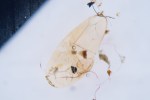
Unknown macro-fossil JdK-type2

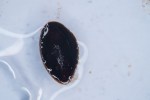
Unknown macro-fossil JdK-type2

Past environmental change on Mauritius has been the focus of research with the Palaeoecology & Landscape Ecology group at the University of Amsterdam (UvA) for a number of years. This research has been lead by Erik de Boer and Henry Hooghiemstra and has already resulted in a number of key publications on the environmental history of the island (de Boer et al., 2013, 2014, 2015). One current past environmental change research project working on Mauritius is being undertaken by Jona de Krui; a student within the UvA BSc Biology program supervised by myself and Erik. Jona’s is working on a study site (modern day swamp) on the north-east of the island and is focused on improving our understanding changes in the:

  • depositional environment (loss-on-ignition analysis),
  • fire activity (macro-charcoal analysis), and
  • vegetation (macro-fossils) over the last c. 1000 years.

Jona has now completed the analysis of all his samples and we are currently collating the data sets; however, a number of the macro-fossils which he has discovered remain unidentified. Below are images of the unknown macro-fossils if you have any suggestions on identifications please comment, or get in touch directly.

Continue Reading

BES annual meeting: Top talks

December 17, 2015
WDG

I am just back from a fabulous British Ecological Society (BES) annual meeting in Edinburgh. Both the city and the science were interesting and exciting. The Science Slam was certainly my highlight “fringe” event and I believe all the slams will be avaliable to view soon on the BES Youtube channel. But you can watch the winner, Rosie Woodroffe, now…

Of the many great science talks I would like to highlight just four here which I found particulalry interesting, by: Stephen Prentice (Queen’s University Belfast), Althea Davies (University of St. Andrews), Tom August (Cente for Ecology & Hydrology), and Kimberly Simpson (University of Sheffield).

Continue Reading

Journal articles

  • Clement, C.R., Denevan, W.M., Heckenberger, M.J., Junqueira, A.B., Neves, E.G., Teixeira, W.G. & Woods, W.I. (2015) The domestication of Amazonia before European conquest. Proceedings of the Royal Society of London B: Biological Sciences 282. DOI: 10.1098/rspb.2015.0813
  • Oliver, T.H., Heard, M.S., Isaac, N.J.B., Roy, D.B., Procter, D., Eigenbrod, F., Freckleton, R., Hector, A., Orme, C.D., Petchey, O.L., Proenca, V., Raffaelli, D., Suttle, K.B., Mace, G.M., Martin-Lopez, B., Woodcock, B.A. & Bullock, J.M. Biodiversity and Resilience of Ecosystem Functions. Trends in Ecology & Evolution. DOI: 10.1016/j.tree.2015.08.009
  • Watkins, C. (2015) Oliver Rackham OBE FBA 1939–2015. Landscape History 36, 5-8. DOI: 10.1080/01433768.2015.1044280
    COMMENT: One of the books that inspired me to enter this field of research was Rackham’s Trees and woodlands in the British landscape; published the year I was born…

Plus three papers discussed during the University of Amsterdam BSc Biology Tropical Ecology course trip to De Hortus Botanicus Amsterdam:

  • Bush, M.B. (1995) Neotropical plant reproductive strategies and fossil pollen representation. American Naturalist 145, 594-609. Stable URL: http://www.jstor.org/stable/2462970
  • Cárdenas, M.L., Gosling, W.D., Sherlock, S.C., Poole, I., Pennington, R.T. & Mothes, P. (2011) The response of vegetation on the Andean flank in western Amazonia to Pleistocene climate change. Science 331, 1055-1058. DOI: 10.1126/science.1197947
  • Logan, A.L. & D’Andrea, A.C. (2012) Oil palm, arboriculture, and changing subsistence practices during Kintampo times (3600–3200 BP, Ghana). Quaternary International 249, 63-71. DOI: 10.1016/j.quaint.2010.12.004


Ecology of the past on film: Hayley Keen

October 6, 2015
WDG

Whilst conducting her PhD research Hayley Keen helped produced two of short films about her research project Past environmental change on the eastern Andean flank, Ecuador:

  1. on her field work, which was the winning entry into the American Geophysical Union (AGU) student video competition in 2014, and
  2. a presentation summing up her PhD project in just 3 minutes!

First prize in the AGU student video competition (2014)

Three minute thesis (The Open University, 2014)

Follow Hayley’s ongoing research on this blog and on Twitter @Hayley1keen 

Keen PhD Thesis 2015

September 30, 2015
WDG

Hayley Keen getting excited about sediments during fieldwork in Ecuador (2012). Photo: J. Malley

Hayley Keen getting excited about sediments during fieldwork in Ecuador (2012). Photo: J. Malley

Keen, H.F. (2015) Past environmental change on the eastern Andean flank, Ecuador. PhD Thesis, Department of Environment, Earth & Ecosystems, The Open University.

Abstract
The eastern Andean flank of Ecuador (EAF) contains some of the world’s most biodiverse ecosystems. Andean montane forests are threatened due to anthropogenic pressures and both current and projected climate change. This thesis examines the palaeoecological history of two stratigraphic sequences (Mera Tigre West [MTW] and Mera Tigre East [MTE]) obtained from the Ecuadorian modern lower montane forest. The sediments preserved were analysed using eight analytical techniques, allowing an insight into the ecosystem’s potential response to projected changes derived from their past responses. Palaeoecological studies on the EAF are rare, and those that do exist are debated relating to: i) the inference of robust ecological data from pollen records in floristically diverse locations, and ii) the past source area of sediments preserved in fluvially exposed sequences, potentially leading to contamination with older material.

A statistical sub-sampling tool was developed (debate i), capable of producing statistically robust count sizes for each pollen sample; MTW and MTE count sizes ranged from 196-982 showing the diversity within sequences. The depositional environment of MTE was analysed, investigating sediment provenance throughout (debate ii). Results found that large scale volcanic events were critical in the preservation of the sediments, whereas fluvial influence caused a regional sediment source area in the upper stratigraphy, impacting on the palynological interpretation of MTE. Pollen records demonstrated the presence of a diverse vegetation community with no modern analogue at MTE (abundant taxa (>15 %): Hedyosmum, Wettinia, Ilex) and upper montane forest at MTW (Alnus, Hedyosmum, Podocarpus). Fire was not the main driver for the vegetation reassortment at either site (MTW correlation coefficient: -0.37, MTE: 0.16). The two sites have demonstrated the EAF plays host to floristically dynamic ecosystems, susceptible to drivers of change (fire and landscape) and should be considered when predicting the montane forests’ future response to environmental change.

Supervisors: Dr. William D. Gosling (The Open University/University of Amsterdam), Dr. Encarni Montoya and Dr. Sarah Sherlock (both The Open University).
Examiners: Dr. Dunia Urrego (University of Exeter), and Prof. David Gowing (The Open University).
Chair: Dr. Mark Brandon (The Open University).

To borrow a copy from The Open University Library click here.

Publications (so far): Continue Reading

Palaeoecology at UvA and Twente 2015: Teaching and Learning

September 21, 2015
cmcmicha

By Crystal McMichael

The month-long palaeoecology module at UvA is coming to an end. We have had two weeks of lectures and microscope work, an introduction to quantitative palaeoecology, and we just finished a week of fieldwork in Twente, which is in the easternmost part of the Netherlands.

Students working in the field (photo: M. Groot)

Students working in the field (photo: M. Groot)

Will Gosling and I tried something new for the field excursion this year. We split the class into eight groups, and gave each group a set of pollen and phytolith samples from an ‘unknown location’. Unknown in this context means being from one of the eight primary sites that we would visit during the field excursion. The students were required to perform vegetation surveys and characterize soils at each of the primary sites that we visited. The goal of each group was to figure out which location their set of ‘unknown’ samples came from. Basically, we had them doing forensic palynology, with idea that they could then better visualize the different vegetation assemblages seen in the palaeoecological records.
Continue Reading

JOB: PhD candidate in Palaeoecology & Landscape Ecology

July 28, 2015
WDG

UvAInstitute for Biodiversity & Ecosystem Dynamics
Faculty of Science

University of Amsterdam

Characterization of Neotropical ecosystems by their modern pollen spectra and organic chemical composition

  • Develop skills in pollen identification, pollen chemical characterization, and the analysis of organic biomarkers.
  • Examine ecological variation across an altitudinal gradient of nearly 4000 meters on the tropical western Andean flank.
  • Improve understanding of how ecosystems function in a biodiversity hotspot, and how they might be identified in the fossil record.

Mashpi (25)The considerable biodiversity of Neotropical ecosystems is under pressure from projected climate change and human activity. Modern ecosystems can be characterized by their pollen rain and organic chemistry, which can in turn provide information about ecosystem health and functioning. However, little is known about how pollen assemblage and chemical composition (of pollen and plants) vary along environmental gradients. Altitudinal transects provide an opportunity to study a range of environments and ecosystems with a relatively small geographic area. By improving our understanding of modern ecosystems we can improve our interpretation of fossil records, and consequently better understand how modern ecosystems came into being.

The main objectives of this PhD project are to:

  1. Generate the first modern pollen assemblage and chemical data set for the Neotropics,
  2. Characterize the landscape-scale variation in pollen assemblage and chemistry composition, and
  3. Identify the key environmental drivers that determines pollen assemblage and chemistry composition variation.

Publication date: 27 July 2015
Closing date: 18 September 2015
Level of education: University (Masters)
Hours: 38 hours per week
Salary indication: €2,125 to €2,717 gross per month
Vacancy number: 15-286

Applications should be emailed to application-science@uva.nl, with in the subject line the position you are applying for and vacancy number (15-286). Please make sure all your material is attached in only one pdf. Applications should include a detailed CV including educational experiences, a list of research projects and/or publications, a letter of motivation, relevant work experience, and the names and contact addresses of two academic referees from whom a reference for the candidate can be obtained.

For more details, including information on how to apply, click here (UvA), or here (via academic transfer).

For further information visit the Palaeoecology & Landscape Ecology web pages, or contact Dr. William D. Gosling  directly.

Blog at WordPress.com.