Every picture tells a story. This one is a snapshot I took of Dan Livingstone’s African palaeolimnology group in June1984, when I spent a few months at Duke University, North Carolina, at Dan’s invitation. I had started work on the pollen analysis of a Holocene core from Cameroon that I’d collected in 1981 and Dan was keen to help me as far as possible. He was making plans for his lake coring projects a few years later in Cameroon (Barombi Mbo).
Back row (L-R) is me (Keith Richards age 24), Margaret Adebisi Sowunmi, Alice Tucker, Lida Burney, George Kling and Dan Livingstone. Front row (L-R) is David Burney, Wendy Watson, Susan Gerbeth-Jones and Patricia G. Palmer.Continue Reading
On Wednesday 19 July 2023 the Mapping Ancient Africa session of the INQUA Rome congress took place. We were delighted to have an full program of speakers despite some late cancellations. The first session featured seven speakers.
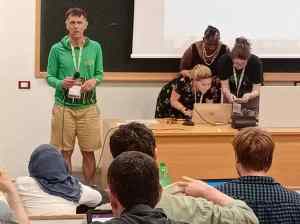
No panic as we set up for session 1…
The first two talks focused on southern Africa. The first talk by Liviu Giosan (Woodshole Oceanographic Institute) focused on new sediment cores extracted from the Okavango – Makgadikgadi region and new efforts to obtain sediment cores that can provide information on the dispersal of hominins. Brian Chase (CNRS) then looks us to the Karoo highlighting recent findings that suggest that this currently arid region was more habitable in the past and that a proliferation of stone tools suggests past peoples utilised the region extensively (Carr et al., 2023).
We invite you to join us on an incredible journey through the heart of Ecuador, where a group of adventurous students from Florida Institute of Technology embarked on a life-changing experience as part of the Neotropical Archaeoecology summer field course. Buckle up as we delve into the marvels of nature, indigenous cultures, and unforgettable experiences. Let’s dive right in!
Unveiling the Andes
Our adventure began with a breath-taking visit to the Paramo at Cayambe-Coca National Park. Paramos are high altitude (3000-4000 metres) wet grasslands above the tree line and below the snow line within the equatorial Andes. Our tour guides Patricio and Byron gave us information about the local vegetation, focusing on the Polylepis tree (locally known as “paper tree”), which is unique to this sort of habitat. They also told us about some of the fascinating wildlife that can be seen here, such as the Andean Bear (Tremarctos ornatus) and the Andean Puma (Puma concolor).
We then descended through the cloud forest (3,600–3,400 meters) and lower montane rainforest (3,400–2,500 meters). Across these various habitats, we documented changes in hummingbird abundance and recorded their behaviour at four different feeder points: Guango Lodge, La Brisa, San Isidro Lodge, and Cascada el Hollin. The sheer diversity of hummingbird species left us in awe, and we marvelled at their iridescent feathers and incredible agility.
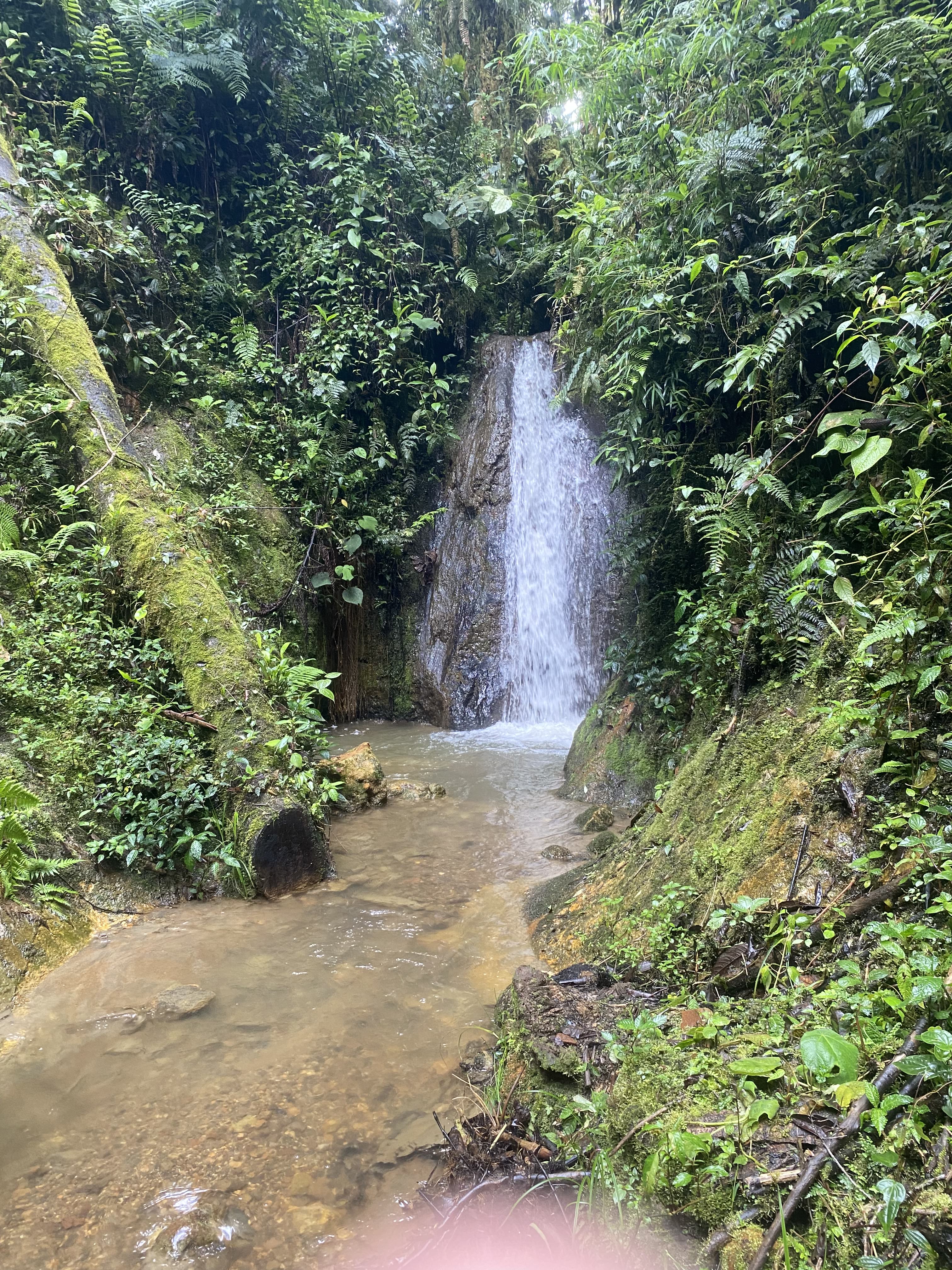
We explored a waterfall near San Isidro Lodge (https://cabanasanisidro.com), and we were able to observe pre-Inca pottery. At the lodge we also saw a diverse array of bird species, which was delightful! The forest’s nightlife brought us close encounters with a group of nocturnal monkeys, and to our surprise, we stumbled upon a very rare mountain tapir. The following morning we saw a small agouti (a small rodent) prowling around the lodge, and ended our adventures in the cloud forest on a high note.
San Isidro waterfall and some of the animal diversity we observed
Gosling, W.D. & McMichael, C.N.H. (2023) The use of micro infrared spectroscopy in reconstructing past ecological and environmental change. Reference Module in Earth Systems and Environmental Sciences (ed. by R. Bradshaw) Elsevier. DOI: 10.1016/B978-0-323-99931-1.00087-8
My name’s Alfred Houngnon, native of Benin Republic in West Africa. I hold an agricultural engineering degree in “Rangeland Management and Conservation” (Abomey-Calavi University). After gaining relevant field experience, I obtained a French Government Bursary to pursue an MSc degree in “Tropical Plant Biodiversity” at Montpellier (France). There, I learned about how to use indicators of past environmental and climatic change to give insights into projected future change.
It was a great scientific experience to participate in-person at the XXI INQUA Congress 2023 in Rome (Italy). This opportunity came under the supervision of William Gosling, and with the support of the Mapping Ancient Africa (MAA) project funded by INQUA’s Palaeoclimate commission (PALCOM). I have been working with Will for a number of years and published a first paper related to this work in 2021; a checklist of vascular plants from a ‘relict’ forest in Benin (Houngnon et al., 2021). A second manuscript is under development and was accepted for poster and oral presentation at INQUA 2023 congress that brought together around 4000 abstracts.
Interview 1: Alfred Houngnon (AGIR)
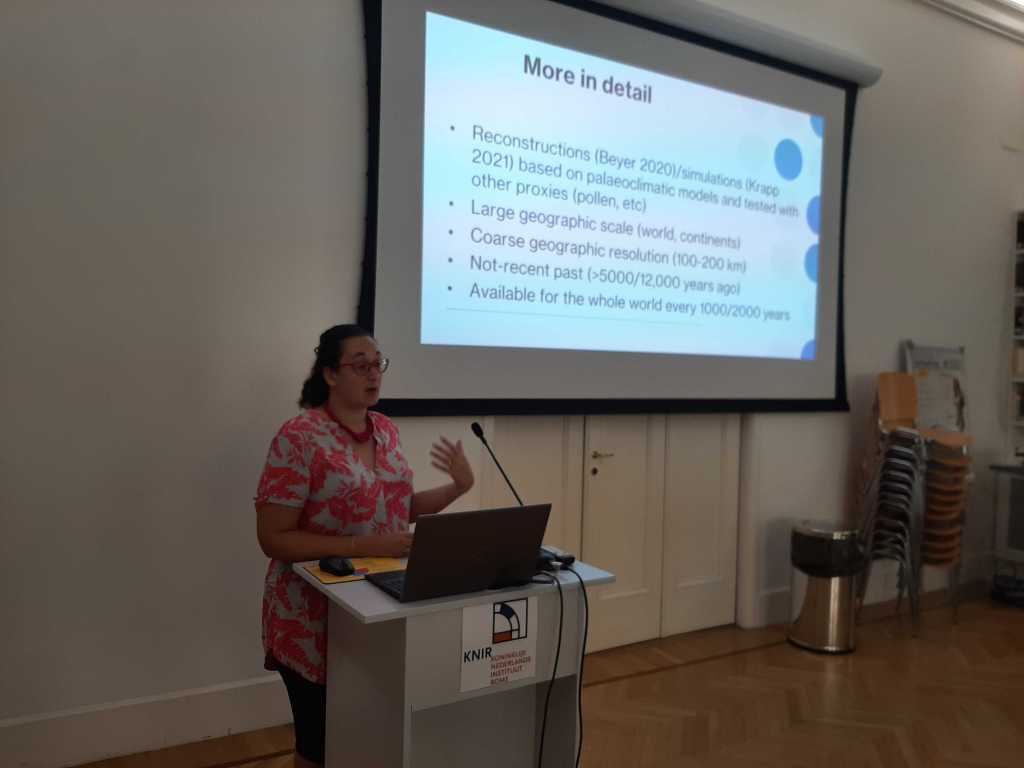
The bursary from the MAA project allowed me to also attend the MAA Rome workshops held at the Royal Netherlands Institute in Rome (12-13 July 2023). During the workshops, I was trained in two novel approaches to palaeoclimate modeling. The first based on interfacing paleoclimate models through the “pastclim” R package (Michela Leonardi), and the second on reconstructing palaeoclimates on the basis of ancient pollen data using the “CREST” program (Manu Chevalier). The workshops helped me to sharpen the communication of my ideas and in so doing strengthened the manuscript in preparation for submission to an international journal for publication.
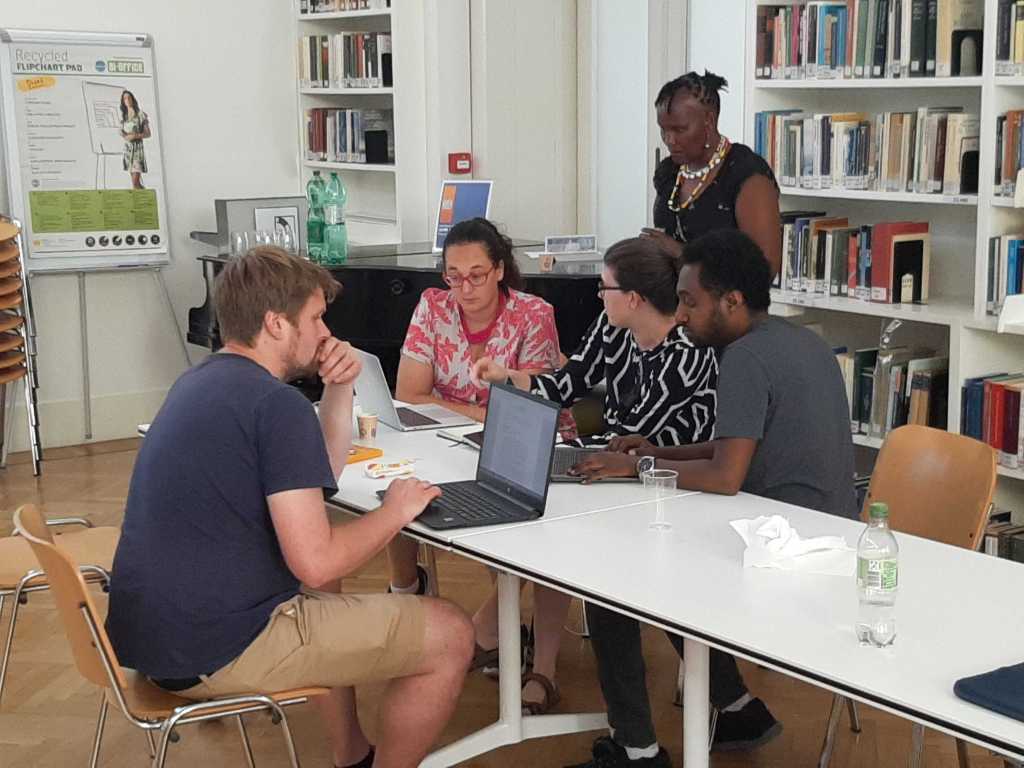
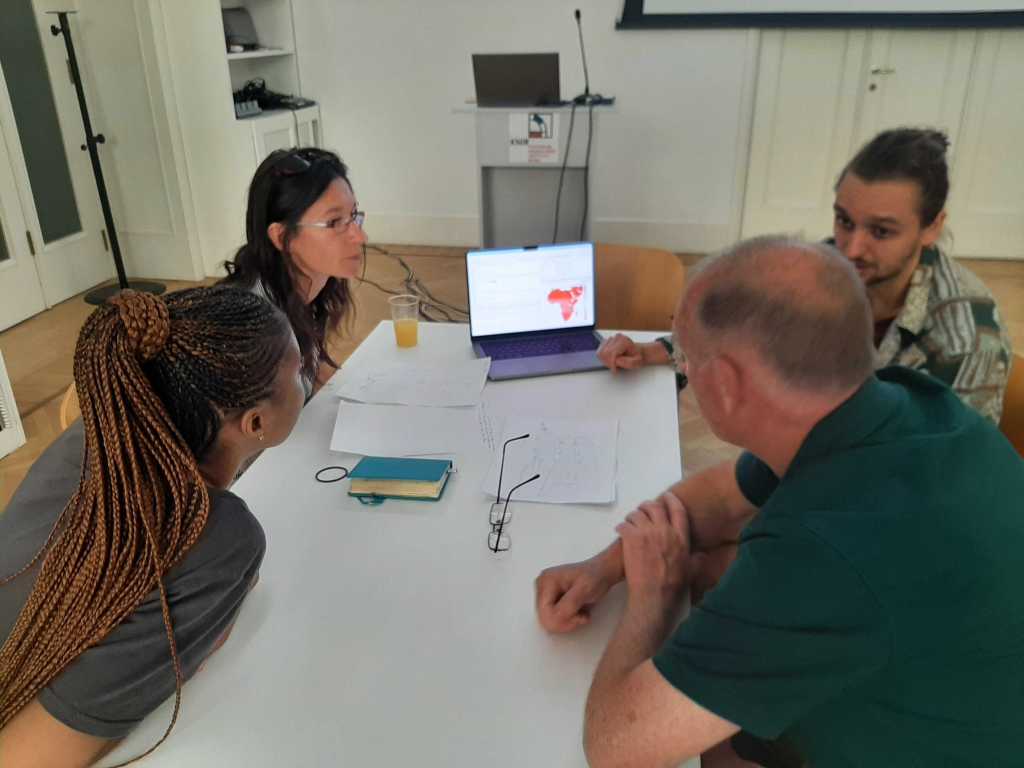
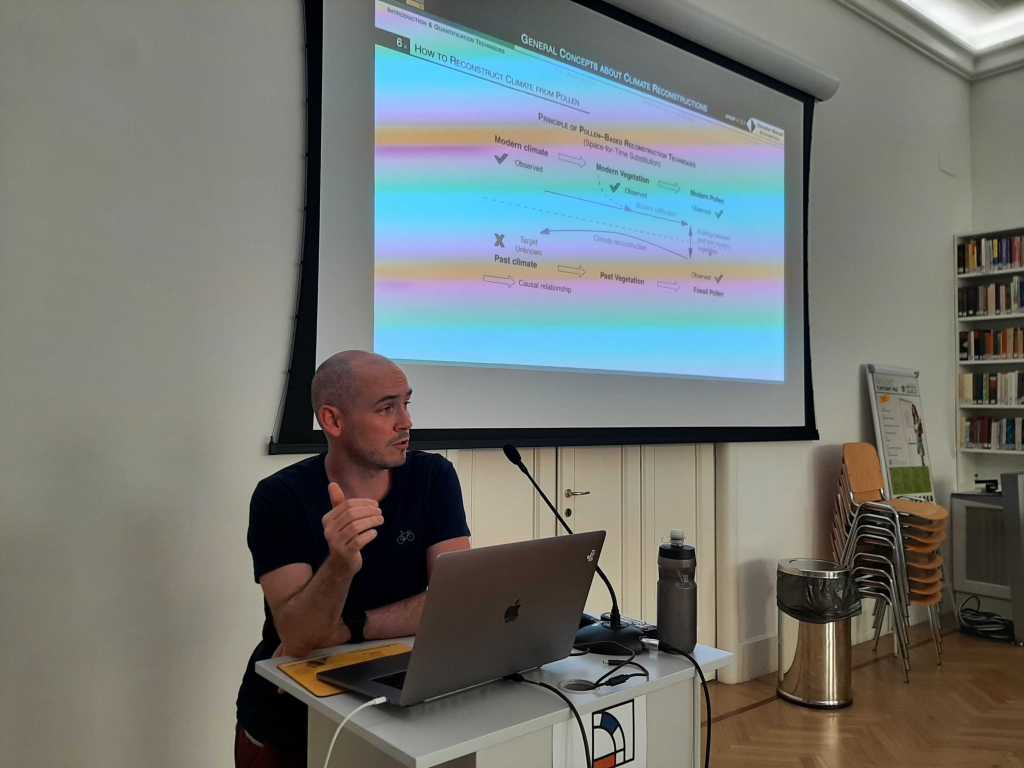
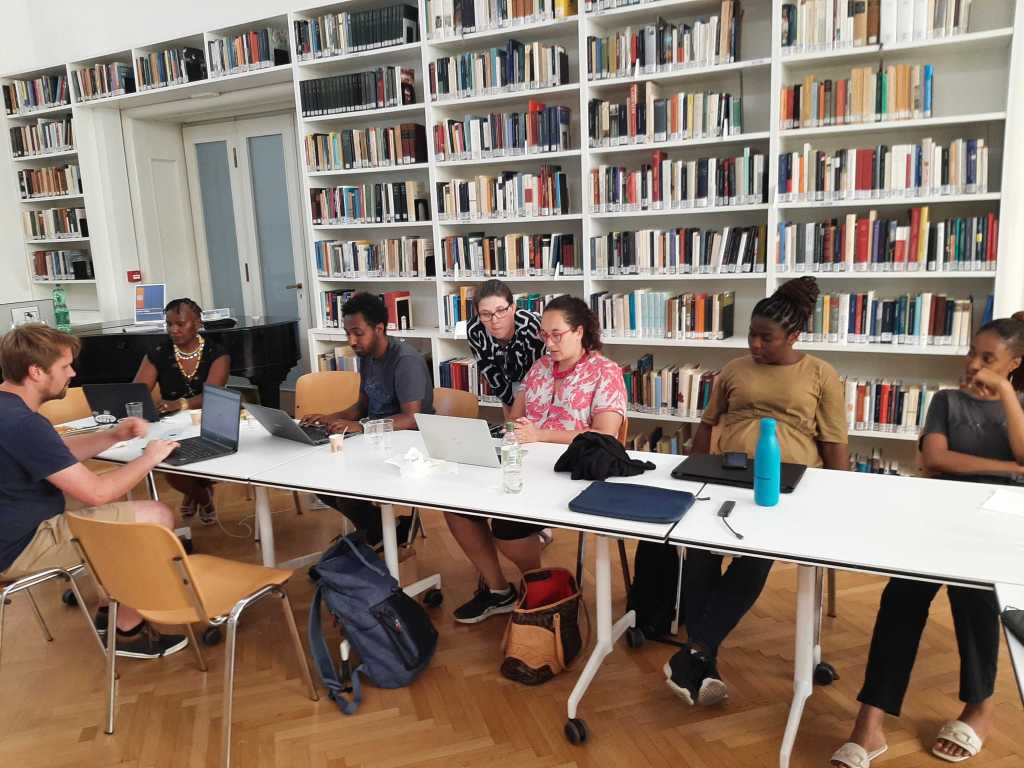
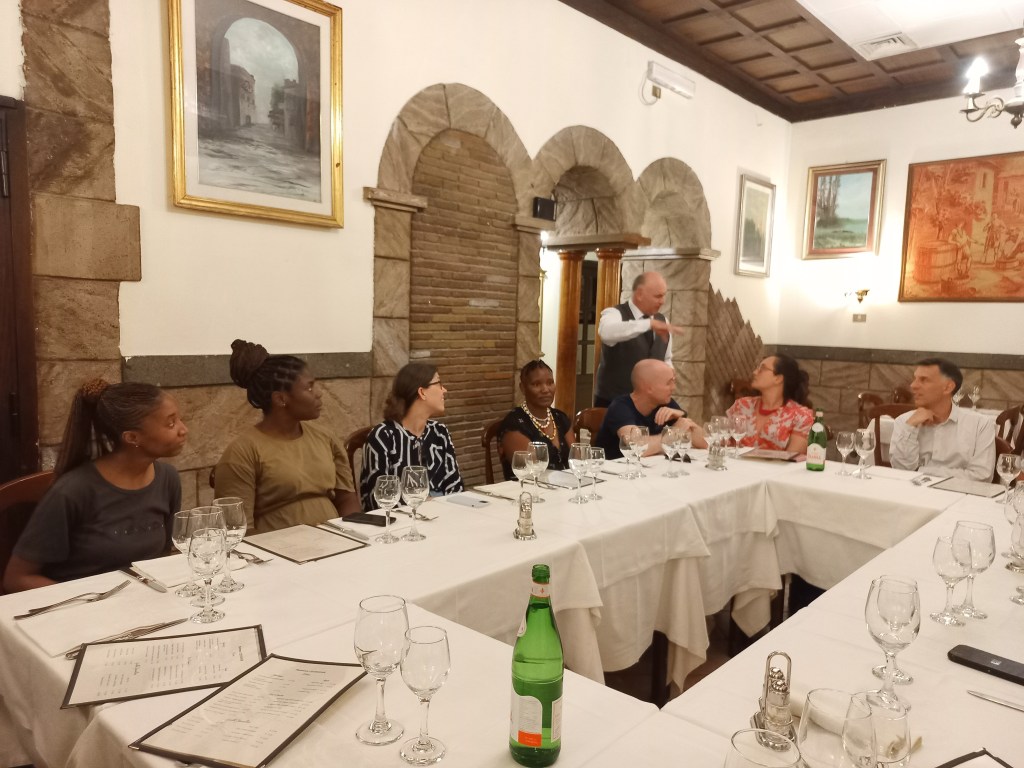
The Mapping Ancient Africa workshop took place on the 12-13 July 2023 at the Royal Netherlands Institute in Rome. At this INQUA funded workshop we played with palaeoclimate models and discussed past environmental change across the continent. Here are some picture of us in action. To find out more click here.
Day 1: Modelling past climate through the pastclim package, and reconstructing past climate through CREST
Day 2: Planning the proposed special issue and the future of the project
Interfacing palaeoclimate models through the “pastclim” R package. Lead by Michela Leonardi.
Reconstrucing palaeclimate on the basis of ancient pollen data using the CREST program. Lead by Manu Chevalier.
The aim of the workshop was to promote interaction between scientists working across Africa and across disciplines (palaeoclimate, palaeoecology, archaeology, modelling). The plenary session was joined by participants who could not make it to Italy via Zoom. This session was recorded and you can watch it below. In the plenary session outputs from the workshop, the planned special issue of Quaternary International, and the future of the Mapping Ancient Africa project were discussed.
Henry Hooghiemstra (University of Amsterdam) began working on “long” continental pollen records during his PhD (Hooghiemstra, 1984). After a long and distinguished career working around the Henry has just published a retrospective discussing the challenges, benefits, and prospects for investing in this aspect of palaeoecological research (Hooghiemstra, 2023).
References
Hooghiemstra, H. (2023) Making a Long Continental Pollen Record, a Fabulous and Bizarre Enterprise: A 50-year Retrospective. Palynology 47, 1-4. DOI: 10.1080/01916122.2023.2191257
Hooghiemstra, H. (1984) Vegetational and climatic history of the high plain of Bogota, Colombia: A continuous record of the last 3.5 million Years Gantner Verlag, Vaduz.
The Mapping Ancient Africa (MAA) project has a double session of talks and a poster session at the INQUA congress in Rome 2023. Our session will be on Wednesday 19 July.
Giosan et al. When the desert was a lake: Providing context for Homo sapiens development in the northern Kalahari
Chase et al. Paleolakes and socioecological implications of glacial “greening” of the South African interior
Biddulph et al. Spatiotemporal variability in the initiation and development of peatlands across the central Congo Basin
Blinkhorn et al. Evaluating refugia in recent human evolution in Africa
Aureli et al. Homo sapiens behaviour and adaptation in East Africa. New evidence from an open-air site in a modern Ethiopian savannah environment: the GOT10 site
Dembele Climatic fluctuations during the last millenium and their impact on political history and human settlements in West Africa
Porchier et al. Annually resolved hydroclimate variability in the East African Rift Valley at a time critical for hominin dispersion
Effiom et al. Late Holocene palaeoecological studies at Lake St Lucia, KwaZulu-Natal
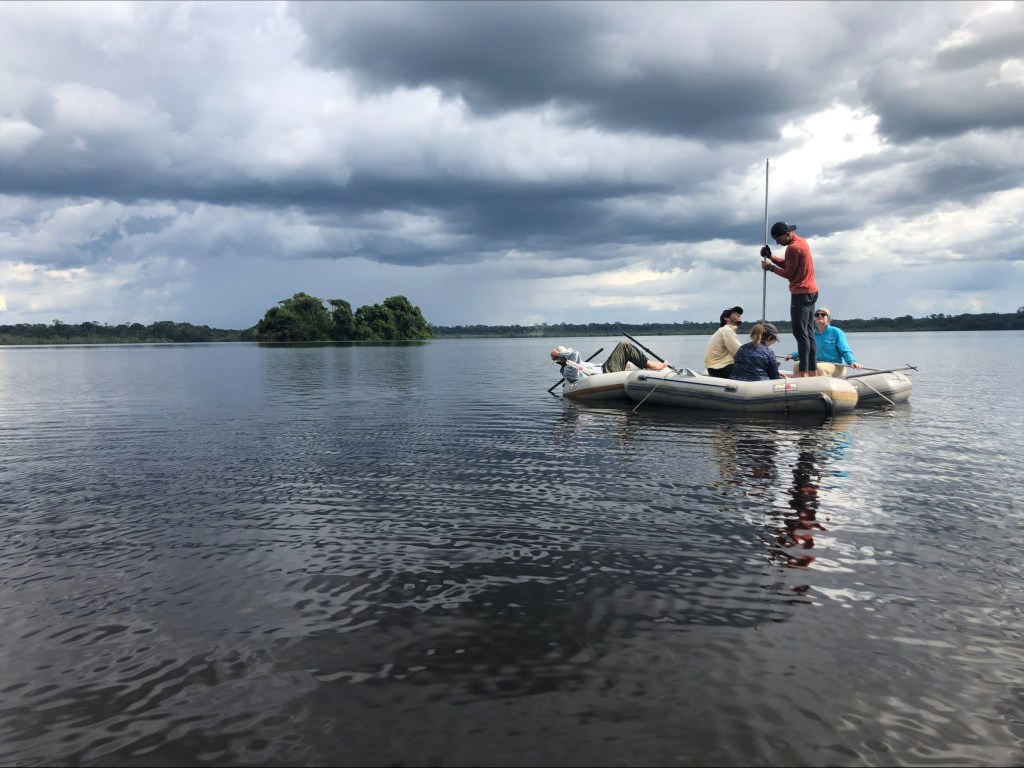
Fieldwork in Ecuador, Lake CubeCoring lake Zancudo Cocha (Ecuador)
Ansis Blaus is a Latvian postdoctoral research associate exploring patterns of climatic and anthropogenic change in the Neotropical Paleoecology Research Group led by Mark Bush at Florida Institute of Technology. He earned his Ph.D. in Earth Sciences from Tallinn University of Technology, Estonia. Supervised by Dr. Triin Reitalu he worked on modern pollen-plant relationships and palaeoecological reconstructions of peatlands and calcareous spring fens with an emphasis on biodiversity and plant functional trait reconstructions.
Currently, at Florida Tech, Ansis works on pollen data and other proxies from the sediment cores collected in the tropical Amazon. He investigates the tropical forest changes in relation to the global climate from a historical perspective, particularly during the Last Glacial Period and the Last Interglacial ca. 130 thousand years ago. His work will shed light on the history of dynamics and climate tipping points in the Amazonian rainforest. This research is particularly important in the face of the current global climate crisis and could help to anticipate the tropical forest response to the changing climate in the future.
Another objective of Ansis’s work is to study the pollen signature of human disturbance in the Amazon Basin as a means to model and interpret human presence and activities in the past and to understand human-nature interactions in tropical forest ecosystems in different spatial and temporal scales. For that, he is collaborating with the University of Amsterdam, Institute for Biodiversity and Ecosystem Dynamics, and working on a project aiming to quantify tropical pollen assemblages led by Crystal McMichael.
Ansis is fascinated by the potential revelations that come with the intersection of neoecology and paleoecology and human interactions. His interest in paleoecology, biodiversity, and various natural processes comes through the sense of pursuing a higher purpose for society and the well-being of our planet, and from the concern that humans have altered tropical forests and most other ecosystems in the world to the level of a negative rebound effect. Ansis believes that we must study and understand these ecosystems from different perspectives to decrease the current damage, predict future scenarios and to develop conservation strategies for both nature and human well-being.









 Ecology of the past