INQUA fellow Alfred Hougnon continues his research into past environmental change in the Dahomey Gap (Benin). In the fourth video documenting his progress a short background to the project, and insights into field work, are given. Field work took place near the Ewe-Adakplame forest in the south east of Benin and involved the recovery of sediments using a Russian corer. The video also shows how interactions and engagement with the local community was developed during the research expedition.
To find out more above Alfreds project read posts on:
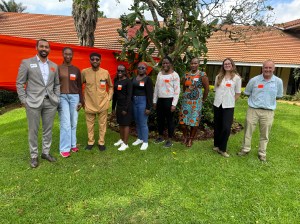
During the Mapping Ancient Africa writing workshop in Kenya (3-6 June 2024) Stefanie Kaboth-Bahr conducted a series of short interviews with the scientists attending. Below you can find part 2 (of 2) of the interviews with the participants in the workshop. Watch the videos to find out their scientific stories and top tips for academic writing. Watch all the Mapping Ancient Africa videos on the Mapping Ancient Africa YouTube Playlist.
The participants (part 2 of 2)
Ruth Kiely (University of Amsterdam, Netherlands)
Husna Mashaka (Arizona State University, USA & National Museums of Kenya, Kenya)
During the Mapping Ancient Africa writing workshop in Kenya (3-6 June 2024) Stefanie Kaboth-Bahr conducted a series of short interviews with the scientists attending. During the interviews she asked the participants and instructors to describe their scientific background, what had motivated them to take part in the writing workshop, and what they thought the most important thing they had gained from it. You can now meet the first four of these scientists now by watching the videos below, or catch up with all the latest videos on the Mapping Ancient Africa YouTube Playlist.
The participants (part 1 of 2)
Olugbenga Boboye (University of Ibadan, Nigeria)
Angela Effiom (University of the Witwatersrand, South Africa)
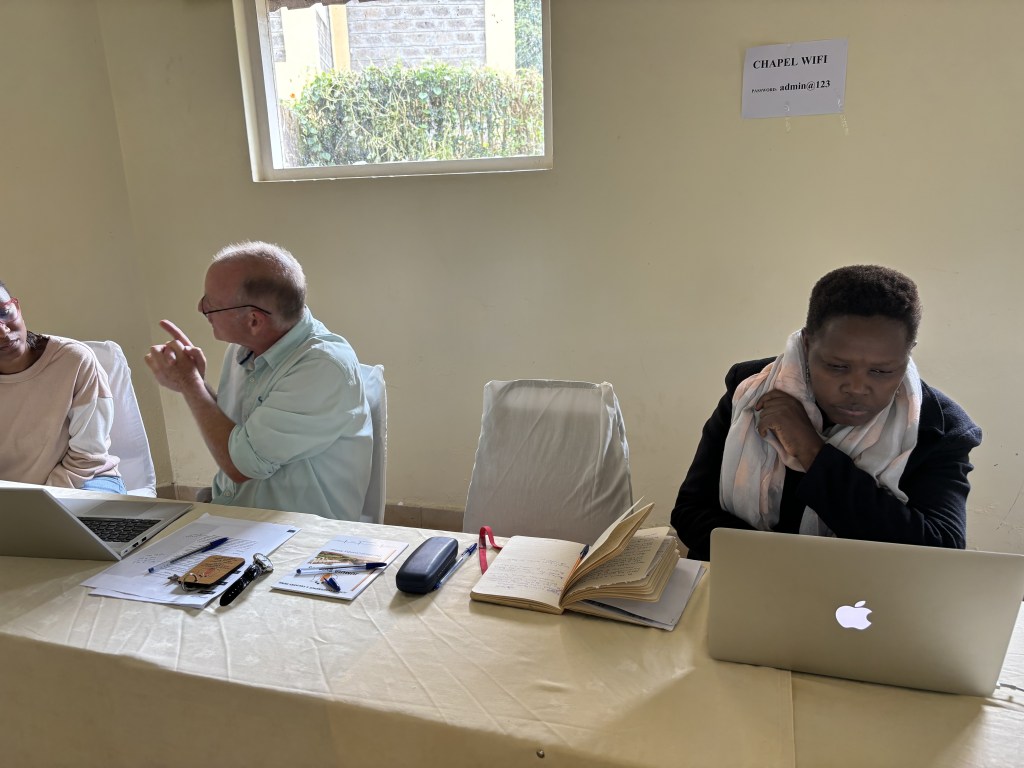
The Mapping Ancient Africa (MAA) writing workshop is currently in full swing in Kenya. Running from 3 June until the 6 June 2024 a diverse range of skills related to academic publishing is being delivered by our international team, including: structuring a scientific article, managing references and revision strategies. There is also plenty of time set aside for writing and getting feedback from more experienced academic writers. The manuscripts being developed at the workshop are being designed to be submitted to the MAA special issue of Quaternary International.
The fifteenth Mapping Ancient Africa seminar will take place on 15 March 2024 (17:00 CET)
Speaker: Bruk Lemma (Martin Luther University Halle-Wittenberg, Germany; Ethiopian Biodiversity Institute – EBI)
Title: Nature’s Fingerprints: Exploring the Use of Biomarkers and Stable Isotopes in Unraveling Chemotaxonomy and (Paleo-)Climate Dynamics of the Bale Mountains, Ethiopia
The seminar will be delivered via Zoom. The link for the seminar can be obtained from the MAA Slack channel or by contacting the chair of this seminar (Stefanie Kaboth-Bahr). If you want to know more about the Mapping Ancient Africa project visit our web pages and please do not hesitate to get in contact if you want to get involved.
The seminar delivered by Emma Mbua (National Museums of Kenya) on the 13th April 2023 was the twelfth in the Mapping Ancient Africa series. The seminar highlighted new finds from archaeological sites in eastern Africa that have yielded bones of various animals, including early humans.
Title: Newly discovered fossil sites in Kenya and their implications in human evolution discussions
Related publication: Mbua, E., Kusaka, S., Kunimatsu, Y., Geraads, D., Sawada, Y., Brown, F.H., Sakai, T., Boisserie, J., Saneyoshi, M., Omuombo, C., Muteti, S., Hirata, T., Hayashida, A., Iwano, H., Danhara, T., Bobe, R., Jicha, B. & Nakatsukasa, M. (2016) Kantis: A new Australopithecus site on the shoulders of the Rift Valley near Nairobi, Kenya. Journal of Human Evolution 94, 28-44. DOI: 10.1016/j.jhevol.2016.01.006
The seminar will be delivered via Zoom. The link for the seminar can be obtained from the MAA Slack channel or by contacting the chair of this seminar Rahab Kinyanjui. If you want to know more about the Mapping Ancient Africa project visit our web pages and please do not hesitate to get in contact if you want to get involved.
I am pleased to announce that we will be holding a two day Mapping Ancient Africa (MAA) workshop at the “Royal Netherlands Institute in Rome” on the 12 and 13 July (just before the INQUA 2023 Rome congress). We invite all MAA members to participate. Workshops will be lead on the two days by myself, Stefanie, Rahab and Lynne. We will cover the development of manuscripts for the proposed Quaternary International special issue, and planning for the future of the MAA network (future meetings and potential grant applications). If there are particular items that you would like to cover during the workshops then please let us know and we will do our best to include them. This event will be designed primarily for “in person” activities, however, we hope to have opportunities for people to also link in online at some plenary moments.
IMPORTANT: If you plan to attend the MAA Rome meeting in person please email me to register with the words “MAA Rome event registration” in the subject line. I can then organize appropriate levels of catering.






 Ecology of the past