Trecking with sediment corer in the high Andes of Peru
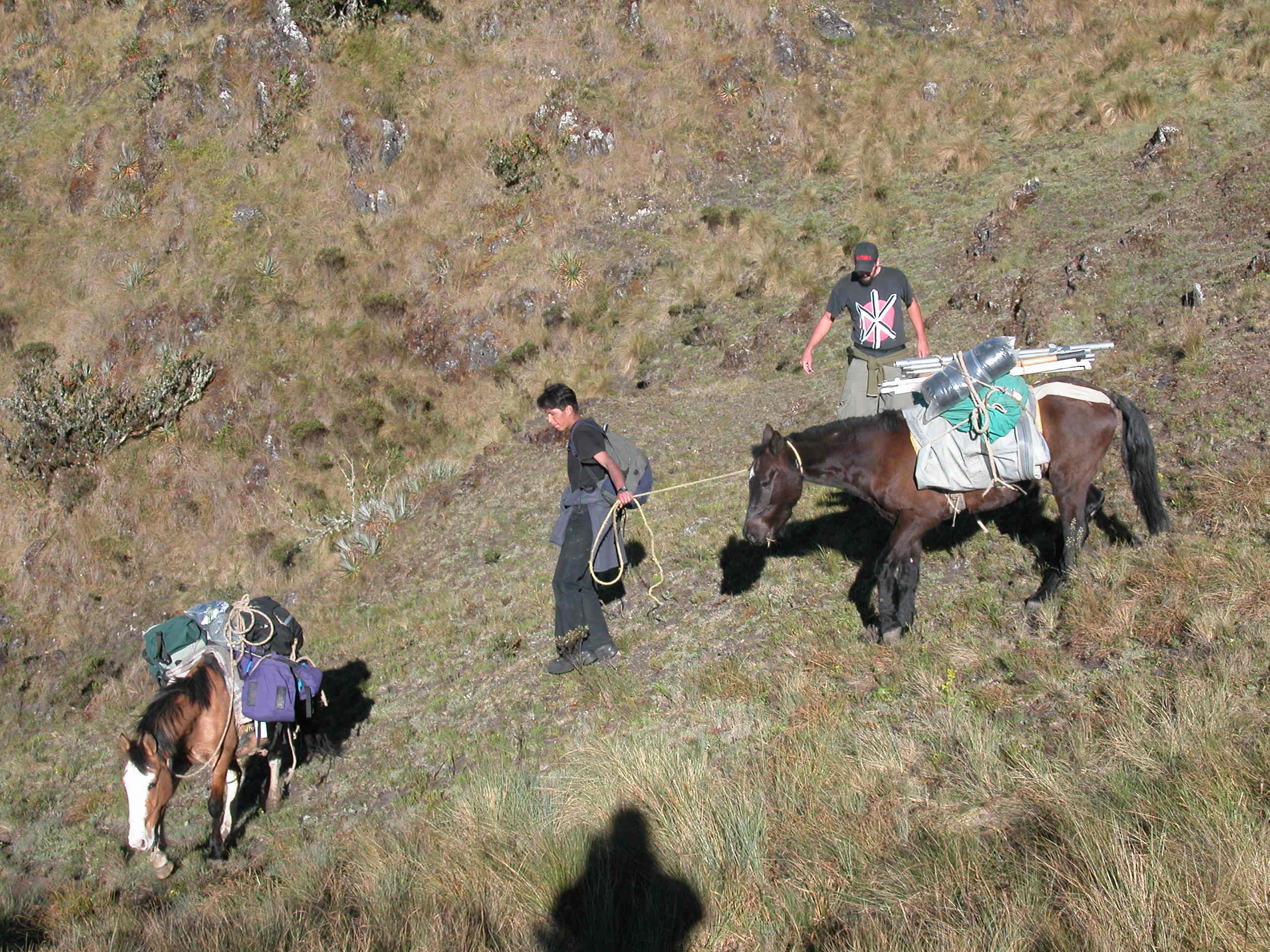
When it comes to collecting sediments from lakes its all about having the right tools for the job. Working in remote areas of the tropics we tend to favour the Colinvaux-Vohnout corer; supplied by Vince Vohnout at Geo-core). The advantages of this system are:
its light-weight nature (can be backpacked or donkeyed into field sites), and
the cam system (which allows hammering to penetrate tough sediments).
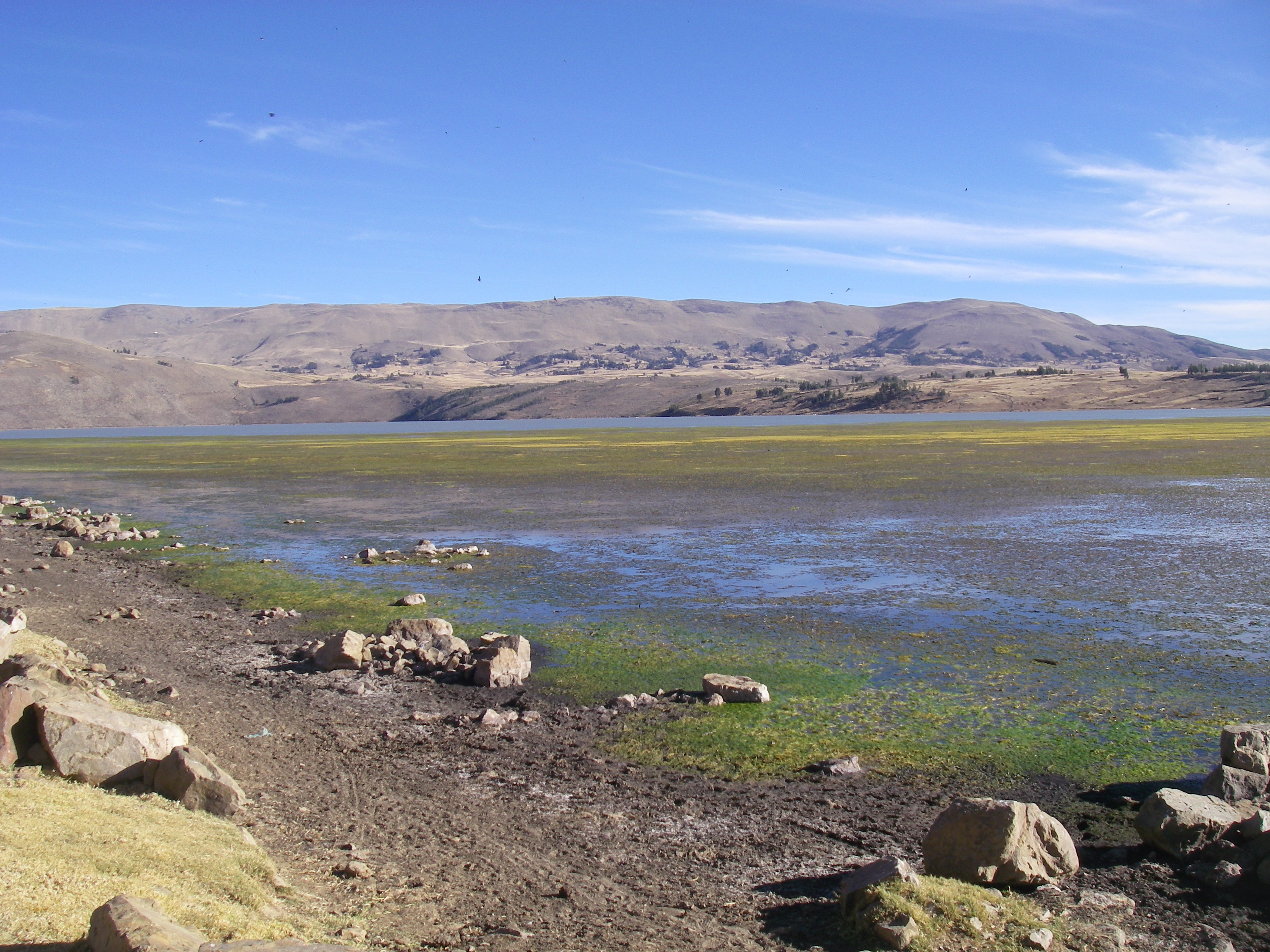
Eric Martinez carrying an Avon Redstart back out from Laguna Khomer Kotcha (Williams et al., 2011a)
With the right platform (two banana boats and an A-frame) we have manged to retrive c. 20 m of sediment from 20 m of water (c. 40 m of drill rod extended); Lake Pacucha, Peru (Hillyer et al., 2009). More typically we use two Avon Redstart inflatables and a platform following the design of Colinvaux et al. (1999).
Bush, M.B. & Gosling, W.D. (2012) Environmental change in the humid tropics and monsoonal regions. The SAGE Handbook of Environmental Change (ed. by J.A. Matthews, P.J. Bartlein, K.R. Briffa, A.G. Dawson, A. De Vernal, T. Denham, S.C. Fritz and F. Oldfield), pp. 113-140. SAGE, London.
Two NERC algorithm funded PhD studentships are currently available with the PCRG. The projects are focused on understanding past environmental change in west tropical Africa and Amazonian-Andean Ecuador. Both projects will involve field work and build on on-going research within the lab.
Closing date 31/01/2013
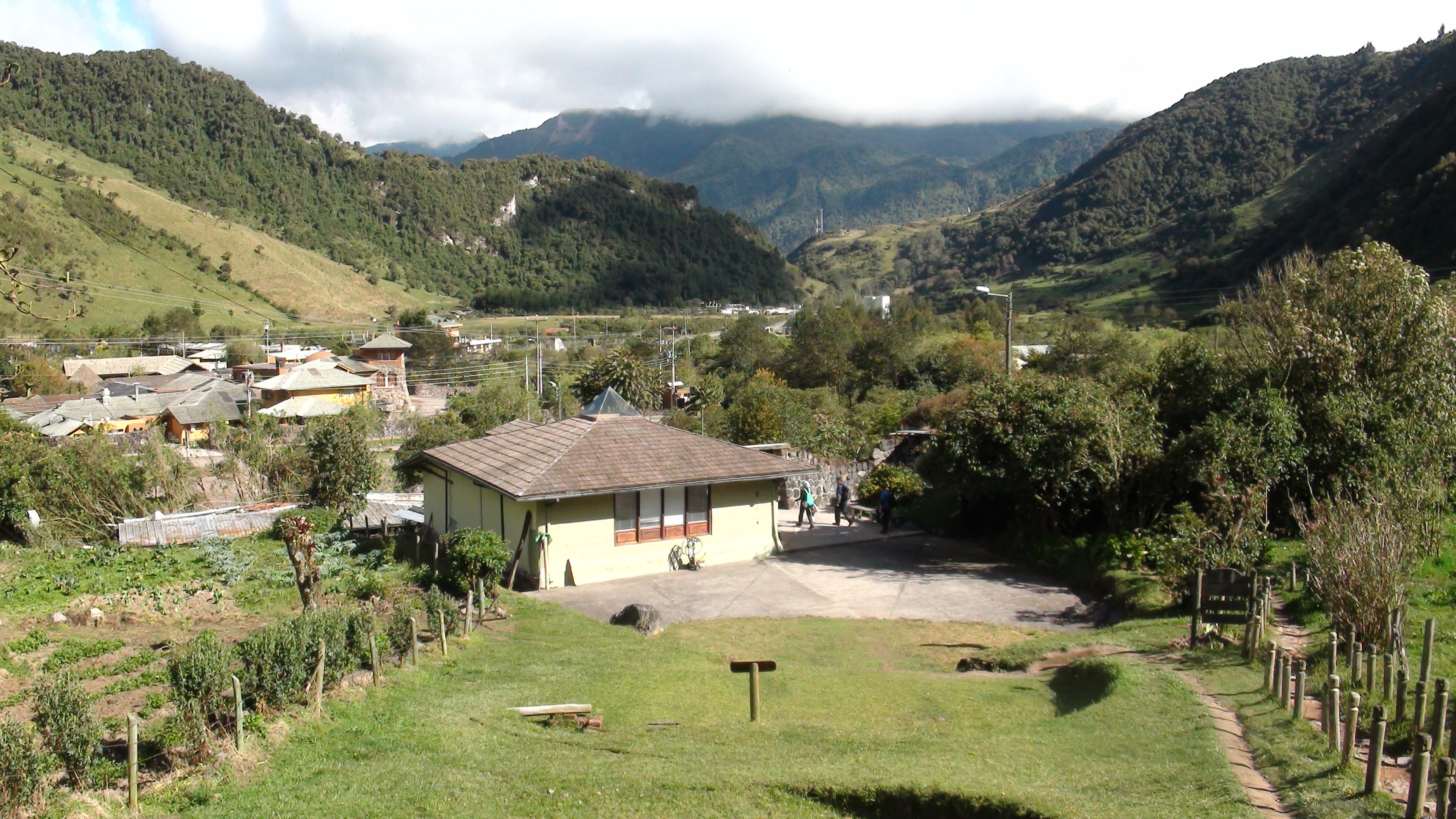
One project will work on samples collected during fieldwork in 2012 near Papallacta (Ecuador).
Further project details and how to apply below… Continue Reading
I whish I could start with “ Once upon a time…” because that would be the easiest way to begin this paragraph (or a paper). Besides, to some extend, “Once upon a time” can be appropriate because this is a story related to the OLD friends of the Paddington Bear. By that, I mean a story about the mega fauna in South America.
Macrauchenia drawn by Kobrina Olga (Photo credit: Wikipedia)
I am delighted to report that Dr Encarnacion Montoya Romo (currently of the Botanical Institute of Barcelona) has been awarded a NERC Fellowship to join the PCRG. The project is entitled “Evaluation of tropical forests sensitivity to past climate change” (FORSENS) and will examine environmental change at four study sites from different regions of the Neotropics: 1) Khomer Kotcha (Bolivia; 17oS, 4100 m above sea level [asl]) [1-3], 2) Consuelo (Peru, 13oS; 1400 m asl) [4-5], 3) Banos (Ecuador; 0oS, 4000 m asl), and 4) a new lowland site from Columbia/Ecuador to be collected during field work during the project.
Time seemed to escape me in April so I have a lot of research group action to report in this post! Here are some highlights…
At The Open University (OU) the research students have all been busy (of course): Natalie presented her 3rd year talk at the CEPSAR student conference and attended a meeting in Durham, Lottie spent two weeks at University College London (Environmental Change Research Centre) learning to become a statistics guru studying the “Numerical Analysis of Biological and Environmental Data” course, while Hayley and Frazer have been writing up their first year probation reports ahead of their mini-vivas next month. Over in Florida Bryan submitted his first PhD paper and has headed off on field work in Peru; and most significantly… I am very pleased to report that Nikki successfully defended her PhD thesis! Congratulations Nikki!
Thinking of PhD I was also pleased to have the opportunity to welcome my PhD supervisor, Frank Mayle, to The OU to give a CEPSAR seminar last week. It was great to be able to show off the labs to Frank at last having promised to invite him down when I arrived at The OU in 2005! He gave a very interesting talk on new archaeological findings from beneath the rain-forest in the Amazon Basin.
Away from The OU a couple of weeks ago I was down at Charles Darwin House for the British Ecological Society meetings committee meeting! We were working on the program for the annual meeting in Birmingham during December this year and it is shaping up to be a very exciting event; keep up to date by following the BES on twitter (@BritishEcolSoc).




 Ecology of the past